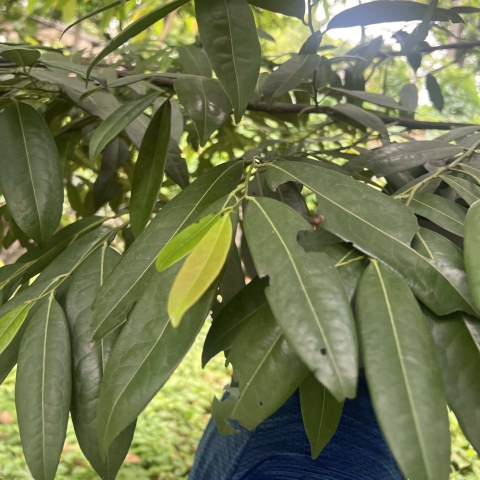
Diospyros blancoi is an ebony species native to the Philippines.
Kamagong is a medium sized tree, it averages about 20 meters in height. The leaves are leathery and oblong in shape, it reaches around 20 cm in length and has an acute tip and rounded base, the lamina is glossy and smooth while the abaxial side is lightly pubescent, arranged in alternating phyllotaxy. Dioecious trees, either “male” or “female”, pistillate flowers are much larger than staminate flowers, male flowers are cymose and axillary while female flowers are solitary and axillary. The fruit known as “Mabolo” is edible, it is a fleshy berry that is slightly flattened with a brown and velvety skin and yellow to cream-colored flesh. Kamagong wood is known for its exceptional beauty and hardness. It's popularly used for furniture and arnis sticks. Its edible fruit is known as mabolo and is derived from the word bolo, which means hair, since the fruit has reddish-brown hairy skin. This rare tree is critically endangered in the wild, but it can be found in parks and schools around the Philippines. The bark, leaf and unripe fruit extract has astringent properties for treating wounds, cough, fever, dysentery, snake bites and diarrhea. The seeds are recalcitrant, which means it needs to be sown immediately. The fallen mature fruit can be planted straight into potting media.