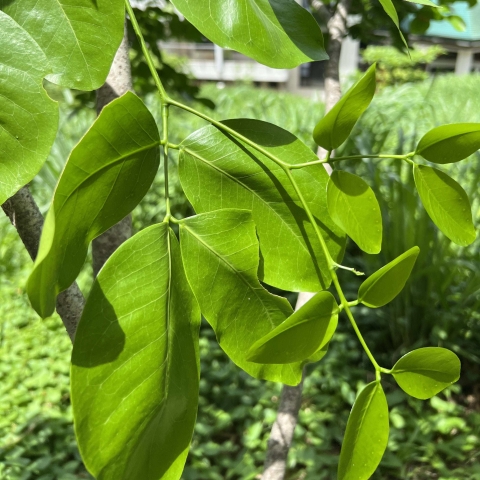
Sindora supa, known also as just Supa, is a tree native to the Philippines.
A medium sized tree which grows 15 to 30 meters tall. Pinnate leaves with 3 pairs of leaflets on each leaf, the leaves are glabrous, leathery, and elliptic in shape. The florets are borne on a paniculate inflorescence and can be either terminal or axillary, the petals are sublanceolate, two perfect stamens and three shorter stamens. The fruit is a pod with distinct sharp spines.The seeds are black and shiny with a fleshy aril. Supa can be found on limestone ridges and in forests from low to medium altitude. Its distinct seed pod with its broad oval shape and evenly spaced spines, houses two large seeds. Supa has also been called the kerosene tree because of its renewable high oil yield. The wood oil has medicinal value since it is used for herpes, eczema, and other skin diseases. The oil is also used for varnish, paint, transparent paper and lamp oil. The wood is prized for its aroma and is used for high-grade furniture, music instruments, and flooring. The seeds are recalcitrant, which means it needs to be sown immediately. To help germinate, the seeds can be scarified and soaked in water first. These can be sown directly to grower bags or first grown in seed beds. The fallen mature fruit can be planted straight into potting media. Seedlings will reach the outplanting age with a height of around 11 cm by 3 months. These can be trained to be hardy by gradually increasing exposure to sunlight and reducing watering.