Botanical Description
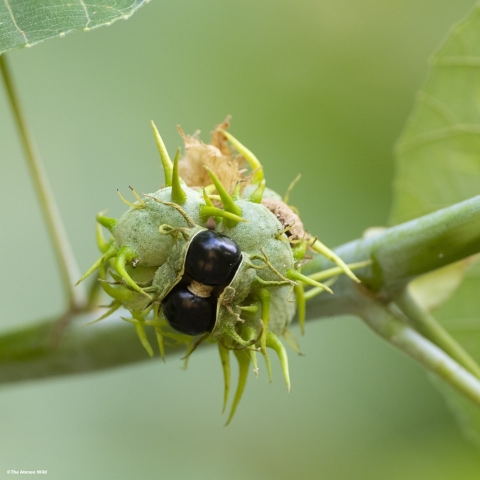
Binunga (Macaranga tanarius) also known as the Parasol Leaf Tree is a dioecious tree that is on the smaller side relative to the size of other trees reaching up to 20 meters in height although most individuals will be much smaller. Its branches are covered in hairs when young and are a bluish-green color. The most striking feature of this plant is its peltate oblong to ovate leaves with a rounded base, acute to acuminate apex, entire or denticulate margin, and occasional slight lobing. Its flowers are borne on axillary panicles enclosed by bracts, male flowers occur in clusters female flowers as well but with less flowers in each cluster compared to the males, male flowers are small and are numerous compared to the female flower clusters, female flowers are glandular and sub-ovoid in shape with a two-celled ovary and two large stigmas. The fruit that is produced is a glandular yellow capsule with long but soft prickles that splits open to reveal a globose wrinkled seed in each cell.
Uses:
-
The bark and leaves are used to create vinegar and the fermented sugarcane drink known as “basi”.
-
The roots can supposedly help treat hemoptysis, fever, coughing, and can even be used to induce vomiting.
-
The bark can be used to supposedly treat dysentery, as well as being used in creating glue, baskets, dye, and for tanning leather.
-
The leaves can supposedly help with wound healing, inflammation, and used as a wrapping for food akin to banana leaves.
-
The wood though light is fairly durable and can be used to make light structures or processed for its pulp to make items such as particle boards or used as firewood.
-
As an intermediate tree species in forest succession, cultivation of the tree in grasslands is recommended to promote ecological succession by paving the way for climax species.