Botanical Description
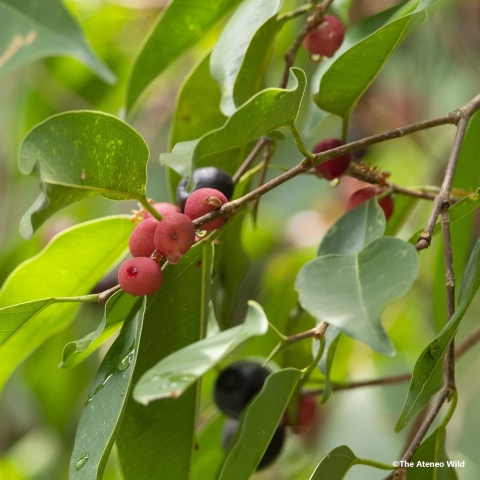
Salisi (Ficus benjamina) also known as weeping fig in English is a shrub or small tree growing up to only 10 meters in height with a smooth trunk. It has oval to elliptical leaves that are coriaceous, glossy and green with a rounded base, entire margin, and an acuminate apex. Some cultivars have irregularly shaped white margins. Like other figs it exudes a milky-white latex when it is wounded. Much like other figs its flower is a syconium which eventually develops into a fruit once pollinated by its specific wasp pollinator, the fruit and flower emerge at the axils. The fruit starts as green and then turns white, then red, and then finally black once fully ripened.
Uses:
-
The root is said to help with wound healing, bruising, muscle aches, fatigue, and to stimulate appetite.
-
The bark is used to help address rheumatism and liver disease.
-
The latex obtained from the plant is used to treat boils and reduce itching, although to some people contact with the exudates of the tree may cause mild irritation.
-
Due to its height and spreading habit it makes for a good landscaping tree as it takes up very little space whilst providing shade.
-
The fibers of the tree can be used for rope making.
-
The leaves and their extract are used as a natural insect repellant.