
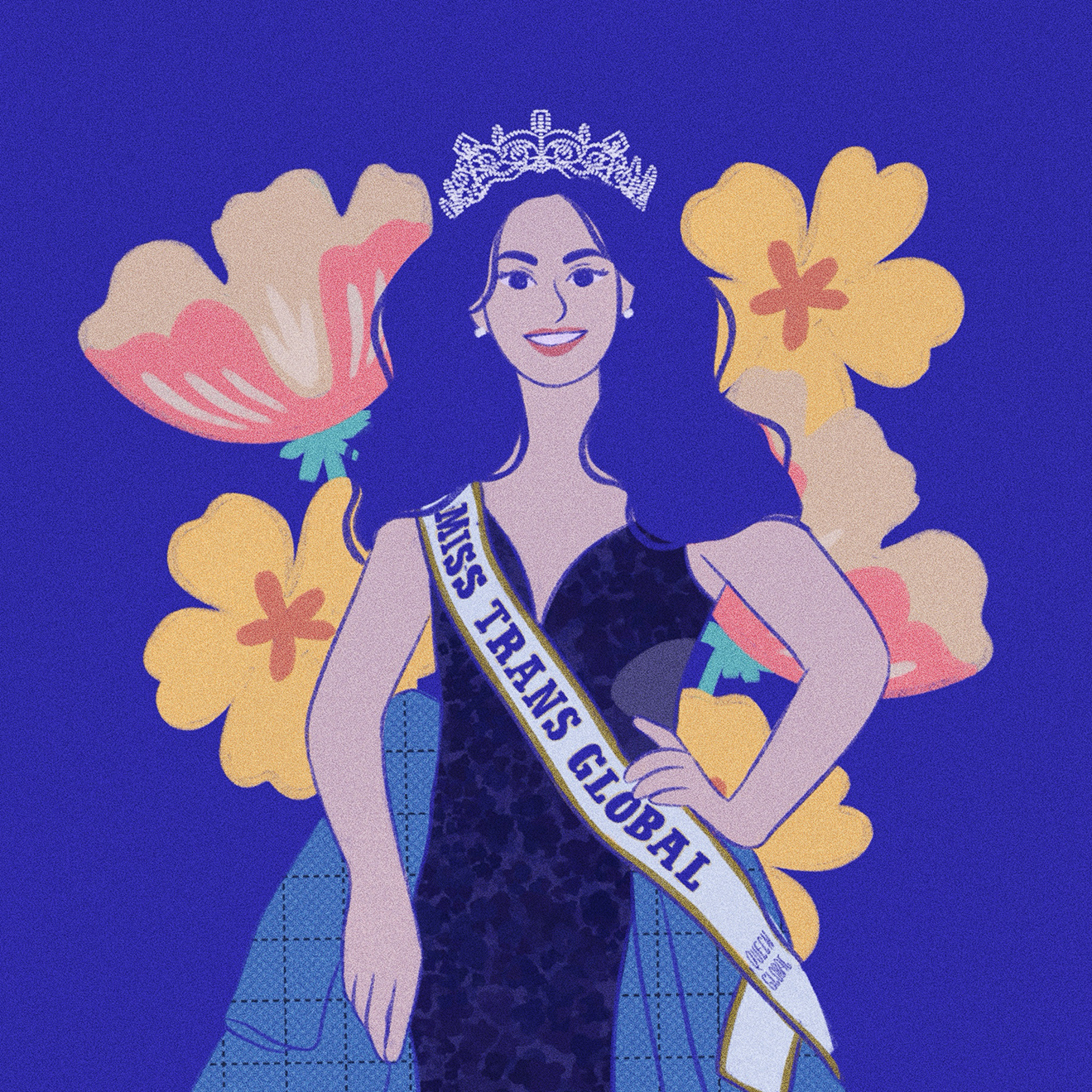
Mela Habijan: Advocating change for freedom, love, and acceptance
by KD Suarez
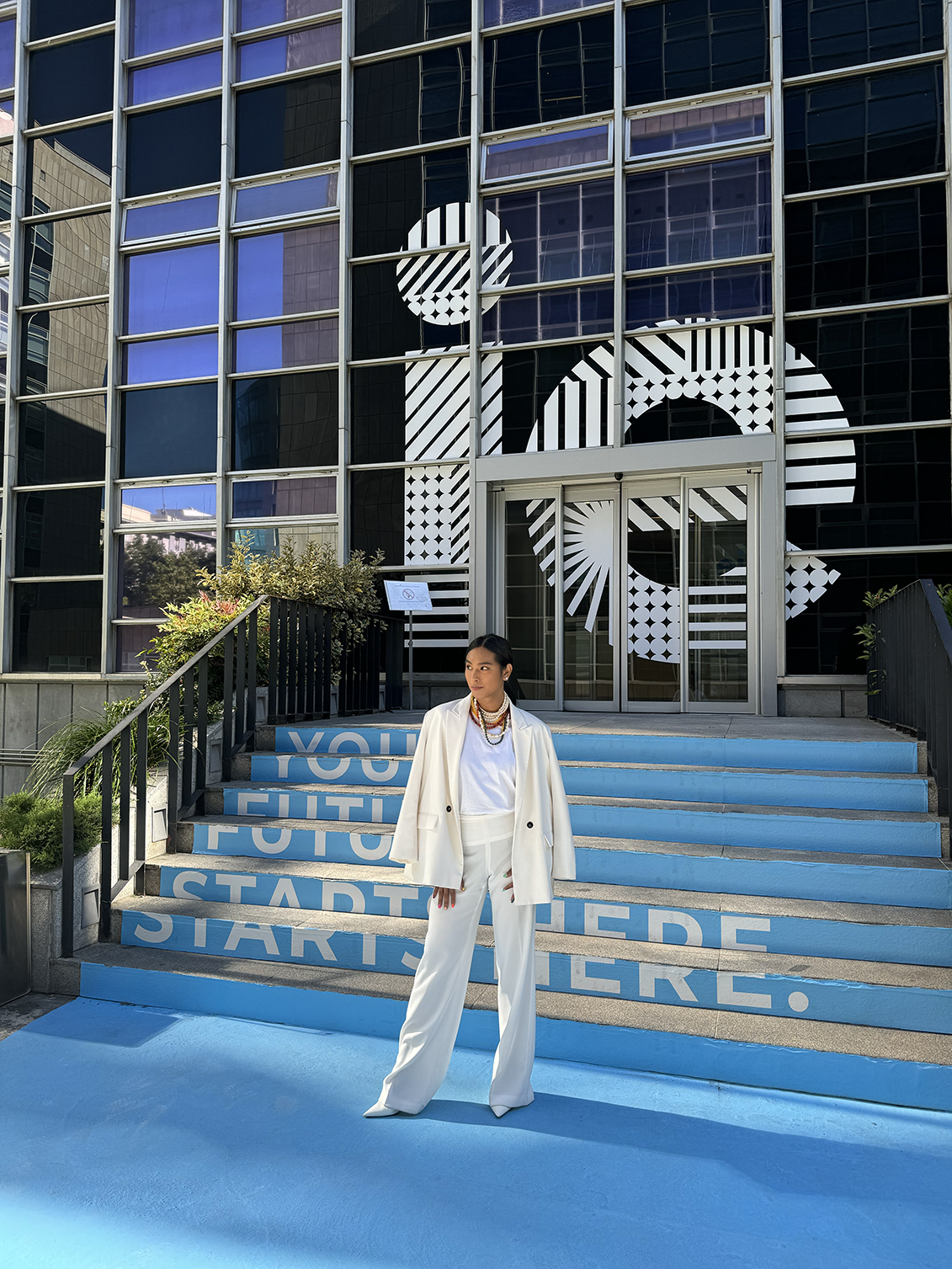
Living in Spain for more than 2 years now, Mela Habijan (HS '04, AB Comm '08) says she has been treasuring the experience living in a country that respects diversity.
During her time studying for her dual-degree MBA-Master in Creative Direction at IE University in Madrid, Habijan -- content creator, influencer, actress, TV host, entrepreneur, one-time politician, and advocate -- enjoyed a kind of acceptance and freedom she has not experienced back home in the Philippines.

"They have laws: anti-discrimination law, they have marriage equality law; they're the second in the world to impose marriage equality law, and they're celebrating their 20th year of that milestone, and they also have a gender recognition law."
"Before I came here, my primary question was ‘my lived name is different from my legal name and I’m still male in my passport. I'm a trans woman. Would you honor that?’ And the university told me, ‘in Spain you are a woman and we will call you Mela.’ So everyone knows me as Miss Mela Habijan," she recalls.
And before she received her diploma, her university asked her if she would like to have her lived name be put in a 'personal' version of her diploma, one not for official records. "For the first time, I will be seeing the name that I want to see [in a document]... they allowed it."
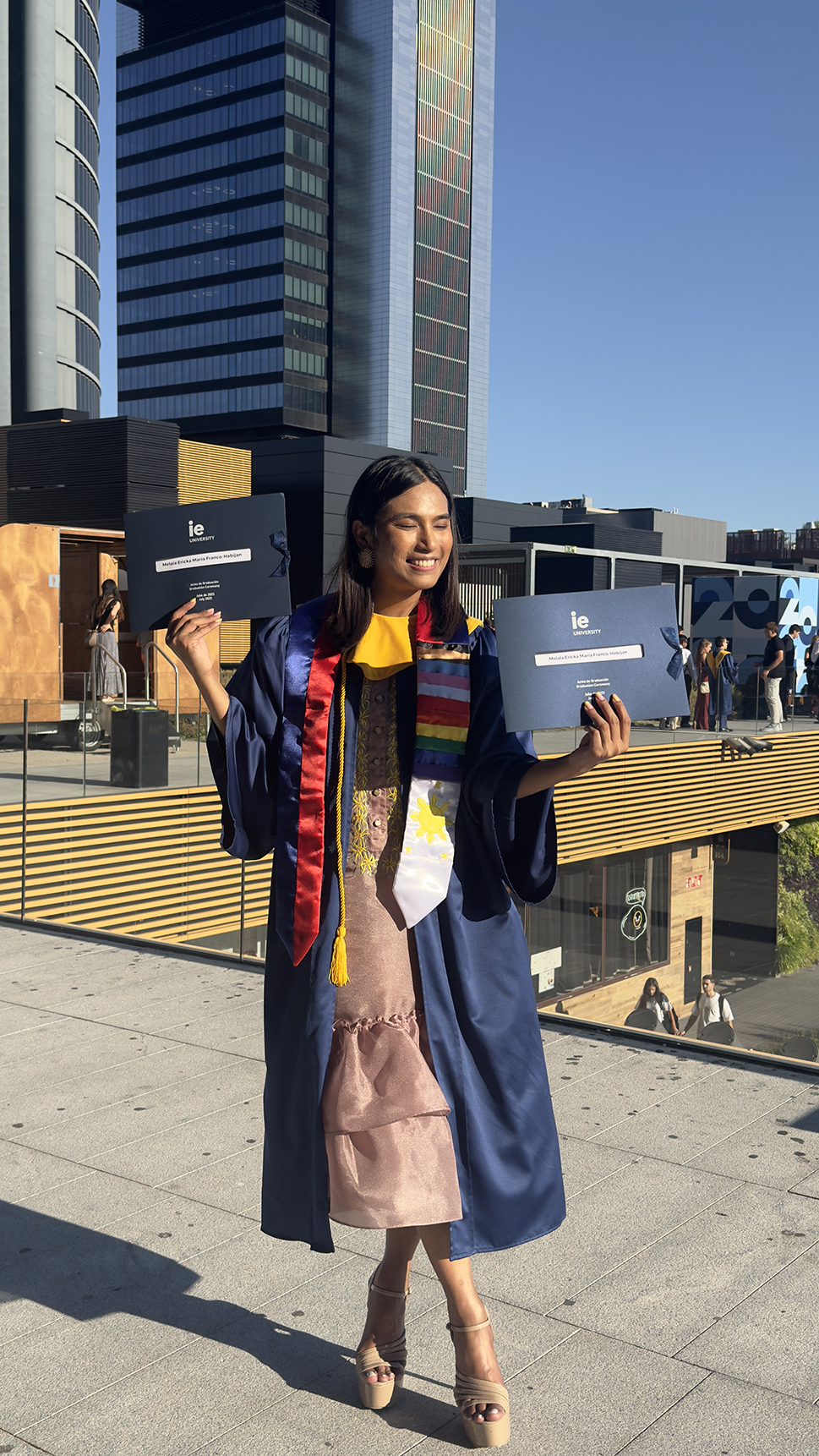
“Pwede pala at posible ka pala na i-honor [ka] for who you are as an individual,” she says.
This also shows that change is possible back in the Philippines: "Nakakalungkot na ang layo [ng kulturang Pilipino], pero patunay din 'yon na puwedeng mangyari [ang pagbabago]," she says. "The roots of Spanish culture is Catholicism [like Filipino culture] but they went on the progressive route."
“If these people can do it, we can do it as a society [also],” she continues. “I guess [Filipinos] are just at the phase in which it's so hard to accept people like us because of the trained traditions, but it can be unlearned because they were able to unlearn it.”
A welcoming community
But it was not in Spain that she first encountered this kind of open, welcoming, and inclusive community, Habijan says. "Ateneo was a ground for me to experience what it's like to live without any judgment."
Having studied in Ateneo de Manila since high school, Habijan says Ateneo gave her the opportunity to be a visible and valuable member of the community.
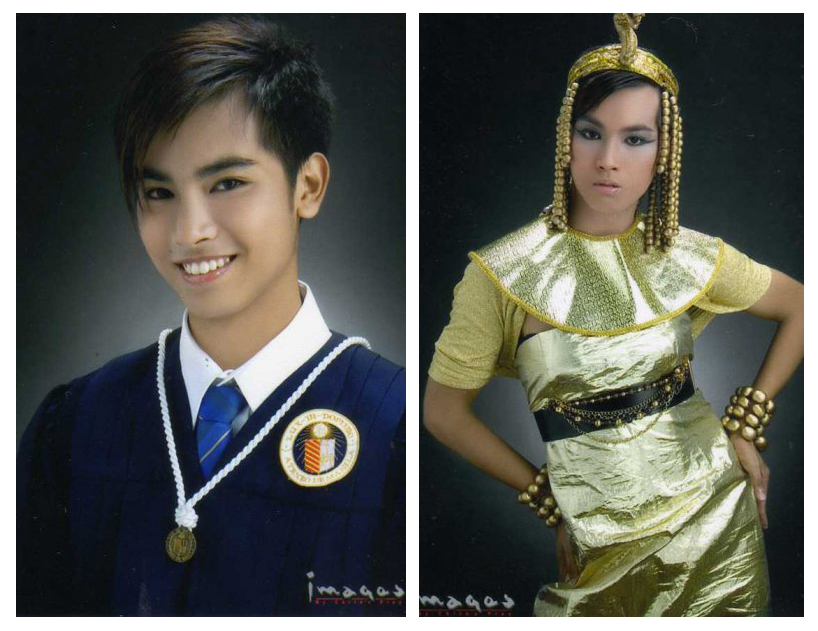
One of her fondest and most valuable memories from her time in Ateneo was the Dollhouse -- a tambayan for and community of LGBT+ students of the then-Loyola Schools.
In a space just beside the University Archives at Faber Hall, the Dollhouse was a fixture of the Ateneo college community for years, where LGBT+ students, their friends, and many other members of the Ateneo community would hang out.
"Iyong space na iyon sa tabi ng Rizal Library [annex], sa tabi ng [Rizal Mini Theater], doon kami nakakatawa ng malakas. Doon kami nakakapagbihis ng kung anong gusto naming damit," she says. "We can just be ourselves in that space. At nadala namin iyon sa classroom, nadala namin iyon sa Sanggu, nadala namin iyon sa [komunidad]."
"For a Catholic university… to allow this space -- kasi ang dali namang sabihin na parang 'hindi iyan puwede' -- 'yong pagyakap nila [sa amin], posible pala iyon," she says.
Visibility, recognition, growth
Members of the Dollhouse community, including herself, were treated just as any other student by the community -- becoming active members and leaders in student orgs, Sanggunian officers, performing in university events, singing in choirs.
"I hosted OrSem; Dollhouse was recognized by sir Rene San Andres before; professors passed by just to say hi," she recalls. "Bitbit ko ‘yong mga ganoong karanasan na sinasabi ko sa sarili ko na posible [ang pagtanggap]."
"Binigyan kami ng space to be visible, so doon pa lang, na-ground na iyong importance ng visibility for us," she explains. "Because if people see us they know that we exist, and if they know that we exist and we can talk to them and we can interact with them, nababago ‘yong mindset."
"Malaki din ‘yong kontribusyon sa kung sino ako ngayon, because I was given the opportunity to be visible in Ateneo," she adds.
Spirituality and faith, she says, is also a gift that Jesuit education has given her. She does not identify as a Catholic anymore, and yet she still says she is "very spiritual" and considers a Jesuit church near her place in Spain as a sanctuary.
Even after graduation, Habijan says she still feels welcomed and included in the Ateneo community, and sees that the institution and community continues to change for the better.
"I received [the alumni birthday greeting] letter from Ateneo bearing [the name] 'Miss Mela Habijan' -- hindi ko naman pinabago 'yong name ko [sa records]," Habijan recalls. "[I thought] 'in fairness to Ateneo, they're starting to unlearn and learn."
"I'm proud of the university that where I came from pushes for this evolution, because it's a testament that faith and gender can be inclusive, and can be intertwined."
Inspiring others to dream
Down from the hill, though, Habijan says reality still hits -- the Philippines, despite being seen as tolerant of minorities including members of the LGBTQIA+ community, is still very conservative and highly judgmental. This is why, as one of the more visible LGBTQIA+ media personalities in the country, she is doing all she can to advocate for fairness, equity, and inclusion.
"What we lacked growing up were figures and role models that allow us to think anything is possible," she explains. "So being in the media as a host, as a content creator and as a writer, I was able to extend the reality that any queer person can become and can realize their dream."
From Boy Abunda to Vice Ganda, she now sees more representation in popular media, as the likes of Sassa Gurl and KaladKaren also are becoming more popular. "We're seeing more diverse figures and looks that can allow children to believe in the power of their dreams. It's important because this empowers... dreamers and not to doubt themselves."
Bridging the gap
Habijan also believes in the power of communication to close the gaps in understanding, and in helping build a non-judgmental and welcoming society.
A few years back, she was invited to speak at a conference of church leaders -- priests and nuns to be exact -- an experience she recalled as "nerve-wracking."
"That... changed my perspective in a sense that they actually needed to see and hear someone experiencing [discrimination]. What it's like to be an LGBTQIA+ person in the Philippines. And through having that space of extending my experience, nagkaroon ng shift in mindset," she says. "It became a way for them to extend that they realized that they needed that encounter so that they can understand."
Habijan says there was no "instant" or "pivotal" moment that led her to be an advocate; she believes it just grew naturally to her, since she has always been outspoken. "I won't just accept what I'm being taught.I will ask questions. I will even challenge [others] through asking questions... So when I'm given a platform, I say my piece, grounded on experiences."
Her brief foray into politics, running for a Marikina City council seat back in 2016 (when she was still known as Erick Habijan), as well as her journey transitioning to womanhood, also helped solidify her resolve to be a communicator and a bridge, open to dialogue and conversation with people from opposing sides.
"If I'm given a platform to speak, I will speak; if I'm given a platform to be visible, I will take that chance -- because I know that in that 5 seconds, in that one minute, in that full page of an article, 'pag may magbasa, may pagkakataon na may ma-shift na mindset."
Amplify voices and expand horizons
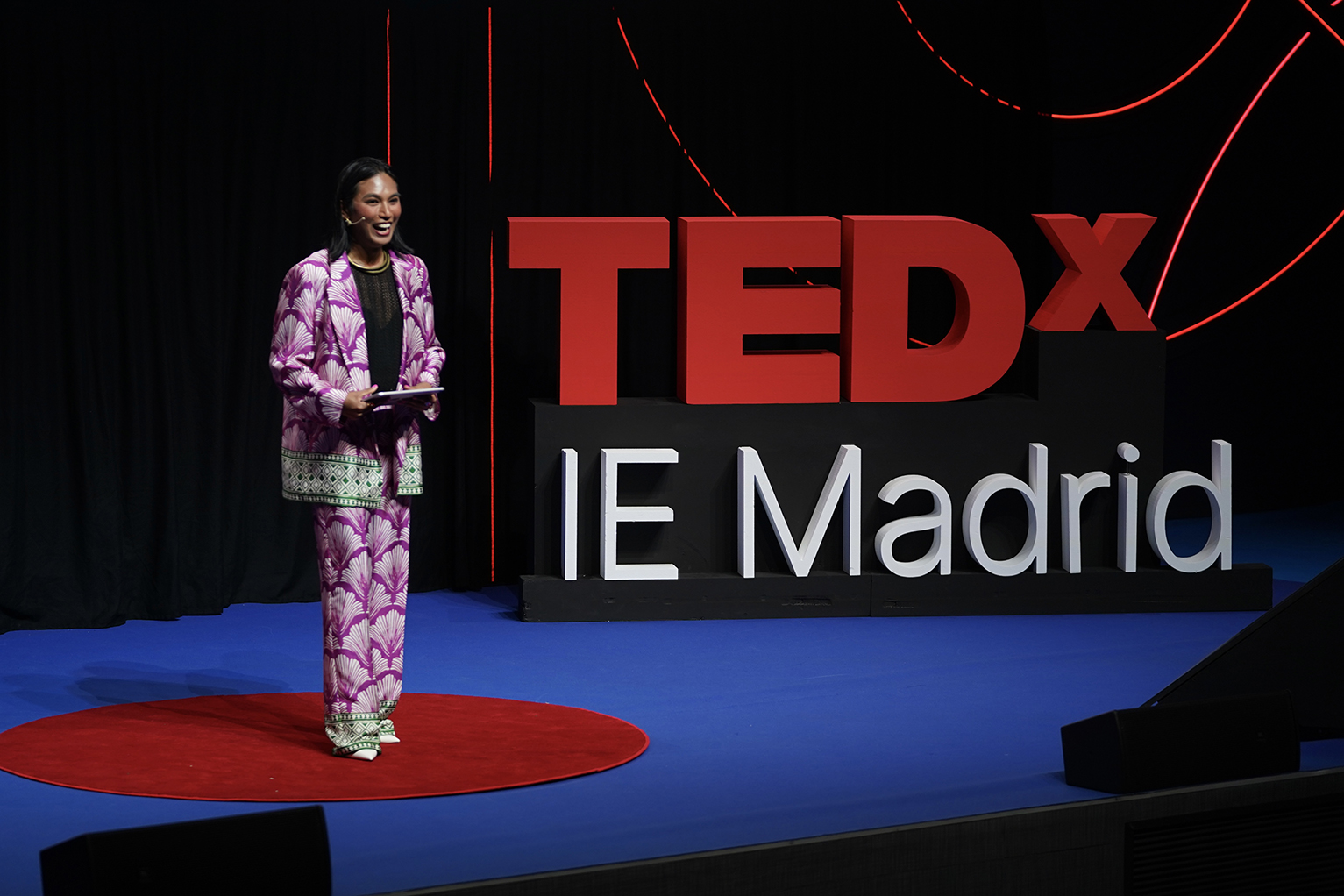
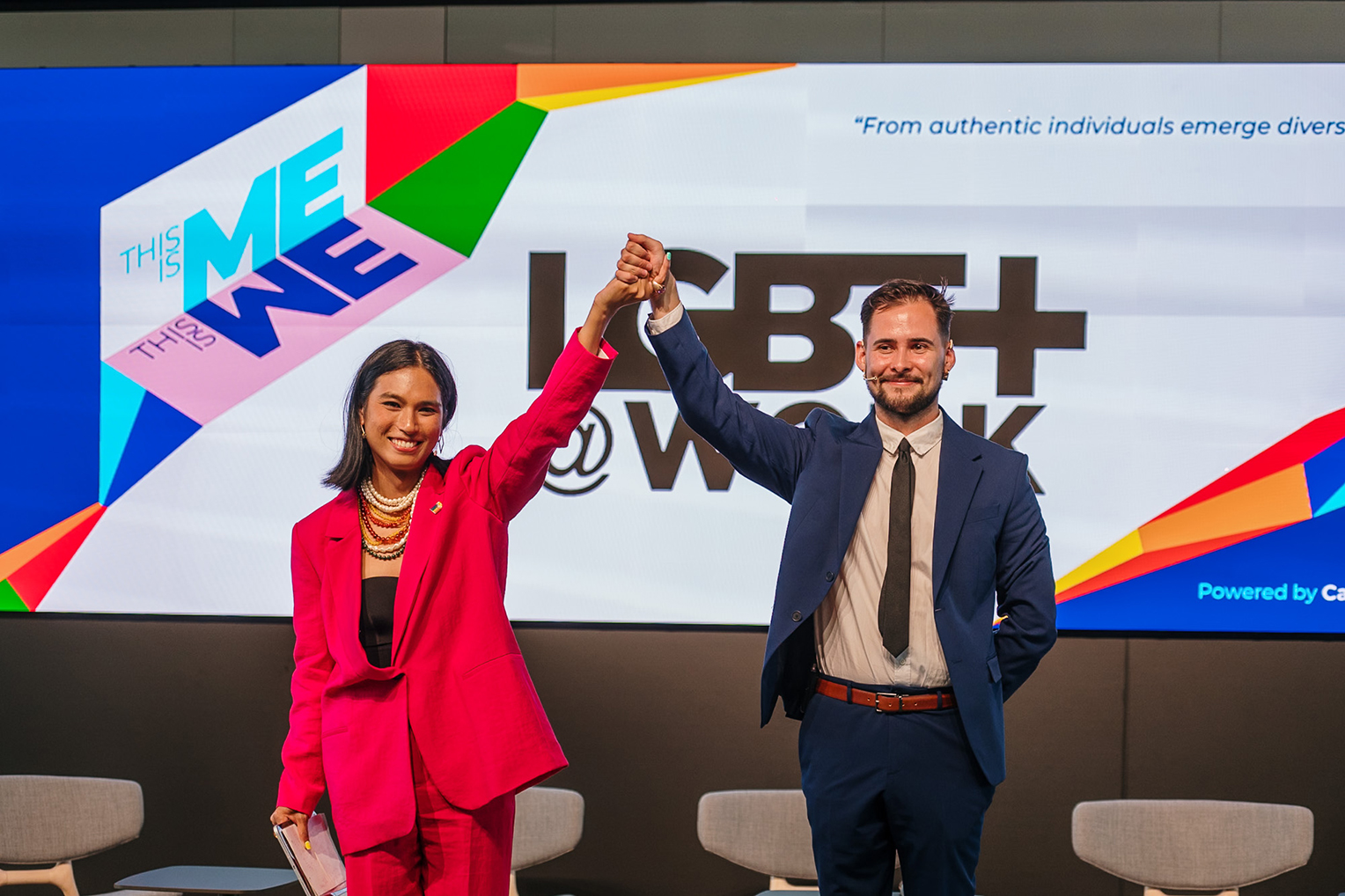
After she completed her master's degree at IE University in Madrid, she chose to stay in Europe to pursue her goal of becoming "the next Oprah."
"Following the footsteps of Oprah will lead me to a path that can allow me to feature voices that are not heard," she explains. "I hope to have that platform in which as people watch, they would expand their horizons into understanding differences and individualities, and at the same time be a source of healing."
This, in turn, is in the hope of inspiring the next generation to further push for an inclusive and equitable world for all. "I'm a millennial and I know how it's like to live in a more conservative society as compared to today. Malayo na ‘yong narating natin pero malayo pa ang kailangan nating lakbayin," she says.
Spain, Habijan says, showed her how a culture that puts forward one's abilities and skills, instead of labels put by social and religious norms, allows people to live their best lives and become productive members of society.
Becoming free to live and love
"Kapag hindi mo na kailangang ipaliwanag ang sarili mo, mas masarap lumipad. Mas madaling abutin ang pangarap kasi walang magdududa sa ‘yo dahil sa pagkatao mo, at ang sarap pala noon," she says. "Because the only thing that you have to prove is your value... your professionalism, your productivity."
People and society will grow "only if we are given spaces to just simply be at peace with who we are, and at the same time where we can showcase our talent and give a valuable contribution to the community," she says.
And moving forward she hopes that her work -- whether as a host, a content creator, an actress, or an advocate -- would help open up minds and hearts to be more welcoming and more loving of people who are different.
And why does she do all this? It all comes from one important Philosophy 101 lesson, under Jope Guevara.
"Sinabi niya noon sa discussion namin... the opposite of love is not hate, it's fear; and when you live in fear, you're not free. The only way for you to become free is to live and love," she recalls.
"That lesson led me to reflecting and discerning who I am as a person... leading me to this advocacy that I want to live in love because I want to be free, in the same manner that I want to be free because I want to live in love."



Published by the
Office of University Development and Alumni Affairs
Ateneo de Manila University
Fr Raymund Benedict "RB" Hizon SJ
Publisher
Rica Bolipata-Santos PhD
Editor-in-Chief
KD Suarez
Editor
Meyanne Plamenio-Cortezano
Franchette Mary Therese Silva
Renée Nuevo
Contributors
Andrea Bautista
Art Director/Graphic Designer
Ateneo alumni can update their information by emailing OUDAA at
alumnirelations@ateneo.edu
Contributions
fabilioh@ateneo.edu
Facebook
facebook.com/AteneoOAR