

Forming leaders, leading reforms: Dr Jennifer Oreta on her vision for the Ateneo School of Government
by Meyanne Plamenio-Cortezano
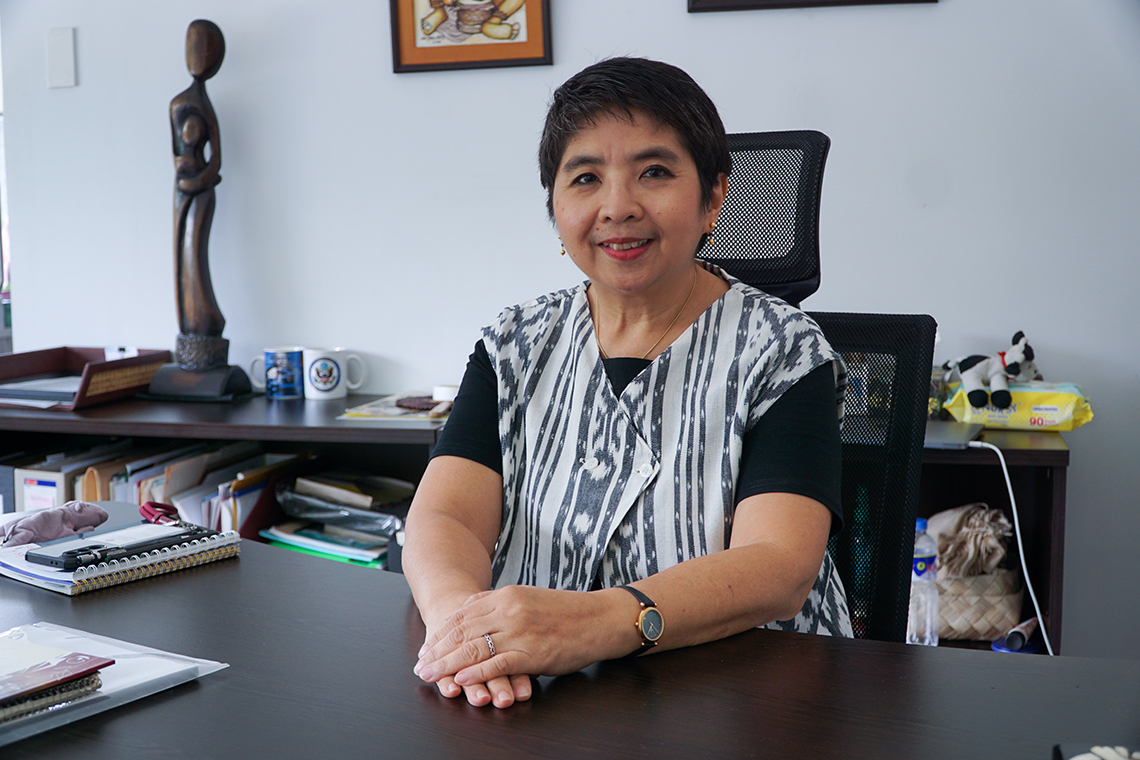
When Dr Jennifer “Apple” Oreta was first invited to lead the Ateneo School of Government (ASOG), her initial reaction was disbelief. “I was surprised,” she admits, recalling the moment she was approached. “I was already preparing for retirement.”
And yet, after a period of discernment, Dr Oreta accepted the nomination, grounded by humility, a deep sense of responsibility, and a lifetime of experience in governance, peacebuilding, and public service. “I may not be the best,” she reflects, “but if I am the right fit at the right time, then maybe the forces in the universe have conspired and made me Dean.”
A Unique School with a Unique Mission
Now at the helm of ASOG, Dean Oreta brings a clear and passionate vision for the school. “ASOG is not like other schools,” she explains. “Our students are government personnel - elected, appointed, and career officials. ASOG is a school, but it is also a mission, an advocacy.”
ASOG’s mission, she emphasizes, is deeply rooted in nation-building. “We want to engage government personnel and convince them to become agents of change inside their respective institutions. We want them to become Ignatian ambassadors - ethical, capable, and committed to reform.”
On the other hand, it is equally important to ensure that institutions are doing what they are supposed to do. “Our institutions are created to standardize processes and prevent potential abuses of power,” Dean Oreta says. “So we direct our efforts in reforming leaders, and in reforming institutions, to make sure that both are committed to ethical leadership and good governance. ”
Leadership Grounded in Real-World Policy Work
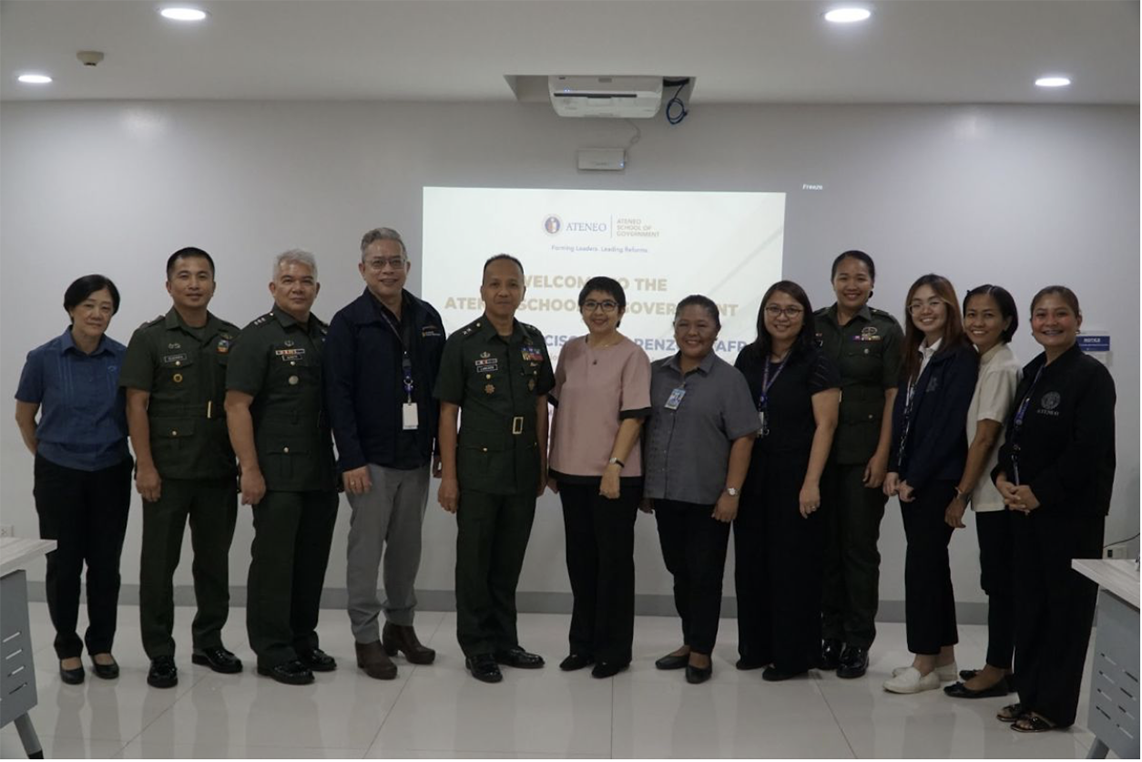
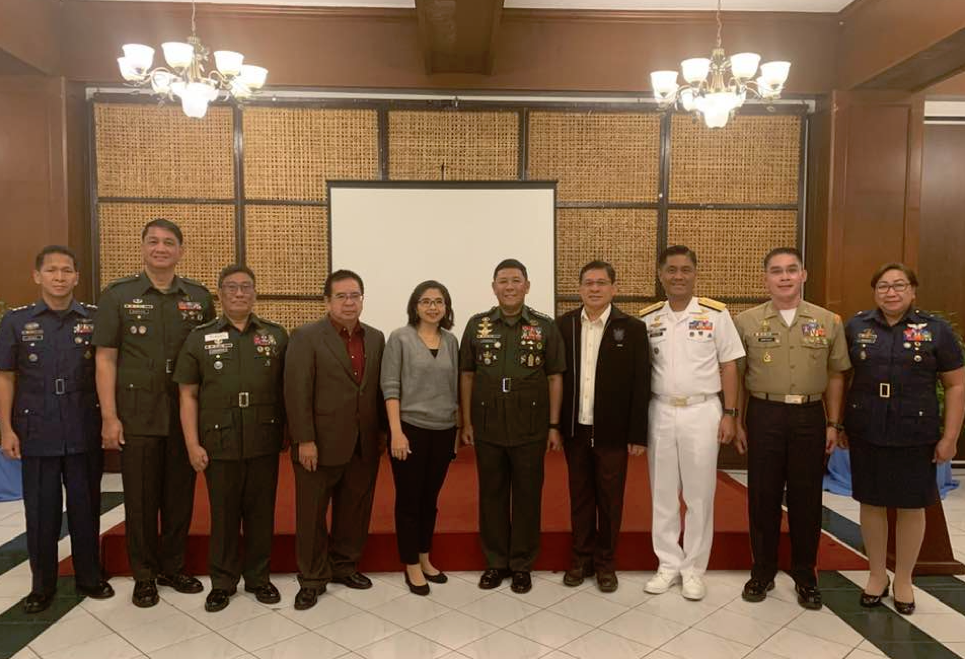
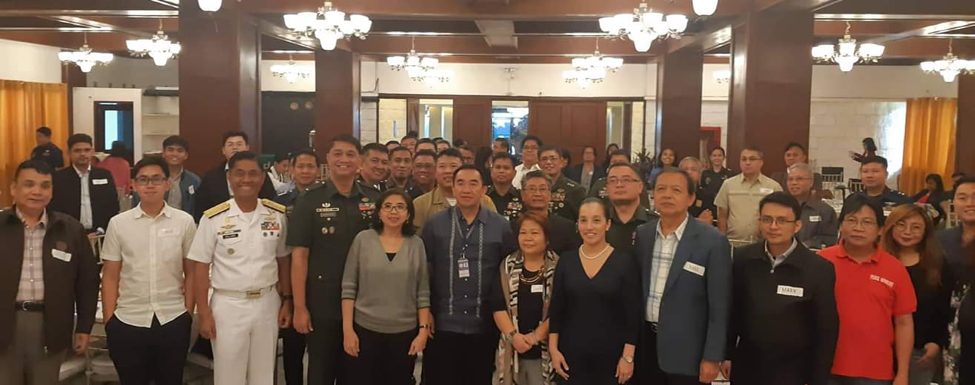
Dean Oreta brings a rare blend of academic insight and government experience to her new role. After serving in the administration of President Benigno “PNoy” Aquino III, she continued working closely with agencies like the AFP, National Security Council, Office of the Presidential Adviser on Peace, Reconciliation, and Unity (OPAPRU), and the DILG. Her work focused on research and policy development, much of it confidential but crucial to reform initiatives.
“Thankfully, many of those I’ve worked with trust me,” she says. “They know I can be a bridge between academic insight and government realities.” Since her appointment, several agencies have reached out to ASOG to co-develop capability-building programs.
Her government experience, she says, will help guide ASOG’s future direction. “The relationships I have with agencies, together with the collective network of ASOG’s faculty with various government institutions, will allow us to develop more nuanced programs. Whether on financial management, leadership, policy development, or strategic communication, we can offer or customize programs based on what’s needed by partner agencies to make their services better. ”
The Challenge and Role of Leadership in a Polarized Time
Dean Oreta does not shy away from discussing the political complexities of today. “During PNoy’s time, there was a clear commitment to ethics in governance,” she recalls. “Many young people, including many Ateneo alumni, joined the government because they believed in that reform agenda.”
But the political climate has since shifted. “We became polarized,” she notes. “Some defended the current administration, others remain critical. In the political discursive space, ASOG must be an institution that provides clarity and help people understand the issues with level-headed, critical lens, and offer constructive views and ways forward .”
Dean Oreta sees this duality as essential: to remain academically rigorous and critical, but at the same time being solutions-oriented. “I tell my students: if all you do is criticize without offering solutions or recommendations, that’s an irresponsible kind of activism. True leadership offers alternatives. Responsible engagement means pointing out what’s wrong, but also recommending what can be done better.”
Women in Leadership and Inclusive Governance
As someone who has long worked on gender and peacebuilding, Dean Oreta is keen to expand ASOG’s efforts to include more diverse voices. “I realized ASOG needed a stronger program on women in leadership. We’ll be developing courses and case studies on women in government, legislators, mayors, local officials, and how they can use their platforms to create space for others.”
Beyond curriculum, she’s committed to embedding gender equity in ASOG’s culture, from policies to physical space. Gender sensitivity needs to be part of our environment, not just our lectures.”
Defining the Filipino Ignatian Leader
Perhaps Dean Oreta’s most ambitious vision is to help define what it truly means to be a Filipino Ignatian leader in public service.
“Most leadership literature comes from the West,” she points out. “But what about our own? Who is the Filipino Ignatian public servant? What does that look like?”
She wants to collaborate with other Ateneo units to craft a foundational document, a guiding framework rooted in Filipino values, Ignatian spirituality, and public-servant leadership model. “That will be our anchor.”
She cites public figures like Pasig Mayor Vico Sotto and Senator Risa Hontiveros, not just for their effectiveness, but for how their leadership styles align with deeply rooted Filipino and Ignatian values. “They lead with integrity and accountability. They don’t apologize for who they are. They are clear on what matters most - the people’s welfare. That’s the kind of leadership we want to promote and nurture.”
A Call to Alumni: Come Home to ASOG
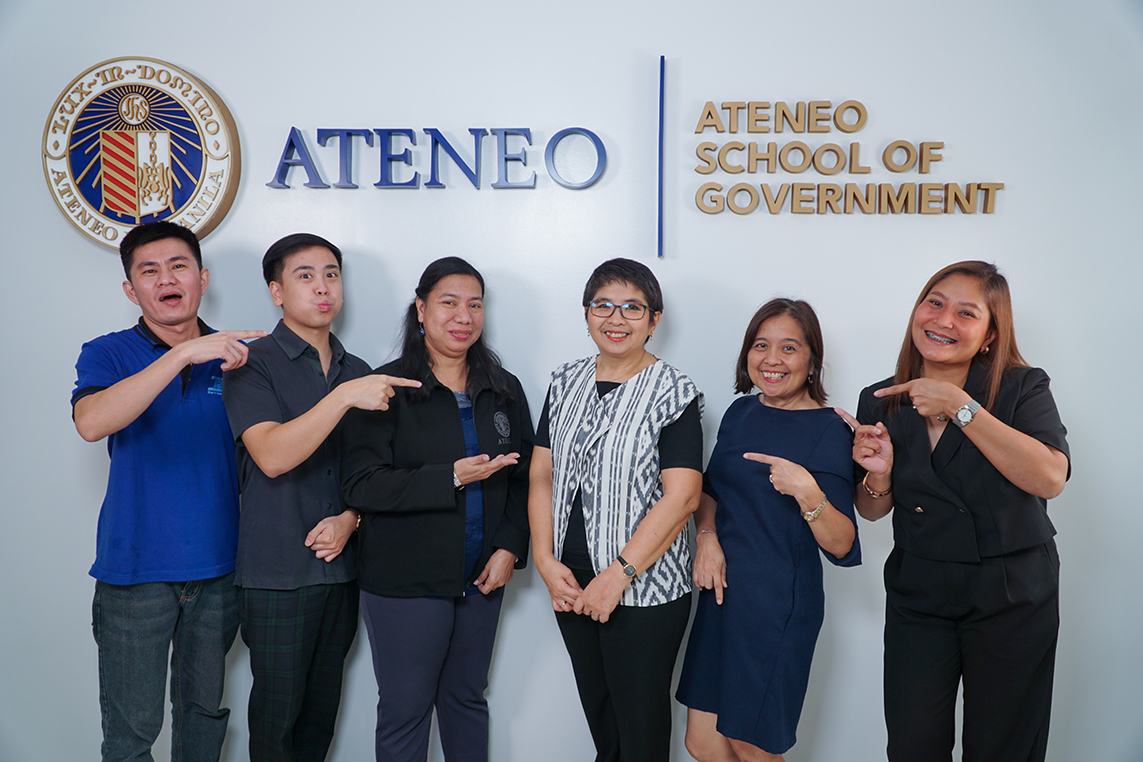
As she begins this new chapter, Dean Oreta has a heartfelt message for Ateneo alumni, especially those in public service:
“We want ASOG to be your home. When I joined the government, I often wished I could go somewhere where I could talk to someone about the ethical dilemmas that public officials are often faced with. I want ASOG to be that place. A sanctuary where discussions and real talk can be had, where genuine desire for clarity is the goal. ”
She envisions a future where alumni would return to ASOG not just for training, but for conversation, reflection, and renewal.
“We want our alumni to feel that this is where they belong, where they can think through hard problems together.”
Dean Jennifer Oreta’s appointment marks both a continuation and a transformation. Rooted in ASOG’s founding mission to form ethical leaders for the nation, she brings with her a fresh yet deeply grounded perspective, one that bridges the classroom and the capitol, the personal and the political, the Ignatian and the Filipino.
In her words, “Come home. Come back to ASOG.”



Published by the
Office of University Development and Alumni Affairs
Ateneo de Manila University
Fr Raymund Benedict "RB" Hizon SJ
Publisher
Rica Bolipata-Santos PhD
Editor-in-Chief
KD Suarez
Editor
Meyanne Plamenio-Cortezano
Franchette Mary Therese Silva
Renée Nuevo
Contributors
Andrea Bautista
Art Director/Graphic Designer
Ateneo alumni can update their information by emailing OUDAA at
alumnirelations@ateneo.edu
Contributions
fabilioh@ateneo.edu
Facebook
facebook.com/AteneoOAR