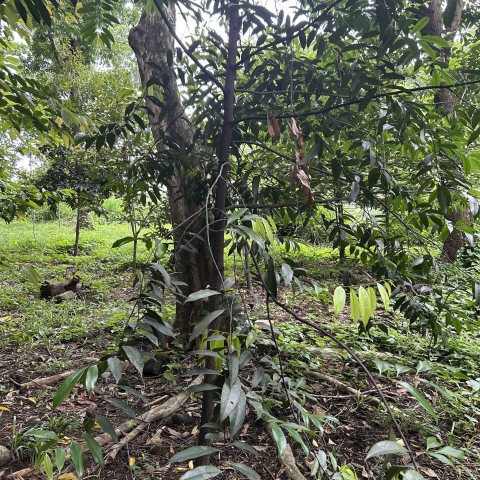
Shorea malibato, also known as Yakal-malibato, is a dipterocarp species endemic to the Philippines.
A large tree. The tree is a samara with 3 large membranous wings and 2 shorter wings that are yellow once dry. The fruit itself is hairy with sparse gray pubescence and small, it is described as being “almost round” measuring 6 to 7 mm long and 5 to 7 mm wide. Leaves are glabrous on both surfaces and lanceolate with acuminate apex and a subcuneate base, measure 6 to 14 cm long and 2.5 to 5.5 cm wide. Leaf morphology differs based on height, leaves higher up the tree appear more yellowish than those below. Each leaf has around 14 pairs of secondary nerves and the tertiary nerves are parallel and reticulate. Petioles of measure around 12 to 15 mm long, display grayish pubescence similar to those in the fruit. Although found rarely in the wild, this tall tree grows along steep slopes in lowland forests (0-500 masl). It can be found in Luzon (Quezon & Camarines), Visayas (Leyte) and Mindanao (Zamboanga & Agusan del Norte). Known to fruit in October (Zamboanga). Yakal-malibato can be planted as windbreaks and to control soil erosion. The wood is used for high-grade construction such as bridges and wharves. Dipterocarp seeds are recalcitrant and easily lose viability when dried or stored long. After cutting the wings, the seeds should be planted in a potting medium as soon as possible.