

SDG 12: Responsible Consumption and Production
Highlights
5R Waste Management Program: Advancing the 3Rs in Campus Sustainability
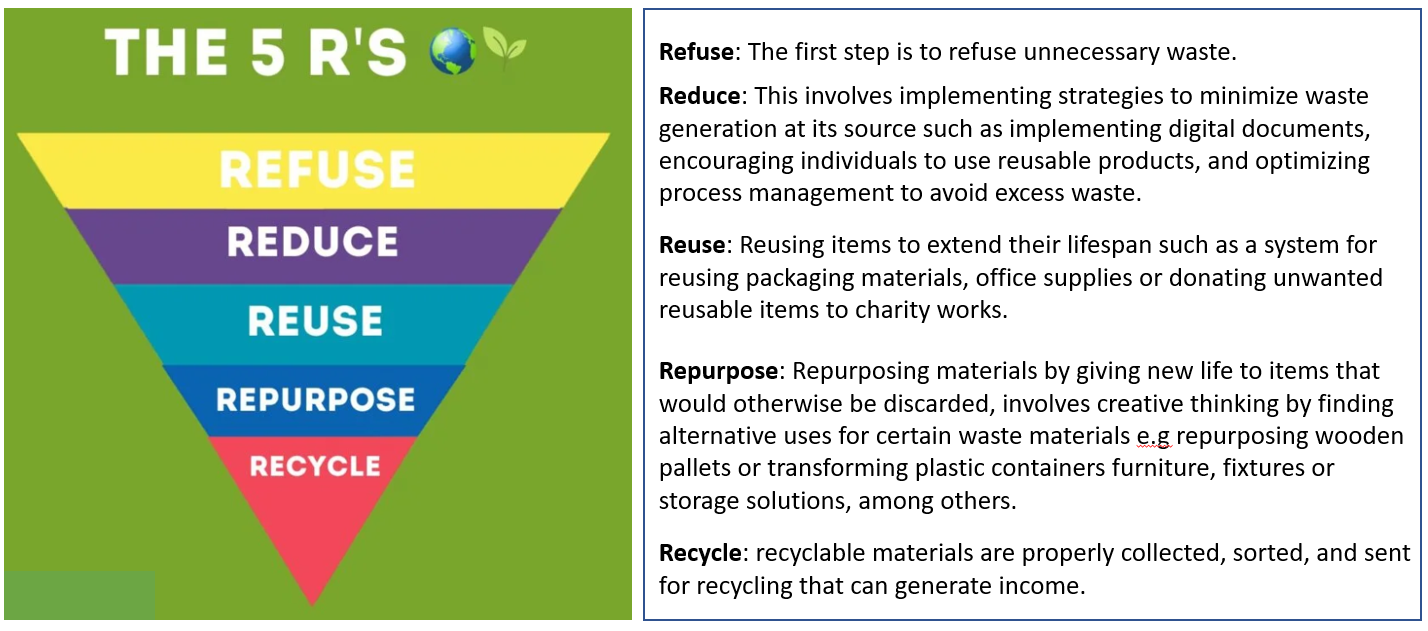
Ateneo de Manila University has advanced beyond the traditional 3R framework—Reduce, Reuse, Recycle—toward a comprehensive 5R Waste Management Program that integrates Refuse and Recover as part of its sustainability strategy. Implemented through collaboration among the Ateneo Institute of Sustainability (AIS), the Central Facilities Management Office (CFMO), and the Custodial Services Group (CSG), the University has achieved more than 75 percent implementation of its 3R program.
Key Practices
Institutional Integration and Strategic Planning
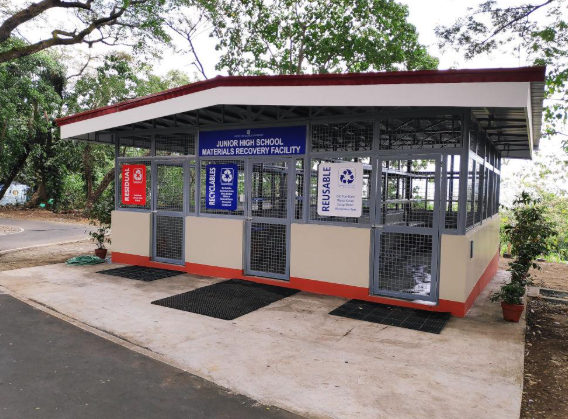
The University’s waste management system is anchored in strategic sustainability planning. The 5Rs are embedded in the Campus Sustainability Master Plan, supported by the Office of Environmental and Social Concerns (OESC) and CFMO’s Grounds, Trees, and Waste Management Section (GTWMS). Each unit’s Facilities Management and Safety Office implements localized Materials Recovery Facilities (MRFs), ensuring decentralized yet coordinated waste segregation and tracking.
Waste Reduction and Segregation at Source
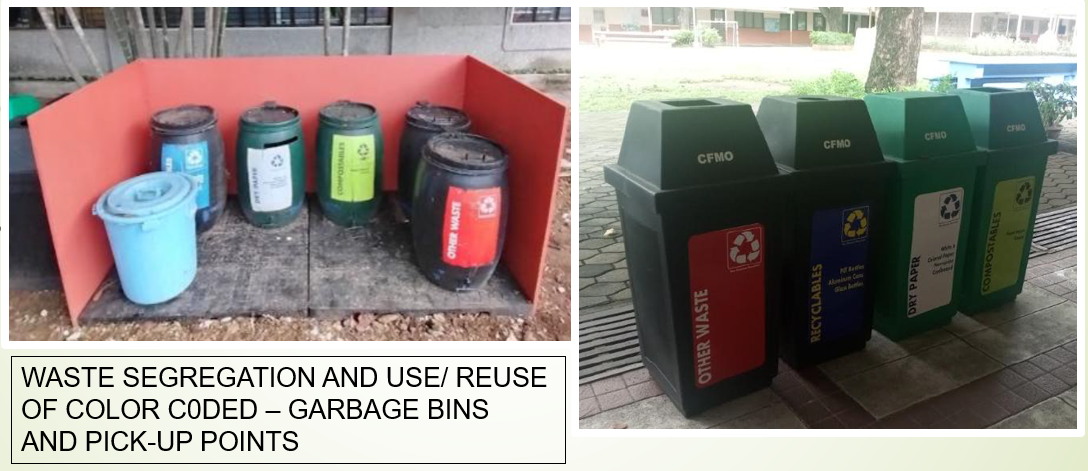
Ateneo follows Ecological Solid Waste Management (ESWM) principles, emphasizing waste minimization and proper segregation at source. Distinctly shaped and color-coded bins guide users to dispose of recyclables, compostables, and residuals appropriately. Unit-based MRFs ensure that recyclable paper, plastics, and e-waste are recovered and endorsed to accredited recyclers, with income shared among maintenance staff, providing both ecological and social incentives.
Reuse and Resource Recovery
Construction debris, tree cuttings, and other reusable materials are repurposed within campus—such as converting logs into benches or slabs into pathways. Organic waste from cafeterias and yard waste are composted or processed through vermicomposting using African Nightcrawlers, generating organic fertilizer for campus gardens. In 2025, 30 percent of the University’s 95.524 tons of organic waste was treated on campus and reused for landscaping and soil enrichment.
Reducing Single-Use Plastics and Paper
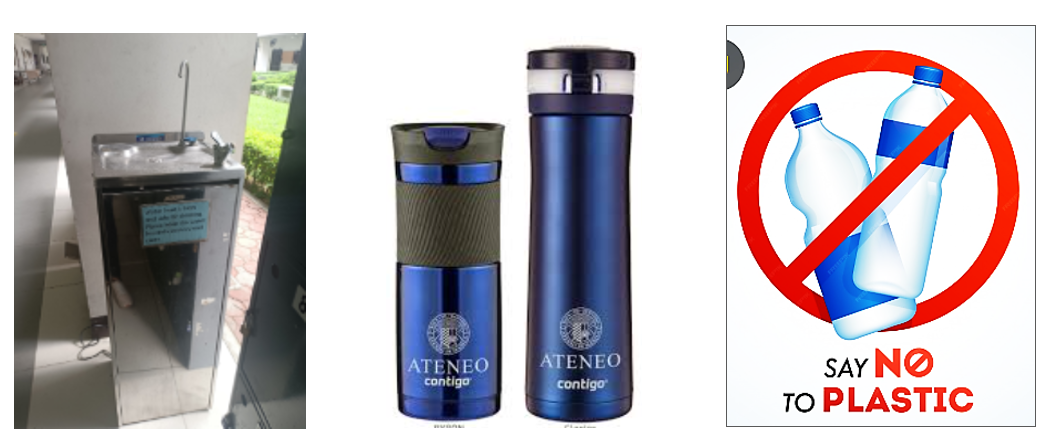
Through the Ateneo Food Packaging Primer and No to Single-Use Plastics (NTSUP) campaign, the University promotes the use of reusable food containers, bottles, and tumblers. Policies such as BYOB (Bring Your Own Baon/Bag) and CLAYGO (Clean As You Go) reinforce behavioral change, while administrative offices adopt paperless operations through digital documentation systems. Collectively, these programs have reduced the University’s annual paper and plastic waste by over 15 percent between 2024 and 2025.
Education, Training, and Awareness
Waste education is integral to the Ateneo experience. All new students and employees undergo orientation on proper waste management, while continuous campaigns, workshops, and signage reinforce responsible habits. Waste management principles are also integrated into the curriculum across levels, from basic education to environmental science and sustainability management programs.
ICT-Based Waste Monitoring and Evaluation
Ateneo employs ICT tools and waste audit software to monitor collection, recycling rates, and MRF operations. The 5R Strategy is assessed annually using data analytics and feedback systems, with the University targeting a 50 percent waste reduction by 2030. This digital integration enhances accountability and aligns operational practices with measurable sustainability outcomes.
Impact and Alignment with the SDGs
Ateneo’s waste management program supports at least seven Sustainable Development Goals (SDGs)—including SDG 3 (Health), SDG 6 (Clean Water), SDG 11 (Sustainable Cities), SDG 12 (Responsible Consumption), and SDG 13 (Climate Action). Its multi-stakeholder model of recycling, composting, education, and policy enforcement demonstrates a circular economy approach embedded in institutional governance and culture.
Ateneo Aligns Financial Policies with Sustainability Principles
Ateneo de Manila University is aligning its financial systems with sustainability and Catholic social principles through two key frameworks: the Laudato Si' Plan 2022-2029 and the Sustainable University Master Plan.
The Laudato Si’ Plan calls for the integration of Catholic, green, and sustainable investing into the University’s investment principles and criteria. In parallel, the Sustainable University Master Plan states that financial decisions and operations are guided by integral ecology and sustainability, and that these are incorporated into the University’s Investment Policy Statement.
Together, these frameworks show a consistent approach to embedding sustainability considerations into Ateneo’s financial policies and practices.