

SDG 6: Clean Water and Sanitation
Highlights
Water: From Conservation to Circular Use
Conservation Program: Plan–Build–Behave
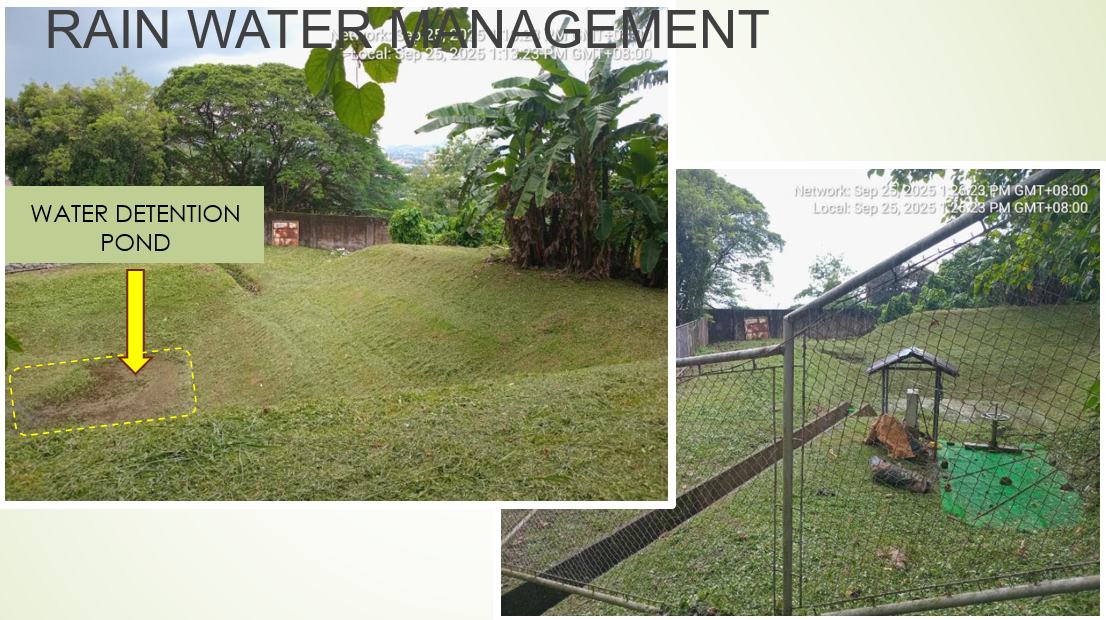
Submeters and daily readings guide unit feedback; leak detection and pipe relining curb losses; water-efficient fixtures (dual-flush WCs, aerated taps) reduce demand; and nature-based systems (rainwater harvesting, detention ponds, porous pavers) slow runoff and recharge groundwater.
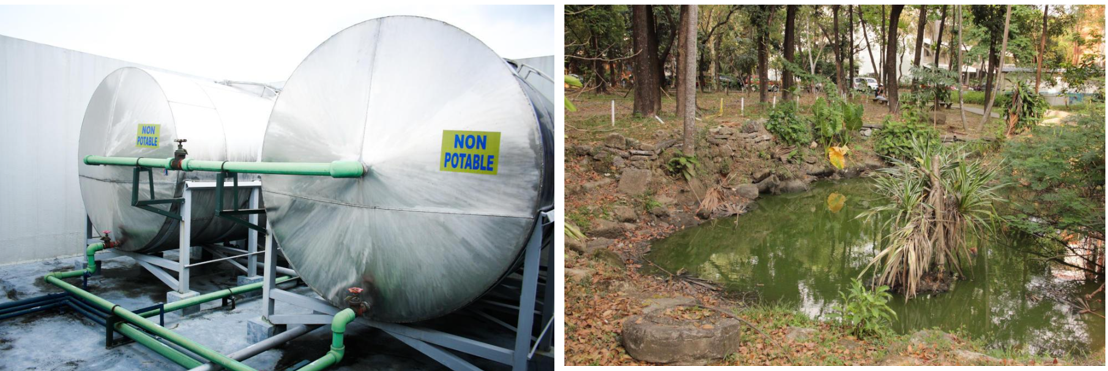
Recycling and Reuse: Closing the Loop
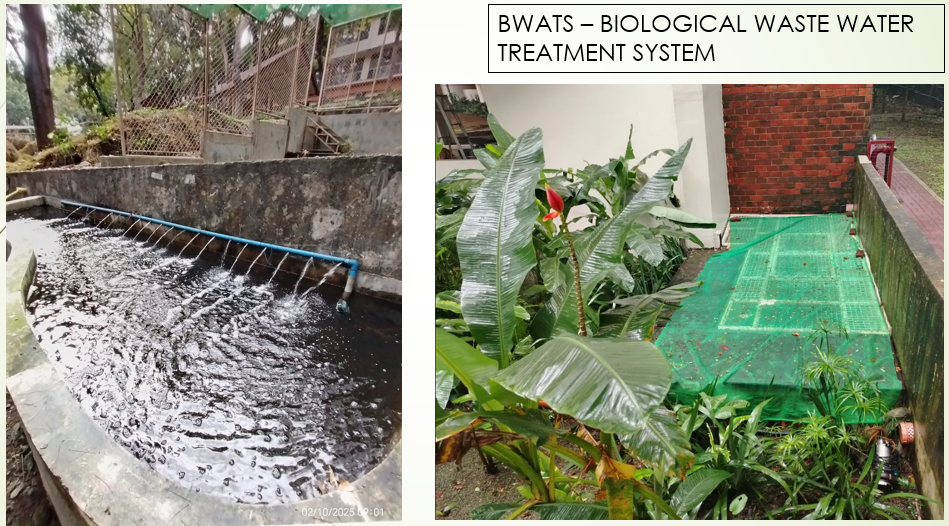
Campus DEWATS and BWATS use aerobic/anaerobic reactors, reed beds, and polishing ponds to meet effluent standards. Treated water irrigates green spaces and cleans walkways and driveways. Rainwater harvested at New Rizal Library, Cervini Cafeteria, Areté, and the International Residence Halls supports toilet flushing and grounds care.
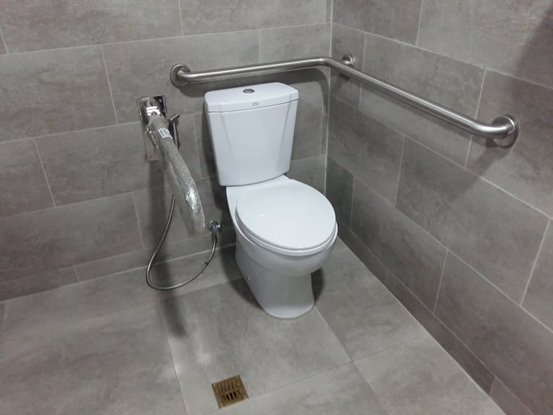
Efficient Appliances: End-Use Efficiency
Current verified data for water closets show 930 of 1,868 units are dual-flush (≈49.79%), placing adoption within the 40–60 percent band and delivering measurable conservation at source.
Treated-Water Consumption: Smart Substitution
Reuse of treated wastewater and captured rainwater offsets potable demand for irrigation, cleaning, and toilet flushing, particularly in buildings with dedicated harvesting systems.
Pollution Control and Compliance: Protecting Receiving Waters
Regular sampling at discharge points, compliance with the Philippine Clean Water Act (RA 9275), LLDA permitting, and routine Self-Monitoring and Compliance Monitoring Reports safeguard water quality. Integrity checks and the campus Sewage Treatment Plant reinforce controls.
ICT-Enabled Management: Data to Decisions
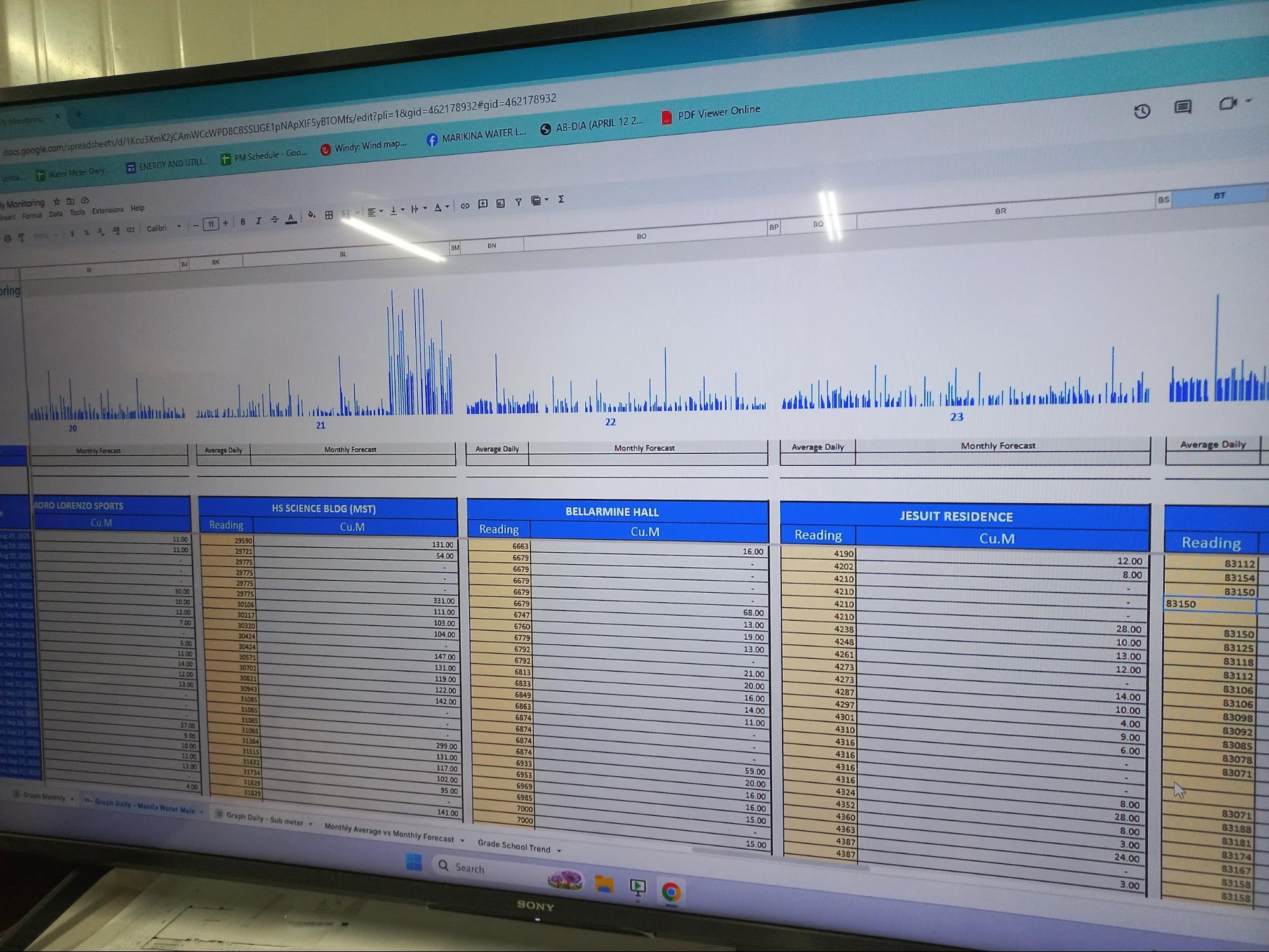
CFMO maintains spreadsheets and dashboards for meter readings, trend graphs, variance analysis, and issue flagging. Data inform repairs, fixture retrofits, and irrigation schedules. Community engagement (Green Nudges, student projects, unit briefings) sustains everyday conservation behaviors.
Off-Campus Water Conservation Support: Ateneo–Boston College Partnership in Candaba

Ateneo de Manila University is extending its sustainability mission beyond campus through a continuing partnership with Boston College, working closely with farming and school communities in Candaba, Pampanga. In early 2024, the project introduced a range of water-smart, solar-powered technologies designed to help farmers and students use water more efficiently while improving crop productivity.
Water-Smart Technologies in the Field
The initiative brought in practical tools like water level and wind sensors for smarter irrigation, a portable NPK sensor for precision fertilization, and an aquaponics system to show how food can be grown with less water. Farmers also benefited from a blue LED black bug trap and a rice seed scatterer to protect crops and make planting more efficient. All these devices are powered by solar-charged lithium-ion batteries, making them reliable even off-grid.
Community Ownership and Training
In June and July 2024, the Ateneo Innovation Center (AIC) led workshops at Tagulod High School and in Salapungan that engaged students, teachers, parents, farmers, and local officials. These sessions included live demonstrations, open feedback, and hands-on training to ensure that the technologies are now locally managed and adapted to the community’s needs.
Building Toward 2025
Encouraged by strong community support, Ateneo and Boston College will continue the project in 2025, expanding training and technical exchanges. The goal is to help farmers build resilience, practice water conservation, and secure sustainable livelihoods for their families.
For more information read https://www.ateneo.edu/sose/aic
Ateneo Community Actively Promotes Conscious Water Usage on Campus
As the El Niño phenomenon continues to bring rising temperatures, prolonged dry spells, and increasing demand for water, Ateneo de Manila University has strengthened its commitment to responsible water use on campus. Each year, the Office of the Central Facilities Management Office (CFMO), through its Director, Arch. Michael Canlas, issues a community-wide reminder to practice conscious water conservation as part of the university’s sustainability efforts and its broader Laudato Si’ Ateneo commitment to integral ecology.
Sustainable Irrigation Practices
Irrigation remains one of the most significant uses of water on campus. To reduce reliance on potable water, Ateneo encourages the use of recycled water from its decentralized and biological wastewater treatment systems (DEWATS and BWATS) for plant and turf irrigation. Ground sprinkler systems are used efficiently, while mulching is applied around trees and exposed soil to preserve moisture. Plant watering is also scheduled during cooler hours—early morning or late evening—to minimize evaporation.
Maximizing Natural and Alternative Water Sources
The university optimizes the use of rainwater harvesting systems, creeks, and open canals as alternative water sources. These resources are used for flushing toilets, irrigating green spaces, cleaning grounds, and other non-potable needs, reducing pressure on the potable water supply.
Everyday Water-Saving Practices
Inside campus facilities, simple but effective water-saving techniques are promoted. Students, faculty, and staff are reminded to use buckets instead of hoses for cleaning and plant watering, to promptly report and repair leaks, and to make use of the half-flush option in dual-flush toilets. Housekeeping services are guided by the same principles to further minimize waste.
Mindful Daily Habits
The university also emphasizes the importance of avoiding continuous water flow when performing everyday tasks such as washing hands or cleaning utensils. By adjusting taps to the needed flow and amount, community members contribute to significant savings.
A Call to Action Beyond Campus
Ateneo extends this call for water stewardship beyond its campus borders. The community is encouraged to bring these conservation habits into their homes and daily lives, underscoring that small, mindful changes in water use can collectively make a lasting impact.
Safe Drinking Water on Ateneo Campus
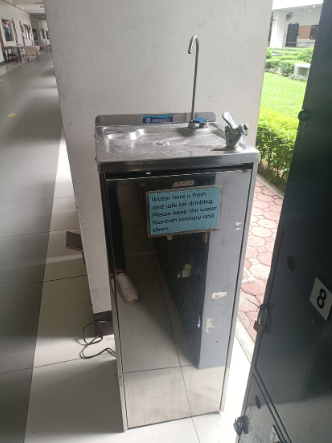
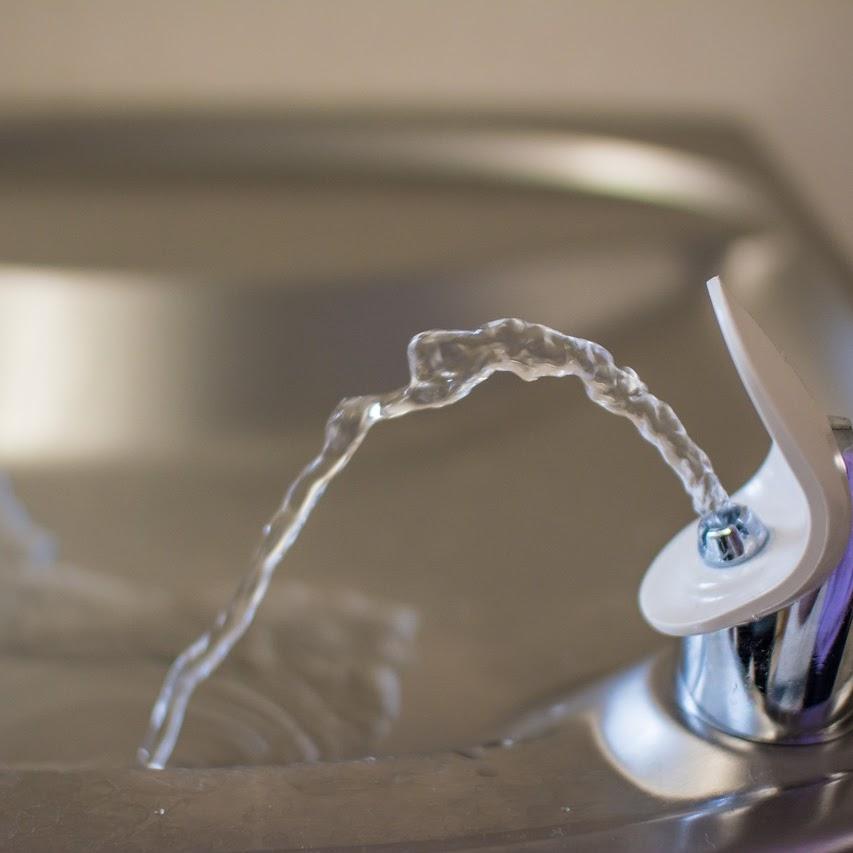
Ateneo provides safe drinking water that mainly comes from two sources: drinking water fountains and purified water dispensers. Drinking fountains are connected to the main water system, and are equipped with a 5-micron filter and a UV light disinfection system ensuring bacteria and virus free drinking water.
The Central Facilities Management Office (CFMO) maintains the drinking fountains. It follows a schedule for cleaning and replacing filters, and for checking UV lights. Further to this, Department of Health (DOH)-compliant outsourced providers supply the University’s purified water dispensers.
 |
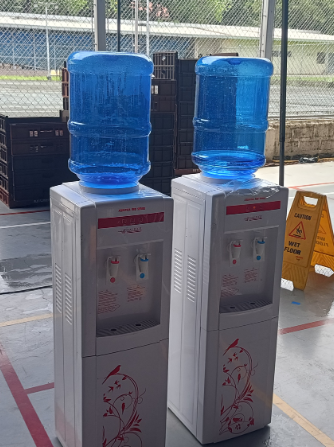 |
Various campuses have installed the primary water sources: The Loyola Heights campus has a total of 51 drinking fountains and 60 water dispensers; additionally, the University’s professional schools campuses maintain 11 drinking fountains and 13 water dispensers.
Ateneo ensures regular monthly testing for microbial quality, while guaranteeing compliance with the 2017 Philippine National Standards for Drinking Water (PNSDW). To ensure effective access to safe drinking water, Ateneo will embark on bridging the gap in the water facility and user ratio in most of its campuses.
Ateneo Ensures Safe Drinking Water: 2023-2024 Potability Report
The Central Facilities Management Office (CFMO) and the Office for Food Safety and Quality Assurance (OFSQA) collaborate to ensure the water on Ateneo de Manila University campuses is safe. The University was able to comply with the 2017 Philippine National Standards for Drinking Water (PNSDW 2017) for the SY 2023-24.
Water Quality Examination
A physicochemical study was carried out at 12 sampling locations in November 2023, and all samples met the requirements, indicating four years in a row of 100% compliance. Microbial tests were carried out at a total of 218 sampling locations in November 2023 and May 2024. In November, 81% of samples passed at first; following corrective measures, this percentage increased to 97%. The pass rate was 71% in May, but it increased to 93% after additional steps. Water stagnation due to limited operations during these months caused a drop in compliance.
Continued Initiatives
To address the issues, OFSQA is implementing rigorous remedial measures, ongoing maintenance, and monthly testing for sites that don't meet the criteria. The institution also imposes administrative restrictions, like limiting non-compliant water sources and offering substitutes for potable water.
Ateneo de Manila University remains dedicated to providing its community with clean drinking water, and it is working hard to uphold and enhance stringent water quality regulations.
Ensuring Water Safety and Quality: Ateneo de Manila University's Comprehensive Testing and Monitoring Program
Ateneo de Manila University ensures the safety and quality of its potable water supply through a comprehensive Testing Quality Control Plan, following the Philippine National Standards for Drinking Water (PNSDW) 2017. To protect the health of the campus population, the program analyzes a range of characteristics divided into three categories: microbiological, radiological, and physicochemical.
Physicochemical Testing
The university tests for total dissolved solids (TDS), color, turbidity, pH, odor, arsenic, cadmium, lead, nitrate, and disinfectant residue (chlorine) every year. Samples are taken from consumer taps, and water sources such as overhead tanks and cisterns. Analytical methods such as atomic absorption spectrometry, ion chromatography, nephelometric processes, and sensory evaluations ensure the water meets the prescribed limits. Results consistently meet the maximum allowable levels for each parameter, passing the required standards.
Microbial Testing
Based on the building’s population, Ateneo conducts microbiological testing regularly to check for total coliform, thermotolerant coliform, and heterotrophic plate counts. Buildings with fewer than 600 occupants are examined every other month, and buildings with more than 600 residents are checked monthly through a stringent supplier selection process. Ateneo only contracts with laboratory services certified by the Department of Health. These laboratories use approved techniques such as Pour Plate and Method and multiple Tubes to ensure that water samples pass 95% of the established standards.
Radiological Testing
While fewer radiological experiments exist, such as Gross Alpha, Gross Beta, and Gamma, the university is still equipped to handle emergencies such as nuclear catastrophes. The initial testing takes place over four quarters in a year, and then there is frequent monitoring every three years. Ateneo’s radiological quality standards align with the PNSDW guidelines, ensuring safe levels of radioactive materials in the campus water supply.
The testing for radioactivity includes Gross Alpha, Gross Beta, and Gamma radiations. The radiological testing is done every four years and exclusively by the Philippine National Radiological Institute (PNRI). There has been no cause for concern about radioactive residues on the campus over the past decade, commensurate with the safe levels of radioactive materials in the campus water supply.
Ateneo de Manila University upholds strict testing protocols and collaboration between the Central Facilities Management Office (CFMO) and the Office for Food Safety and Quality Assurance (OFSQA) to ensure that high water quality standards are maintained, protecting the ecology, animals, and public health.