Tagpuan Ateneo
Center for Dialogue, Research, and Collaboration

Research
People’s History of Lupang Arenda Project
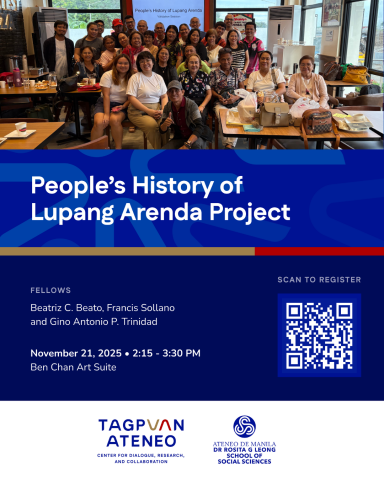
RESEARCH FELLOWS:
Beatriz C Beato
Francis Sollano
Gino Antonio P Trinidad
PROJECT DESCRIPTION:
Urban poor narratives are often thematized to surface themes of ‘victimhood’ or manipulation—with little attention paid to their agency. Although they have helped sustain their communities and contributed to the urban economy, their stories have not been recognized and heard, leading to their continued displacement and underrepresentation in development policies. Further emphasis must be placed on the agency of the community—not only their struggles and challenges, but also their triumphs and leaps forward. For decades, the people of Lupang Arenda, Taytay, Rizal have engaged their local and national governments, seeking decisive action especially for a new proclamation that would declare Lupang Arenda a site for socialized housing development and secure tenure.
COMMUNITY:
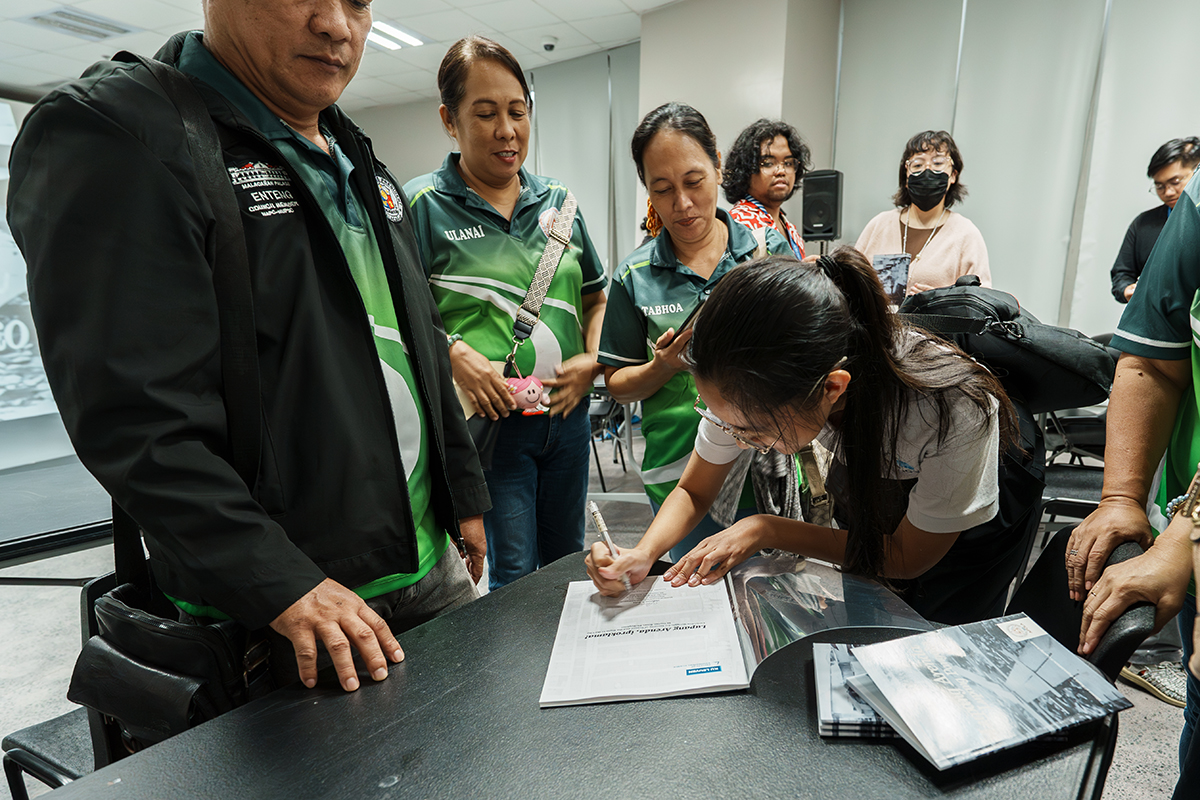
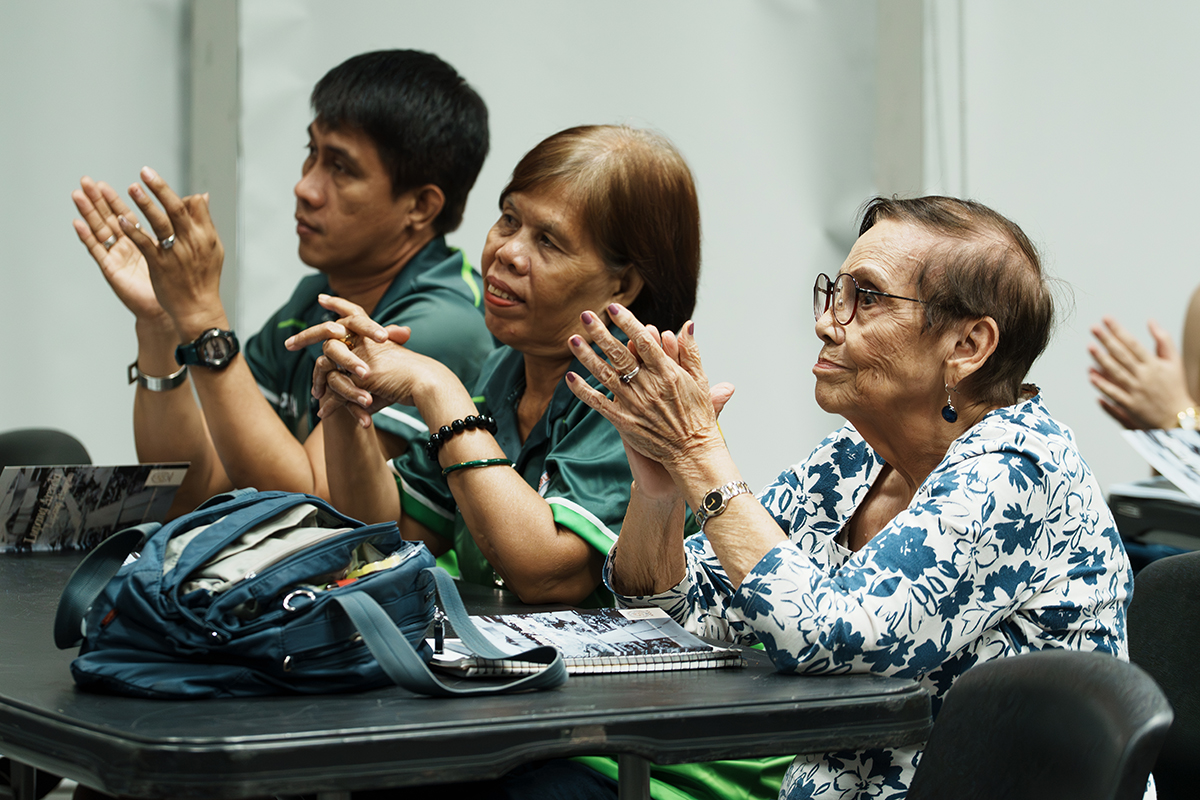
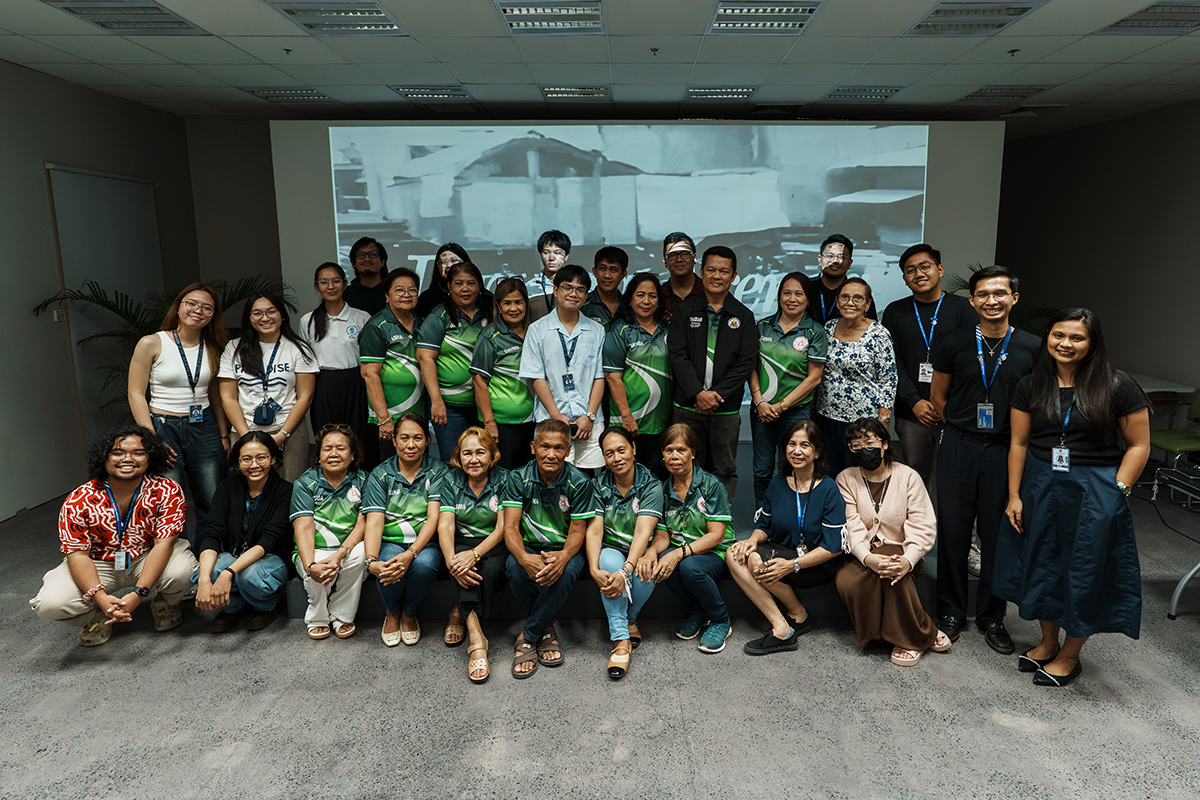
This project facilitated the telling of the story of Lupang Arenda from the perspective of community leaders, highlighting their struggles and resilience in their three-decade-long effort to secure tenure and assert their rights. In doing so, the project also created a space for dialogue between the community and the public at large through the sharing of narrative and the co-production of knowledge.
INNOVATIVE RESEARCH DESIGN:
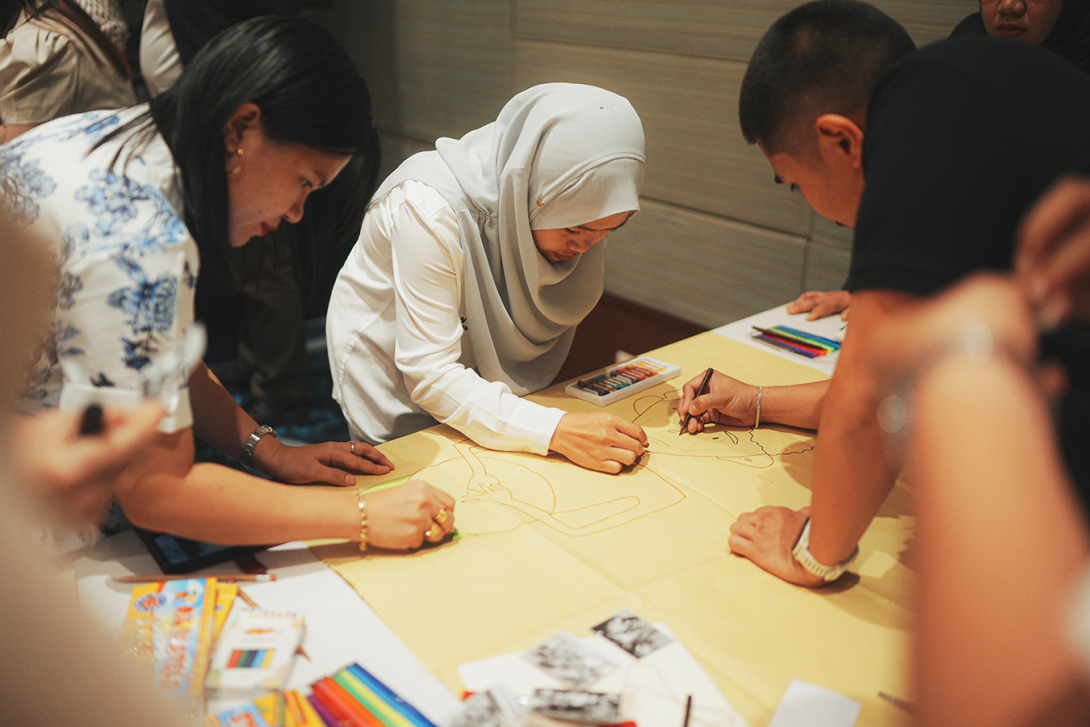
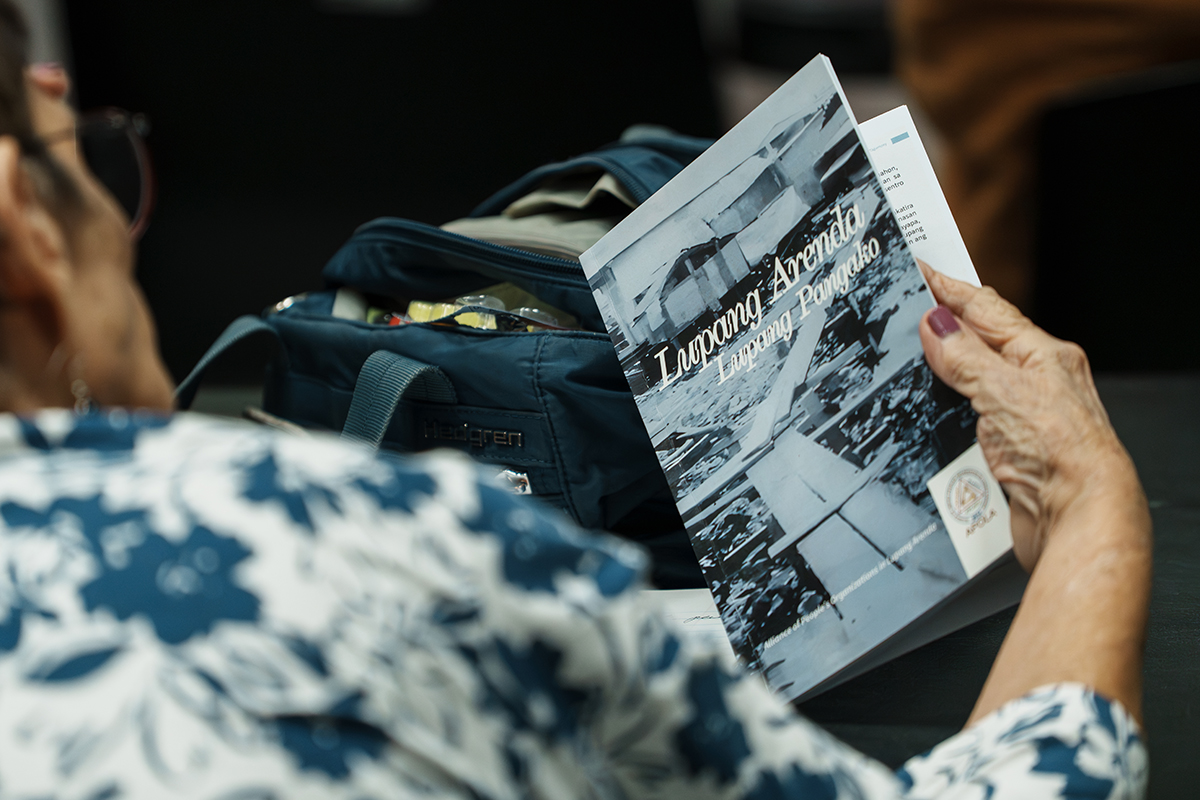
The Developing Co-Produced Community Narratives toolkit is a product of documenting the process undertaken by the Alliance of Peoples’ Organizations in Lupang Arenda (APOLA) in writing Lupang Arenda: Lupang Pangako. The toolkit, guided by the principles of co-production of knowledge, provides a suggested set of activities and workshops, as well as a suggested flow of activities to facilitate the development and production of community-authored narratives. Further, the tool kit also includes guide questions to help in the processing of each activity for both community partners and facilitators. Conversations on narrative and storytelling facilitate dialogue within the community and showcase that even among organized communities with one agenda there is further space to reflect on their experience.
The toolkit aims to assist in the documentation of community experiences. In particular, the toolkit highlights the process of facilitating conversations on the community’s narratives, so that other communities experiencing the same situations and their organizers can benefit from the experiences undergone by the project and its partners. The toolkit, made for academics and civil society organizations, presents practical recommendations and activities for execution and replication in other organized communities.
KEY INSIGHTS:
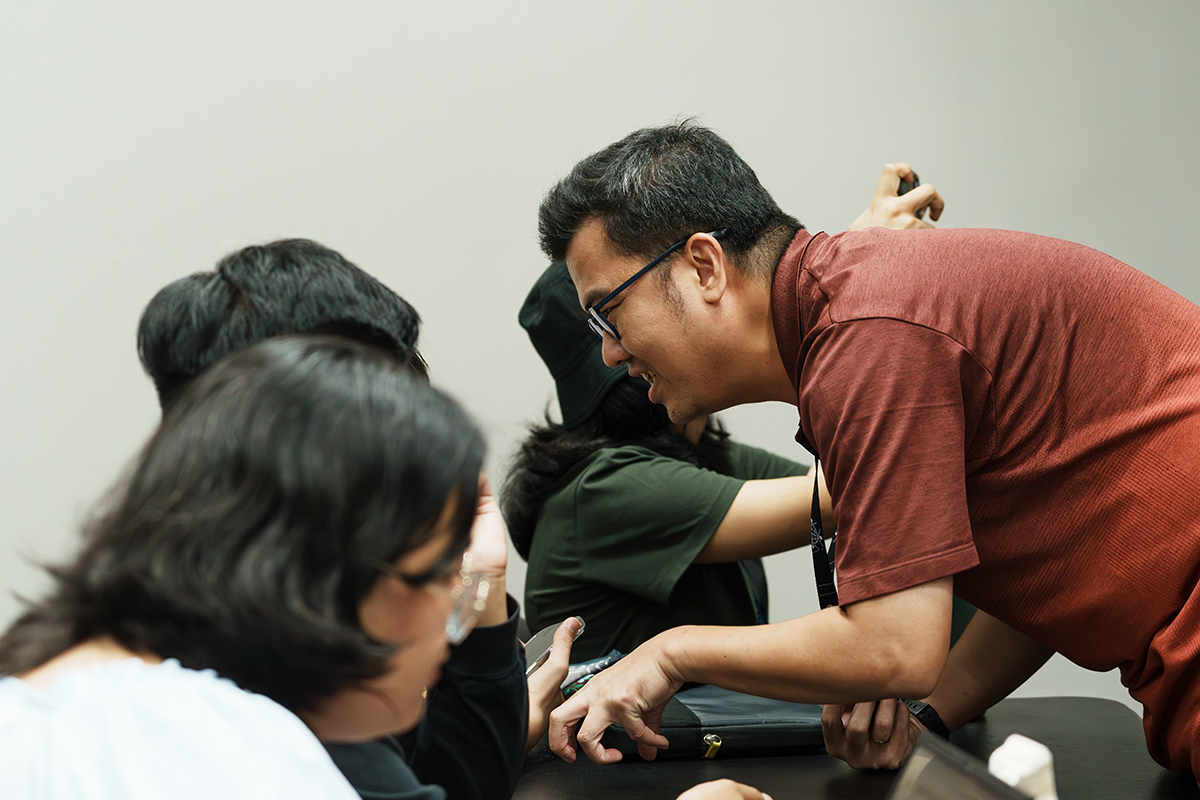
Capacity-building sessions, writeshops, community-focused validation sessions, and focus group discussions (FGDSs) were used to unpack how the community leaders of Lupang Arenda make sense of their history, how community organizing has impacted the development of the community, and how participatory storytelling has helped the community make their own story more tangible. These activities were inherently dialectical and facilitated conversation not just between the researchers and the community, but within and among the community leaders themselves.
Through the activities, community knowledge was able to dialogue with technical knowledge in order to produce a narrative—and by extension—research output that is reflective of both the community and the researcher’s goals.The project highlights negotiation in the telling of the community’s history—that even seemingly ‘homogenous’ experiences can also be disparate and thus need to be to surface particular themes over others. Further, the project also emphasizes the role of community organizing in mediating among diverse community interests in order to forward their common advocacy for land tenure.

Tagpuan Ateneo
Center for Dialogue, Research and Collaboration
2nd Floor, Old Communications Building,
Seminary Road,
Ateneo de Manila University Loyola Heights Campus,
Katipunan Avenue, Loyola Heights
1108 Quezon City
Philippines