
Ateneo and the UN Sustainable Development Goals
Climate Action
Take urgent action to combat climate change and its impacts
The University is committed to addressing climate change and its effects by taking various actions. These include reducing carbon emissions, promoting sustainability in campus operations, integrating sustainable practices into its processes, supporting climate research, and engaging with the community through the Coastal Cities at Risk Philippines (CCARPH) initiative. The University is working closely with CCARPH partners, such as the Manila Observatory, National Resilience Council, and Water Alliance, to achieve its goals.
News and Features
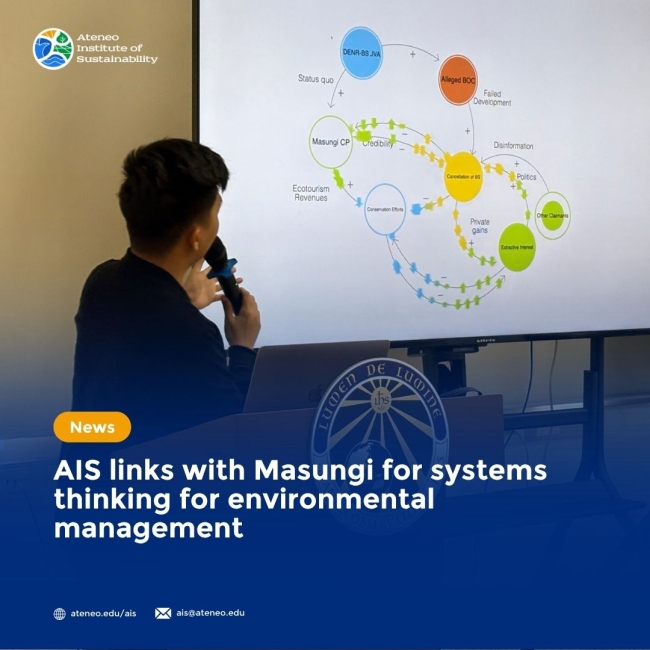
AIS links with Masungi for systems thinking for environmental management
Last 23-24 March 2026, the Ateneo Institute of Sustainability (AIS) , which manages the My Climate Risk – Ateneo de Manila University Regional Hub...
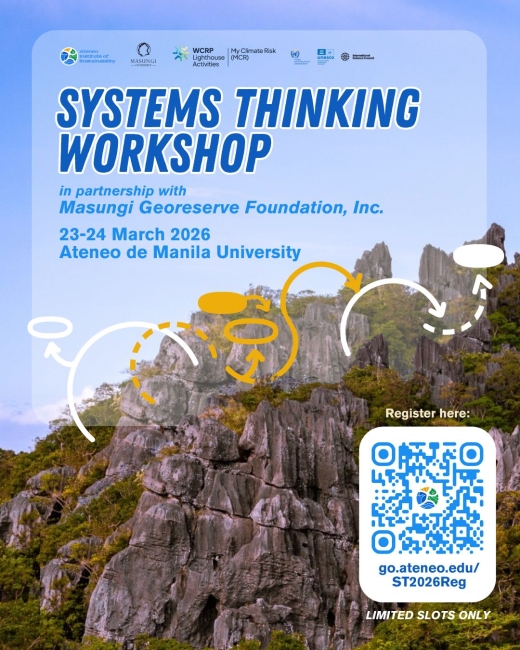
Systems Thinking Workshop for Environmental Management
Systems Thinking Workshop for Environmental Management in partnership with Masungi Georeserve Foundation, Inc. 🗓 23-24 March 2026 📍 Ateneo de Manila University Ateneo Institute of...

Highlights
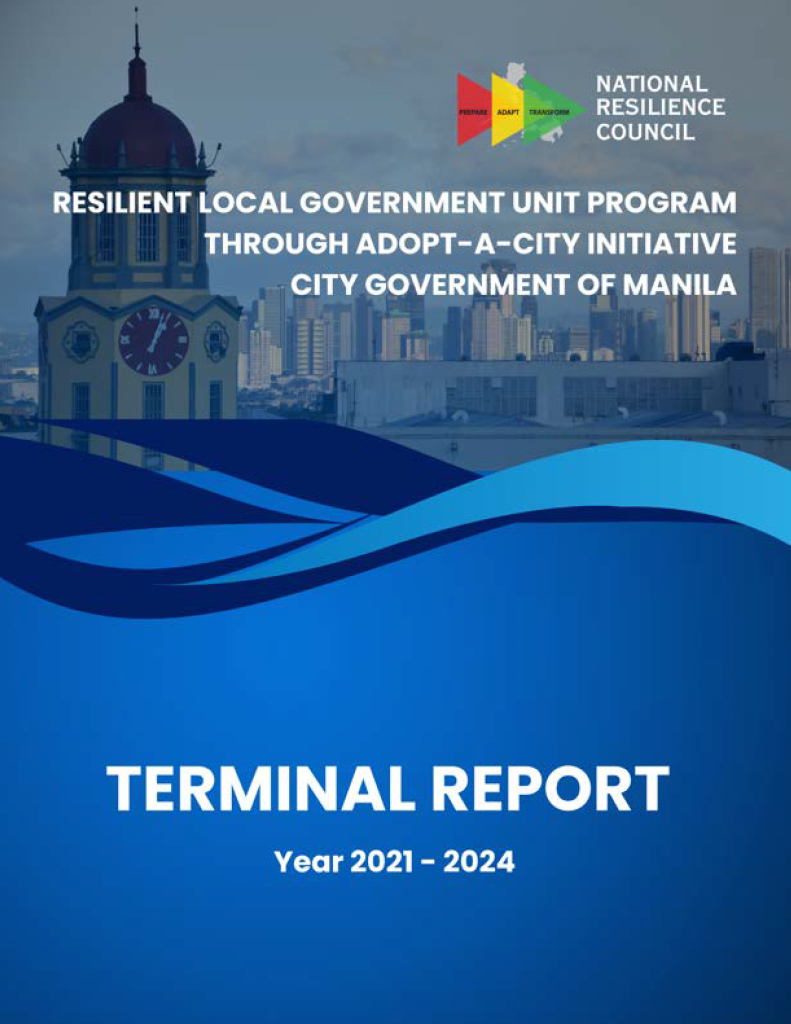
CCARPH, Ateneo de Manila University, and Manila Observatory Partner with the National Resilience Council’s Resilient Local Government Unit Program for the City of Manila: publishes Terminal Report 2021-2024
Building Resilient Communities: The Adopt-a-City Initiative in Manila
With ever changing climate, disaster risk and its management and resilience building among local governments has become a critical priority for urban communities worldwide. In the Philippines, the National Resilience Council (NRC), in cooperation with Ateneo-based Coastal Communities At Risk Philippines, has spearheaded initiatives to build resilient and disaster-ready local government units (LGUs).
Through its innovative Adopt-a-City Initiative, the program equips city governments with the tools, knowledge, and partnerships to build resilience and preparedness to withstand and recover from climate-related hazards’ environmental and socio-economic impacts while employing evidence-based risk governance.
This report outlines the achievements, lessons, and future goals for achieving a resilient and sustainable City of Manila (SDG 11).
Project Profile and Rationale
The Resilient LGUs Program, designed to strengthen Manila's capacity to handle climate and disaster risks, is a multi-stakeholder partnership led by the NRC. Key collaborators include the Ateneo de Manila University, BPI Foundation, International Container Terminal Services, Inc. (ICTSI) Foundation, and the Manila Observatory. The initiative has been targeted toward Manila’s most vulnerable communities, serving as a prototype for resilience-building efforts throughout the Philippines while aligning with the Sendai Framework for Disaster Risk Reduction and the Paris Climate Agreement.
Through this initiative, NRC, with its partners, has “adopted” the following high-risk barangays (communities): Barangays Tondo, San Nicolas, and Port Area. These communities confront severe threats of urban decay, poverty, flooding, storm surges, and seismic events, intersecting to create complex vulnerabilities.
Program Milestones
Since its launch, the Resilient LGUs Program has achieved notable milestones:
-
Capacity-Building and Knowledge Sharing: Local leaders and government officials engaged in Resilience 101 and 102 trainings and GeoRiskPH sessions to learn and adopt resilience concepts and build a resilience and data management toolkit.
-
Youth Engagement: The Young Leaders for Resilience Program, introduced design thinking and risk management principles in identified barangays, planting the seeds of resilience among the community’s youth sector.
-
Resilience Infrastructure Development: The initiative supports infrastructure development, with early projects focused on supporting and investing in Early Warning Systems (EWS), which are essential for preparedness in high-risk communities.
Events
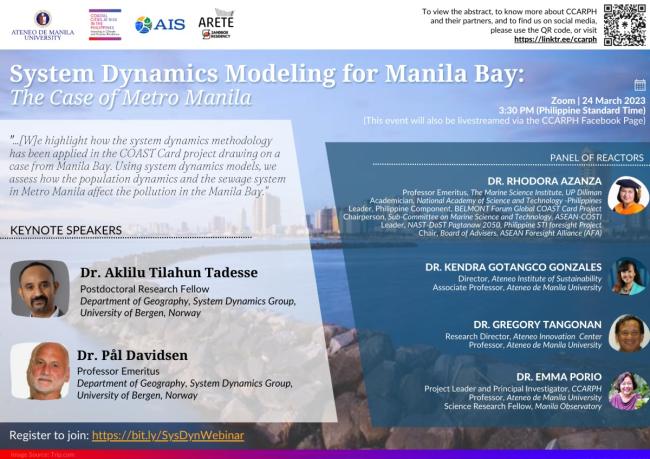
Lecture / Talk / Discussion
Webinar | Systems Dynamics Modeling for Manila Bay: The Case of Metro Manila
Fri, 24 Mar 2023
Ateneo de Manila University
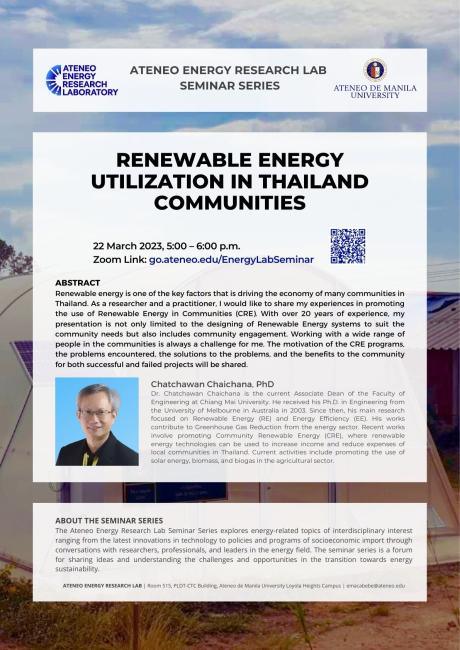
Lecture / Talk / Discussion
Renewable Energy Utilization in Thailand Communities (Ateneo Energy Research Lab Seminar Series)
Wed, 22 Mar 2023
Online
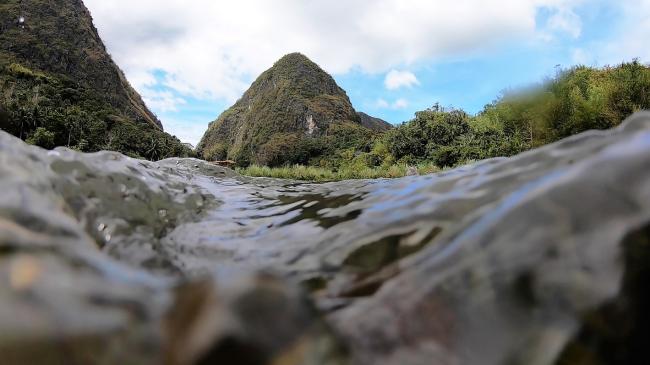
Exhibit
Living 𝘸𝘪𝘵𝘩 water: an exhibition
Wed, 15 Feb 2023
Doreen Black Box Theater, 3F Soledad V Pangilinan Arts Wing, Areté
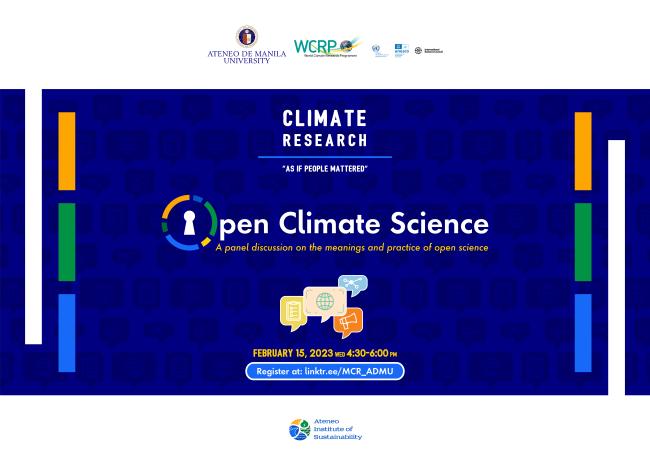
Workshop / Seminar / Short Course
“Open Climate Science,” A Webinar by the MCR-ADMU Regional Hub
Wed, 15 Feb 2023
Online
Workshop / Seminar / Short Course
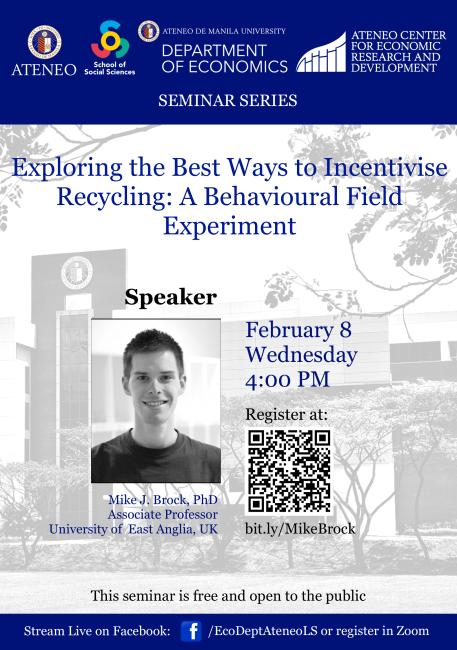
Exploring the Best Ways to Incentivise Recycling: A Behavioural Field Experiment
Wed, 08 Feb 2023
Online
Meeting / Consultation / Town hall / Forum
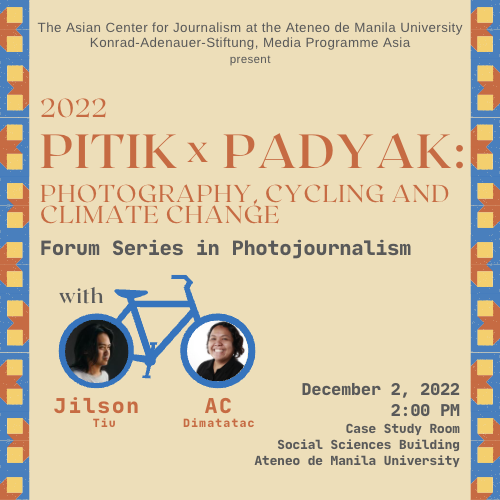
Pitik x Padyak: Photography, Cycling and Climate Change
Fri, 02 Dec 2022
Cast Study Room, Social Sciences Building