Ateneo Confucius Institute strengthens Mandarin education through 2025 Local Teacher Training Program
03 Nov 2025


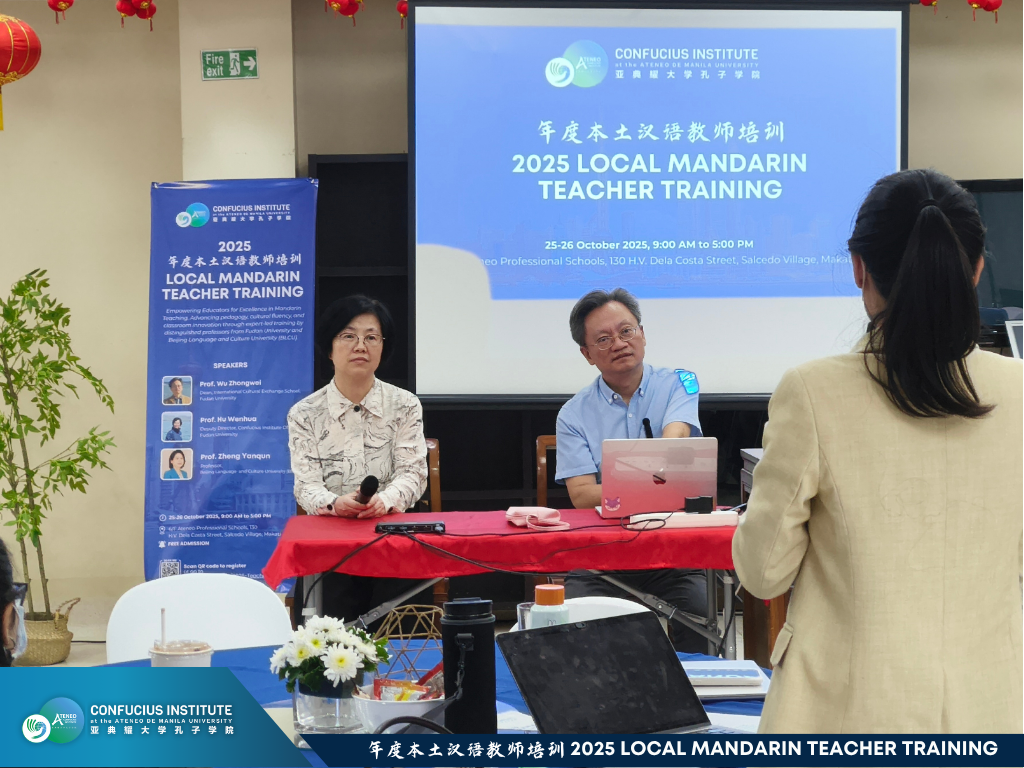
The Confucius Institute at Ateneo de Manila University (CI-Ateneo) successfully conducted the 2025 Local Chinese Teacher Training Program from 25 to 26 October 2025 at the Ateneo Professional Schools Building in Salcedo Village, Makati City.
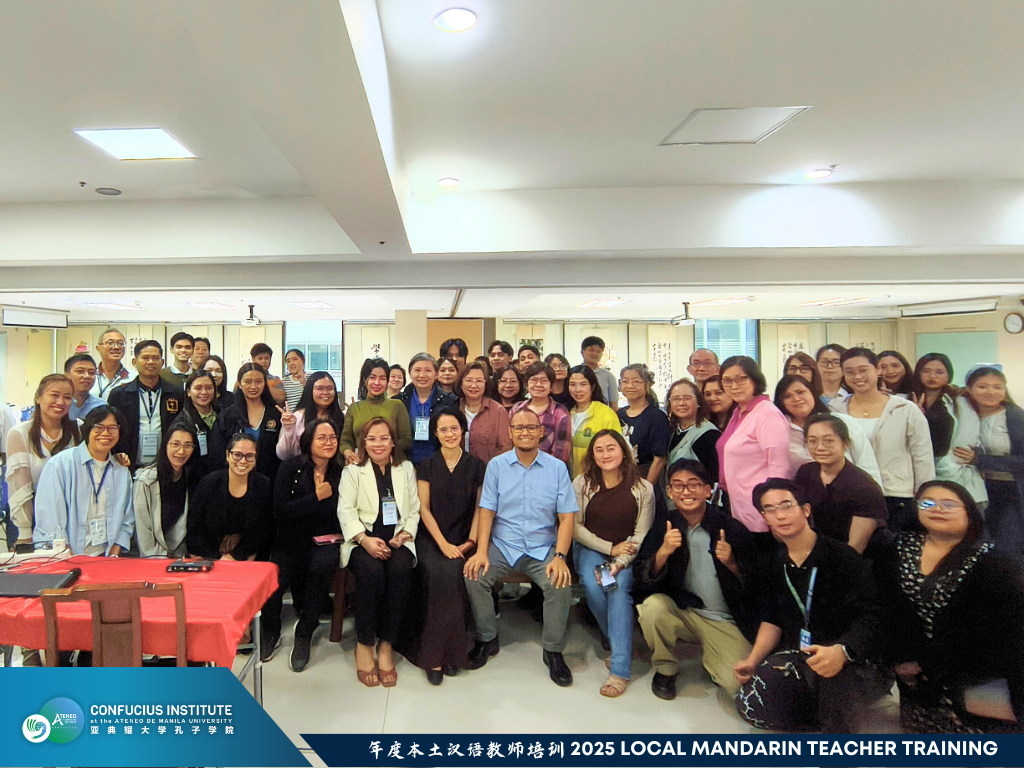
A total of 52 educators attended onsite, representing schools and universities across the Philippines, while additional teachers joined remotely via Zoom. The hybrid format strengthened nationwide access to quality professional development in Mandarin instruction and pedagogy.
Strengthening Pedagogical Foundations
The program opened with welcome remarks from Mr Cris Gilbert Garcia, Director of CI-Ateneo, who emphasized the Institute’s mission to strengthen local Mandarin teaching capacity and equip Filipino educators with linguistic competence and modern pedagogical skills.
The two-day training featured sessions by:
- Prof. Wu Zhongwei - Dean, International Cultural Exchange School, Fudan University
- Prof. Hu Wenhua - Deputy Director, Office of the Confucius Institute, Fudan University
- Prof. Zheng Yanqun - Professor, Beijing Language and Culture University (online lecture)
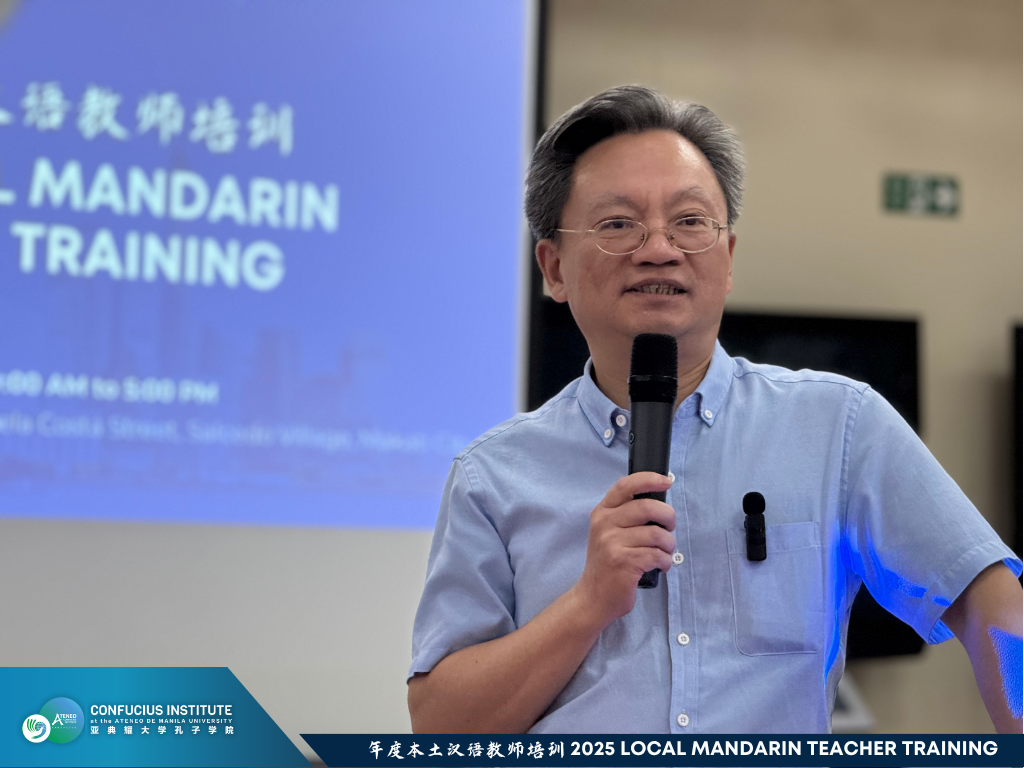
Prof Wu Zhongwei, Professor at the International Cultural Exchange School of Fudan University, led the first day’s sessions on Basic Theories of Language Acquisition and Intercultural Communication and Chinese Culture and Contemporary China. His lectures explored how social context and cultural awareness can strengthen communicative teaching methods.
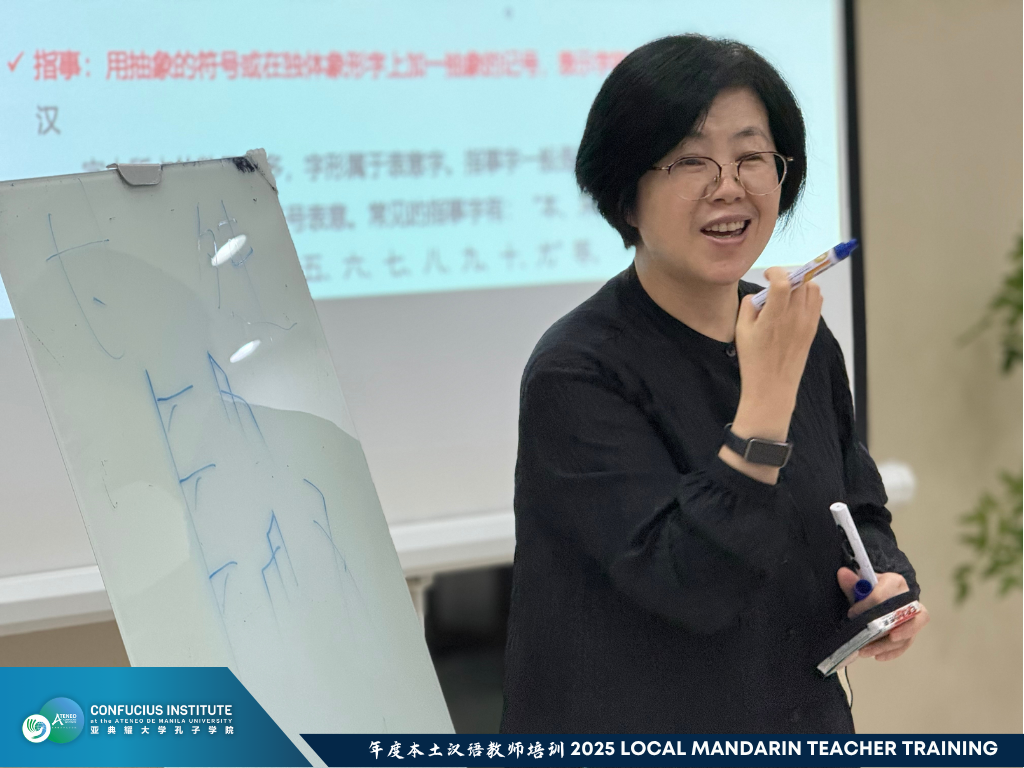
Meanwhile, Prof Hu Wenhua, Deputy Director of the Office of the Confucius Institutes at Fudan University, conducted technical sessions on Chinese Pronunciation and Chinese Character Teaching. Participants learned about the underlying cognitive principles of phonetic learning and discussed classroom applications for improving pronunciation accuracy.
Academic Highlights: In-depth Theoretical Discussions
Over two days, the program delivered six intensive training modules, blending theoretical foundations, language pedagogy, cultural integration, and emerging approaches in digital language teaching.
The first plenary discussions centered on second language learning theories, including the Contrastive Analysis Hypothesis, Error Analysis Theory, and Order of Acquisition Theory. Facilitators emphasized how these frameworks help teachers identify, interpret, and address learners’ common language difficulties. The sessions also introduced Input and Output Hypotheses, stressing that interaction-centered learning promotes greater language acquisition than mechanical drills.
Further discussions on Chinese teaching theories covered interactive teaching activities and sociocultural learning approaches, particularly scaffolding methods derived from modern pedagogical models. The trainers distinguished between comprehensive education and needs analysis, noting how instruction can be designed for general, academic, or professional purposes.
The group also examined various Chinese language teaching models, including task-based, theme-based, and content-based instruction. Through the example of environmental protection, trainers illustrated the three stages of task-based learning, input, processing, and output, and showcased a project-based model using a research case on localizing Chinese cuisine.
Lecture on Chinese Phonetics and Pinyin
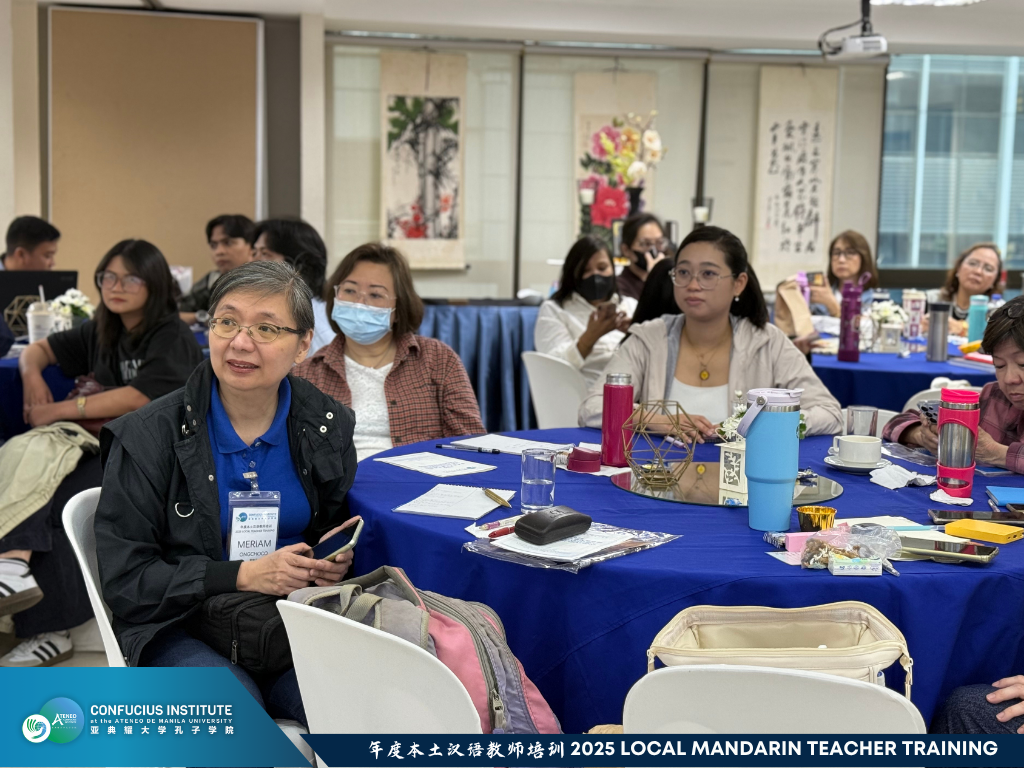
Prof. Hu Wenhua led an in-depth workshop on Chinese phonetics, elaborating on the physical, physiological, and social features of Mandarin sounds. He guided participants in analyzing syllable components, initials, finals, and tones, and demonstrated techniques for classifying phonemes based on their articulation.
In the final part, Prof. Hu discussed effective pronunciation teaching methods, covering phoneme-based, syllable-based, and stream-of-speech techniques, and guided participants in practicing the teaching of retroflex sounds for Filipino learners.
Graduate Studies Information Session
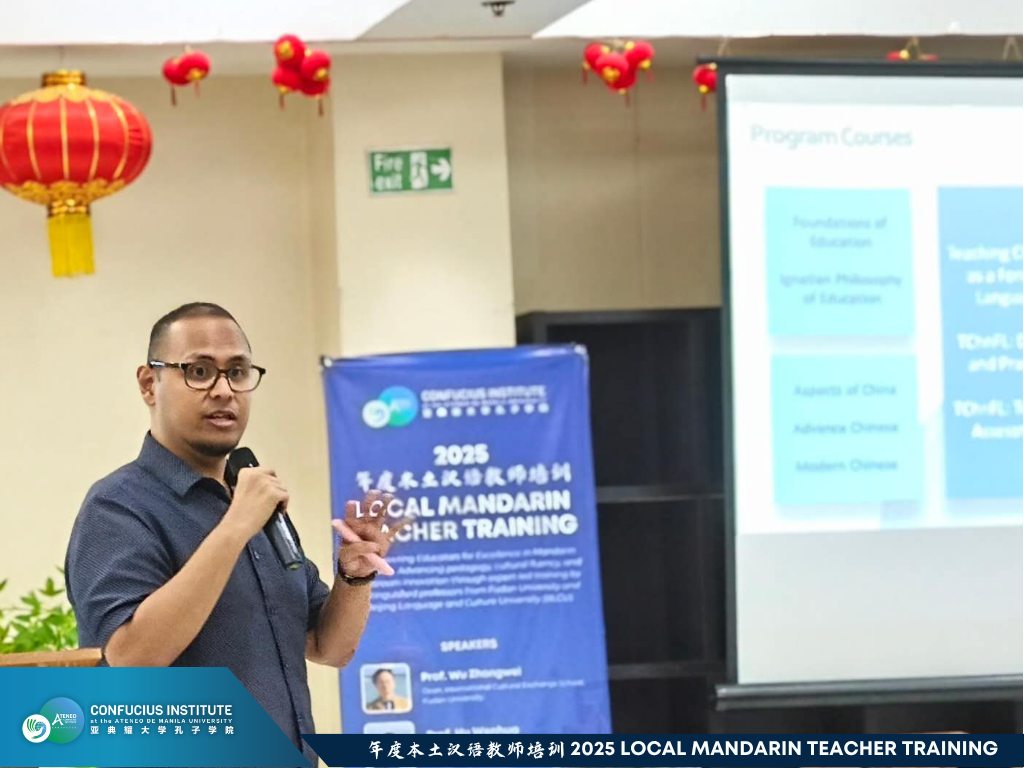
Later in the first day, participants attended an Information Session on the Master in Teaching Chinese as a Foreign Language program offered by Ateneo de Manila University conducted by Sir Cris Gilbert Garcia, Director of the Institute. The session introduced curriculum features, application guidelines, scholarships, and opportunities for professional advancement in Chinese language education.
Innovation and Digitalization in Language Teaching
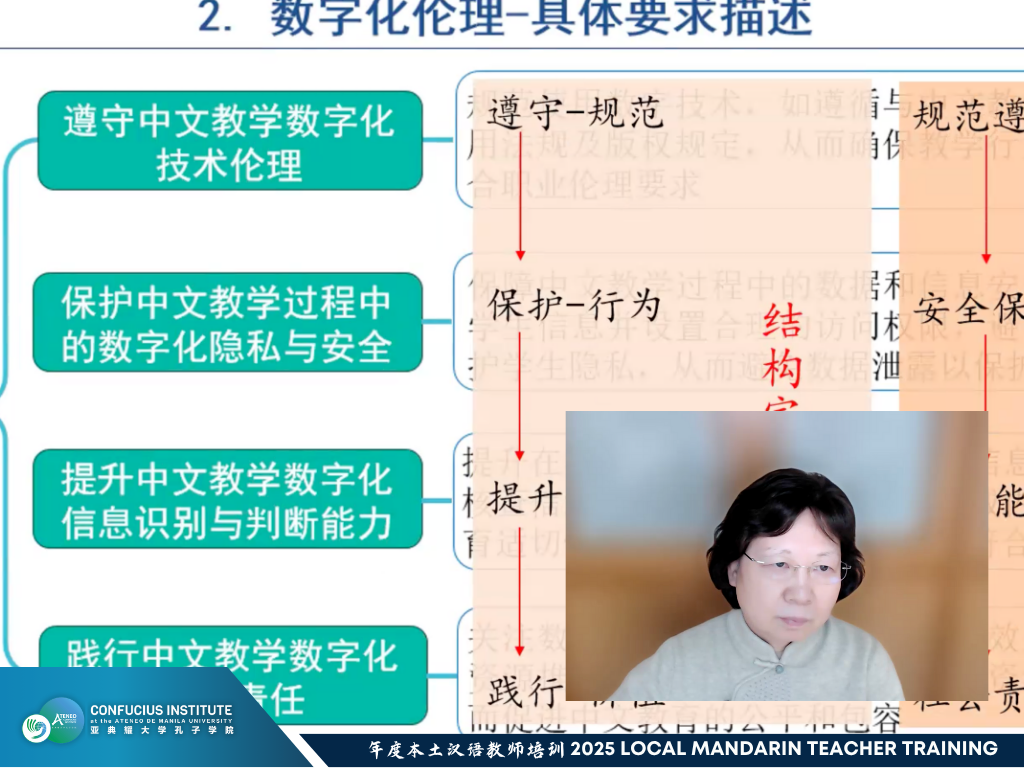
On the second day, Prof. Zheng Yanqun from Beijing Language and Culture University delivered her lecture online via Zoom, focusing on Strategies, Technologies, and Applications in International Chinese Intelligence and Digitalized Teaching. She demonstrated how digital platforms, AI-powered teaching tools, and emerging instructional technologies can enhance classroom interactivity, real-time language assessment, and personalized learning pathways for students in the digital era.
Following her talk, interactive online and onsite open forums provided an opportunity for participants to discuss practical applications of digital pedagogy, exchange classroom experiences, and explore how digital tools can be effectively adapted to the Philippine teaching context.
Participating Schools and Institutions
Educators from over 40 schools, universities, and learning centers nationwide participated in the 2025 program, including:
- Apas National High School
- Asian Christian University
- Baguio Patriotic High School
- Caraga State University-Cabadbaran Campus
- Chiang Kai-shek College
- Colegio de San Juan de Letran
- Diliman Preparatory School
- De La Salle University
- Eduquest Tutorial Center
- Immaculate Conception Academy-Greenhills
- La Verdad Christian College
- Little Owls Learning Center
- LVG Foreign Language Institute
- Camarines Norte Sta. Elena College
- Lyceum of the Philippines University
- Maple Bear Inc.
- Mariano Marcos State University
- Messiah’s Angel School
- Miriam College
- National University-Clark
- Far Eastern University Institute of Technology
- Northern Rizal Yorklin School
- Pangasinan State University
- PHINMA Saint Jude College
- University of Caloocan City
- PHINMA Upang
- Polytechnic University of the Philippines- Manila
- Rainbow Joy Learning Center
- Saint Joseph Institute of Technology
- St. Scholastica’s College
- STI Colleges
- National Teachers College
- Trinity University of Asia
- Victory Christian International School
- Wisdom Light Christian Academy
- West Visayas State University
- 中正学院 (Philippine Chung Cheng Academy)
- 嘉南中学 (Chi Nan High School)
- 聖公會中學 (St. Paul Anglican High School)
- 那牙嘉南中学 (Naga Hope Christian School)
Closing Ceremony
The training concluded with a ceremony led by Dr. Huang Linjun, Chinese Director of the Ateneo Confucius Institute. Certificates of completion were awarded to recognize their commitment to professional development.
Continuing the Mission
The 2025 Local Chinese Teacher Training Program reinforces the Ateneo Confucius Institute’s long-term commitment to empowering educators, promoting cross-cultural understanding, and integrating technology into language education. Through partnerships with Fudan University and BLCU, CI-Ateneo continues to foster academic collaboration and cultural exchange between the Philippines and China, training the next generation of teachers who will nurture intercultural dialogue in the classroom.
Recent News
You may also like these articles

[Hot Off the Press] Arkipelago
New book from the Ateneo Press Arkipelago provides a fascinating and fantastical twist on Philippine politics and history Our country is an archipelago of stories
Protecting Creativity: AIPO and Rizal Library Host Copyright Awareness Session for the Ateneo Community
On March 18, 2026, the Ateneo Intellectual Property Office (AIPO), in collaboration with the Rizal Library, successfully conducted a Copyright Awareness Session held on the
Holy Week 2026 Holidays (Memo # UHR2526-038)
Memo # UHR2526-038 31 March 2026 TO: All Employees FROM: [Sgd] Maria Victoria T Cortez, PhD Vice President for University Human Resources SUBJECT: Holy Week
ASOG’s Tobacco Control initiatives spotlighted in DOH National Technical Working Group for Tobacco Prevention and Control
On March 10 to 12, 2026, the Ateneo School of Government (ASOG), through its research and public policy unit, the Ateneo Policy Center, participated in
Things You Wanted to Say But Never Did: Geloy Concepcion’s six-year project makes Its exhibition debut at the Ateneo Art Gallery
Geloy Concepcion’s Things You Wanted To Say But Never Did comes to the Ateneo Art Gallery this 18 April 2026. After receiving almost 300,000 messages

[Hot Off the Press] Love If I'm Pretty
New YA Release from the Ateneo Press Love If I’m Pretty tackles the nuances of growing up through complex characters and straightforward prose What do