[Hot Off the Press] Arkipelago
31 Mar 2026 | Ateneo University Press




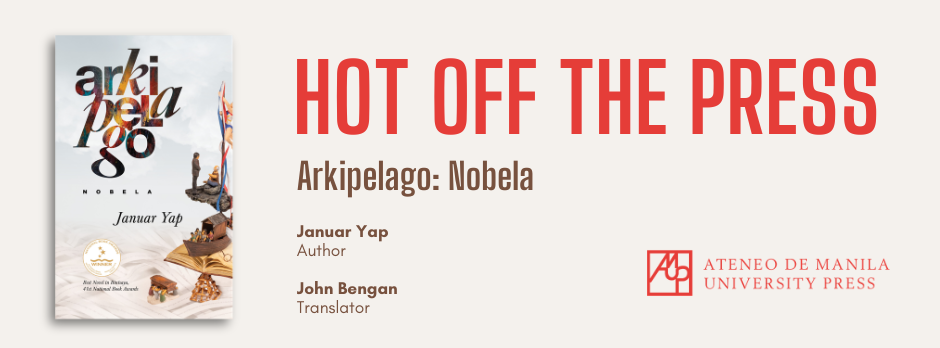
New book from the Ateneo Press Arkipelago provides a fascinating and fantastical twist on Philippine politics and history
Our country is an archipelago of stories. A new release from the Ateneo University Press, Arkipelago, written by Januar Yap and translated from the original Cebuano to English by John Bengan, tells the stories of characters who mirror and symbolize fascinating aspects of Philippine history and politics, while weaving in elements of the absurd, the comical, and the fantastical.
Peoples, islands, seas, histories—no matter how great or small—each one of us make up this enigmatic archipelago: where do we come from, where are we now, and where are we going? Arkipelago is a way of owning the complicated connections between dream and reality in our collective lives as a nation. A little man elopes with a sexy dancer, a suicidal faux Rizal and Tasyo the negotiator/travelling salesman, a nuisance candidate who retires in an island, a friendly tagolilong, a band of lepers in a tilting boat, and a thousand and one fisherfolk delivering and collecting stories from the mysterious Warden Blanco in Kalipung-awan—these are but some of the seafarers in a journey aboard the massive ship of the divinely mad.
Poet, translator, and professor, Marjorie Evasco praises the collaboration between Yap and Bengan, their linguistic dance offering a rich dive into Cebuano-Visayan culture: “Bengan’s translation opens up English in ways not yet done before with a story. Januar Yap and John Bengan are two of the most brilliant contemporary writers of the Visayas and Mindanao. Read and enjoy Arkipelago by novelist Yap, and its translation by Bengan. And be glad that you have in your hands a quirky passage into the sensibility of a jocular, big-hearted, irreverent people who are like Edisa, the “Blind Lady of Justice” entertainer at the LUVIM Islands Bar, who, as Freeze says so precisely, is “sometimes . . . innocent, sometimes . . . stupid, and sometimes . . . the smartest person there is.”
Writer Rolando B. Tolentino highlights the uniqueness of the novel: “Sensitively written in a Cebuano idiolect, the “red-light district” as its translator professes, Januar Yap’s Arkipelago is testament of a national literature from the regions or how prominent a region’s island-water culture is, always already transnational, informs, contests, fictionizes, and materializes the nation and its state. There is a mesmerizing character in reading John Bengan’s translation in English, sublime in its love–disdain for the unfolding of events in the uninhabitable shores of the novel’s narrative. Together, this enigmatic Januar novel as packed and unpacked in John’s worlding of it makes and unmakes the localized and nationalized archipelago’s writing and erasure of our daily and historic lives and deaths.”
Poet, translator, and professor, Merlie M. Alunan spotlights the brilliance of the novel in portraying characters that feel real: “Januar Yap and John Bengan, author and translator, respectively, two contemporary Bisayâ writers of extraordinary mettle, are well meet in these pages. At the very least, both are bilingual, though Bengan might have a few more mother tongues tucked in his linguistic closet, being son of the Mindanao diaspora. Yap has trudged all his life the ghettos of Kamagayan and Sambag Uno in Cebu City and raided for their stories the coastal municipalities of Cebu island, including its neighbors Siquijor, Negros, and Bohol. Both author and translator are familiar with the lore of the sea in the Philippine South. We only have a self-effacing storyteller in this novel. This is not his personal narrative. These are stories of us all, in which he is merely an accidental presence. That is why, despite the artifices of fiction, the people seem familiar, like ourselves, or that of someone in our neighborhood. Some stories are beyond belief and challenge the imagination but, even here, strangeness is not new to us. The stories never seem to end, they remain discrete as life piles on the still unwritten chapters of the future, the way histories crumble in the present, or the way memory shines a lamp to help us understand why things happen the way they do. Why we split our future into multitudes of loyalties and differences. And also, why the beloved islands, inevitably apart through many storms and stresses, are held afloat by the same sea, the one, ever faithful . . .”
As this book offers readers a chance to experience both the Cebuano and English versions of the novel, Arkipelago is a dizzying journey into our country’s complexities. The reader’s view of Philippine politics and history will be put to the test, as this book balances storytelling with philosophizing. It is perfect for those who are unafraid of difficult truths. It is for those who enjoy a challenge and know they will be transformed for the better in the end.
About the Author and Translator
Januar Yap is an educator, novelist, poet, journalist, and filmmaker. He teaches at the University of the Philippines Cebu. His fiction and films have been recognized by the National Book Awards, the Don Carlos Palanca Memorial Awards for Literature, the National Commission for Culture and the Arts Writers’ Prize, the Cinemalaya Independent Film Festival, and the Gawad Urian.
John Bengan has taught writing, literature, and translation at the University of the Philippines Mindanao. His translations have appeared in Words Without Borders, LIT, ANMLY, World Literature Today, Shenandoah, and The Margins, among others. He coedited Ulirát: Best Contemporary Stories in Translation from the Philippines (Gaudy Boy, 2021).
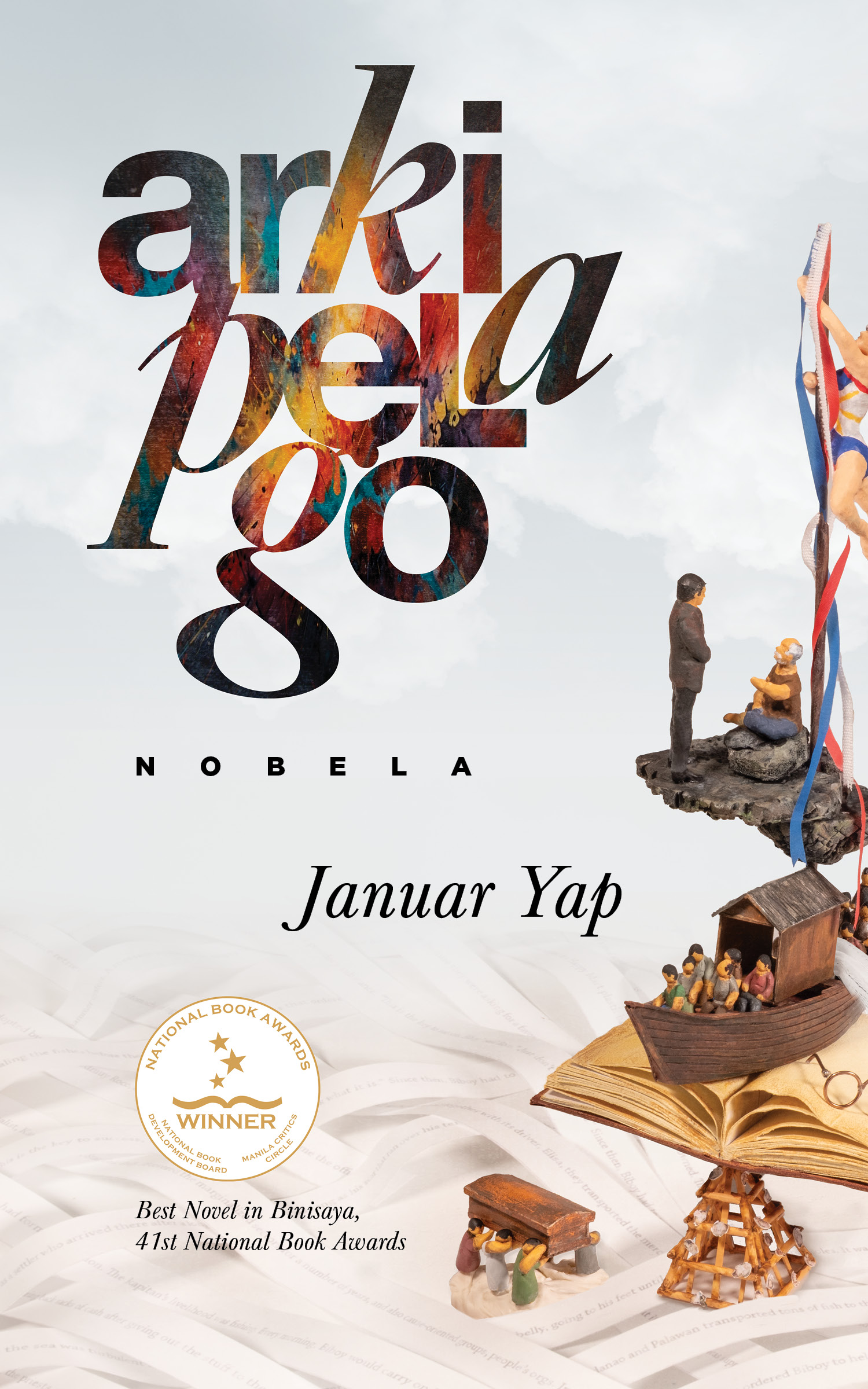 Arkipelago by Januar Yap, translated from the Cebuano by John Bengan, is published by the Ateneo de Manila University Press under the Bughaw imprint. The book retails at PHP 895 and is available at the Ateneo University Press Bookshop in Bellarmine Hall, and the Press’s official Lazada and Shopee stores.
Recent News
You may also like these articles
Protecting Creativity: AIPO and Rizal Library Host Copyright Awareness Session for the Ateneo Community
On March 18, 2026, the Ateneo Intellectual Property Office (AIPO), in collaboration with the Rizal Library, successfully conducted a Copyright Awareness Session held on the
Holy Week 2026 Holidays (Memo # UHR2526-038)
Memo # UHR2526-038 31 March 2026 TO: All Employees FROM: [Sgd] Maria Victoria T Cortez, PhD Vice President for University Human Resources SUBJECT: Holy Week
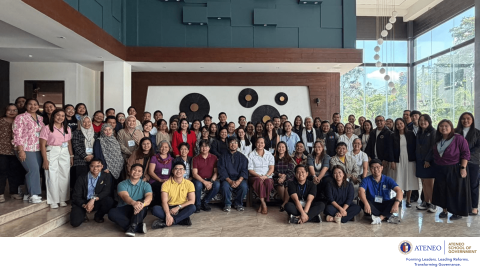
ASOG’s Tobacco Control initiatives spotlighted in DOH National Technical Working Group for Tobacco Prevention and Control
On March 10 to 12, 2026, the Ateneo School of Government (ASOG), through its research and public policy unit, the Ateneo Policy Center, participated in
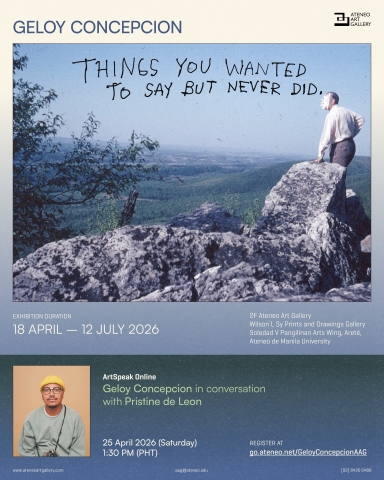
Things You Wanted to Say But Never Did: Geloy Concepcion’s six-year project makes Its exhibition debut at the Ateneo Art Gallery
Geloy Concepcion’s Things You Wanted To Say But Never Did comes to the Ateneo Art Gallery this 18 April 2026. After receiving almost 300,000 messages
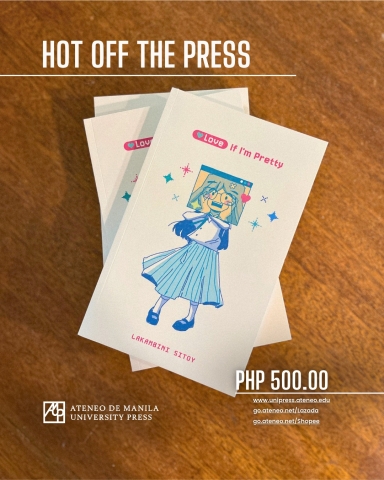
[Hot Off the Press] Love If I'm Pretty
New YA Release from the Ateneo Press Love If I’m Pretty tackles the nuances of growing up through complex characters and straightforward prose What do
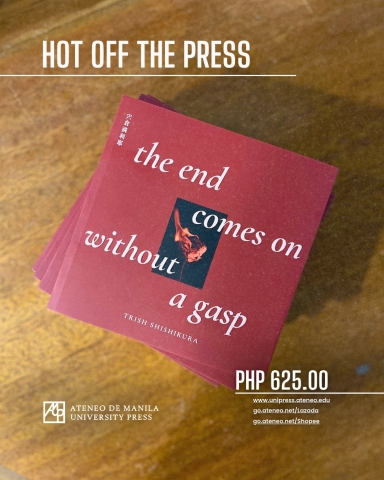
[Hot Off the Press] the end comes on without a gasp
the end comes on without a gasp: Trish Shishikura’s debut poetry collection arrives from Ateneo de Manila University Press (Bughaw) Ateneo de Manila University Press