Philippine ID system is set up for failure
24 Oct 2022 | Jamael Jacob, Esq

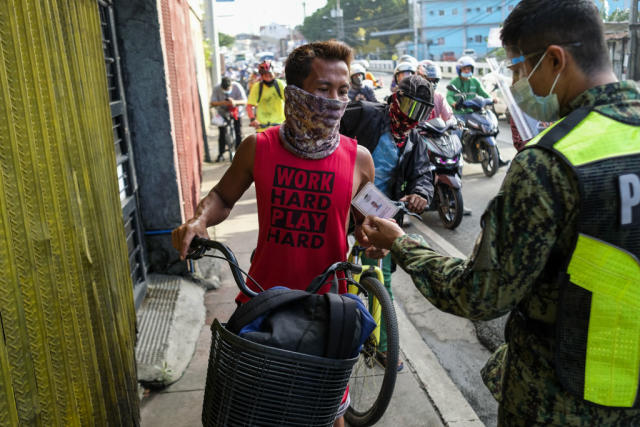
Advocates of the national ID ignored its inherent risks, including the potential for state surveillance and privacy violations
The journey of the Philippines towards having its own national ID system dates back to the 1970s, when then President Ferdinand Marcos tried to set one up via a Presidential decree.
It took two more attempts before a law for its establishment finally passed in 2018. Today, with the son of the former dictator as head of state, the journey endures - still with no clear end in sight.
The Philippine Identification System (PhilSys), managed by the Philippine Statistics Authority (PSA), has three components: the PhilSys number or PSN; the PhilID, and the PhilSys Registry.
The PSN is assigned upon birth or registration, while the PhilID is a non-transferable physical card or a new ePhilID featuring basic information about the registrant. The PhilSys Registry is the repository of all registered information.
Leading up to the enactment of the Philippine Identification System Act, its supporters and critics clashed frequently.
Proponents touted its potential benefits: that it would finally address the ID needs of people without access to proper birth certificates. That it would eliminate the government's multiple ID systems. That it would enable seamless delivery of government services and facilitate financial inclusion, especially among marginalised groups. That it would even usher in peace and national security.
Human rights advocates and other civil society stakeholders pointed out the system's inherent risks, including the potential for state surveillance and privacy violations, as well as the infringement of other civil liberties.
ID databases are extremely prone to function creep and make for a lucrative target for hackers and other criminals. On top of that, if they are not properly implemented - as is often the case - they also facilitate social exclusion, which is the exact opposite of what they are supposed to do.
In the end, the PhilSys adherents won. All the criticism, doubts, and fears were swept aside, and those who voiced them branded as overzealous fearmongers.
Now, four years into its implementation, PhilSys has yet to fulfil any of its stated promises.
Marred by significant delays and alleged irregularities, the system has not even completed its registration phase, covering only 74% of the population as of June 2022. Among them, less than a quarter have obtained their PhilIDs, with many waiting for their IDs for more than a year now.
Complaints about the IDs abound, including incorrect or missing names, and changes in people's civil status - which the government has refused to address, saying that registration is the priority for now.
Even the effectiveness of the ID is in question, as some financial institutions refused to recognise the PhilID for lacking the holder's signature. Government agencies were forced to step in to address the impasse.
Inevitably, function creep has already set in, with the Finance Secretary suggesting recently that the PhilID be made mandatory for government cash aid. A most dangerous proposition, given its potential to exclude qualified beneficiaries who are unable to obtain a PhilID.
So far, PhilSys is nowhere close to the godsend its supporters made it out to be. It has instead been a magnet for problems and controversies, confirming the worst fears of its detractors who saw the writing on the wall early on, given the experience of other countries, from India to Uganda.
But that is not even the most alarming part. The most serious concerns raised about PhilSys relate to its actual use - something many people have yet to observe first-hand because of the delays. In other words, today's concerns could portend issues that are much worse, and way more harmful.
Like the so-called record history that will include details of authentication requests made whenever the PhilID is used in a transaction. Maintaining such a detailed history of an individual's activities over an extended period essentially makes it a comprehensive state surveillance system.
Last week, House Deputy Minority Leader Bernadette Herrera filed a resolution to look into the ID system's "problematic rollout", and called for an "accountability mechanism" to look into what went wrong and what may still be improved in the implementation of the national ID system.
One hopes that the government and other ID proponents will listen this time around and act on issues preemptively so as to avert, or at least mitigate, negative consequences.
Recent News
You may also like these articles

[Hot Off the Press] Arkipelago
New book from the Ateneo Press Arkipelago provides a fascinating and fantastical twist on Philippine politics and history Our country is an archipelago of stories

Protecting Creativity: AIPO and Rizal Library Host Copyright Awareness Session for the Ateneo Community
On March 18, 2026, the Ateneo Intellectual Property Office (AIPO), in collaboration with the Rizal Library, successfully conducted a Copyright Awareness Session held on the

Holy Week 2026 Holidays (Memo # UHR2526-038)
Memo # UHR2526-038 31 March 2026 TO: All Employees FROM: [Sgd] Maria Victoria T Cortez, PhD Vice President for University Human Resources SUBJECT: Holy Week

ASOG’s Tobacco Control initiatives spotlighted in DOH National Technical Working Group for Tobacco Prevention and Control
On March 10 to 12, 2026, the Ateneo School of Government (ASOG), through its research and public policy unit, the Ateneo Policy Center, participated in

Things You Wanted to Say But Never Did: Geloy Concepcion’s six-year project makes Its exhibition debut at the Ateneo Art Gallery
Geloy Concepcion’s Things You Wanted To Say But Never Did comes to the Ateneo Art Gallery this 18 April 2026. After receiving almost 300,000 messages

[Hot Off the Press] Love If I'm Pretty
New YA Release from the Ateneo Press Love If I’m Pretty tackles the nuances of growing up through complex characters and straightforward prose What do