Reflections on a water crisis, with a bit of linguistics on the side
01 May 2019 | Priscilla Angela T. Cruz


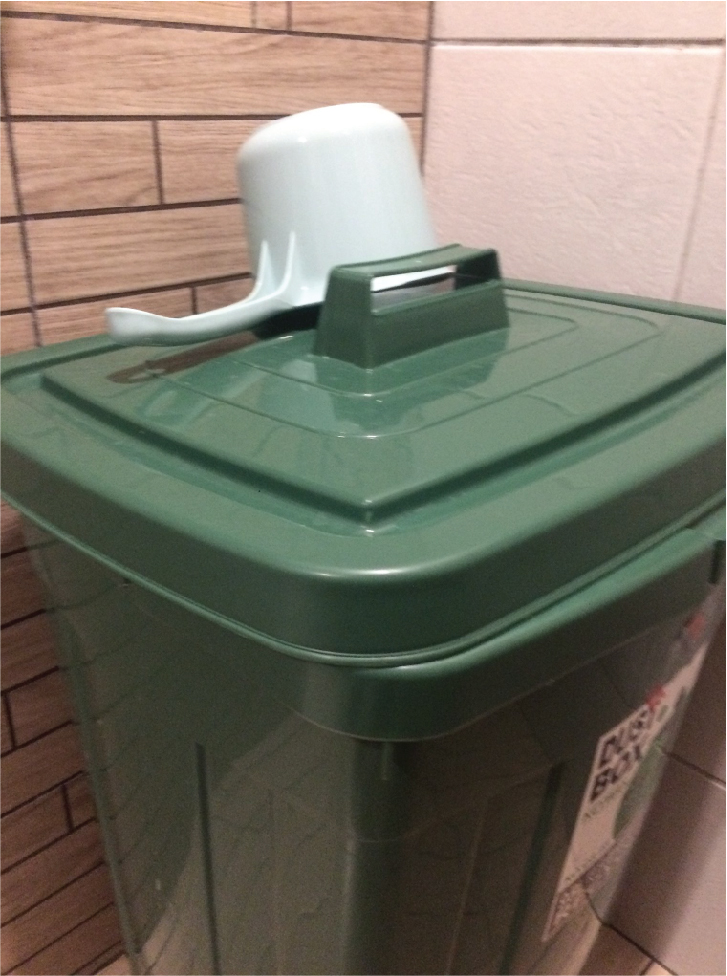
We’ve been having a water crisis in some parts of Manila for about a week now. We’ve lost water for about 24 hours straight and before that, about 12 hours straight. We are some of the luckier ones. Some friends have not had water for about 3 days now and I’ve heard cases of no water for about 5 days. Yesterday, water at the university was so weak, some bathrooms on the top floors had to be closed. A few days ago, we had to scramble to the hardware shops to get big plastic drums, pails, and tabo, that plastic dipper which is a fixture in many Filipino homes but is now not as common in homes with showers and running water. Supposedly, we have used up all our water allocation and what water remains in the dams have to be allocated to others. The politics and conspiracies of all this aside, though, here’s a bit of a personal reflection on this crisis.
I remember, when I was young, water pressure wasn’t as good as it is today. Our showers didn’t often work and we would lose water regularly during the day. So, my grandmother had big drums of water in the bathrooms which everyone had to responsibly fill up as they bathed. This water was for showers, flushing the toilet, and cleaning. It had to be refilled every time there was water, to make sure that we had a healthy supply. It wasn’t a pretty bathroom but it inadvertently taught me how to bathe with very little water. I could use one small pail or about 5 tabos of water to get squeaky clean. We also had to heat water by boiling it or using that portable plastic heater that could be put directly into the pail but needed to be unplugged before bathing for safety. Because hot water was limited, I had to be very efficient with my showers. But when water pressure improved and bathrooms got renovated, the shower became a nice part of my life, with its instant hot water which I could enjoy for as much as I liked. And therein lies the problem. Although I’m pretty sure most of us are somehow conscious of using less water, modern bathrooms have all the conveniences that lead to more water use.
My favorite linguist, M.A.K Halliday, has written that “language does not passively reflect reality; language actively creates reality”. Halliday applied this concept to environmental issues and we would do well to listen to him today, even though he wrote these words many years ago. He pointed out that English has a “syndrome of grammatical features” which creates a very unhealthy reality. One of these features is the distinction we make between countable and uncountable nouns. Water, oil, air, power, food, even plastic... these are uncountable nouns and are the names for some of the things that lie at the heart of environmental crises we face today. The grammar we use makes it seem like these things are infinite and the only thing that makes them countable is when we attach another grammatical item, like a pail of water or a box of food. But perhaps it is this concept of ’uncountable-ness” that is priming us to think of these resources as infinitely usable. It’s very interesting to apply this concept to plastic, which actually seems countable but now is not.
There is also the feature that differentiates between animate and inanimate. Water is inanimate and the only way it does things is when we think of it metaphorically and tell ourselves that we are endowing it with human properties. But there lies another problem. If we have set ourselves apart from the ‘inanimate’, then we think of ourselves as in control somehow, as better, as more conscious. We like to acquire inanimates and since they’re not us, we throw them too. We do need to think about what Halliday has named “the semantics of growthism”, of more, of bigger, of better. I agree with Halliday, that being conscious about our languaging and how it creates our reality should be part of how we can address the environmental issues we face today.
As for me and today’s water crisis, I am in no way absolving the people in power who have to address this problem right now. I live in an area with a lot of small businesses and I’ve heard some are closing. Without water, a power crisis might happen soon too. But I do also know that we can’t just all do nothing. So, in my mind, when the water comes back and I get my shower back, I need to think in terms of countable-ness and animate-ness. Water gives me something in very literal, non-metaphoric ways. So I have to accept and be grateful. What is given, can be taken away anytime. Therefore, I need to be quick with my shower because it might be taken away. Also, I need to find ways to think of a shower in terms of tabos of water (yes, in Philippine English, we renovate Tagalog words with English grammar). Maybe 5 minutes under the shower is about 5 tabos of water? I don’t know, really. I just study language but I do know that grammar can be planned, renovated, and in so doing, change the way we think.
Priscilla Angela T. Cruz has worked with the Department of English, Ateneo de Manila University, for over two decades now. Her work in higher education has involved English language teaching and training in multilingual contexts, mentoring student research projects and supporting and mentoring faculty. Her research interests are on Systemic Functional Linguistics, positive discourse analysis, language variation, and interdisciplinary approaches that allow for applying linguistics in various contexts. Recently, she published on linguistic perspectives on teaching literature. Her works may be viewed though the following page: https://works.bepress.com/priscillaangela-cruz/
Recent News
You may also like these articles
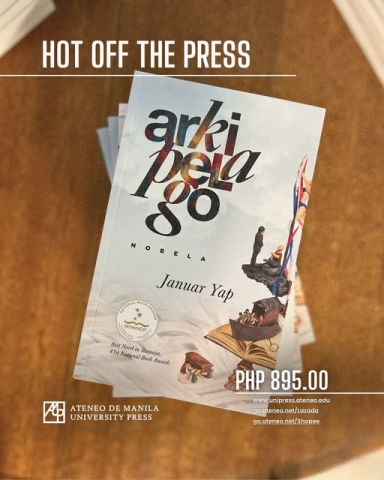
[Hot Off the Press] Arkipelago
New book from the Ateneo Press Arkipelago provides a fascinating and fantastical twist on Philippine politics and history Our country is an archipelago of stories
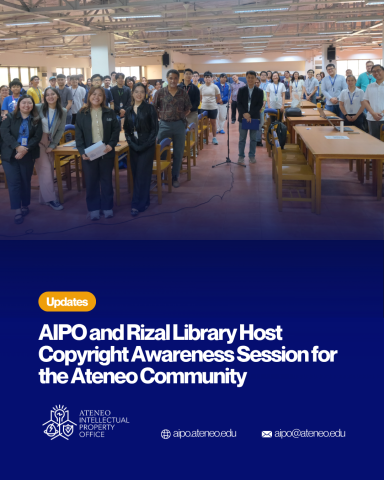
Protecting Creativity: AIPO and Rizal Library Host Copyright Awareness Session for the Ateneo Community
On March 18, 2026, the Ateneo Intellectual Property Office (AIPO), in collaboration with the Rizal Library, successfully conducted a Copyright Awareness Session held on the
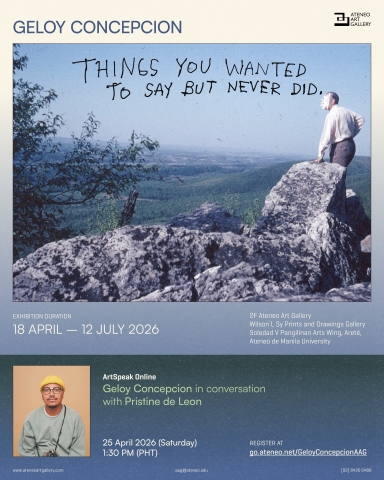
Things You Wanted to Say But Never Did: Geloy Concepcion’s six-year project makes Its exhibition debut at the Ateneo Art Gallery
Geloy Concepcion’s Things You Wanted To Say But Never Did comes to the Ateneo Art Gallery this 18 April 2026. After receiving almost 300,000 messages
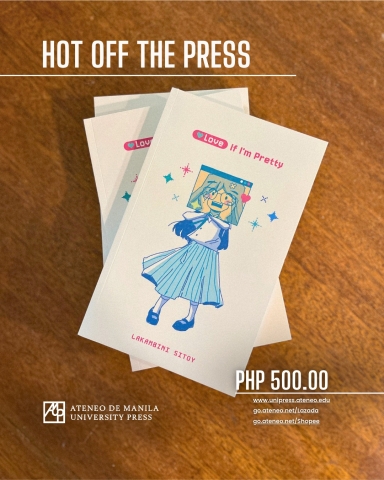
[Hot Off the Press] Love If I'm Pretty
New YA Release from the Ateneo Press Love If I’m Pretty tackles the nuances of growing up through complex characters and straightforward prose What do
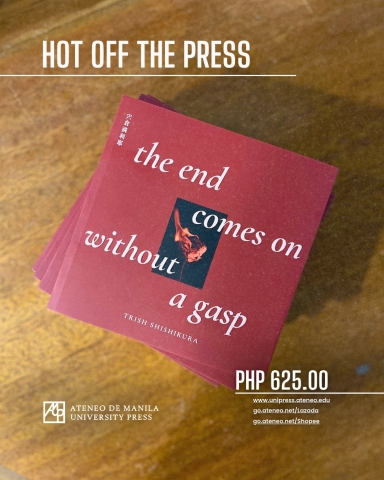
[Hot Off the Press] the end comes on without a gasp
the end comes on without a gasp: Trish Shishikura’s debut poetry collection arrives from Ateneo de Manila University Press (Bughaw) Ateneo de Manila University Press
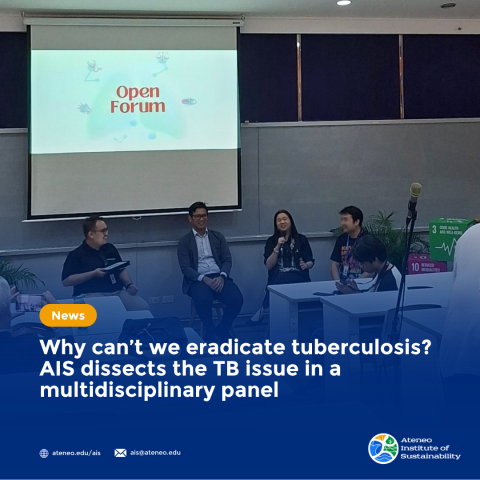
Why can’t we eradicate tuberculosis? AIS dissects the TB issue in a multidisciplinary panel
On 24 March 2026, the Ateneo Institute of Sustainability (AIS), through its Sustainable Development Goals (SDGs) Program, hosted a multidisciplinary panel in observance of World