Klim@Keso
27 Sep 2024 | By Maggie Ceniza and Diana Reyes


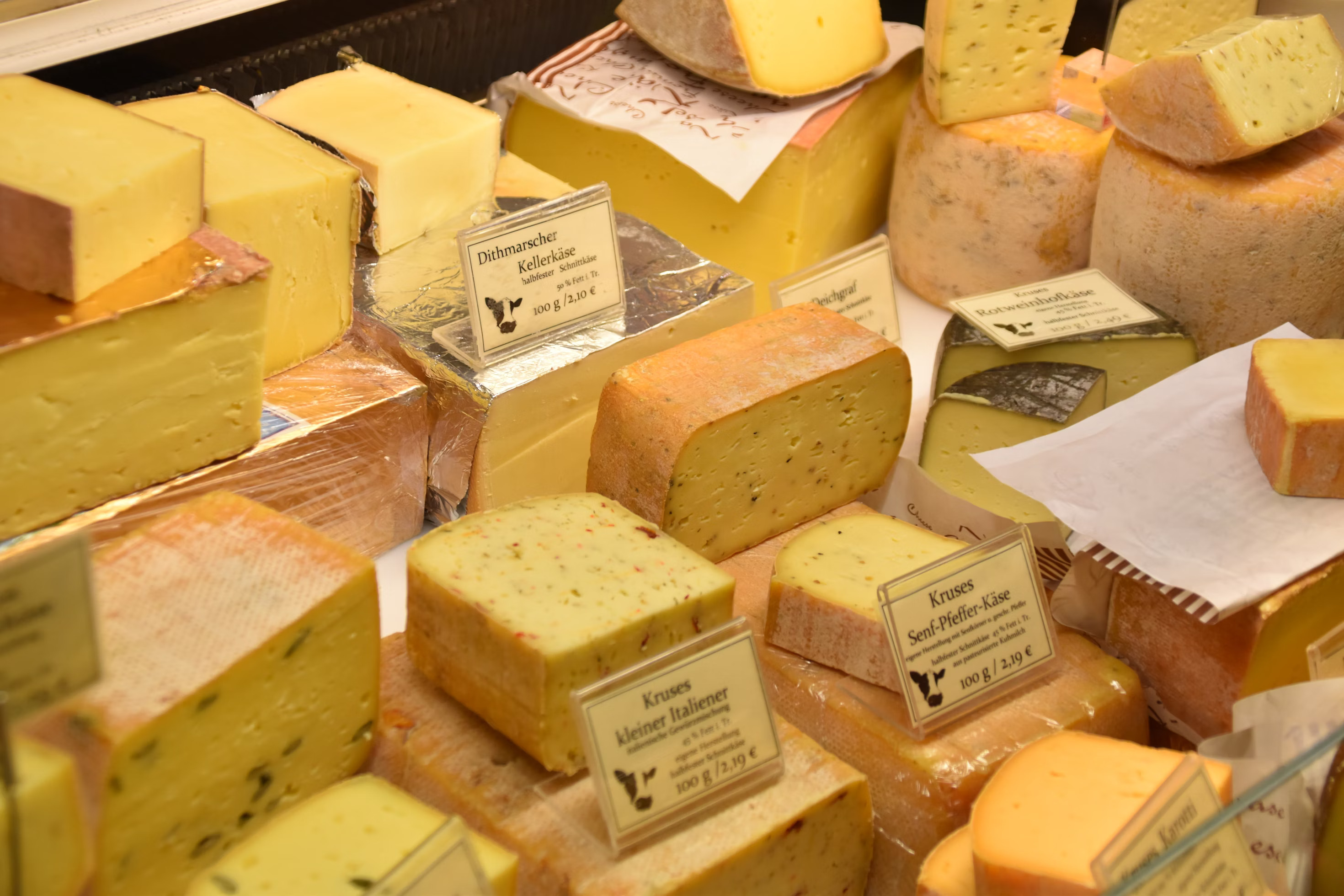
What can be hole-y, funky, or moldy, yet absolutely delicious? If you guessed cheese, you’re right! The world of cheese is a delicious rainbow that spans from the blue-spotted Roquefort to the pillowy, stringy mozzarella. Spread on top of a cracker, sandwiched between two slices of bread, battered and fried, or even mixed into a curry, the humble cheese is a versatile product eaten by billions globally. Currently, there are over a thousand varieties of cheese currently being produced today. Italy has its Ricotta and Gorgonzola, England has its Cheddar and Stilton, and France has its Brie and Comté. Aside from these well-known cheeses, we also have India's Paneer and the Philippines' Kesong Puti. These cheeses vary in their milk sources, aging process, and additives, offering a tapestry of flavor for us to try.
However, as the impacts of climate change significantly shape the different aspects of our lives, how long will it be until this delectable food becomes scarce in our diet?
The cheese evolution
As early as 8,000 BCE, Neolithic farmers would harvest the milk of domesticated ruminants (animals that are able to ferment their food due to their chambered stomachs, such as cows, goats, and sheep) and leave the milk under the sun to coagulate (Kindstedt, 2018). These curds, known as whey, would then be eaten to regain energy. Over time, this process would be refined: rennet would be used alongside a bacterial starter to encourage curdling, curds would be pressed into firm loaves or hung to dry in rows, and brining, or adding other additives to the milk to change its flavor and appearance.
As different countries in Europe would conduct trade and expand their empires across the globe, cheese and European production techniques followed (Kindstedt, 2012). Cheese would be introduced, from East Asia all the way to North and South America, where cheese was not historically consumed in their diets. During the Middle Ages, monasteries and manors, influenced by the Benedictine ideal of “to labor is to pray,” would also push forward a wave of cheese evolution, where monasteries experimented with cheesemaking and produced their own unique types of cheeses (Kindstedt, 2012). Some well-known cheeses produced during this period include Brie de Meaux, Gruyère, and Pont-L’Evêque.
One major evolution in cheese making would occur in the wake of the Industrial Revolution, where factory cheese would become dominant over farmstead cheese (Kindstedt, 2017). Starting in 1851, the factory system for cheese making would be introduced to places such as the United States, allowing for mass production and exportation of cheese. Over time, the amount of factory cheese entering the markets would surpass that of farmstead cheese, reaching just under 500 million pounds of cheese by 1930. As the 20th century drew to a close, American cheese production topped 4 billion kilograms annually.
Today, cheese is an industry currently worth over 83 billion USD and is predicted to shoot up to over 120 billion USD by 2028 (Imarc, 2023). The 27 countries that comprise the European Union currently claim the spot of the biggest producer of cheese globally with 10,390 metric tons, and the United States trailing close by. Germany was also the highest exporter of cheese as of 2022 (UN Comtrade, 2023). Cheese's global significance is such that many countries celebrate National Cheese Day every 4th of the month of June to honor its cultural and economic importance.
Due to the high value of cheese, there is a strong economic incentive to increase production in the dairy industry. However, this expansion, from creating more pastures to breeding more cows, has demonstrated alarming and devastating environmental impacts.
No pain, no gain in a cheese world
One major issue arising from dairy farming is deforestation. Global forest area dropped by 1,780,000 square kilometers (km2) from 1990 to 2020 (FAO and UNEP, 2020). Agriculture accounts for the majority of deforestation, as much of this land use change is intended for cattle farming. This link is strongest in South America. Brazil, which hosts the majority of the Amazon rainforest, has been losing 10,000 km2 per year to deforestation since 2019 (INPE, 2023). It is estimated that 80% of the deforestation is to make way for pasture for cattle (Skidmore et al., 2021).
A deforested world reduces forest cover for carbon capture and sequestration, increasing levels of carbon dioxide in the atmosphere. It contributes to the global warming phenomenon through the Greenhouse Effect, where it and other greenhouse gasses form a sort of “blanket” in the atmosphere, trapping heat within the Earth’s atmosphere. With elevated greenhouse gas concentrations, the world is warming more rapidly than pre-industrial levels. From current predictions, the global temperature is estimated to increase to above 2°C compared to the limit of 1.5°C set in the Paris Climate Agreement (Dickie, 2023). This can cause warming oceans, unpredictable weather patterns, and more.
Due to the high value of cheese, there is a strong economic incentive to increase production in the dairy industry. However, this expansion, from creating more pastures to breeding more cows, has demonstrated alarming and devastating environmental impacts.
Additionally, deforestation contributes to habitat loss and a decrease in biodiversity. Over 10,000 species, many endemic, are at risk of becoming extinct due to the ongoing destruction in the Amazon rainforest (Eisenhammer and Griffin, 2021). Indigenous tribes, who usually reside in these vulnerable regions, are also at risk of losing their homes, their cultures, and their lifestyles (Kanungu, 2023).
Moreover, due to how their digestive system is constructed – imagine having four compartments in your stomach! – cows are well-known not only for their milk but also their belching and flatulence. The average cow excretes around 160 to 320 liters of gas every day. Within these emissions is a deadly greenhouse gas called methane that, when present in high amounts, can contribute to ground-level ozone! Due to the 141,704,000 dairy cows worldwide, methane levels in the atmosphere are quickly shooting up (USDA Foreign Agricultural Service, 2023).
The Philippines is not a land of milk and cheese
Milk production in the Philippines is limited, with domestic production accounting for 1% of national demand for dairy products. The remaining 99% is fulfilled by imported milk and dairy products from overseas suppliers such as New Zealand, the United States, and Australia. Much like milk, local cheese production is also limited in the country. Cheese production data is sparse in the Philippines. Thus, the focus will shift to milk production instead.
According to the National Dairy Authority (2023), the dairy industry of the country by 2022 was made up of 71,819 animals comprising dairy cows, carabaos or buffalos, and goats, producing a total of 30.28 million liters of milk. Quimba and Dela Cruz (2021) state that average milk production per animal is at 8 liters per day – a low figure compared to the United States and the United Kingdom, whose average milk production per animal is at 30 liters per day and 20 liters per day, respectively.
There are many factors that limit the dairy industry in the country, but factors that are visibly affected by climate include land and feed resources to be used for dairying, alongside the suitability of the location of established dairy zones. Speaking of which, what are dairy zones anyway?
Dairy zones are defined by the National Dairy Authority (n.d.) as areas that consist of at least 100 farmers in possession of three dairy animals each, situated in neighboring towns and near an urban market which can accommodate the locally produced dairy.
According to the National Dairy Authority (2022) in the Philippine Dairy Industry Roadmap for 2020 to 2025, areas with high elevation and lower temperature are most suitable for dairy production – conditions that few areas in the country enjoy. Such an environment is preferred because ambient temperature, humidity, and radiant energy exposure affect milk yield. Higher readings translate into lower volumes of milk as animals become more susceptible to heat stress, which triggers reduced appetite and milk production (Silanikove, 2000). The Philippine Genome Center (n.d.) attributes this suboptimal milk yield to the continued use of imported Sahiwal-Holstein hybrid cattle, which are unaccustomed to the heat and humidity of the Philippines on top of being expensive to procure.
The problem that dairy (and cheese!) face in the context of a warming world is not quite as black-and-white as the most popular cows that give milk – it is complex and requires the cooperation of many different sectors to solve.
Cheese in a changing climate
Areas suitable for dairying in the Philippines are likely to become more limited as global temperature rises. Exacerbated droughts and flooding also threaten livestock feed supply, especially those who depend on grazing and forage to feed their animals. Hence, cheese production is negatively impacted at the fundamental level of milk production, with elevated temperatures increasing heat stress on dairy animals that lead to reduced milk yield, alongside a drop in their general well-being.
With the livestock sector being a major contributor to climate change through the emission of greenhouse gas, and dairy consequently being impacted by climate, the problem that dairy (and cheese!) face in the context of a warming world is not quite as black-and-white as the most popular cows that give milk – it is complex and requires the cooperation of many different sectors to solve.
References
Dickie, G. (2023, November). Climate on track to warm by nearly 3C without aggressive actions, UN report finds. Retrieved from https://www.reuters.com/sustainability/climate-energy/climate-track-warm-by-nearly-3c-without-greater-ambition-un-report-2023-11-20/
Eisenhammer, S. and Griffin, O. (2021, July 15). Over 10,000 species risk extinction in Amazon, says landmark report. Retrieved from https://www.reuters.com/business/environment/over-10000-species-risk-extinction-amazon-says-landmark-report-2021-07-14/
FAO & UNEP. (2020). The State of the World’s Forests 2020: Forests, biodiversity and people. Rome. https://doi.org/10.4060/ca8642en
INPE. (November 10, 2023). Deforestation area in the Brazilian Amazon from 2000 to 2023 (in 1,000 square kilometers) [Graph]. In Statista. Retrieved July 11, 2024, from https://www.statista.com/statistics/940696/brazil-amazon-deforestation-rate-area/
Kanungu, A. (2023). The Silent Cry of the Forest: How Deforestation Impacts Indigenous Communities. Retrieved from https://earth.org/the-silent-cry-of-the-forest-how-deforestation-impacts-indigenous-communities/
Kindstedt, P. (2018, 14 Dec). A brie(f) history of cheese. [Video]. Retrieved from https://www.youtube.com/watch?v=QKae1k1BDdA
Kindstedt, P. (2012). Cheese and Culture: A History of Cheese and Its Place in Western Civilization. New York: Chelsea Green Publishing. ISBN: 9781603585064.
National Dairy Authority. (n.d.). Programs | National Dairy Authority. Retrieved July 9, 2024, from https://nda.da.gov.ph/programs/
National Dairy Authority. (2022). Philippine Dairy Industry Roadmap 2020-2025. In Official Portal of the Department of Agriculture. Department of Agriculture - Bureau of Agricultural Research. Retrieved July 9, 2024, from https://www.da.gov.ph/wp-content/uploads/2023/05/Philippine-Dairy-Industry-Roadmap.pdf
National Dairy Authority. (2023). National Dairy Authority Annual Report 2022. In National Dairy Authority. Retrieved July 10, 2024, from https://drive.google.com/file/d/1j1U2tScoL6AF37fqu7INh7Y328dL9IkQ/view
Philippine Genome Center. (n.d.). Developing a Sustainable Dairy Cattle Genetic Stock in the Philippines. Retrieved July 10, 2024, from https://pgc.up.edu.ph/research-development/program-on-agriculture-livestock-fisheries-forestry/developing-a-sustainable-dairy-cattle-genetic-stock-in-the-philippines/
Quimba, F. M. A., & Dela Cruz, K. J. (2021). Issues Paper on the Philippine Milk Products Industry. In Philippine Competition Commission (PCC Issues Paper No. 03 Series of 2021). Philippine Competition Commission. Retrieved July 10, 2024, from https://www.phcc.gov.ph/wp-content/uploads/2021/03/PCC-Issues-Paper-2021-03-Issues-Paper-on-the-Philippine-Milk-Products-Industry.pdf
Silanikove, N. (2000). Effects of heat stress on the welfare of extensively managed domestic ruminants. Livestock Production Science, 67(1–2), 1–18. https://doi.org/10.1016/s0301-6226(00)00162-7
Skidmore, M. E., Moffette, F., Rausch, L., Christie, M., Munger, J., & Gibbs, H. K. (2021). Cattle ranchers and deforestation in the Brazilian Amazon: Production, location, and policies. Global Environmental Change, 68, 102280. https://doi.org/10.1016/j.gloenvcha.2021.102280
UN Comtrade. (June 21, 2023). Leading exporters of cheese worldwide in 2022 (in billion U.S. dollars) [Graph]. In Statista. Retrieved July 11, 2024, from https://www.statista.com/statistics/827446/top-exporters-of-cheese-global/
USDA Foreign Agricultural Service. (2023, Dec). Dairy: World Markets and Trade. https://downloads.usda.library.cornell.edu/usda-esmis/files/5t34sj56t/7m01d640w/qz20vc57k/dairy.pdf
Recent News
You may also like these articles

[Hot Off the Press] Arkipelago
New book from the Ateneo Press Arkipelago provides a fascinating and fantastical twist on Philippine politics and history Our country is an archipelago of stories

Protecting Creativity: AIPO and Rizal Library Host Copyright Awareness Session for the Ateneo Community
On March 18, 2026, the Ateneo Intellectual Property Office (AIPO), in collaboration with the Rizal Library, successfully conducted a Copyright Awareness Session held on the

Holy Week 2026 Holidays (Memo # UHR2526-038)
Memo # UHR2526-038 31 March 2026 TO: All Employees FROM: [Sgd] Maria Victoria T Cortez, PhD Vice President for University Human Resources SUBJECT: Holy Week

ASOG’s Tobacco Control initiatives spotlighted in DOH National Technical Working Group for Tobacco Prevention and Control
On March 10 to 12, 2026, the Ateneo School of Government (ASOG), through its research and public policy unit, the Ateneo Policy Center, participated in

Things You Wanted to Say But Never Did: Geloy Concepcion’s six-year project makes Its exhibition debut at the Ateneo Art Gallery
Geloy Concepcion’s Things You Wanted To Say But Never Did comes to the Ateneo Art Gallery this 18 April 2026. After receiving almost 300,000 messages

[Hot Off the Press] Love If I'm Pretty
New YA Release from the Ateneo Press Love If I’m Pretty tackles the nuances of growing up through complex characters and straightforward prose What do