Klim@Tomà
06 Nov 2024 | By John Paul I Blando, Jan Raphael M Pangilinan, and April Urbano


Alcohol is made through fermentation, a process where yeasts from the air break down glucose (or sugars) and release alcohol, specifically ethanol, as a byproduct. After the fermentation process, the alcohol goes through filtration, aging, and packaging. In terms of the reaction of the body, alcohol does not undergo the digestive process. Rather, it becomes absorbed by the stomach and intestines and goes through the bloodstream. It acts as a “depressant”; this does not necessarily mean that it makes you depressed, but this term means it slows down the activity of certain organs. For alcohol, this happens in the brain which results in lack of judgment, self-control, or awareness.
From Ancient Brews to Modern Booze
The origins of alcoholic beverages are unknown, but evidence dates back to 7,000 BCE in China. The remnants in Chinese clay pots suggest the brewing of alcoholic beverages using fermented rice, millet, and grapes (Phillips, 2020). Nowadays, alcoholic beverages are made from fermented fruits, berries, or grains. The process of making alcoholic beverages has evolved over time, including integrating the process of distillation for a more purified liquid with a higher concentration of alcohol.
In the Philippines, products of fermentation have existed even before Spanish colonization (Akamine, n.d.). Inuman, or Filipino drinking sessions, have been a huge part of Filipino culture and remain so to this day. As a matter of fact, this has even been depicted in different Filipino songs like Inuman Na by Parokya Ni Edgar, Beer by The Itchyworms, and Pare Ko by Eraserheads, to name a few. These songs somewhat reflect how drinking in the Philippines is a staple, from the smallest of occasions to the grandest ones. From celebrations to heartbreaks, drinking has always seemed to be on the table.
There are different factors that affect alcohol consumption, such as gender, race, socio-economic status, societal norms, and even religion (Sudhinaraset et al., 2016). However, there is an interesting study about the idea that cold weather and less sunlight can be possible reasons for an increase in alcohol consumption (Ventura‐Cots et al., 2019). There may be two reasons for this. First, alcohol dilates the blood vessels to regulate body temperature and this gives a warm sensation to the skin, which could be helpful in cold areas (Dekker, 1999). Cold weather is linked to depression (Mirzakhani & Poursafa, 2014), which is, then, linked to increased alcohol consumption (Alcohol and Depression, 2022). This raises a thought-provoking question: will climate change impact drinking behaviors?
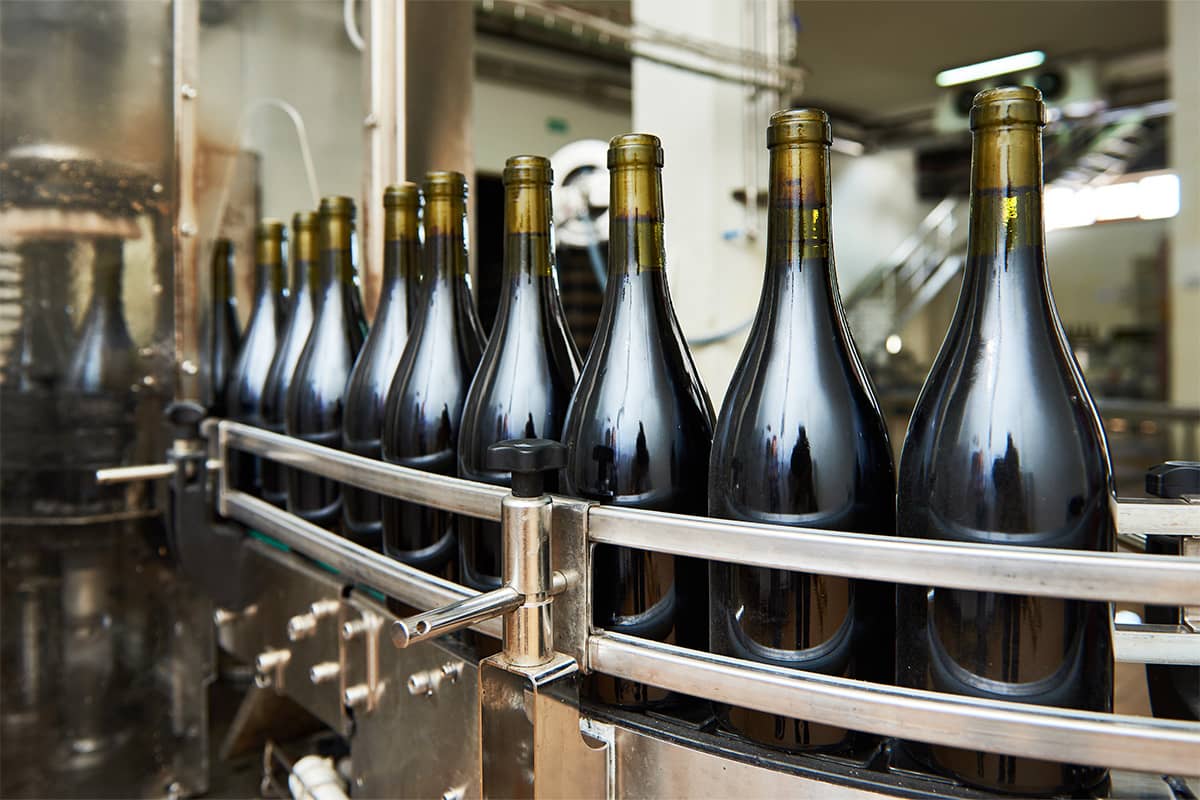
The various types of alcoholic beverages differ from each other in two ways. The main fermentation base mostly determines the taste of the drink (e.g. grapes in wine, barley and wheat in beer, rice in sake, or sap in lambanog). Another would be the fermentation process, that is, if there is a variation with the process itself (e.g. brewing in beer), or additional steps (e.g. distillation in whiskey). Since the alcoholic beverage market has been growing throughout the years, the production of these drinks has been industrialized. Big machinery is required to support the large production of alcohol: machines for malting, steeping, and germination, among other things, are used in beer making; there are also machines used to crush grapes and separate their juices; furthermore, fabricated machines are also used in bottling and packaging these beverages for increased efficiency.
The whole process of alcohol production, including the agricultural phase, fermentation, packaging, transportation, and the like, has its fair share in the continuously changing climate, which might become more detrimental in the future (Hallström et al., 2018).
Pour Decisions: Alcohol’s Climate Impact
Despite alcohol's cultural and socio-economic importance, this industry also contributes significantly to the adverse climate change effects we are currently experiencing. The whole process of alcohol production, including the agricultural phase, fermentation, packaging, transportation, and the like, has its fair share in the continuously changing climate, which might become more detrimental in the future (Hallström et al., 2018).
Farms, for instance, require a large amount of water supply to ensure high-quality produce, which will then be fermented and subjected to further processing (Cook et al., 2024a). It was highlighted in a study that in order to produce one liter of wine, 800 liters of water are needed, the majority of which will just end up as waste. These large quantities of wastewater contaminated with various chemicals may lead to pollution if not properly disposed of, which may harm the biodiversity in the area and cause disease outbreaks (Cook et al., 2024). Moreover, as global temperatures continue to rise, alcohol production may worsen and expedite the water shortages brought on by severe droughts and heat waves (Afanasieva & Millan, 2023). This highlights poor tradeoff, where we deplete our water resources with minimal or no gains in return.
Manufacturing is another phase of alcohol production with detrimental environmental impacts. Packaging and transportation of alcohol products emit a huge amount of carbon dioxide (CO2) and other greenhouse gasses into the atmosphere (Cook et al., 2024; Hallström et al., 2018). It is estimated that every liter of beer produces 510–842 g of CO2 equivalent (Amienyo & Azapagic, 2016), or the equivalent emissions of other greenhouse gasses to CO2 (Eurostat, 2023). While this may vary depending on the packaging, alcohol production is still one of the contributors to waste generation due to the utilization of one-time-use bottles (Cook et al., 2024). Transporting alcohol products, especially over long distances, also has negative effects on the climate due to its high carbon emissions (Hallström et al., 2018).
Uncorking Climate’s Role in Alcohol Production
While alcohol affects the climate, various climatic factors also impact its production. Water stress and temperature shifts are among the challenges the alcohol industry faces, which limit their production or, in extreme cases, cease their operation entirely. Different levels of water stress pose various effects on the whole alcohol production process. For instance, a positive effect has been noted on the sugar accumulation of grapes under moderate water stress (Teslić et al., 2016). However, excessive changes pose risks to this industry, as more intense droughts and heat waves caused by climate change would cause water scarcity. Many of the leading alcoholic beverage distributors fear that having a well-known brewery and distillery globally is pointless if basic ingredients for their products are unavailable (Afanasieva & Millan, 2023).
Temperature fluctuation is also a major factor affecting alcoholic beverages. Cool and warm climates both have their pros and cons for alcohol production: regions with cooler climates tend to produce beverages with a lower alcohol content than warmer ones. How is this possible? The fruit’s sugar level is associated with the alcohol content that will be produced after the fermentation process. In light of this, a cooler climate only allows a slow metabolic rate, limiting the fruit’s ripening, which also leads to low sugar accumulation but preserves acidity. On the other hand, warmer climates speed up this process and yield a beverage with a higher alcohol content but with less acidity (Afanasieva & Millan, 2023; Teslić et al., 2016). The unpredictable and extreme climate conditions would be detrimental to the alcohol industry, with limited resources and compromised quality.
With the industry and consumers working together, businesses can innovate sustainable practices to ensure compliance and responsibility while consumers could opt to purchase locally to minimize transportation-related emissions.
Wine not?: Initiatives towards Sustainability
Given all of these effects, the alcohol industry is doing their due diligence to become more sustainable and reduce their environmental impact. Take for example, the brand Absolut Vodka. The company claims to be one of the world’s most energy efficient distilleries with carbon-neutral facilities, with aims of achieving zero emissions, zero waste and 100% recycling by 2040. This commitment is manifested in their Elyx Vodka, which is made from 40% recycled glass. Another noteworthy brand is Bombay Sapphire Gin which is renowned for its accolades regarding sustainability. Central to this achievement is their biomass boiler which uses the by-products of the production process to help power the distillery. This innovative approach cultivates a circular system within their distillery while significantly minimizing waste and reducing energy consumption. Moreover, the location of the distillery also allows the company to harness renewable hydro-energy that further enhances the sustainability of their operations (Cariki, 2021).
Sustainability requires collaboration and partnerships to thrive. With the industry and consumers working together, businesses can innovate sustainable practices to ensure compliance and responsibility while consumers could opt to purchase locally to minimize transportation-related emissions. At the end of the day, collective effort across sectors ensures a sustainable and resilient future. Tagay to sustainable practices!
References
Afanasieva, D., & Millan, L. (2023). How Climate Change Could Impact Global Alcohol Supply. Time. https://time.com/6285359/water-scarcity-alcohol-climate- change/
Akamine, J. (n.d.). Whisper of the Palms: Etic and Emic Perspectives in Comparative Linguistics Whisper of the Palms. https://www.sil.org/system/files/reapdata/20/ 86/57/20865762888113928641476074772115870955/Akamine.pdf
Alcohol and Depression. (2022). WebMD. https://www.webmd.com/depression/alcohol-and -depresssion
Amienyo, D., & Azapagic, A. (2016). Life cycle environmental impacts and costs of beer production and consumption in the UK. The International Journal of Life Cycle Assessment, 21(4), 492–509. https://doi.org/10.1007/s11367-016-1028-6
Cariki. (2021). Best sustainable alcohol brands 2019 - eco wines, beers and spirits you must know about. Cariki. https://cariki.co.uk/blogs/the-green-road/best-sustainable-alcohol -brands
Cook, M., Critchlow, N., O’Donnell, R., & MacLean, S. (2024). Alcohol’s contribution to climate change and other environmental degradation: a call for research. Health Promotion International, 39(1), daae004. https://doi.org/10.1093/heapro/daae004
Dekker, A. (1999). What are the effects of alcohol on the brain? Scientific American. https://www.scientificamerican.com/article/what-are-the-effects-of-a/#:~:text=At%20intoxicating%20levels%2C%20alcohol%20is
Eurostat. (2023). Glossary:Carbon dioxide equivalent. ec.europa.eu. https://ec.europa.eu/eur ostat/statistics-explained/index.php?title=Glossary:Carbon_dioxide_equivalent#:~:text=A%20carbon%20dioxide%20equivalent%20or
Hallström, E., Håkansson, N., Åkesson, A., Wolk, A., & Sonesson, U. (2018). Climate impact of alcohol consumption in Sweden. Journal of Cleaner Production, 201, 287–294. https://doi.org/10.1016/j.jclepro.2018.07.295
Kah, B. (2023). Sustainability and Environment in the Alcohol Industry | Moving Spirits. Moving Spirits. https://movingspirits.eu/blog/sustainability-and-environment-in-the- alcohol-industry/#:~:text=Transporting%20alcoholic%20beverages%20over%20long
Mirzakhani, L., & Poursafa, P. (2014). The Association between Depression and Climatic Conditions in the Iran Way to Preventive of Depression. International Journal of Preventive Medicine, 5(8), 947–951. https://www.ncbi.nlm.nih.gov/pmc/articles/PMC 4258674/#:~:text=More%20recently%2C%20Mersch%20et%20al
Phillips, R. (2020). A brief history of alcohol. www.ted.com. https://www.ted.com/talks /rod_phillips_a_brief_history_of_alcohol?subtitle=en
Schestak, I., Styles, D., Black, K., & Williams, A. P. (2022). Circular use of feed by-products from alcohol production mitigates water scarcity. Sustainable Production and Consumption, 30, 158–170. https://doi.org/10.1016/j.spc.2021.11.034
Sudhinaraset, M., Wigglesworth, C., & Takeuchi, D. T. (2016). Social and Cultural Contexts of Alcohol Use: Influences in a Social-Ecological Framework. Alcohol Research: Current Reviews, 38(1), 35–45. https://www.ncbi.nlm.nih.gov/pmc/articles/PMC 4872611/
Teslić, N., Zinzani, G., Parpinello, G. P., & Versari, A. (2016). Climate change trends, grape production, and potential alcohol concentration in wine from the “Romagna Sangiovese” appellation area (Italy). Theoretical and Applied Climatology, 131(1-2), 793–803. https://doi.org/10.1007/s00704-016-2005-5
Ventura‐Cots, M., Watts, A. E., Cruz‐Lemini, M., Shah, N. D., Ndugga, N., McCann, P., Barritt, A. S., Jain, A., Ravi, S., Fernandez‐Carrillo, C., Abraldes, J. G., Altamirano, J., & Bataller, R. (2019). Colder Weather and Fewer Sunlight Hours Increase Alcohol Consumption and Alcoholic Cirrhosis Worldwide. Hepatology, 69(5), 1916–1930. https://doi.org/10.1002/hep.30315
Recent News
You may also like these articles

[Hot Off the Press] Arkipelago
New book from the Ateneo Press Arkipelago provides a fascinating and fantastical twist on Philippine politics and history Our country is an archipelago of stories

Protecting Creativity: AIPO and Rizal Library Host Copyright Awareness Session for the Ateneo Community
On March 18, 2026, the Ateneo Intellectual Property Office (AIPO), in collaboration with the Rizal Library, successfully conducted a Copyright Awareness Session held on the

Holy Week 2026 Holidays (Memo # UHR2526-038)
Memo # UHR2526-038 31 March 2026 TO: All Employees FROM: [Sgd] Maria Victoria T Cortez, PhD Vice President for University Human Resources SUBJECT: Holy Week
ASOG’s Tobacco Control initiatives spotlighted in DOH National Technical Working Group for Tobacco Prevention and Control
On March 10 to 12, 2026, the Ateneo School of Government (ASOG), through its research and public policy unit, the Ateneo Policy Center, participated in

Things You Wanted to Say But Never Did: Geloy Concepcion’s six-year project makes Its exhibition debut at the Ateneo Art Gallery
Geloy Concepcion’s Things You Wanted To Say But Never Did comes to the Ateneo Art Gallery this 18 April 2026. After receiving almost 300,000 messages

[Hot Off the Press] Love If I'm Pretty
New YA Release from the Ateneo Press Love If I’m Pretty tackles the nuances of growing up through complex characters and straightforward prose What do