[Ateneo Press Review Crew] Centering Women in the Revolutionary History in Vina Lanzona’s “Amazons of the Huk Rebellion”
07 Apr 2025 | Aldrake Gallaza



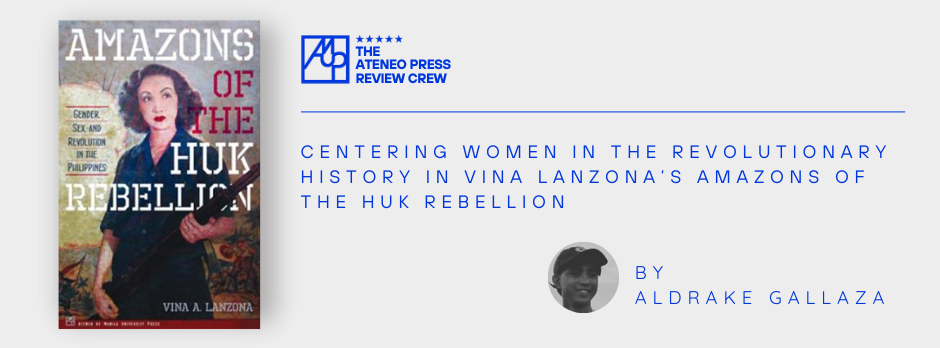
The experience and contribution of women in social and revolutionary movements are usually overlooked. In the Amazons of the Huk Rebellion: Gender, Sex, and Revolution in the Philippines, Vina Lanzona critically examines the intersection of codes of sex-gender, class, family, and of revolution, and how these codes shaped women’s place in the Huk struggle in World War II and in the postwar Philippine society.
By utilizing oral history, the author not only revealed the internal dynamics—the quotidian aspect, the complex relations and power dynamics within the movement that are often obscured in conventional sources and narratives—which contributed to the movement’s rise and decline, but also rescued the stories of ordinary women, who are largely marginalized in most of the historical accounts, to shed light on the political and personal factors that led them to join the Huk movement and that shaped their lives and identities.
The author begins by detailing the prewar lives of Huk women and the social, cultural, and political realities that helped shape their motivations to join the struggle against the Japanese. Besides political reasons and personal experience of Japanese violence and injustices, kinship networks—which are central in peasant, rural life—played a crucial part in mobilizing women to join the Hukbong Bayan Laban sa Hapon (Hukbalahap). Most women were recruited or joined the movement through close links with male members. Through these social networks, the Huk movement was able to strengthen its mass support and “emerged as one of the most successful guerilla movements in World War II.” By the end of the war, the struggle continued for the Huks, but this time against the government and American imperialism, and the movement was transformed into the Hukbong Mapagpalayang Bayan (HMB). Many women remained in the struggle and there are others who, wanting a peaceful and normal life after the war, chose to leave the movement but still continued to sympathize or support it in other ways.
Combining personal testimonies of Huk men and women, memoirs and biographies of top leaders, and party documents, the author reveals the contradictions in a radical and revolutionary organization like the Huk movement. As a male-led and -dominated military organization, gender hierarchy within the Huk movement, Lanzona writes, “rendered women invisible.” Due to the persistence of feudal and masculinist tendencies within the movement, women’s role in the guerilla movement were limited to reproductive activities. Although women were able to engage in the battlefield on some occasions, they primarily functioned as nurses, as secretaries of Huk leaders, in organizing and educating the masses in the barrios, in homemaking such as cooking and laundry, and as couriers or communication agents. Still preoccupied by traditional, rural values, women accepted these support roles in the movement. However, there were women who were able to emerge as Huk leaders and commanders in a male-dominated movement: the likes of Celia Mariano, Remedios Gomez, Felipa Culala, Simeona Punzalan, among others. These Huk women who fought alongside men—even became their commanders—shaped the discourse on the image of women in postwar Philippine society.
It is also interesting how gender relations influenced the revolutionary culture in the movement. Despite the attempt of the party to challenge the country’s dominant gender and sexual norms by integrating kasal huk (Huk marriages) into the movement, and addressing issues of children, family lives, extramarital relationships, and courtships, patriarchal assumptions on gender and sexual relations failed to properly address these conflicts. For instance, party policies on the “sex problem” ignored the status and specific needs of women in the movement and were used by politburo leaders to legitimize extramarital relationships. “These problems prevailed,” Celia Mariano argues, “due to the lack of understanding of the ‘woman question’” among the cadres.
Another strength of the book is its brilliant use and presentation of visual sources. For instance, the displayed images of captured Huk women and of Huklings (children of Huk mothers) published in newspapers demonstrates how the propaganda campaign of the government generated images of Huk women as heartless, neglectful, and selfish mothers who abandoned their children and by that not only betrayed their nations but also failed their duty as mothers. Lanzona’s study subverted such sensationalized portrayal of Huk women in public media and brought them into their proper place in history. The propaganda machine’s attempts to diminish the image of Huk women reveal how Huk women challenged the dominant image of the postwar Filipina by deviating from the traditional and domestic roles consigned to them in that conservative milieu.
Nonetheless, in a milieu where women were prescribed roles that emphasized domesticity and submission, the Huk movement provided a space for ordinary peasant women to transcend beyond the bounds of traditional feminine roles and offered them a different sense of identity and purpose—as nationalists and revolutionaries. Their image as “Amazons” presented a contrarian representation of postwar Filipina women as unconventional and extraordinary Filipinas. They were ready to leave relatively comfortable and peaceful civilian life for a life in turmoil, and they sacrificed their family lives to devote themselves to a larger cause of emancipation of the masses and the liberation of themselves as women.
In sum, Lanzona’s Amazons of the Huk Rebellion is a significant contribution to both Philippine history and gender studies, offering a nuanced analysis of the intersection between revolution, gender, and social structures. The book provides interesting perspectives for academics specializing or interested in social movements and feminist historiography, and the new source materials uncovered by Lanzona makes this a great reference for further studies. For casual readers, the book is a compelling and accessible read. The catchy titles of each chapter will definitely entice readers and encourage a deep exploration of the text. By centering the experiences of Huk women—both their struggles and their agency—Lanzona challenges dominant narratives that have long marginalized their contributions. Through extensive archival research and interviews, Lanzona did a tremendous job of bringing to light the narratives of Huk women and putting them into their rightful place in revolutionary history.
Get your copy in paperback: Shopee | Lazada | Website

Aldrake Gallaza is a graduate of BA History from the Polytechnic University of the Philippines - Sta. Mesa. His academic interests delve into intellectual history, social movements, and popular culture.
Recent News
You may also like these articles
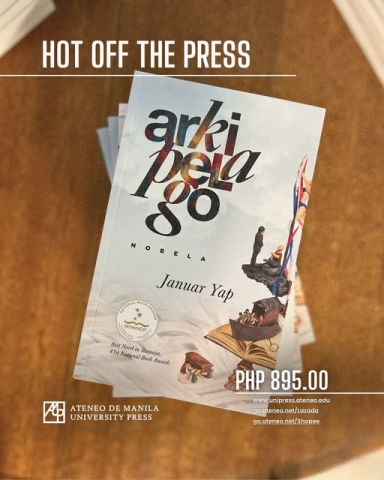
[Hot Off the Press] Arkipelago
New book from the Ateneo Press Arkipelago provides a fascinating and fantastical twist on Philippine politics and history Our country is an archipelago of stories
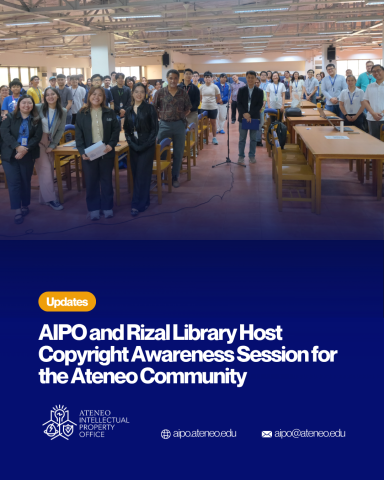
Protecting Creativity: AIPO and Rizal Library Host Copyright Awareness Session for the Ateneo Community
On March 18, 2026, the Ateneo Intellectual Property Office (AIPO), in collaboration with the Rizal Library, successfully conducted a Copyright Awareness Session held on the
Holy Week 2026 Holidays (Memo # UHR2526-038)
Memo # UHR2526-038 31 March 2026 TO: All Employees FROM: [Sgd] Maria Victoria T Cortez, PhD Vice President for University Human Resources SUBJECT: Holy Week
ASOG’s Tobacco Control initiatives spotlighted in DOH National Technical Working Group for Tobacco Prevention and Control
On March 10 to 12, 2026, the Ateneo School of Government (ASOG), through its research and public policy unit, the Ateneo Policy Center, participated in
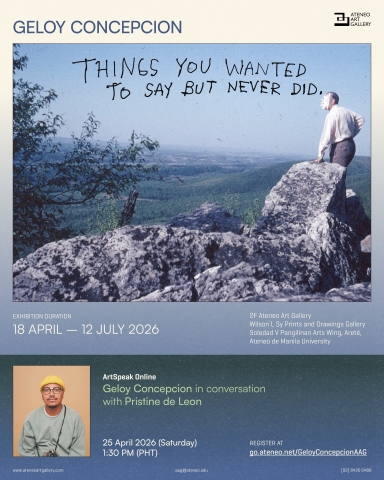
Things You Wanted to Say But Never Did: Geloy Concepcion’s six-year project makes Its exhibition debut at the Ateneo Art Gallery
Geloy Concepcion’s Things You Wanted To Say But Never Did comes to the Ateneo Art Gallery this 18 April 2026. After receiving almost 300,000 messages
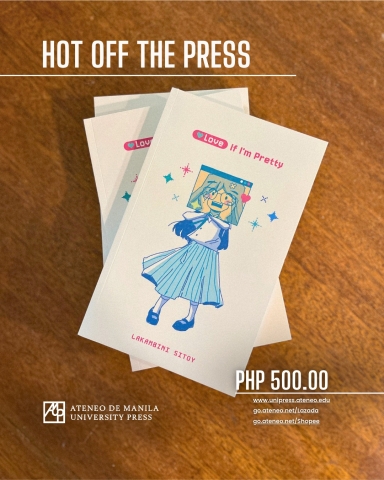
[Hot Off the Press] Love If I'm Pretty
New YA Release from the Ateneo Press Love If I’m Pretty tackles the nuances of growing up through complex characters and straightforward prose What do