Klim@Kimchi, atbp.
21 Nov 2025 | By Sebastian Raphael Ang and Jairon Lee Mejia









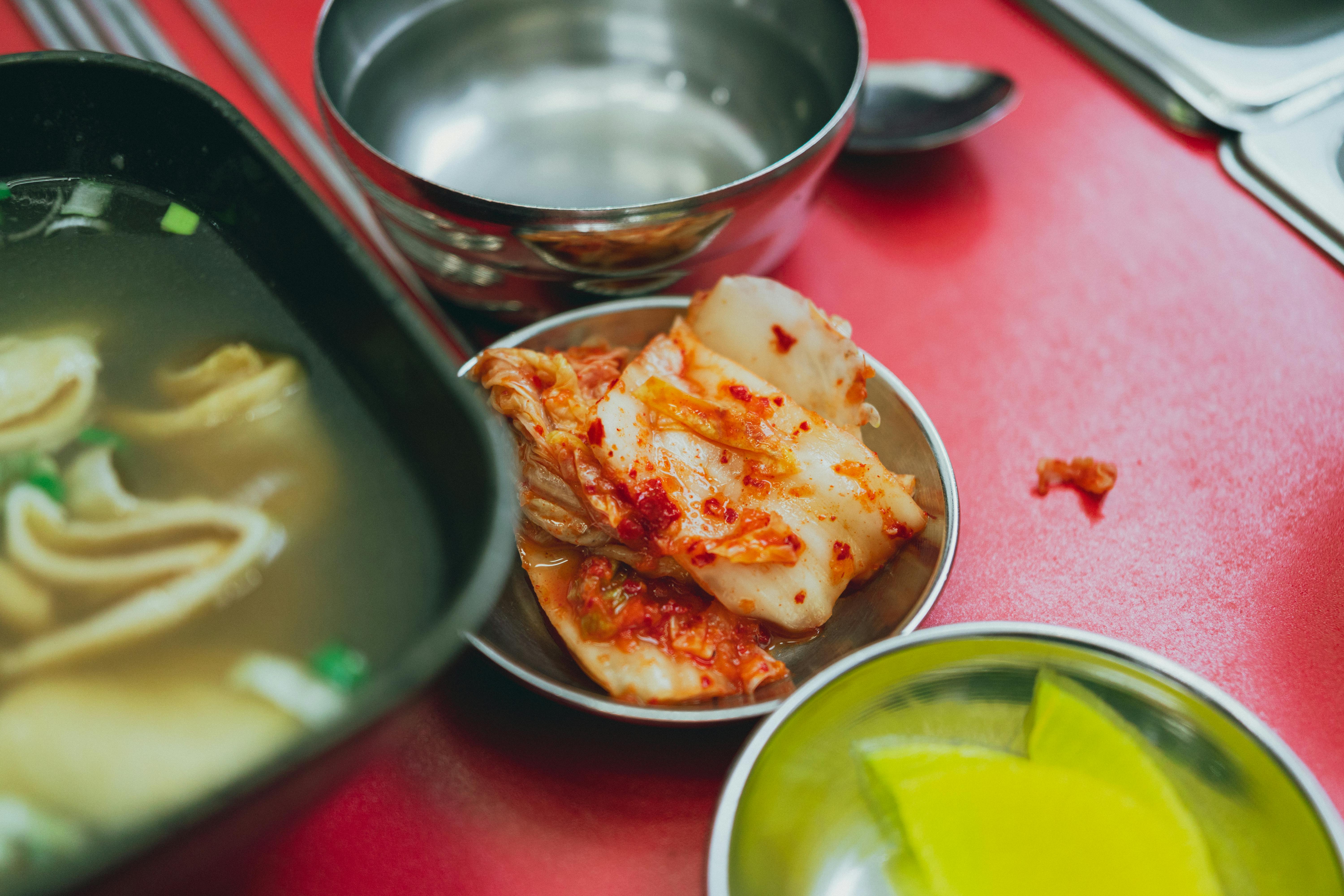
Spice invaders: Kimchi’s takeover of the Philippines and the world
Scroll through the household Filipino pantry today, and you might find a jar of kimchi nestled between our favorite Pinoy staples such as bagoong (fermented fish or shrimp paste), atsara (pickled green papaya and other vegetables), and suka (varied forms of vinegar). What used to be a foreign, fiery dish is now a familiar flavor found in our rice bowls and baunans, and even served as a side in our silog meals across the country.
No longer just a Korean staple, kimchi has carved a niche in the Philippines’ culinary and cultural landscape, spurred by the rise of Korean popular culture. This growing love affair with kimchi (and with fermented foods, in general) has a lot to do with the global spread of the Hallyu wave — K-Dramas, K-Pop, and Korean cultural trends — that have permeated the Filipino cultural consciousness and consumer behavior (Savillo, 2019; Hicap, 2025). Supermarkets and convenience stores now regularly stock Korean food items, and kimchi can be seen more often in Filipino households and restaurants. Alongside kimchi, other fermented products like gochujang (red chili paste) and doenjang (soybean paste) have started gaining traction, riding the wave of interest in Korean food, health, and wellness practices. As interest grows, so too does the appetite for consistent supply (Jung, Chae, & Shin, 2022).
However, much of the current demand for kimchi in the Philippines is still met through imports from South Korea and China. This dependence raises concerns about sustainability, especially as climate change disrupts global agriculture and supply chain logistics. Crops like napa cabbage are highly climate-sensitive — droughts, typhoons, and heatwaves in Korea have already led to shortages and price hikes (Choi & Yi, 2024). Shipping delays and rising fuel costs also make imported goods less reliable and more expensive. Further, even the slightest changes in ambient temperature have affected the taste and quality of our favorite cabbage dish due to its impacts on the fermentation process, an essential mechanism that gives kimchi its sour-spicy flavor.
As climate change reshapes what’s possible in our food systems, it becomes imperative for producers and consumers alike to understand the role and influence of the changing climate to the food we eat and enjoy and, even further, possibly rethink and evaluate our production and consumption practices towards a more sustainable and resilient future.
Growing pains: Cabbage cultivation amidst climate change
Cabbage, particularly napa cabbage, is the star ingredient of kimchi — but its cultivation is becoming increasingly fragile in the face of climate change. Studies in South Korea have shown that rising temperatures, erratic rainfall, and higher carbon dioxide levels are expected to reduce napa cabbage yield by up to 65% (Lee et al., 2016). These harsh conditions cause the cabbage to grow poorly, develop misshapen leaves, and struggle with basic processes like photosynthesis. Climate change is, quite literally, turning up the heat on a once-stable crop, making it harder and more expensive to produce the volume needed to meet the demands of making this delicious dish.
In South Korea, a major exporter of kimchi and cabbage products, farmers are already seeing the effects. Some types of cabbage grow faster in warmer temperatures, but that’s not always a good thing. When too many cabbages mature at once, it can flood the market, lower prices, and create tons of food waste (Kim, Rho, & Kim, 2022). On the other hand, sudden cold snaps, heavy rains, or droughts can wipe out entire harvests. These sudden swings in climate make it difficult for farmers to plan ahead, and the instability and volatility trickles down to the global kimchi supply chain — including in countries like the Philippines that rely heavily on imports.
Beyond weather, climate change also affects the soil where cabbage is grown. Continuous planting of napa cabbage in the same fields without rest or crop rotation can wear down the soil, making it less fertile and harder for future crops to grow (Bak & Lee, 2021). Problems like lower soil pH levels (more acidic soil) and compacted ground reduce the quality and quantity of cabbage harvests. As temperatures rise, pests and plant diseases also become more aggressive, putting more pressure on farmers who already face tight margins (Doody, 2020).
Climate change is, quite literally, turning up the heat on a once-stable crop, making it harder and more expensive to produce the volume needed to meet the demands of making this delicious dish.
Napa cabbage needs just the right conditions to thrive: cool weather, steady water, and a predictable growing season (Červenski et al., 2022). But as climate change continues to disrupt those patterns, growing cabbage becomes more of a gamble. For the Philippines, this means rising prices, unpredictable imports, and growing need to rethink our dependence on foreign fermented goods. The future of kimchi — as simple and delicious as it seems — now depends on how we respond to bigger climate challenges facing the farms that grow its key ingredient.
The heat is on: Climate’s impacts on the fermentation and food safety
The reaches and grasps of climate change don’t just end at the farm. Fermentation, the lifegiver of kimchi, is a process that relies on specific bacteria like lactic acid bacteria to preserve vegetables and enhance their health benefits. This process, although simple and self-sufficing, depends heavily on stable environments. These bacteria essential for the facilitation of fermentation thrive in precise conditions of temperature, acidity, and moisture to transform cabbage into a probiotic-rich food with anti-inflammatory properties (Patra et al., 2016; Fijan et al., 2024). But global warming introduces unpredictable temperature spikes and microbial imbalances, creating unwanted, volatile sulfur-based compounds or even suppressing beneficial bacteria (Hong et al., 2016; Mheen & Kwon, 1984). In the end, that means less reliable fermentation, shorter shelf life, and less nutritious — or even unsafe — fermented foods.
These microbial shifts aren’t just a taste or health issue: they can be dangerous. Research has shown that warmer, less controlled environments may promote the growth of harmful bacteria such as E. coli and Salmonella, especially in fermented foods that depend on natural microbial succession (Bardi, 2024). Moreover, plants under climate stress produce new sugars and compounds to survive drought and heat, but these can also shift fermentation in unintended ways (Bardi, 2024). As the chemical composition of vegetables changes, so too does that fermentation process, opening the door for spoilage and toxic byproducts. In this way, the climate crisis becomes a public health concern, not just an agricultural or ecological one.
Meanwhile, fermentation is often celebrated as a food waste solution, but even climate change complicates that too. If fermented products spoil due to unstable conditions, they become part of the 6.6% of global greenhouse gas emissions linked to food loss and waste, contributing to an increased global warming potential (Amicarelli et al., 2021; Vizcarra, 2020). Spoiled cabbage and wasted kimchi mean methane (CH₄, a potent greenhouse gas) in landfills and emissions from failed transport (Barrion et al., 2023). Tackling this issue demands change at every level of the food chain: fermented foods once symbolized human ingenuity and preserving harvested goods — now, that same ingenuity must help preserve the future of fermentation itself.
Tied to the cold chain: The climate costs of keeping kimchi cool
Cold chain logistics — the system that keeps perishable goods like fermented vegetables fresh during transport — is a double edged sword in the age of climate change. While it plays a vital role in reducing food spoilage and improving food security, it is also highly energy-intensive, relying heavily on fossil fuels and refrigeration technologies (James & James, 2010; Chen et al., 2022). These emissions, including fluorinated gases that are thousands of times more powerful than carbon dioxide, make cold chains responsible for up to 3.5% of the world’s carbon footprint (Ritter, Barker, & Carl, 2023). In the Philippines, where rising demand for imported refrigerated goods like kimchi is tied to globalized consumption trends, cold chain infrastructure expands along with its toll on the climate. The feedback loop is clear: as the world heats up, demand for cooling rises, driving up emissions even further (James & James, 2010).
The global food system already wastes over 1.6 billion tons of food annually, much of which carries a massive embedded carbon cost (Ritter, Barker, & Carl, 2023). Cold chain technologies promise to reduce this loss by extending shelf lives of products from farm to market. But this promise comes with trade-offs. In local contexts like Cebu, both traditional and modern supply chains for crops like cabbage suffer significant post-harvest losses (up to 27%), often worsened by poor packaging, heat, and handling (Gonzales, Aban, & Acedo, 2014). Investments in cold chain logistics may help reduce these losses but risk deepening our dependence on carbon-heavy systems if powered by unsustainable energy sources (Halldórsson & Kovács, 2010).
In the Philippines, where rising demand for imported refrigerated goods like kimchi is tied to globalized consumption trends, cold chain infrastructure expands along with its toll on the climate.
Climate change itself is already straining cold chain infrastructure. Rising ambient temperatures increase the risk of spoilage, forcing the cold chain to grind its gears to work harder, longer, and more expensively. In regions like Benguet, drought-resistant cabbage varieties such as Lucky Ball and Ace Green are being tested to cope with erratic weather: a reminder that agricultural adaptation must go hand-in-hand with logistical reform (Tad-Awan & Shagol, 2016). Without smarter, lower-emissions refrigeration technologies and greener energy inputs, the cold chain may help delay food decay while accelerating planetary decay (Chen et al., 2022).
Localized production and sustainable supply chains offer promising alternatives. Rather than relying on distant imports that require energy-heavy preservation and transport, supporting local agriculture can shorten supply routes, reduce emissions, and build resilience in the face of climate instability (Halldórsson & Kovács, 2010). Reimagining how we feed ourselves is an urgent step toward climate-conscious consumption.
Fermenting the future: Preserving Filipino food and climate
Fermented foods are deeply woven into the fabric of Filipino cuisine and culture. From the sweet-sour tang of atsara to the umami depth of bagoong, fermentation in the Philippines is a story of necessity, abundance, and adaptation. These foods often emerge from what is available — coconut, sugarcane, rice and corn, local vegetables, seafood — and reflect the preservation methods unique to each region and its environment (Chinte-Sanchez, 2008). They are not merely condiments or side dishes, but the lifeblood of Filipino meals. At their core, they are also technologies of survival.
With climate change threatening both food security and agricultural cycles, fermentation becomes more than a culinary tradition, it becomes a strategy. The warming climate compromises the stability of supply chains, causes more post-harvest spoilage, and disrupts crop cycles. However, fermentation, especially when done locally, can help communities preserve surplus or near-spoilage produce before it goes to waste (Martono et al., 2024). Studies even suggest that food scraps, like vegetable trimmings from carrots, cabbage, or radish, can be repurposed into nutritious fermented foods analogous to kimchi, offering a circular solution to food waste in urban areas (Martono et al., 2024). In many rural communities, where refrigeration is limited, fermentation continues to be a practical way to extend food life, especially during disasters or lean harvest months.
Fermentation is deeply tied to the environment: just as it depends on local climates and conditions, it is vulnerable to their disruption. Rising temperatures and unpredictable weather can affect the microbial balance and timing of traditional fermentation processes, challenging long-held practices. Yet research on how climate change impacts Philippine fermented food systems remains limited—leaving gaps in adaptation and community preparedness.
Despite this, the future of food fermentation in the Philippines remains promising, especially if we focus on local, sustainable practices. Supporting homegrown fermented goods like atsara or suka not only lowers carbon emissions but also strengthens food security and sovereignty, reduces food loss and waste, uplifts local livelihoods, and keeps food cultures alive. More than just a preservation method, fermentation is a philosophy of circular economy, of care and compassion, and of community resilience. It not only offers a taste of heritage, but a way forward in the face of climate uncertainty.
References
Amicarelli, V., Lagioia, G., & Bux, C. (2021). Global warming potential of food waste through the life cycle assessment: An analytical review. Environmental Impact Assessment Review, 91, 106677. https://doi.org/10.1016/j.eiar.2021.106677
Bak, G.R. & Lee, J.T. (2021). Effect of Napa Cabbage (Brassica campestris Var. pekinensis) Cropping Systems on Soil Physiochemical Properties, Yield and Quality in Alpine Area of South Korea. Korean Journal of Plant Resources, 34(4), 249–256. https://doi.org/10.7732/kjpr.2021.34.4.249
Bardi, L. (2024). Food Safety as well as Security can be Threatened by Climate Change. Ecology & Conservation Science: Open Access, 4(1), 1–3. http://dx.doi.org/10.19080/ECOA.2023.04.555627
Barrion, A. S. A., Calayag, J. A. S., Nguyen-Orca, F. J. R., & Relo-Rijik, M. N. (2023). Food loss and waste in the Philippines: a literature review. Food Research, 7(6), 278–289. https://doi.org/10.26656/fr.2017.7(6).127
Červenski, J., Vlajić, S., Ignjatov, M., Tamindžić, G., & Zec, S. (2022). Agroclimatic conditions for cabbage production. Ratarstvo I Povrtarstvo, 59(2), 43–50. https://doi.org/10.5937/ratpov59-36772
Chen, Q., Qian, J., Yang, H., & Wu, W. (2022). Sustainable food cold chain logistics: From microenvironmental monitoring to global impact. Comprehensive Reviews in Food Science and Food Safety, 21(5), 4189–4209. https://doi.org/10.1111/1541-4337.13014
Chinte-Sanchez, P. (2008). Philippine Fermented Foods: Principles and Technology. University of the Philippines Press.
Choi, S., & Yi, H.Y. (2024, September 3). Kimchi no more? Climate change puts South Korea's beloved cabbage dish at risk. Reuters. https://www.reuters.com/world/asia-pacific/kimchi-no-more-climate-change-puts-south-koreas-beloved-cabbage-dish-risk-2024-09-03/
Doody, A. (2020, February 27). Pests and diseases and climate change: Is there a connection? CIMMYT. https://www.cimmyt.org/news/pests-and-diseases-and-climate-change-is-there-a-connection/
Fijan, S., Fijan, P., Wei, L., & Marco, M. L. (2024). Health benefits of kimchi, sauerkraut, and other fermented foods of the genus Brassica. Applied Microbiology, 4(3), 1165–1176. https://doi.org/10.3390/applmicrobiol4030079
Gonzales, L. M. R., Aban, M. L., & Acedo, A. L. (2014). Supply chain mapping and postharvest losses of cabbage in traditional and modern chains in Cebu, Philippines. Proceedings of the International Conference on Chemical, Environment & Biological Sciences (CEBS-2014), Malaysia. http://dx.doi.org/10.15242/IICBE.C914092
Halldórsson, Á., & Kovács, G. (2010). The sustainable agenda and energy efficiency. International Journal of Physical Distribution & Logistics Management, 40(1/2), 5–13. https://doi.org/10.1108/09600031011018019
Hicap, J. (2025, January 31). K-pop continues to captivate the Philippines. Manila Bulletin. https://125.mb.com.ph/k-pop-continues-to-captivate-the-philippines/
Hong, S. P., Lee, E. J., Kim, Y. H., & Ahn, D. U. (2016). Effect of Fermentation Temperature on the Volatile Composition of Kimchi. Journal of Food Science, 81(11), C2623–C2629. https://doi.org/10.1111/1750-3841.13517.
James, S., & James, C. (2010). The food cold-chain and climate change. Food Research International, 43(7), 1944–1956. https://doi.org/10.1016/j.foodres.2010.02.001
Jung, S., Chae, S., & Shin, D. (2022, December 9). Traditional fermented foods in Korea. Encyclopedia. https://encyclopedia.pub/entry/37409
Kim, S., Rho, H. Y., & Kim, S. (2022). The Effects of Climate Change on Heading Type Chinese Cabbage (Brassica rapa L. ssp. Pekinensis) Economic Production in South Korea. Agronomy, 12(12), 3172. https://doi.org/10.3390/agronomy12123172
Lee, S. G., Kim, S. K., Lee, H. J., Choi, C. S., & Park, S. T. (2016). Impacts of climate change on the growth, morphological and physiological responses, and yield of Kimchi cabbage leaves. Horticulture Environment and Biotechnology, 57(5), 470–477. https://doi.org/10.1007/s13580-016-1163-9
Martono, V. T., Montela, W., Venessa, M., Hendratno, S. P., Romulo, A., & John, L. C. G. (2024). Kimchi from Vegetable Scrap as Implementation of Circular Economy – Case Study in Urban Area.IOP Conference Series Earth and Environmental Science, 1425(1), 012034. https://doi.org/10.1088/1755-1315/1425/1/012034
Mheen, T.I., & Kwon, T.W. (1984). Effect of Temperature and Salt Concentration on Kimchi Fermentation. Korean Journal of Food Science and Technology, 16(4), 443–450.
Patra, J. K., Das, G., Paramithiotis, S., & Shin, H. (2016). Kimchi and other widely consumed traditional fermented foods of Korea: a review. Frontiers in Microbiology, 7. https://doi.org/10.3389/fmicb.2016.01493
Ritter B., Barker, C., & Karl, K. (2023, January 27). Expanding global cold chains: effective adaptation, or dangerous contribution to climate change? State of the Planet. https://news.climate.columbia.edu/2023/01/27/expanding-global-cold-chains-effective-adaptation-or-dangerous-contribution-to-climate-change/
Savillo, L. (2019, December 13). The Korean wave has hit the Philippines hard, so we asked fans why they love the culture so much. VICE. https://www.vice.com/en/article/korean-wave-hallyu-philippines-filipino-fans-k-pop/
Tad-Awan, B. A., & Shagol, C. C. (2016). Varietal response of cabbage to drought conditions in La Trinidad, Benguet, Philippines. Mountain Journal of Science and Interdisciplinary Research (Formerly Benguet State University Research Journal), 76, 45–52. https://doi.org/10.70884/mjsir.v76i0.5
Vizcarra, N. (2020, May 7). How fermentation’s new heyday is benefitting human and planetary health. Think Landscape. https://thinklandscape.globallandscapesforum.org/44165/how-fermentations-new-heyday-is-benefitting-human-and-planetary-health/
Recent News
You may also like these articles

[Hot Off the Press] Arkipelago
New book from the Ateneo Press Arkipelago provides a fascinating and fantastical twist on Philippine politics and history Our country is an archipelago of stories

Protecting Creativity: AIPO and Rizal Library Host Copyright Awareness Session for the Ateneo Community
On March 18, 2026, the Ateneo Intellectual Property Office (AIPO), in collaboration with the Rizal Library, successfully conducted a Copyright Awareness Session held on the

Holy Week 2026 Holidays (Memo # UHR2526-038)
Memo # UHR2526-038 31 March 2026 TO: All Employees FROM: [Sgd] Maria Victoria T Cortez, PhD Vice President for University Human Resources SUBJECT: Holy Week
ASOG’s Tobacco Control initiatives spotlighted in DOH National Technical Working Group for Tobacco Prevention and Control
On March 10 to 12, 2026, the Ateneo School of Government (ASOG), through its research and public policy unit, the Ateneo Policy Center, participated in

Things You Wanted to Say But Never Did: Geloy Concepcion’s six-year project makes Its exhibition debut at the Ateneo Art Gallery
Geloy Concepcion’s Things You Wanted To Say But Never Did comes to the Ateneo Art Gallery this 18 April 2026. After receiving almost 300,000 messages

[Hot Off the Press] Love If I'm Pretty
New YA Release from the Ateneo Press Love If I’m Pretty tackles the nuances of growing up through complex characters and straightforward prose What do