Prof Rex Hou explores tidal poetics and archipelagic joy in Kritika Kultura lecture
12 Nov 2025



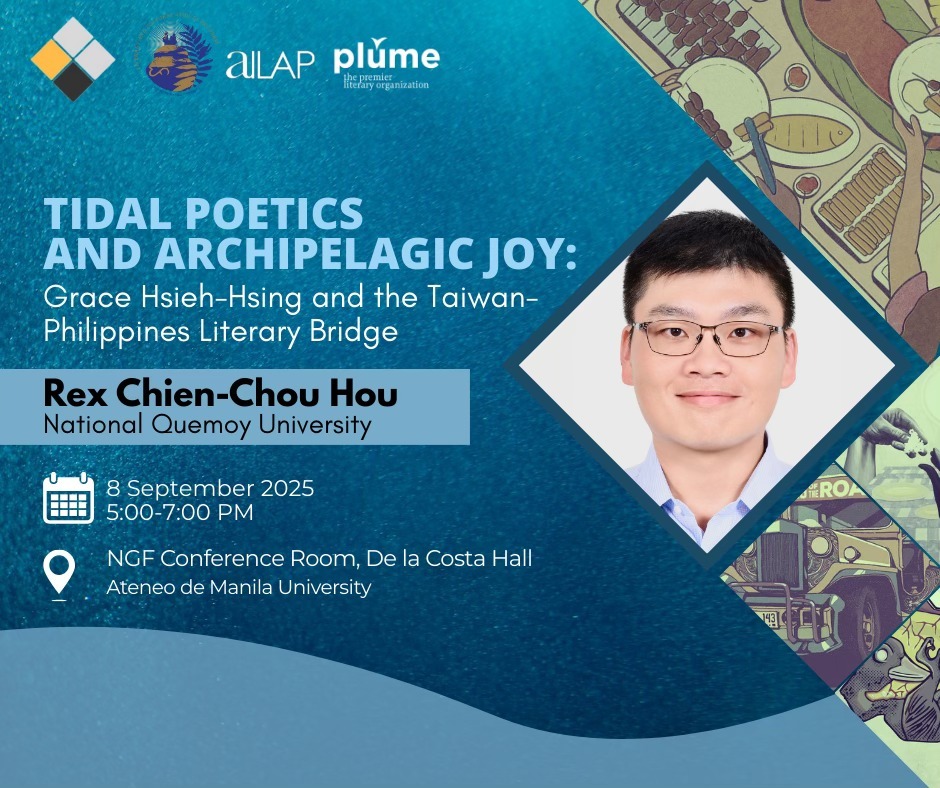
On 8 September 2025, Kritika Kultura, in collaboration with the Literary and Cultural Studies Program, the Ateneo Institute of Literary Arts and Practices (AILAP), and PLUME, hosted a lecture by Prof Rex Chien-Chou Hou of National Quemoy University, Taiwan. The lecture, titled "Tidal Poetics and Archipelagic Joy: Grace Hsieh-Hsing and the Taiwan-Philippines Literary Bridge," was held at the NGF Conference Room, De la Costa Hall, Ateneo de Manila University.
The program began with Sharmaine Hernandez of AILAP, who welcomed the audience and introduced the Kritika Kultura Lecture Series as part of the journal's commitment to fostering interdisciplinary dialogue. She then invited Dr Patricia P Lambino, Dean of the School of Humanities, to deliver the opening remarks. Dr Lambino underscored the importance of continuing transnational conversations in literature and culture, framing the afternoon's discussion as part of a broader intellectual exchange. Hernandez later introduced the guest speaker, presenting Prof Hou's scholarly and creative background as a poet, Sinophone writer, and associate professor of Chinese Studies at National Quemoy University.
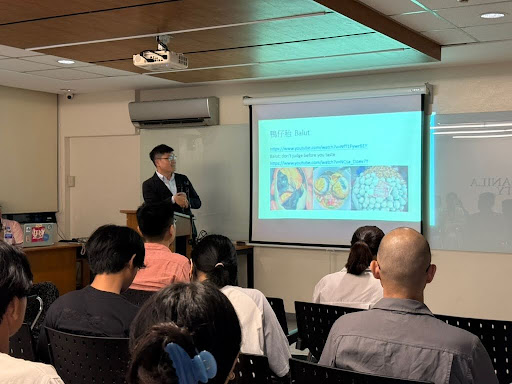
In his lecture, Prof Hou examined the works of Grace Hsieh-Hsing (1938–2021), a Taiwan-born poet who migrated to the Philippines in the 1960s and later became a Filipino citizen. He proposed the concept of "tidal poetics" to describe how Hsieh-Hsing reimagined the Philippine archipelago as a metaphor for artistic creation and cultural identity. Through close readings of her trilingual poetry in Chinese, English, and Filipino, Hou highlighted images such as balut, jeepneys, cockfighting, and kamayan feasts that rooted her work in Philippine culture while simultaneously engaging Taiwan-Philippines connections.
Hou emphasized that Hsieh-Hsing's Filipino identity was an act of choice, reflecting her commitment to her adopted home. Her involvement in the Southern Island Poetry Society exemplified her efforts to create literary communities that transcended Cold War boundaries. He also contextualized her works, Halo-Halo: Poems of the Philippines and Floating Life, Poetic Shadows, within the broader framework of Philippine Sinophone literature and the Philippine Sinophone Poetry Exhibitions featured in Taiwan's Sunshine Collection. The lecture concluded with Hou reading selections from his own poetry, reflecting on how Hsieh-Hsing's poetics continues to inspire contemporary creative dialogue.
During the open forum, participants raised questions on identity, diaspora, and the possibilities of archipelagic poetics in rethinking cultural and historical ruptures. The event ended with Dr Vincenz Serrano, Editor-in-Chief of Kritika Kultura, delivering the closing remarks, where he thanked Prof. Hou for his insights and emphasized the journal's ongoing commitment to creating spaces for critical and creative engagement.
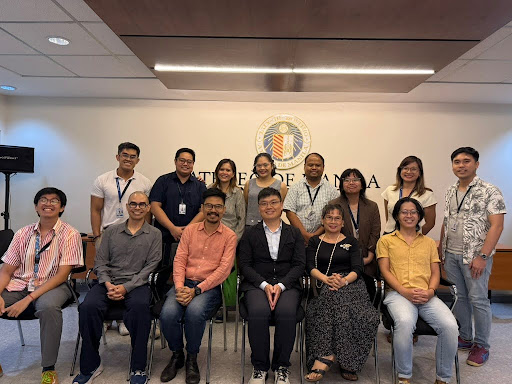
The lecture formed part of the Kritika Kultura Lecture Series, which provides a platform for scholars and writers to share emerging work in literature, culture, and critical theory.
Recent News
You may also like these articles
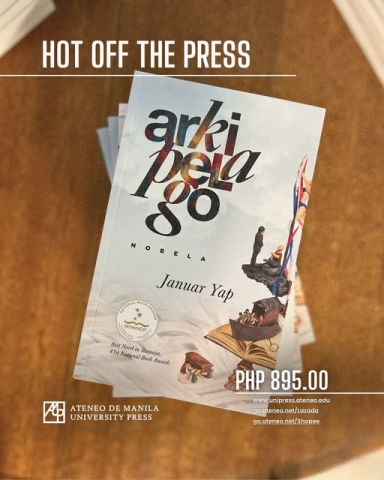
[Hot Off the Press] Arkipelago
New book from the Ateneo Press Arkipelago provides a fascinating and fantastical twist on Philippine politics and history Our country is an archipelago of stories
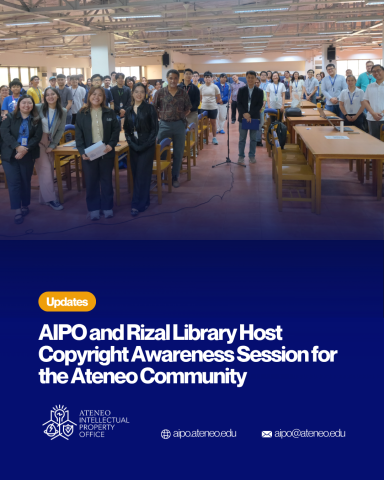
Protecting Creativity: AIPO and Rizal Library Host Copyright Awareness Session for the Ateneo Community
On March 18, 2026, the Ateneo Intellectual Property Office (AIPO), in collaboration with the Rizal Library, successfully conducted a Copyright Awareness Session held on the
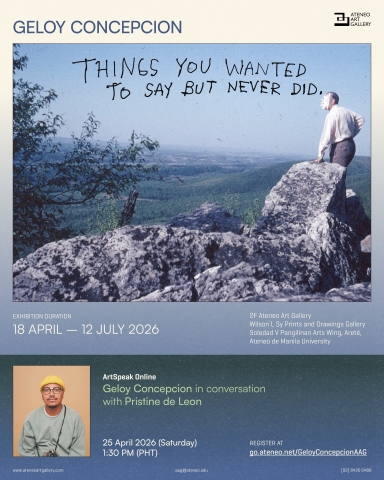
Things You Wanted to Say But Never Did: Geloy Concepcion’s six-year project makes Its exhibition debut at the Ateneo Art Gallery
Geloy Concepcion’s Things You Wanted To Say But Never Did comes to the Ateneo Art Gallery this 18 April 2026. After receiving almost 300,000 messages
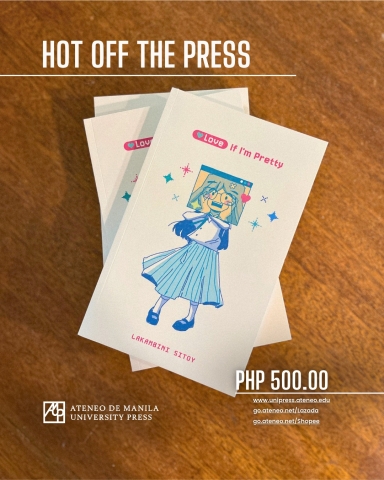
[Hot Off the Press] Love If I'm Pretty
New YA Release from the Ateneo Press Love If I’m Pretty tackles the nuances of growing up through complex characters and straightforward prose What do
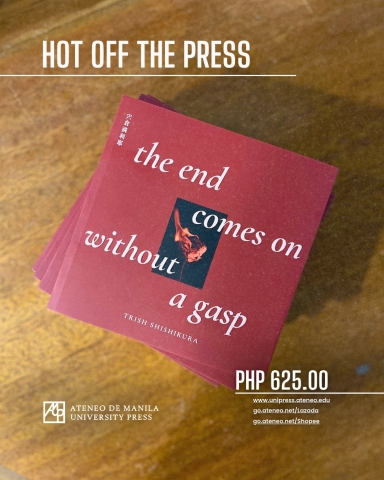
[Hot Off the Press] the end comes on without a gasp
the end comes on without a gasp: Trish Shishikura’s debut poetry collection arrives from Ateneo de Manila University Press (Bughaw) Ateneo de Manila University Press
QS Subject Rankings 2026: Ateneo in top 100 for theology; ranked in 7 subject areas
Ateneo de Manila University is among the top institutions in seven subject areas, and among the top 100 for theological and religious studies, according to