Klim@Karne
16 Dec 2025 | Odessa Julienne Rebaya and Lorenzo Joseph S Sierra




What if the burger you eat isn’t just a slab of meat processed into food? What if it’s a footprint of nature’s interaction and a story of the world we live in?
Consumers are often told that meat consumption contributes to climate change, and there's truth to that. The livestock sector is responsible for about 14.5% of global greenhouse gas emissions, primarily from methane (CH4) produced by cattle (FAO, 2013). This narrative tackles significant environmental discussions: our appetite for meat is changing the planet.
But what’s less talked about, yet equally urgent, is how climate change is changing meat. This article won't rehash how meat impacts climate change—that's a conversation that's been had. Instead, we're diving into the less-explored, critical ways a warming world is transforming the meat on our plates.
Every bite carries the trail of the grass the cow consumed, the water it drank, and the sun, temperature, and rain that touched its skin. It’s more than just meat being food; it’s a product of a system that depends entirely on a chain of interactions between water, food, and energy.
When that chain is under pressure from a changing climate, the meat tells a different story.
Today's rising global temperatures, erratic rainfall, and more frequent extreme weather events like droughts and floods are already disrupting agricultural yields and devastating pastures worldwide. Even more worryingly, this directly impacts livestock by causing heat stress, reducing the quality and quantity of feed, and increasing the spread of diseases, ultimately threatening the very foundation of meat production and its accessibility. (United Nations, 2025)
So as the climate continues to shift, we must ask: what happens to the meat on our tables when the animals, lands, systems, and cultures that produce it begin to break down?
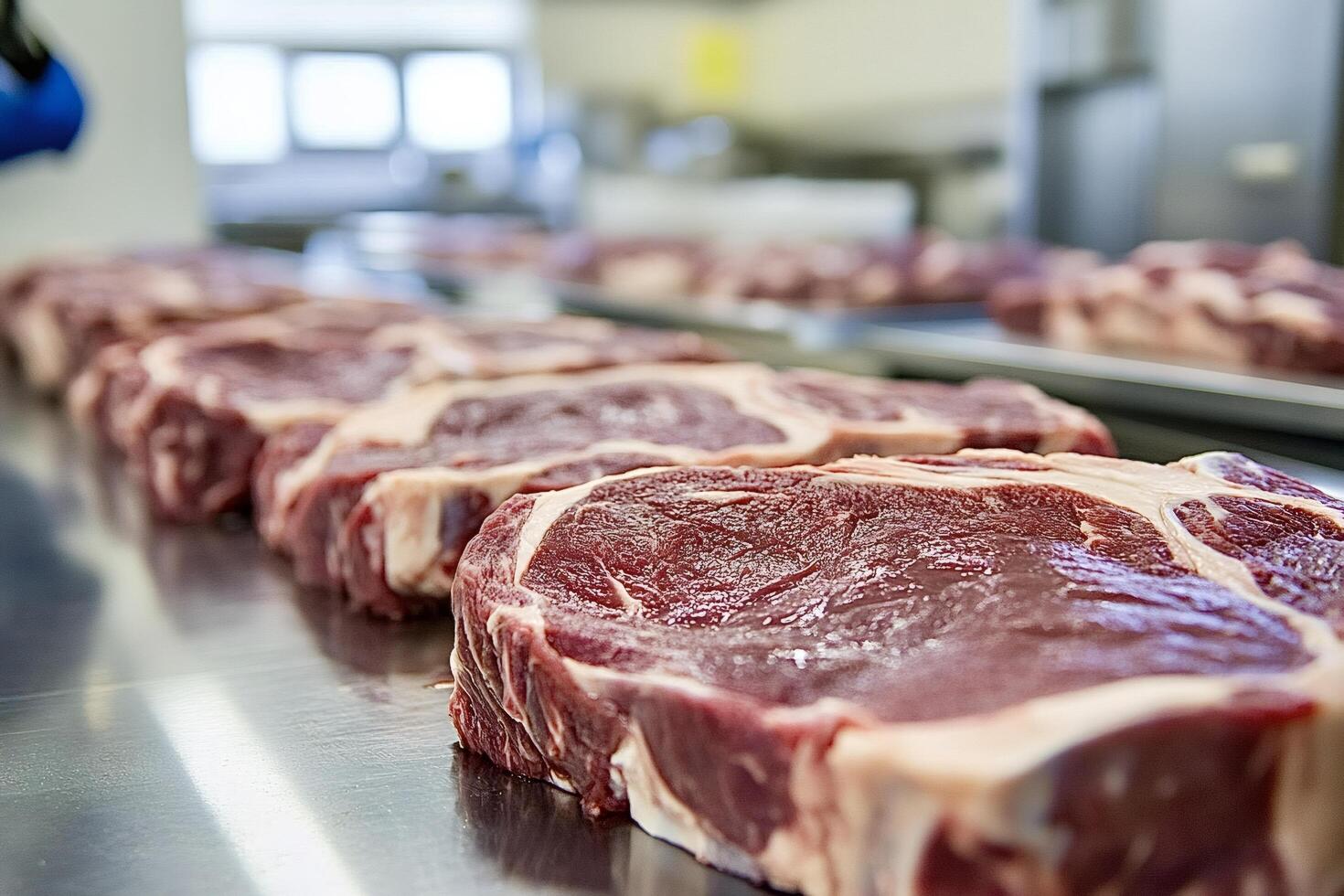
Quality Under Pressure: Climate's Toll on Meat Products
Climate change imposes severe stress on livestock systems, disrupting animal health and growth cycles in significant ways. Heat stress causes livestock, especially poultry, pigs, and cattle, to reduce feed intake by 3–5% for each degree above 30°C (Das et al., 2016). This leads to impaired metabolism, immunity, hydration, and performance, lowering growth rates and increasing mortality. Poultry under chronic heat stress exhibit up to 16% reduced feed intake, 32% lower body weight gain, elevated stress markers, and impaired gut integrity (Mangan & Siwek, 2023). These physiological changes reduce overall meat yield and productivity (Nwokoro & Chukwuka, 2020).
Water scarcity and drought further compound these challenges by restricting hydration and reducing water availability for drinking and sanitation. In regions with limited infrastructure, such conditions can rapidly escalate into animal welfare crises. In South Korea, nearly 160,000 livestock died in a single day due to sustained heat waves, with the national toll nearing 380,000 (Kim, Lee, & Park, 2024). Reports from the Philippines indicate rising temperatures have negatively impacted carabao reproduction and milk production (Climate Tracker Asia, 2024), while heat stress also causes abnormal mortality rates in backyard swine (DA-AFID, 2019). These cases reflect how climate-induced stress directly impairs animal health and growth, ultimately threatening the stability of meat production systems.
When the Heat is On
Beyond animal growth, climate stress also compromises meat quality and shelf life. Physiological stress reduces muscle mass, alters fat distribution, and increases water loss from carcasses, resulting in meat that is less tender, less flavorful, and less stable. For example, broiler chickens under heat stress show higher drip loss (fluid loss from uncooked meat), lower pH, and poor color, all factors that diminish consumer acceptability (Nawaz et al., 2021). Furthermore, heat stress weakens the immune system, leaving animals and meat by-products more susceptible to disease both before and after slaughter. This susceptibility raises the risk of disease outbreaks and bacterial contamination during processing (Akinyemi & Adewumi, 2023). High ambient temperatures also accelerate oxidation and spoilage during transport and storage, increasing post-harvest losses, and ultimately, food waste. These combined effects make it harder for meat to meet safety, quality, and market standards, especially in tropical and low-resource settings where refrigeration and supply chain resilience are already limited (Hodges et al., 2010).
The consequences of climate change also include alarming livestock losses due to extreme weather events. Heatwaves, blizzards, floods, and droughts cause direct mortality on a large scale. In addition to the 2024 livestock deaths in South Korea, past examples include the 2019–2020 Australian bushfires, which reportedly displaced or killed up to 3 billion animals, including approximately 100,000 sheep and cattle (Stephens, 2020). In Mongolia, extreme winters known as dzud have led to the starvation of livestock herds dependent on fragile pasture systems. These events lead not only to short-term supply reductions but also to long-term recovery challenges for affected producers, many of whom are smallholders lacking the capital to rebuild. In the Philippines, repeated typhoons have intensified the vulnerability of livestock-dependent rural communities, further exacerbating rural poverty and food insecurity (World Bank, 2022).
Fragile Foundations: Climate's Grip on the Meat Supply Chain
Environmental shocks from climate change also severely affect meat supply chains through damage to feed and transport infrastructure. Droughts reduce the quality and quantity of pasture, while floods and wildfires destroy feed crops and stored grain. These effects restrict access to the nutrients animals need, further reducing productivity and fertility. Global feed crop production has already experienced volatility due to shifting climate conditions, impacting both grazing animals and industrial meat operations (Van Zyl & Meissner, 2020). Additionally, extreme weather disrupts infrastructure, damaging roads, bridges, ports, and processing facilities (World Bank, 2022). In Southeast Asia, floods have repeatedly delayed the transport of livestock and meat products, while hurricanes in the United States have shut down large-scale meatpacking plants, resulting in widespread shortages. Such bottlenecks increase costs across the supply chain, raising prices for both producers and consumers.
As a result of these compounded disruptions, the meat industry is facing growing volatility in pricing. Reduced yields from livestock losses and feed shortages drive down supply, while increased costs of transportation, feed, veterinary care, and cooling infrastructure are passed on to consumers (Godde et al., 2021). Climate-induced damage amplifies food inflation, particularly in regions already experiencing high levels of food insecurity (Tchonkouang et al., 2024). In response, consumer behavior shifts with some reducing their meat intake due to affordability, while others substitute in cheaper or lower-quality alternatives, affecting dietary nutrition. Economic analyses show that climate change events have increasingly caused commodity price spikes, with meat being one of the most sensitive sectors. Without robust climate adaptation strategies, meat prices are expected to remain erratic, disproportionately affecting low-income populations.
The Equity Equation: Who Pays the Price for a Warming World?
Climate change creates a dual burden, reducing meat access in some regions while itself being spurred by overconsumption in others, carrying with it health-related risks.
The equity and nutritional dimensions of this crisis are significant. Rising meat costs reduce access to animal protein in food-insecure regions, where vulnerable populations already face limited purchasing power (Maqbool et al., 2024). In many developing countries, livestock is not only a dietary staple but also a cultural and economic pillar. The increasing price of meat exacerbates malnutrition, especially among children and pregnant women who rely on high-quality protein for growth and development, especially in areas where alternatives might not be readily available. At the same time, shifts toward higher meat consumption in other parts of the world raise additional public health concerns, such as increased risks of heart disease and diabetes. Therefore, climate change creates a dual burden, reducing meat access in some regions while itself being spurred by overconsumption in others, carrying with it health-related risks. Meanwhile, smallholder farmers and low-resource producers face structural barriers in adapting to these challenges. They often lack access to finance, insurance, and technology needed for resilient livestock systems. National policy frameworks frequently fail to include climate adaptation for small-scale livestock production, leaving a critical gap. While some adaptation programs have shown success, such as mobile cooling units or drought-tolerant forage varieties, many others fall short due to poor implementation or limited reach (World Bank, 2022).
It is also important to acknowledge the meat industry’s role in contributing to climate change. Livestock systems account for approximately 14.5% of global greenhouse gas emissions, primarily through methane (CH4) from enteric fermentation and nitrous oxide (N2O) from manure and fertilizer use (Musa, 2020). Livestock farming also drives deforestation, particularly for pastureland and soy feed production, and consumes vast amounts of water. These factors form a feedback loop: climate change stresses animals, reducing productivity, which in turn leads to more emissions per unit of meat or milk produced (Cheng et al., 2022). For instance, animals under heat stress require more feed to reach market weight, increasing land, water, and energy use per animal. Addressing this cycle is crucial if we are to make livestock systems more sustainable and climate-resilient.
Cultural Cuts
Lastly, climate change has cultural and religious implications, particularly for communities with specific dietary traditions. Halal and non-halal meat production may be disproportionately affected if certain breeds, regions, or practices become unviable due to heat, drought, or disease. In Muslim-majority regions, where differentiating halal meat is a religious necessity, supply disruptions could impact spiritual and nutritional well-being. Similarly, indigenous and local communities with pastoral traditions face the erosion of cultural identity as livestock systems collapse. In Mongolia, the collapse of traditional herding due to climate change events and impacts has led to mass migration and the disintegration of cultural practices tied to livestock (UNDP Climate Change Adaptation, 2023). On a global scale, these cultural disruptions could alter meat trade dynamics and consumer preferences, potentially increasing demand for alternative proteins or reshaping global meat markets to accommodate shifting religious and traditional requirements.
In short, climate change is reshaping the meat economy at every stage—from farm to fork—by disrupting animal health, reducing meat quality, causing mass mortality, damaging infrastructure, driving price volatility, and deepening inequality. It also intersects with cultural identity and global food systems, challenging existing norms. Addressing these issues will require comprehensive adaptation strategies, including better animal management, climate-resilient infrastructure, financial and policy support for smallholders, and a deeper understanding of cultural food systems. Simultaneously, efforts must continue to reduce the livestock sector’s environmental footprint to prevent further intensifying the crisis it already faces.
The climate crisis is already here, and our food systems are on the front lines.
To protect meat production in a warming world, we need to rethink how we raise animals. This means investing in climate-adaptive breeds like heat-tolerant Zebu cattle (Henry et al., 2018), improving shelters, and using precision livestock technologies such as thermal controls to reduce heat stress (Wei et al., 2025). In line with this, supporting farmers with early‑warning weather systems and emergency fodder banks can also help them stay resilient during droughts and extreme weather (UNISDR, 2004).
Climate change is reshaping the meat economy at every stage—from farm to fork—by disrupting animal health, reducing meat quality, causing mass mortality, damaging infrastructure, driving price volatility, and deepening inequality.
Additionally, strengthening our meat supply chain is just as urgent. As such, we need better infrastructure—like water harvesting systems, feed storage, and cold-chain transport—to keep meat safe and accessible (NIFA, 2023; UNDP, 2022). Moreover, solutions like silvopasture, which combine trees and grazing lands, can protect animals, improve soil, and open new sources of income for farmers (U.S. Forest Service, 2020).
More than that, these solutions must reach those who need them most. Inclusive policies—like India’s NICRA program, which supports farmers through community fodder banks and climate-resilient training—show how the right frameworks can empower smallholders (Manju Prem S. et al., 2024). Smallholder farmers—who grow much of our food—receive less than 1% of global climate finance (According to AP News during COP29) and are often left to adapt on their own (Walling, 2024). This is echoed locally: BenarNews reported that in the Philippines, many use their own limited resources to cope with climate stress (Elemia, 2025). It’s time to change that through fairer policies, direct financial support, and inclusive programs that prioritize the needs of local farmers and consumers.
As 2030 nears and climate impacts deepen, can we still secure food for all without rethinking how much, how often, and how responsibly we consume meat?
References:
Akinyemi, F. T., & Adewumi, A. O. (2023). Heat stress in poultry production: implications on growth, meat quality and welfare. Journal of Animal Physiology and Animal Nutrition, 107(2), 392–402. https://doi.org/10.1111/jpn.13916
Cheng, M., McCarl, B., & Fei, C. (2022). Climate Change and Livestock Production: A Literature Review. Atmosphere, 13(1), 140–140. https://doi.org/10.3390/atmos13010140
Climate Tracker Asia. (2024). Scorching heat takes toll on Philippine carabaos. https://climatetracker.asia/scorching-heat-takes-toll-on-philippine-carabaos
DA-AFID. (2019). DA-CMTF Bulletin No. 2: Abnormal Swine Deaths in Backyard Farms - Official Portal of the Department of Agriculture. Official Portal of the Department of Agriculture. https://www.da.gov.ph/department-of-agriculture-da-bulletin-no-2-abnormal-swine-deaths-in-backyard-farms/
Das, R., Sailo, L., Verma, N., Bharti, P., Saikia, J., Imtiwati, & Kumar, R. (2016). Impact of heat stress on health and performance of dairy animals: A review. Veterinary world, 9(3), 260–268. https://doi.org/10.14202/vetworld.2016.260-268
Elemia, C. (2025, February 28). Climate finance eludes small farmers, fishers in Philippines. Benar News. https://www.benarnews.org/english/news/philippine/climate-finance-philippines-farmers-fishers-02282025142840.html
Food and Agriculture Organization. (2013). TACKLING CLIMATE CHANGE THROUGH LIVESTOCK. https://openknowledge.fao.org/server/api/core/bitstreams/492bb0b2-8b73-4e49-b188-8176b1d8c711/content
Food and Agriculture Organization of the United Nations (FAO). (2013). Tackling climate change through livestock: A global assessment of emissions and mitigation opportunities. FAO. https://www.fao.org/3/i3437e/i3437e.pdf
Godde, C.M., Mason-D’Croz, D., Mayberry, D. E., Thornton, P. K., & Herrero, M. (2021). Impacts of climate change on the livestock food supply chain; a review of the evidence. Global Food Security, 28, 100488–100488. https://doi.org/10.1016/j.gfs.2020.100488
Henry, B. K., Eckard, R. J., & Beauchemin, K. A. (2018). Review: Adaptation of ruminant livestock production systems to climate changes. ScienceDirect. https://www.sciencedirect.com/science/article/pii/S1751731118001301
Hodges, Rick & Buzby, Jean & Bennett, B.. (2011). Postharvest losses and waste in developed and less developed countries: Opportunities to improve resource use. The Journal of Agricultural Science. 149. 37 - 45. 10.1017/S0021859610000936.
Kim, Y. J., Lee, H. S., & Park, Y. W. (2024, June). Heat wave impact: 160,000 livestock dead in South Korea. Tridge. https://www.tridge.com/news/heat-wave-continues-160000-livestock-die-in--hqczwi
Mangan, M., & Siwek, M. (2023). Strategies to combat heat stress in poultry production—A review. Journal of Animal Physiology and Animal Nutrition, 108(3), 576–595. https://doi.org/10.1111/jpn.13916
Manju Prem S., Jayalekshmi G., Mohanraj M., Mohamed Aseemudheen M., & Manobharathi K. (2024). National innovations in climate resilient agriculture (NICRA): The reservoir of resilience enhancement. International Journal of Agriculture Extension and Social Development, 7(2), 340–346. https://doi.org/10.33545/26180723.2024.v7.i2e.344
Maqbool, M. E., Farhan, A., & Qamar, M. A. (2024). Global impact of COVID-19 on food safety and environmental sustainability: Pathways to face the pandemic crisis. Heliyon, 10(15), e35154. https://doi.org/10.1016/j.heliyon.2024.e35154
Musa, A. A. (2020). Contribution of Livestock Production to Global Greenhouse Gas Emission and Mitigation Strategies. Journal of Zoological Research, 1(3). https://doi.org/10.30564/jzr.v1i3.2006
National Institute of Food and Agriculture (NIFA). (2023). Cultivating future agricultural innovations for climate resilience. U.S. Department of Agriculture. https://www.nifa.usda.gov/about-nifa/impacts/cultivating-future-agricultural-innovations-climate-resilience
Nawaz, A. H., Amoah, K., Leng, Q. Y., Zheng, J. H., Zhang, W. L., & Zhang, L. (2021). Poultry Response to Heat Stress: Its Physiological, Metabolic, and Genetic Implications on Meat Production and Quality Including Strategies to Improve Broiler Production in a Warming World. Frontiers in Veterinary Science, 8. https://doi.org/10.3389/fvets.2021.699081
Nwokoro, S. O., & Chukwuka, K. S. (2020). Water requirements of livestock under climate variability. Nigerian Journal of Animal Production, 47(3), 80–88. Palmer, L. (2024, March 21). Global heating could cause an extra 1.2m lamb deaths in Australia each year, study finds. The Guardian. https://www.theguardian.com/australia-news/2024/mar/21/global-heating-could-cause-an-extra-12m-lamb-deaths-in-australia-each-year-study-finds
ScienceDirect. (2023). Modeling the impacts of climate change on Australian sheep mortality. https://www.sciencedirect.com/science/article/abs/pii/S0306456523002814
Stephens, T. (2020, September). Climate Change and Livestock Welfare. Vets for Climate Action. https://www.vfca.org.au/livestock
Tchonkouang, R. D., Onyeaka, H., & Hugue Nkoutchou. (2024). Assessing the vulnerability of food supply chains to climate change-induced disruptions. The Science of the Total Environment, 920, 171047–171047. https://doi.org/10.1016/j.scitotenv.2024.171047
UNDP Climate Change Adaptation. (2023, September 27). Preserving nomadic tradition in a changing climate: The path forward for Mongolian herders | UNDP Climate Change Adaptation. Adaptation-Undp.org. https://www.adaptation-undp.org/preserving-nomadic-tradition-changing-climate-path-forward-mongolian-herders
United Nations. (2025). What is climate change? | United Nations. https://www.un.org/en/climatechange/what-is-climate-change
United Nations Development Programme (UNDP). (2022). Feed, fodder and forage production and storage. SDG Investor Platform. https://sdgprivatefinance.undp.org/leveraging-capital/sdg-investor-platform/feed-fodder-and-forage-production-and-storage
United Nations International Strategy for Disaster Reduction (UNISDR). (2004). Living with risk: A global review of disaster reduction initiatives (Vol. 1). https://www.unisdr.org/files/1882_VL102149.pdf
United Nations World Food Programme (WFP). (2023). The impact of climate shocks on food security in vulnerable communities. https://www.wfp.org/publications
University of Florida IFAS Extension. (2025). Heat stress and its impact on cattle reproduction. https://nwdistrict.ifas.ufl.edu/phag/2025/03/14/heat-stress-and-its-impact-on-cattle-reproduction
U.S. Forest Service. (2020). Silvopasture. USDA National Agroforestry Center. https://www.fs.usda.gov/nac/practices/silvopasture.php
Van Zyl, N., & Meissner, H. (2020). The effect of climate change on feed and pasture availability. South African Journal of Animal Science, 50(5), 601–613. https://doi.org/10.4314/sajas.v50i5.6
Walling, M. (2024, November 19). At UN climate talks, farmers argue for money to fight climate change. AP News. https://apnews.com/article/cop29-climate-change-agriculture-fossil-fuels-aid-developing-deabe207761fcda55e373e447b1b6cf1
Wei, M., Zhang, J., Koerkamp, P. G., Aarnink, A., & Sun, C. (2025, May 31). Modeling and optimal control of thermal environment in pig houses. arXiv.org. https://arxiv.org/abs/2506.00502
World Bank. (2022). Livestock and climate change: A global perspective. https://www.worldbank.org/en/topic/climatechange/publication/livestock-and-climate-change
Recent News
You may also like these articles

[Hot Off the Press] Arkipelago
New book from the Ateneo Press Arkipelago provides a fascinating and fantastical twist on Philippine politics and history Our country is an archipelago of stories
Protecting Creativity: AIPO and Rizal Library Host Copyright Awareness Session for the Ateneo Community
On March 18, 2026, the Ateneo Intellectual Property Office (AIPO), in collaboration with the Rizal Library, successfully conducted a Copyright Awareness Session held on the
Holy Week 2026 Holidays (Memo # UHR2526-038)
Memo # UHR2526-038 31 March 2026 TO: All Employees FROM: [Sgd] Maria Victoria T Cortez, PhD Vice President for University Human Resources SUBJECT: Holy Week
ASOG’s Tobacco Control initiatives spotlighted in DOH National Technical Working Group for Tobacco Prevention and Control
On March 10 to 12, 2026, the Ateneo School of Government (ASOG), through its research and public policy unit, the Ateneo Policy Center, participated in

Things You Wanted to Say But Never Did: Geloy Concepcion’s six-year project makes Its exhibition debut at the Ateneo Art Gallery
Geloy Concepcion’s Things You Wanted To Say But Never Did comes to the Ateneo Art Gallery this 18 April 2026. After receiving almost 300,000 messages

[Hot Off the Press] Love If I'm Pretty
New YA Release from the Ateneo Press Love If I’m Pretty tackles the nuances of growing up through complex characters and straightforward prose What do