Klim@Tulog
21 Jan 2026 | By Hxyll Almonguera & Shekinah Mesa


Twinkle, twinkle, little star, how I wonder what you are.
Up above the world so high, like a diamond in the sky.
Oops, don't close your eyes just yet! We’re merely starting to wake up your mind to the beauty, essence, wonders, and even threats surrounding one of our fundamental human needs—sleep.
Whether you believe it yourself or heard others express it, some of us at some point have assumed that sleep is when our brain or body hits pause—yet science has completely shattered this myth wide open.
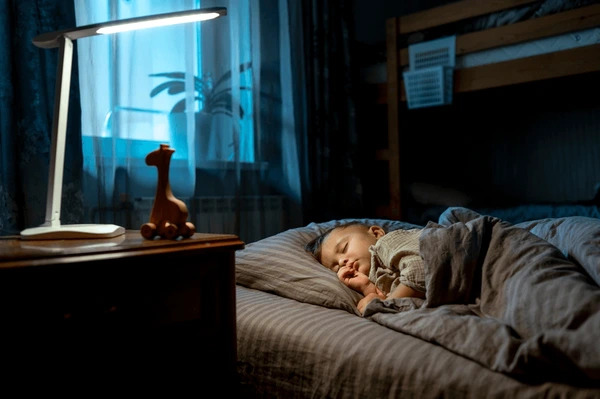
Beyond Zzzs: The Science Behind Sleep
Over the last six decades, researchers have scrutinized that our brain still functions during sleep. Our physiological mechanisms—such as breathing, urine production, blood pressure, and heart rate—are frequently reduced when we fall asleep. This, in turn, allows us to replenish the cellular components of the biological activities that are depleted throughout our awake day (Brinkman et al., 2023). Likewise, sleep also affects the neurophysiological maintenance and brain’s optimal functions, especially on regulating emotions, learning and memory, and other cognition-related mechanisms.
Given how important sleep is for maintaining our physical and mental health, one relevant question to ask yourself is: “Am I getting a good quantity and quality of sleep?”
The Philippine Society of Sleep Medicine Inc (PSSMI) reported in March 2025 that the Philippines ranks first in Southeast Asia and fourth globally as the “most sleep deprived” nation (Co, 2025). Dr Jimmy Chang, the director of PSSMI expressed that this case will only worsen if Filipinos continue to compromise proper and quality sleep for their other activities (Co, 2025). According to Baranwal et al. (2023), a quality sleep, scientifically termed as sleep architecture, is attributed to the “rhythmic, cyclic process” that interchanges between these sleep stages: (1) the non-rapid eye movement (NREM) sleep, where deep sleep and body repair take place, and (2) the rapid eye movement (REM) sleep, the time when dreaming and skeletal muscle atonia (i.e. losing voluntary control of one’s muscles) occurs.
If our sleep architecture is impaired—or worse, if sleep deprivation becomes the norm—our physiological conditions and cognitive systems will be put at high risk. Zhao et al. (2025) highlighted that sleep deprivation substantially disrupts activities requiring high-intensity endurance due to an increased maximum heart rate and reduced time to exhaustion compared to proper sleep settings. Moreover, they found that lack of sleep can weaken the effectiveness of information transmission within the brain, thereby hindering the cognitive and movement-related functions integral to sustaining our systems (Zhao et al., 2025). Beyond the health-related consequences of sleep deprivation, several researchers have also emphasized that poor sleep conditions can lead to other serious issues. These include increased death rates, reduced work performance, accidents, and impaired daily functioning.
Considering the current trajectory of our society, is sleep deprivation something we can still control? Or is it yet another crisis bound to aggravate due to the natural and social systems we are currently confronted with—and those we are yet to encounter?
The answer, unfortunately, is very much the latter. Climate change, pervasive and transformative as it is, is no longer an abstract terror but an invasive reality, and its impacts can be felt in every nook and cranny of our existence—even the sacred domain of sleep. We’re dealing with a crisis from which we can’t slip away, and it’s seeping into our bedrooms, sabotaging the very foundation of our well-being.
Bed or Sauna?
Perhaps the most direct and palpable way climate change steals our good night’s sleep is through rising temperatures. Imagine tossing and turning on a torrid night, air humid and thick, your body scuffling to find cool relief. This is not a unique experience; in fact, it is a globally recognized phenomenon. A study by Minor et al. (2022) has confirmed that global warming-induced ambient temperature rise is negatively affecting the quality of human sleep all around the globe. Their extensive research has shown that increases in nighttime minimum temperature significantly reduces sleep duration primarily by delaying when individuals fall asleep: the warmer it gets, the less sleep we actually get. This phenomenon is more pronounced in urban areas, where cities turn into heat islands, as concrete and asphalt absorb and re-emit solar radiation, thus exacerbating already elevated temperatures. Projections indicate significant increases in average urban temperatures, leading to more frequent and intense heat waves, even during nighttime hours.
Climate change, pervasive and transformative as it is, is no longer an abstract terror but an invasive reality, and its impacts can be felt in every nook and cranny of our existence—even the sacred domain of sleep.
Climate Change: The New Nightmare Fuel
But how exactly does this external heat translate into sleepless nights? The answer lies within our remarkably sensitive physiology.
Our body’s sophisticated thermoregulation system is designed to prepare us for rest by naturally lowering our core body temperature by about 1 to 2 degrees Celsius as bedtime approaches (Cerri & Amici, 2021). This slight dip signals to the brain that it's time to initiate sleep. However, when ambient temperatures remain high, this natural cooling process is disrupted. Our bodies must work harder to dissipate heat, leading to increased heart rate and metabolic activity, making it difficult to fall and stay asleep. Additionally, the production of melatonin, the crucial hormone regulating our sleep-wake cycle, can be suppressed by exposure to both light and heat, further hindering our ability to drift off (Rifkin et al., 2018).
Outside of the immediate impact of heat, climate change also sets off a series of indirect consequences that quietly, yet deeply, undermine our sleep: climate disasters. Typhoons, floods, and wildfires don't just wreak havoc on infrastructure; they disrupt lives, forcing displacement, inflicting trauma, and causing stress. The loss of homes, jobs, and even family members can cause deep psychological pain, potentially resulting in constant anxiety, and consequently, significant sleep deprivation. The question persists: How can one find restful sleep amidst the echoes of a storm or the lingering fear of an uncertain future? Unfortunately, this profound unease is experienced even by those not directly affected, as just the knowledge of climate change can set off “eco-anxiety” — a deep emotional distress about our planet’s future (Gaston et al., 2023) and one of many “eco-emotions” that are triggered by the unfolding ecological crisis (Kurth & Pihkala, 2022).
The Fading Dawn of the Frontlines
If climate change itself is already a living nightmare, how can frontline communities—those who will bear the brunt of its harshest blows—ever wake up from the horrors that are about to unveil?
The World Health Organization (WHO), in 2018, illuminated the climate crisis not simply as an environmental catastrophe but as a profound social emergency, one that leaves vulnerable populations—such as children, women, the elderly, and the poor—haunted by menacing unknowns (Wahowiak, 2018). These communities are not merely exposed to a worsening climate but are also burdened with a high frequency of insufficient sleep, compounded by “unrecognized” sleep disorders that follow them relentlessly (Johnson et al., 2018). Beyond the environmental triggers, such as poor sleeping conditions, inadequate housing, and unsafe neighborhoods, lie deeper structural hurdles. Unjust power structures and the absence of effective adaptation measures continue to aggravate the cracks in their already perilous status quo (Ngcamu, 2023). When access to quality education and meaningful involvement in policy making remains remote, even the most basic human necessity—sleep—becomes an opulence. And when sleep is stolen and its absence becomes the norm, frontline communities are confronted all day by never-ending exhaustion and anxiety.
The Sleepless Paradox
Herein lies a profound, unsettling irony: as climate change intensifies, bringing over hotter nights that relentlessly steal our precious sleep, our common and immediate solution inadvertently worsens the very crisis we are trying to escape. We instinctively reach for the air-conditioning and power up the cooling fans. Yet, these very comforts, designed to bring us respite and rest, are overwhelmingly powered by energy sources that directly contribute to the greenhouse gas emissions fueling climate change (UNICEF, 2025). Beyond energy use, air-conditioning systems expel heat into the surrounding environment when they cool indoor spaces. They do not eliminate heat but merely displace it—cooling one room at the cost of warming the outside air, particularly in dense urban settings where many units operate simultaneously. It is a self-perpetuating cycle. The hotter it gets, the more we cool, and the more we cool, the hotter it gets. The International Energy Agency (IEA) projects that by 2050, the world will see a threefold increase in air conditioner-related energy demand, trapping us in this relentless feedback loop (UNICEF, 2025).
While our individual pursuit of comfortable sleep ironically fuels the very warming we seek to escape, it is vital to recognize that sleep itself, a fundamental human need, is not the underlying culprit of this crisis.
Yet, acknowledging this paradox does not mean surrendering to it. Transitioning to renewable energy sources could significantly reduce the carbon emissions associated with energy consumption, therefore weakening the feedback loop between cooling demand and climate change. In parallel, thoughtful and intentional design choices, such as strategic placement of air-conditioning units and passive cooling techniques, can help manage where and how excess heat is released. Equally important is expanding public involvement in decision-making regarding how our living spaces are designed and governed. When communities are empowered to shape urban planning, solutions cease to be top-down fixes and become equitable and grounded in lived reality.
So, where does this leave us? While our individual pursuit of comfortable sleep ironically fuels the very warming we seek to escape, it is vital to recognize that sleep itself, a fundamental human need, is not the underlying culprit of this crisis. Rather, sleep is now a casualty of a climate crisis largely driven by forces beyond individual control. The true cost of a changing climate, it seems, is measured not just in rising seas, but in stolen dreams.
References
Baranwal, N., Yu, P. K., & Siegel, N. S. (2023). Sleep physiology, pathophysiology, and sleep hygiene. Progress in Cardiovascular Diseases, 77, 59–69. https://doi.org/10.1016/j.pcad.2023.02.005
Brinkman, J. E., Reddy, V., & Sharma, S. (2023, April 3). Physiology of sleep. StatPearls - NCBI Bookshelf. https://www.ncbi.nlm.nih.gov/books/NBK482512/
Cerri, M., & Amici, R. (2021). Thermoregulation and sleep: functional interaction and central nervous control. Comprehensive Physiology, 11(2), 1591–1604. https://doi.org/10.1002/j.2040-4603.2021.tb00151.x
Co, A. (2025, April 8). It’s time to get some sleep, Filipinos. RAPPLER. https://www.rappler.com/life-and-style/health-and-wellness/filipinos-sl…
Gaston, S. A., Singh, R., & Jackson, C. L. (2023). The need to study the role of sleep in climate change adaptation, mitigation, and resiliency strategies across the life course. SLEEP, 46(7). https://doi.org/10.1093/sleep/zsad070
Johnson, D. A., Billings, M. E., & Hale, L. (2018). Environmental Determinants of Insufficient sleep and sleep Disorders: Implications for Population Health. Current Epidemiology Reports, 5(2), 61–69. https://doi.org/10.1007/s40471-018-0139-y
Kurth, C. & Pihkala, P. (2022). Eco-anxiety: What it is and why it matters. Front. Psychol. 13:981814. https://doi.org/10.3389/fpsyg.2022.981814
Minor, K., Bjerre-Nielsen, A., Jonasdottir, S. S., Lehmann, S., & Obradovich, N. (2022). Rising temperatures erode human sleep globally. One Earth, 5(5), 534–549. https://doi.org/10.1016/j.oneear.2022.04.008
Ngcamu, B. S. (2023). Climate change effects on vulnerable populations in the Global South: a systematic review. Natural Hazards, 118(2), 977–991. https://doi.org/10.1007/s11069-023-06070-2
Rifkin, D. I., Long, M. W., & Perry, M. J. (2018). Climate change and sleep: A systematic review of the literature and conceptual framework. Sleep Medicine Reviews, 42, 3–9. https://doi.org/10.1016/j.smrv.2018.07.007
UNICEF. (2025, March). The cooling dilemma amid climate change: Are air conditioners the solution to heat, or the cause.
Wahowiak, L. (2018, September 1). Climate change, health equity ‘inextricably linked’: Vulnerable populations most at risk from harmful effects. The Nation’s Health. https://www.thenationshealth.org/content/48/7/1.1
Zhao, S., Alhumaid, M. M., Li, H., Wei, X., Chen, S. S., Jiang, H., Gong, Y., Gu, Y., & Qin, H. (2025). Exploring the effects of sleep deprivation on Physical performance: An EEG Study in the Context of High-Intensity Endurance. Sports Medicine - Open, 11(1). https://doi.org/10.1186/s40798-024-00807-4
Recent News
You may also like these articles

[Hot Off the Press] Arkipelago
New book from the Ateneo Press Arkipelago provides a fascinating and fantastical twist on Philippine politics and history Our country is an archipelago of stories

Protecting Creativity: AIPO and Rizal Library Host Copyright Awareness Session for the Ateneo Community
On March 18, 2026, the Ateneo Intellectual Property Office (AIPO), in collaboration with the Rizal Library, successfully conducted a Copyright Awareness Session held on the

Holy Week 2026 Holidays (Memo # UHR2526-038)
Memo # UHR2526-038 31 March 2026 TO: All Employees FROM: [Sgd] Maria Victoria T Cortez, PhD Vice President for University Human Resources SUBJECT: Holy Week
ASOG’s Tobacco Control initiatives spotlighted in DOH National Technical Working Group for Tobacco Prevention and Control
On March 10 to 12, 2026, the Ateneo School of Government (ASOG), through its research and public policy unit, the Ateneo Policy Center, participated in
Things You Wanted to Say But Never Did: Geloy Concepcion’s six-year project makes Its exhibition debut at the Ateneo Art Gallery
Geloy Concepcion’s Things You Wanted To Say But Never Did comes to the Ateneo Art Gallery this 18 April 2026. After receiving almost 300,000 messages

[Hot Off the Press] Love If I'm Pretty
New YA Release from the Ateneo Press Love If I’m Pretty tackles the nuances of growing up through complex characters and straightforward prose What do