"The Lotus Path” In-Country Field Study to Vietnam culminates with a Forum and Exhibit
13 Jan 2026



On 18 and 19 November 2025, the Ateneo Initiative for Southeast Asian Studies (AISEAS) hosted an exhibit called “The Lotus Path” to conclude the activities that are part of the SEAS 10 In-Country Field Study to Vietnam.
The Philippines-Vietnam Forum
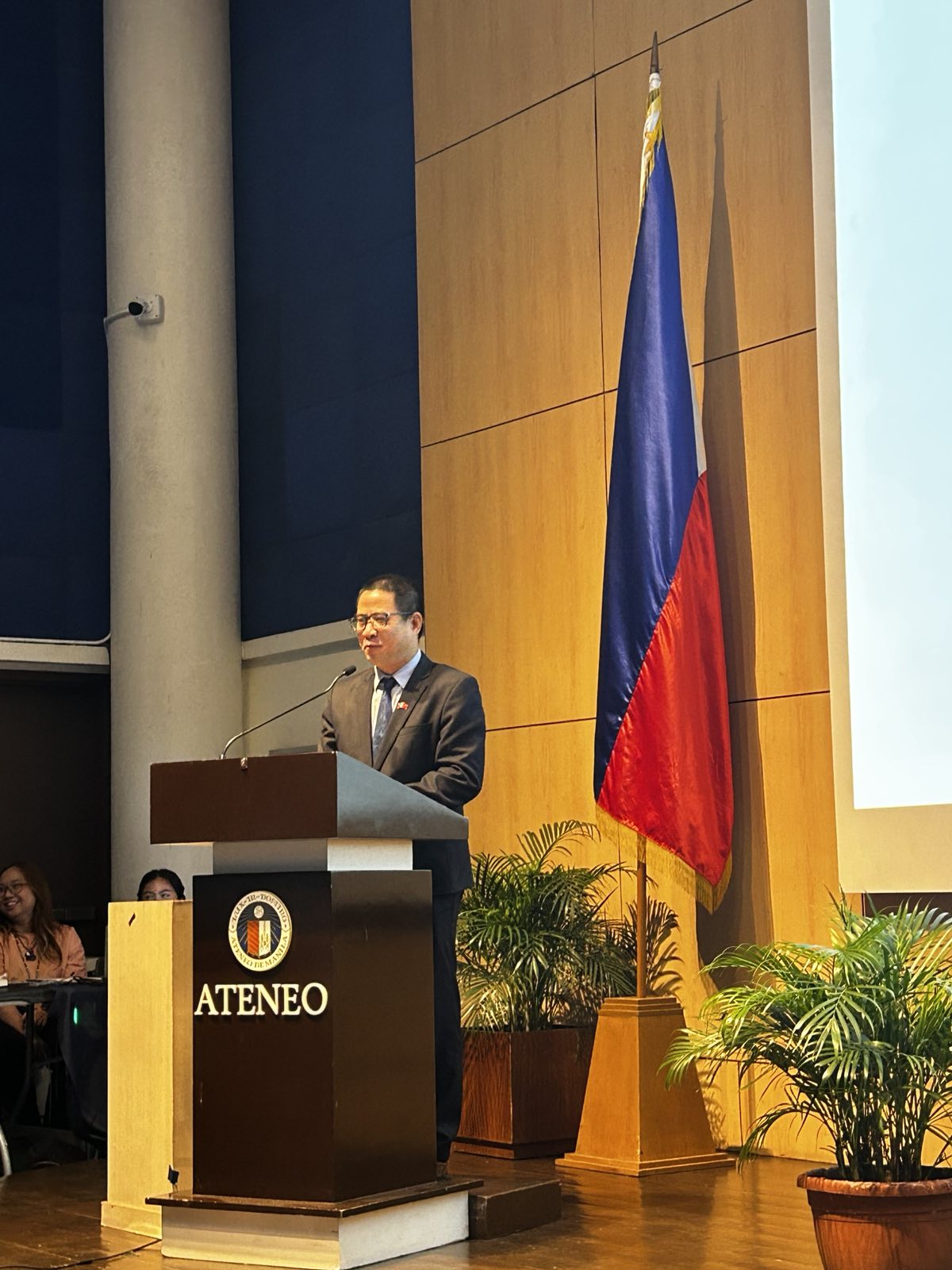
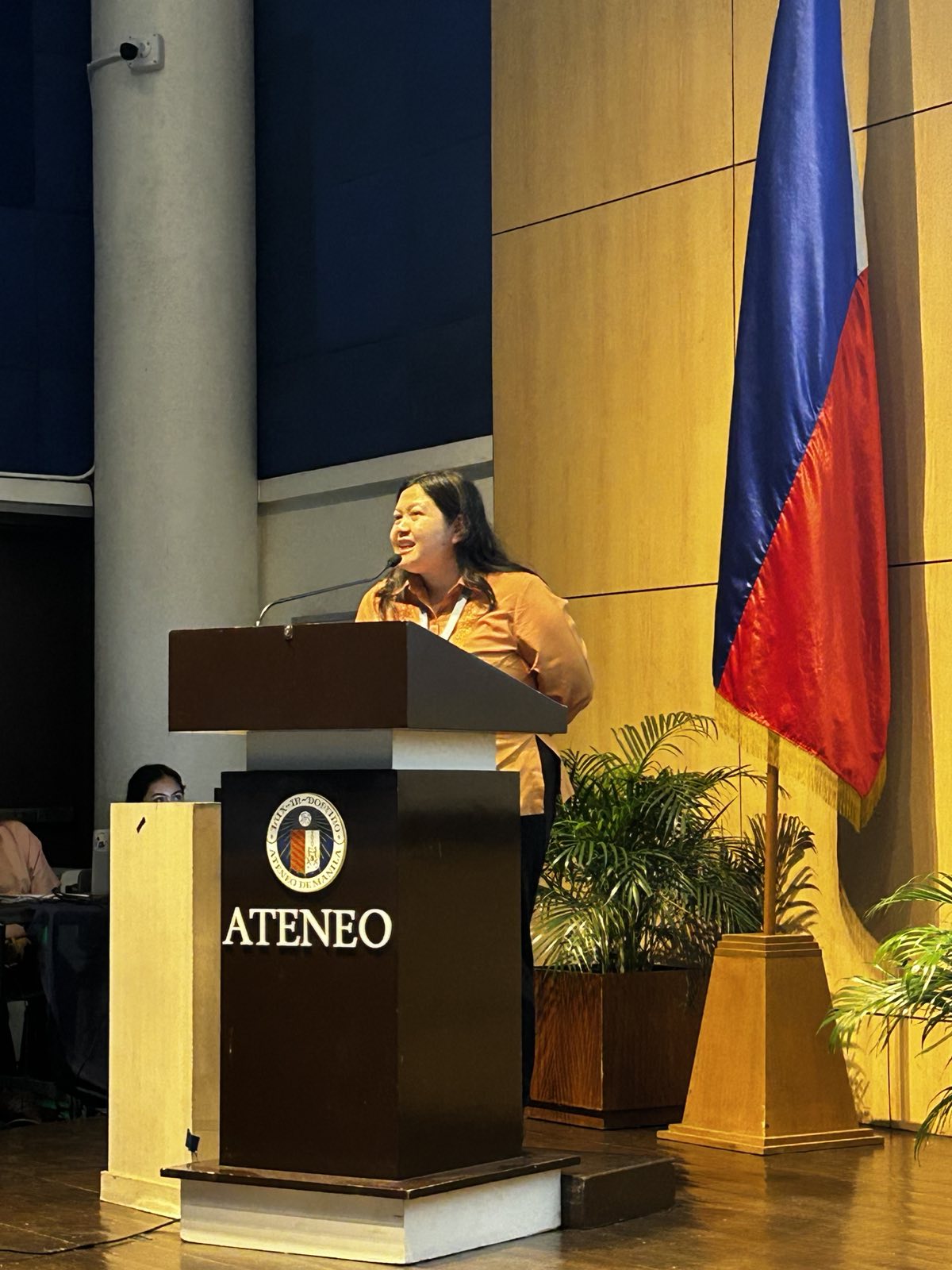
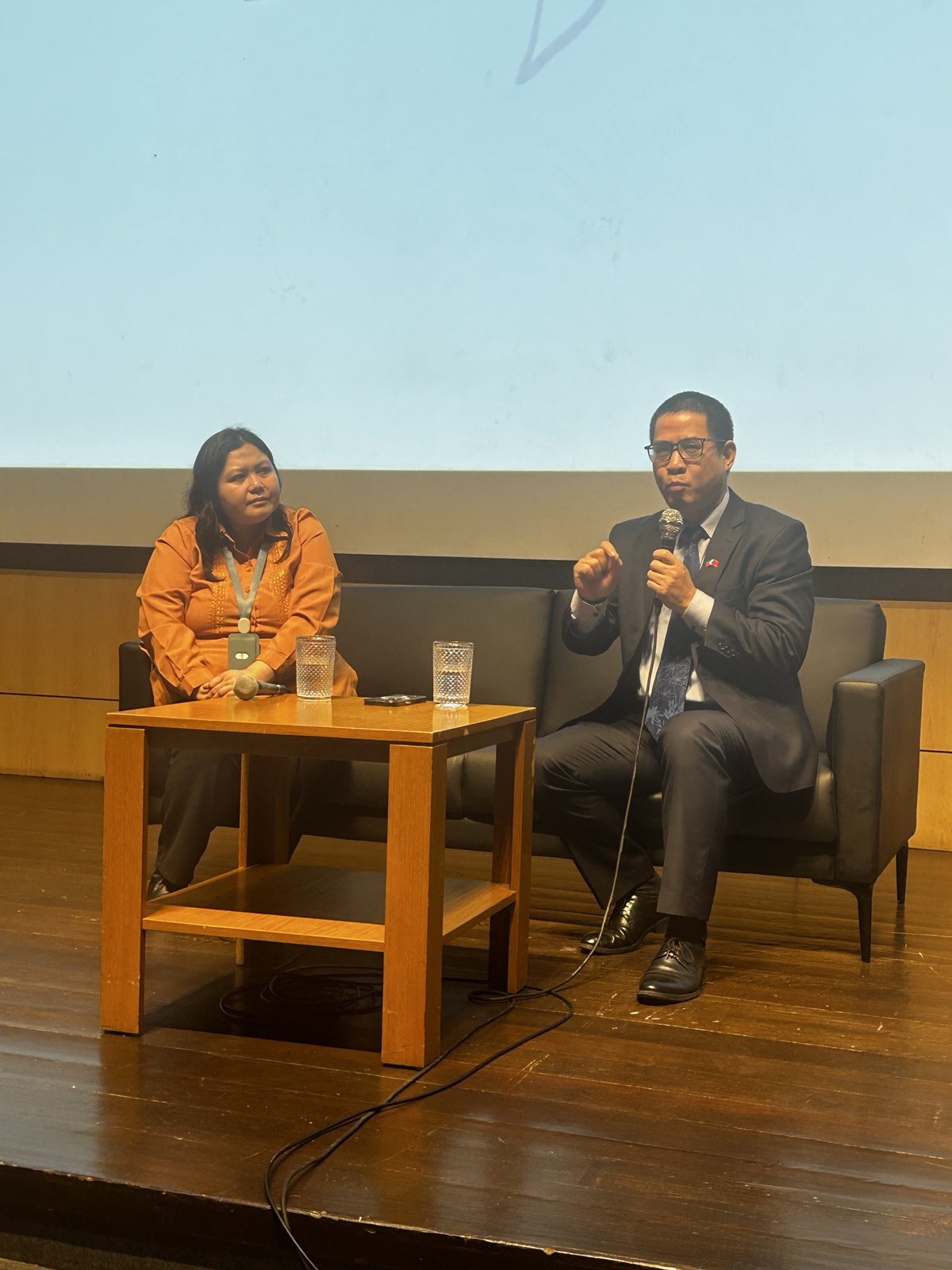
The highlight of the exhibit was the Philippines-Vietnam Forum, held on 19 November 2025 at the Leong Hall Auditorium. The Forum featured a panel discussion with His Excellency Dr Lai Thai Binh, Ambassador of the Socialist Republic of Vietnam of the Philippines; and Ms Anna Marie C Santos, Director for Mainland Southeast Asia Division, Office of Asian and Pacific Affairs (ASPAC) of the Department of Foreign Affairs. Ambassador Lai Thai Binh delivered a lecture about the successes, challenges, and prospects that stem from Vietnam’s economic reforms, especially the Đổi Mới. Director Santos, representing the DFA, talked about the Strategic Partnership between the Philippines and Vietnam, and the current developments in Philippine-Vietnamese relations. During the open forum, students focused their questions on the importance of people-to-people relations in sustaining bilateral relations between states in the 21st century, and the significance of the Association of Southeast Asian Nations (ASEAN) to Philippine-Vietnamese relations.
The Lotus Path Exhibit
Showcased at the Leong Hall Foyer from 18 to 19 November 2025, The Lotus Path exhibit brought together a diverse collection of mixed-media pieces, handcrafted objects, sketches, and reflections that highlight the SEAS 101 class of 2025’s’ engagement with Vietnam’s cultural landscape and how they relate to the Philippines’ own experiences and prospects. Guided by the theme of the field study “The Lotus Path: Exploring Vietnam’s Economic and Cultural Transformation,” each artwork drew from encounters with local artisans, rural fields, urbanscapes, historic sites, and everyday scenes observed during their immersion. The field-school delegation is privileged to share a collection of their works that encapsulate their journey and reflections on Vietnam.
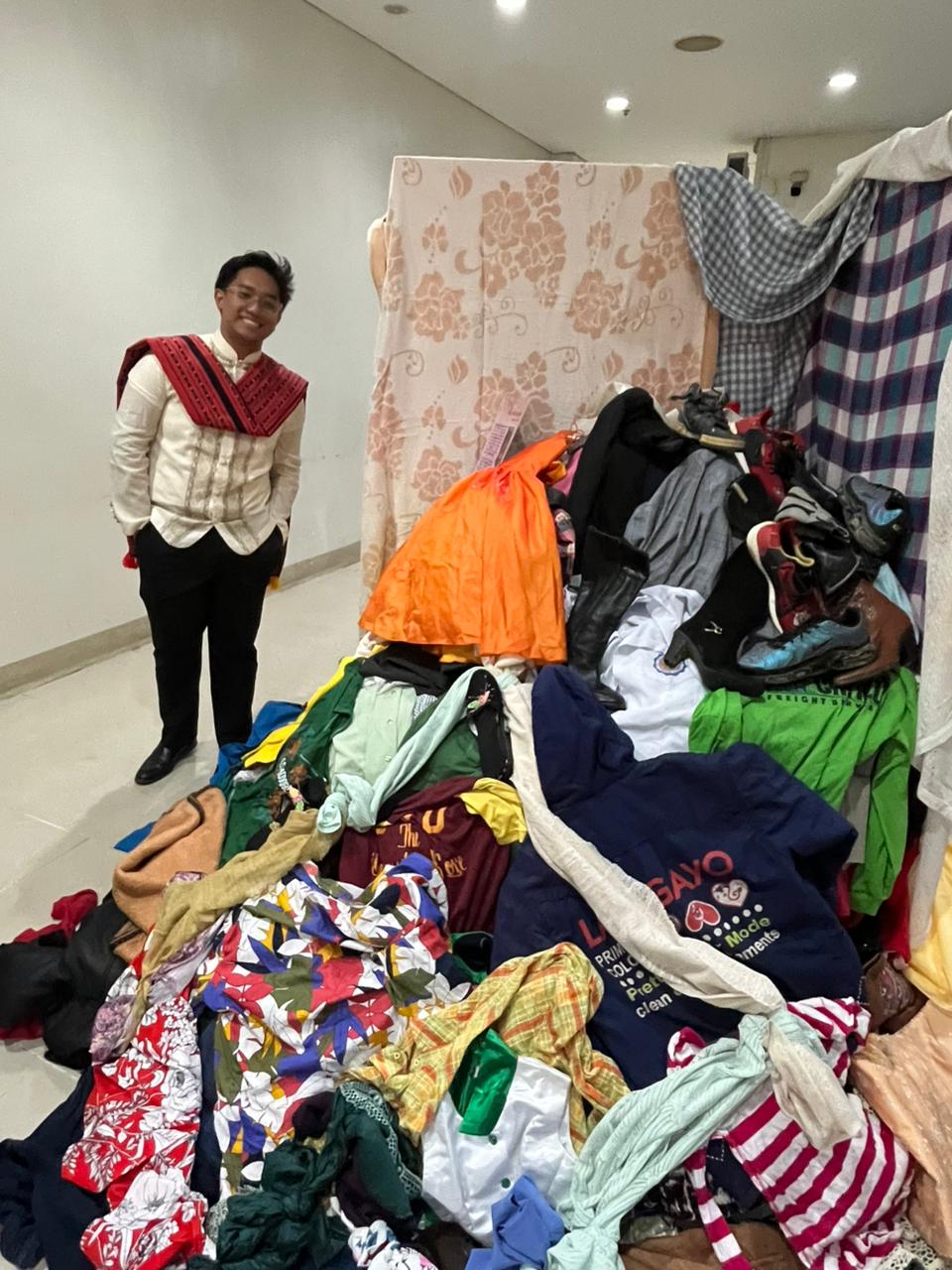
First, “Waste Not, Want More” by Raj Reiner A Cattiling, a 3 AB Diplomacy and International Relations with Specialization in East and Southeast Asian Studies (AB DipIR), emerges from the artist’s encounters in Hanoi and Ho Chi Minh’s Old Quarter and Ben Thanh Market. Cattiling’s installation reflects the paradox of abundance, a nation transformed from socialist austerity to capitalist excess, as represented by mounds of discarded garments and clothing apparels.
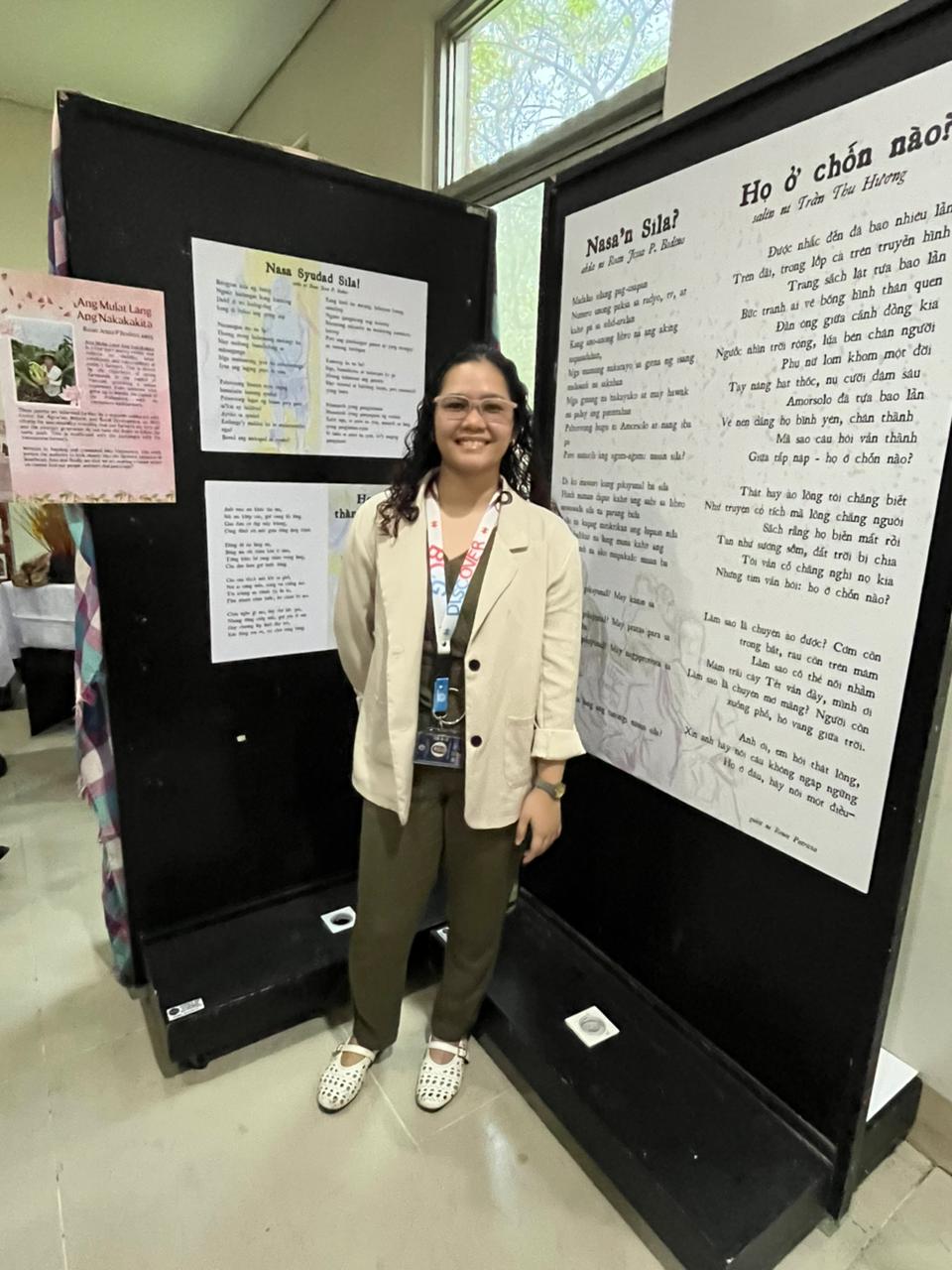
“Ang Mulat Lang Ang Nakakakita” by Roan Jessa P Bodino, also a 3 AB DipIR student, is a four-part poetry exhibit that reflects on visibility, labor conditions, and vulnerabilities of today’s agricultural laborers. Her reflections were driven by her encounters with farmers in the capital of Vietnam, which afforded her a unique experience from someone who grew up in Manila with no encounters with farmers.
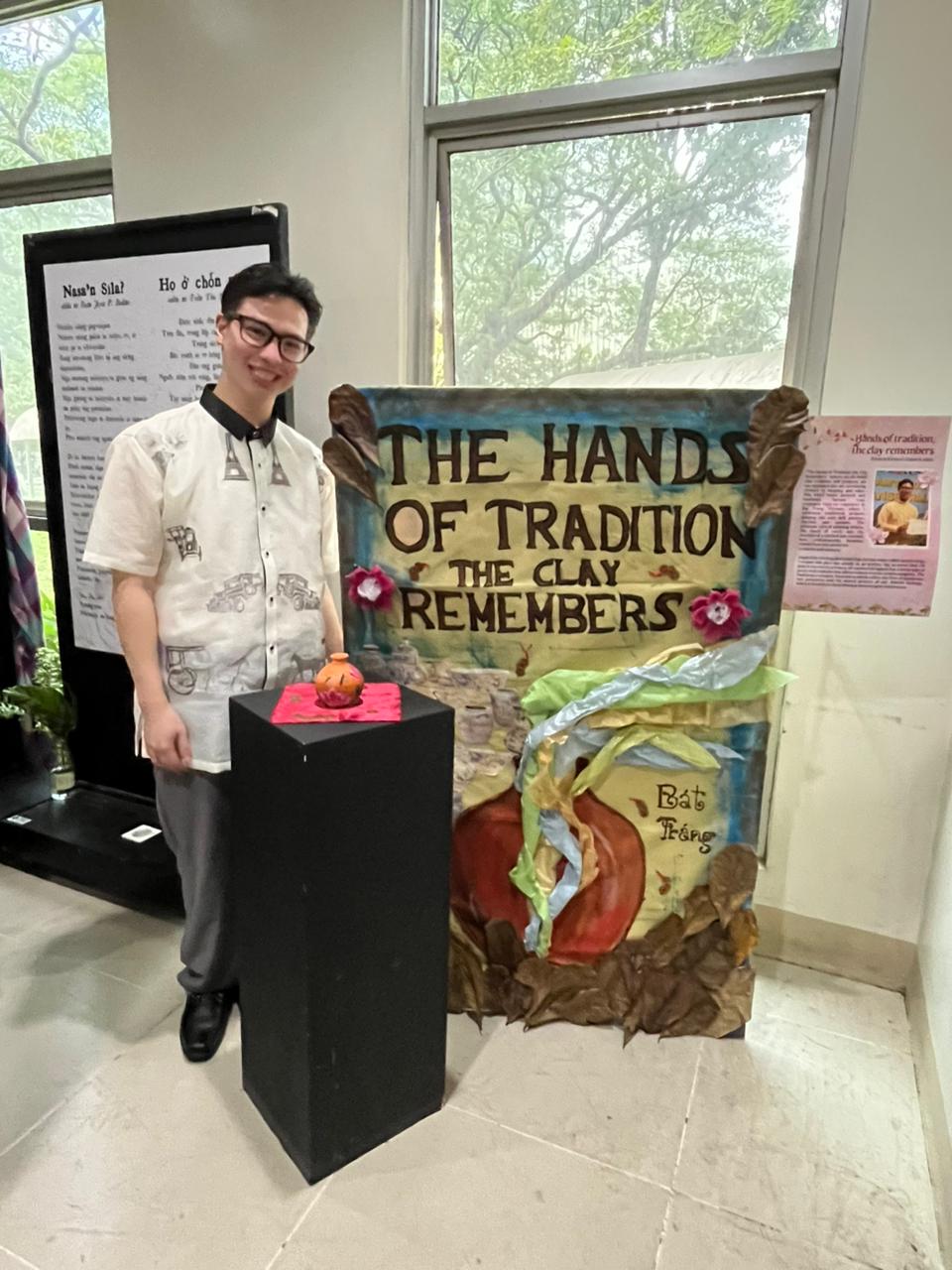
“Hands of tradition, the clay remembers” by Francis Kirian G Zulueta, another 3 AB DipIR student, is a multimedia artifact which centers on the belief that tradition and progress are not opposites but are co-existing creators of meaning and value. This mixed media artwork, with a handmade fortune vase at its center, originated from his experience in Bat Trang, Vietnam, where he witnessed traditional artisans shaping clay with skill, patience, rhythm, and passion amidst progress.
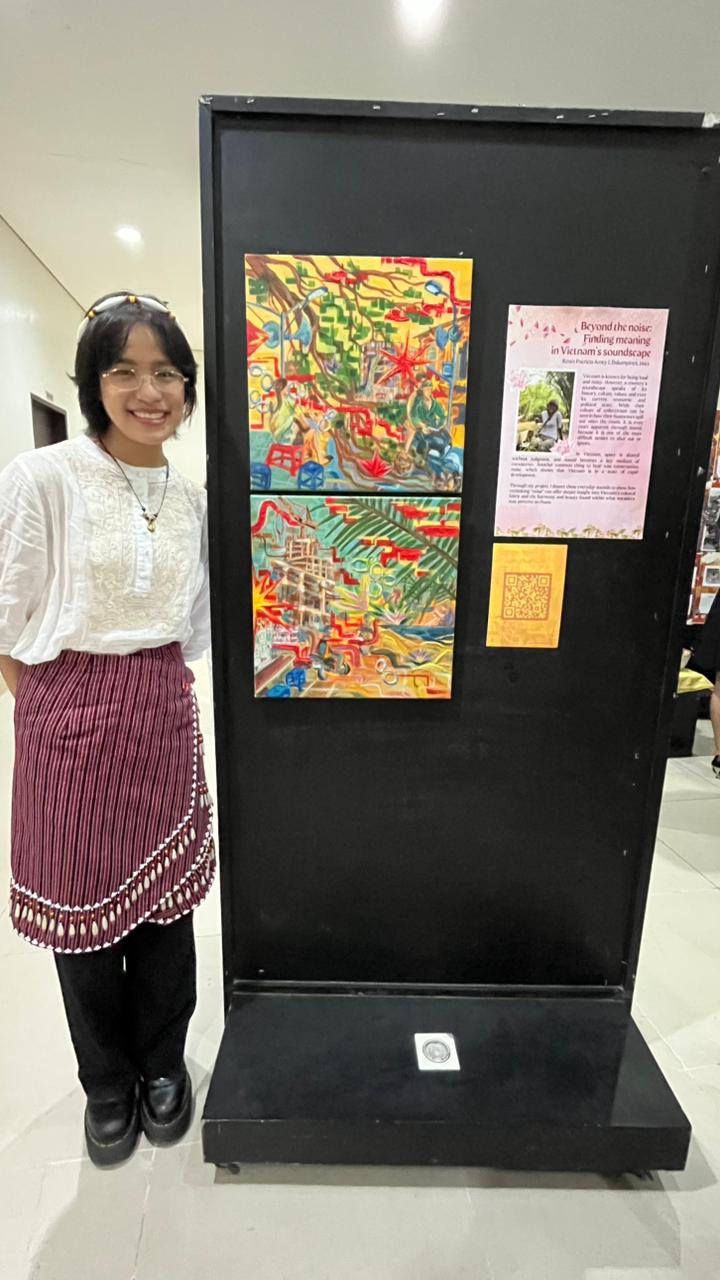
Renée Patricia Amey L Dalumpines, a B Fine Arts Major in Information Design student, showcased her painting series “Beyond the noise: Finding meaning in Vietnam’s soundscape.” Through her project, she sought to present and dissect the everyday sounds and noise in the streets of Vietnam’s busy urban spaces to invite the audience to rethink their perception of “noise” and how this can offer deeper insight into Vietnam’s cultural fabric and the harmony and beauty found within what outsiders may perceive as chaos.
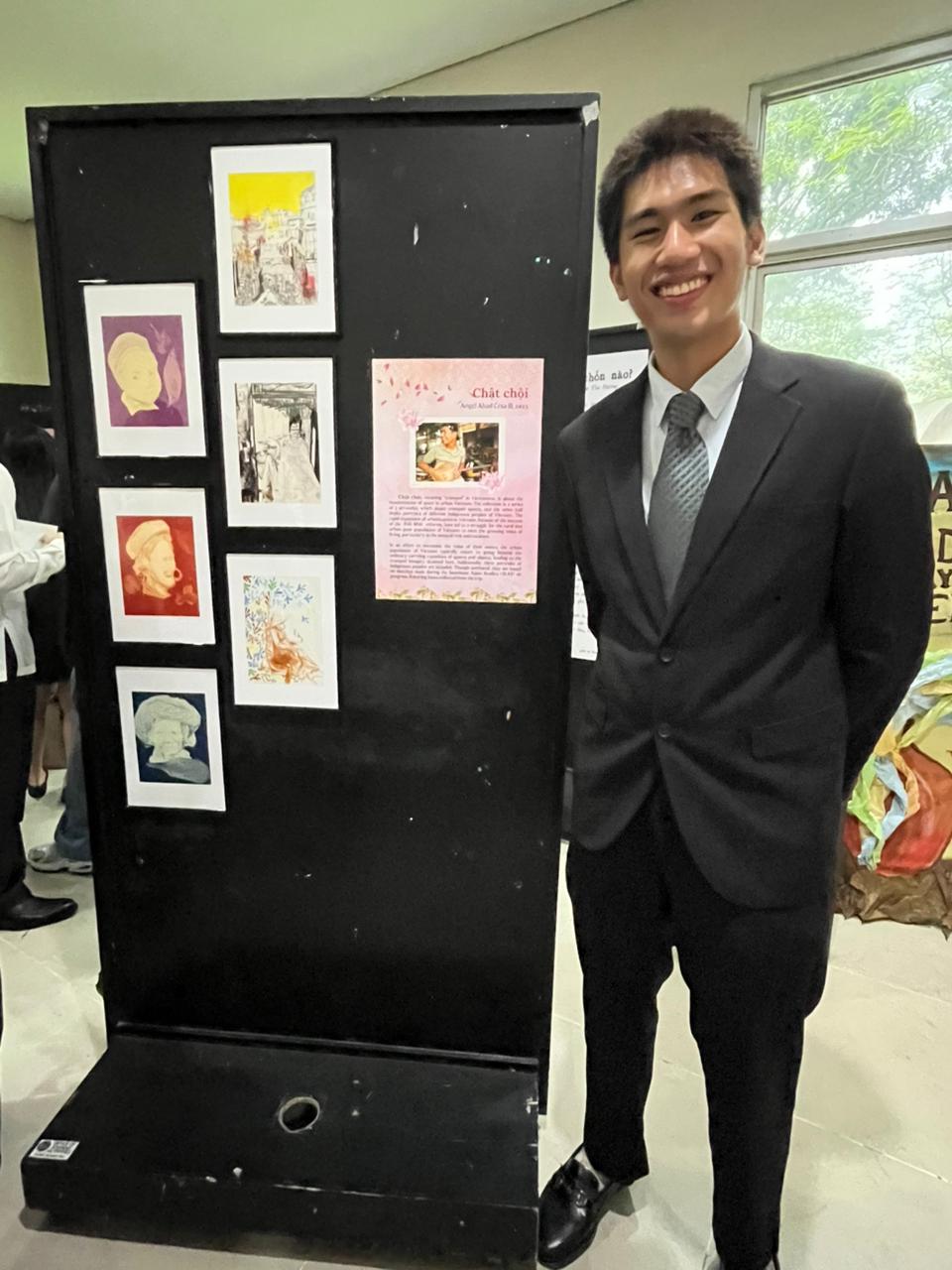
“Chật chội” (literally, “cramped” in English), by Angel A Cesa III of 3 AB DipIR, details the maximization of space in urban Vietnam. The collection is a series of 3 artworks, which depict cramped spaces, and the other half depict portraits of different indigenous peoples of Vietnam. They are based on sketches made during the field study and feature fauna collected by Cesa from the trip.
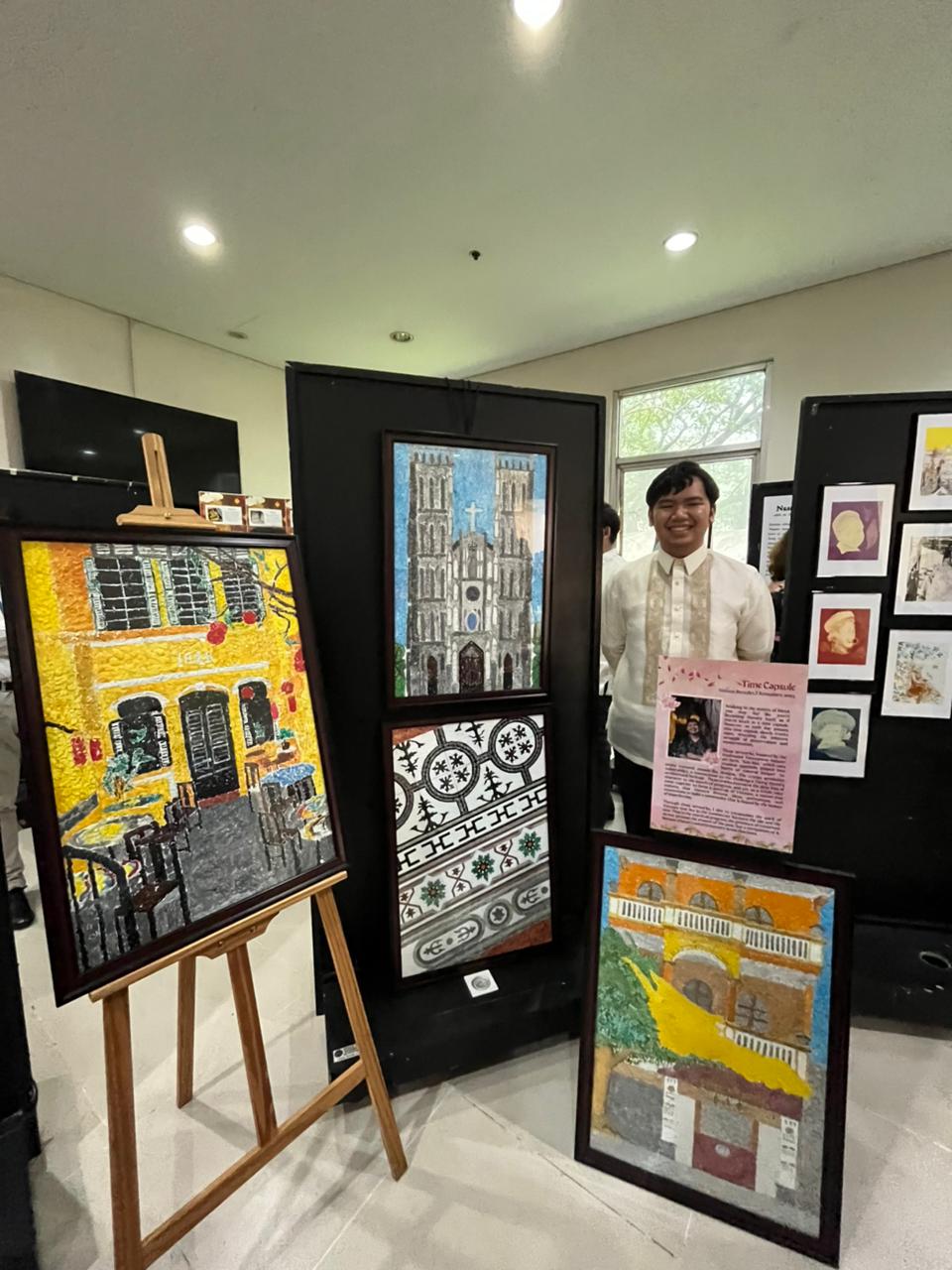
Vincent Benedict F Remudaro of 3 AB DipIR, created his “Time Capsule,” inspired by the traditional Vietnamese lacquer art form, Son Mai, which uses crushed eggshells inlaid into layers of natural lacquer to create textured, mosaic-like designs. The cracks represent the slow loss of character to the march of progress, and yet, as a whole, they come together to form a portrait of Vietnam, a nation that endures, that conveys dreams, ideas, perceptions, and connections to build a community that is bound by the beauty of imperfection
“Vietnam at a glance” by Raphael K Diongco and Mervin Audet A Suetos, both 3 AB Political Science students, is centered around a collection of clay pots, each distinct, confronting the culture of silence that has long concealed the Mekong’s slow unraveling and built this Vietnamese Mirage that tourists readily consume as the ‘Real Vietnam’. The pieces depict the Mekong Delta in its wholeness: the quiet suffering and deep dependence, the vanishing riverbanks and dwindling waters, and the unaware communities whose lives rest on the fate of the river.
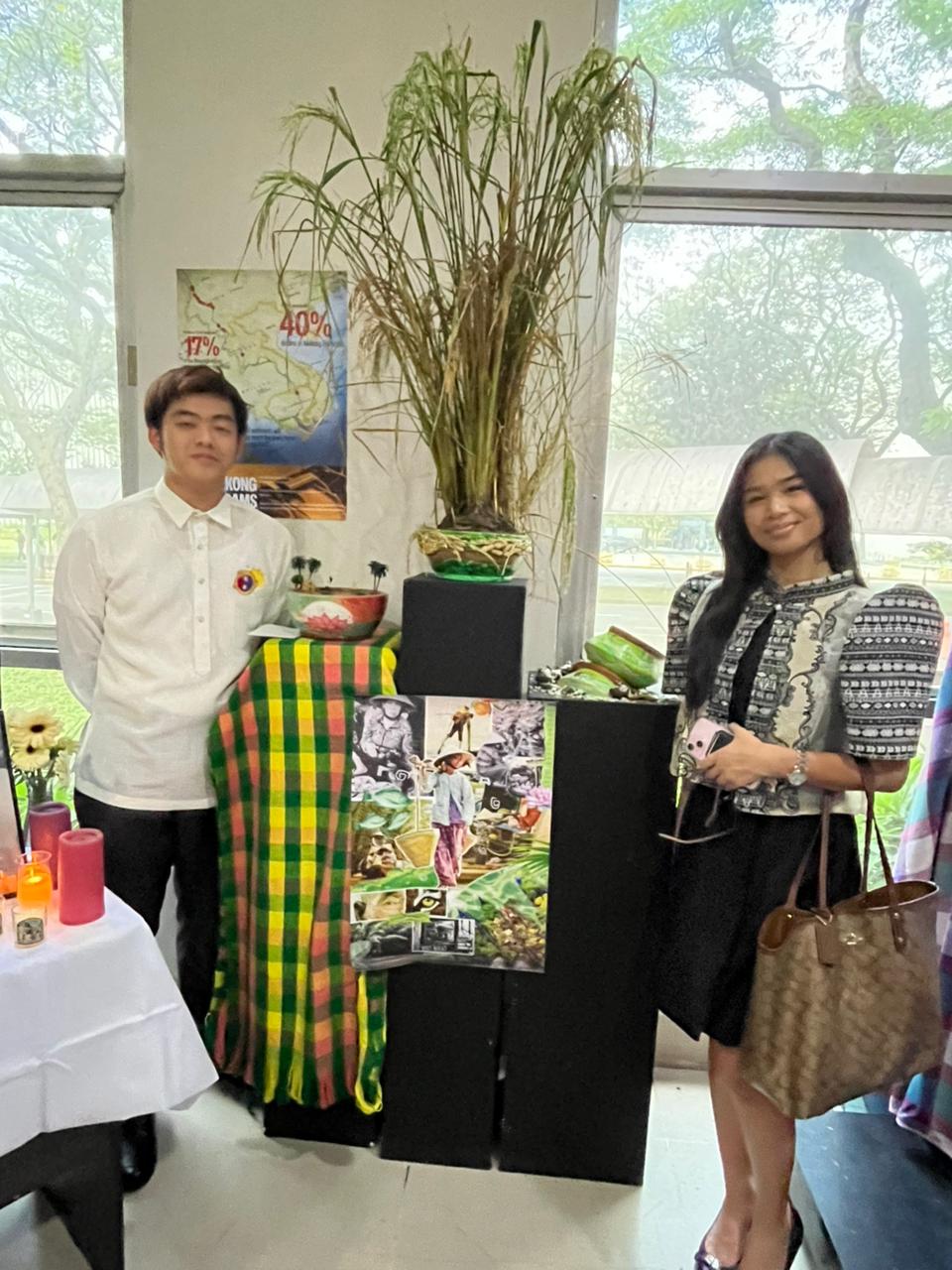
“Fixed in place” by Maria Gabrielle Z Domingo and Ysabelle Therese C Jatulan, 3 AB Sociology and AB Economics - Honors respectively, handcrafted clay magnets which are hinged on the idea of preservation through Vietnam’s culture and values. These clay magnets, inspired by the recurring key symbols they encountered, aim to showcase their experience of viewing Vietnamese resilience throughout the field study.
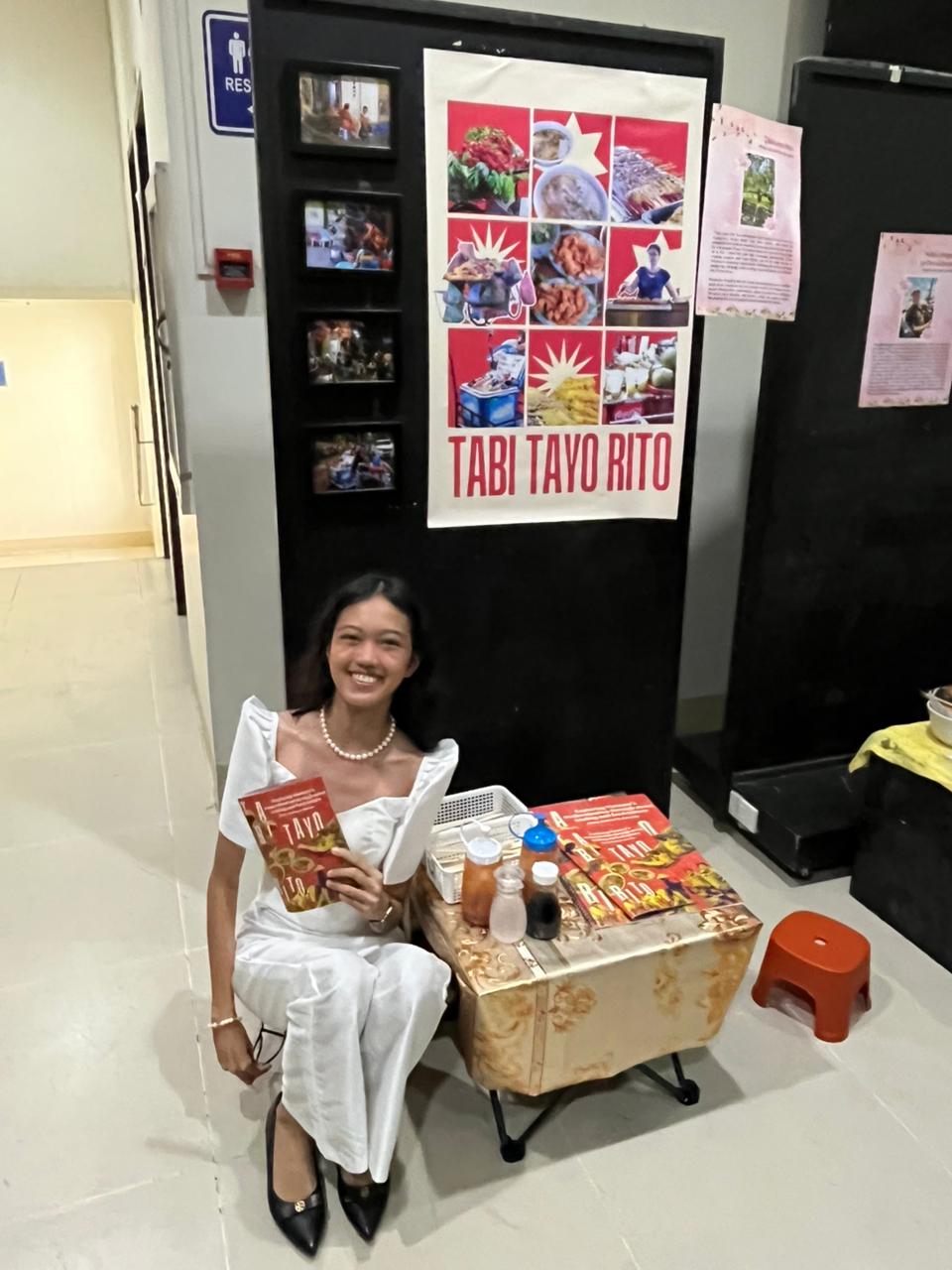
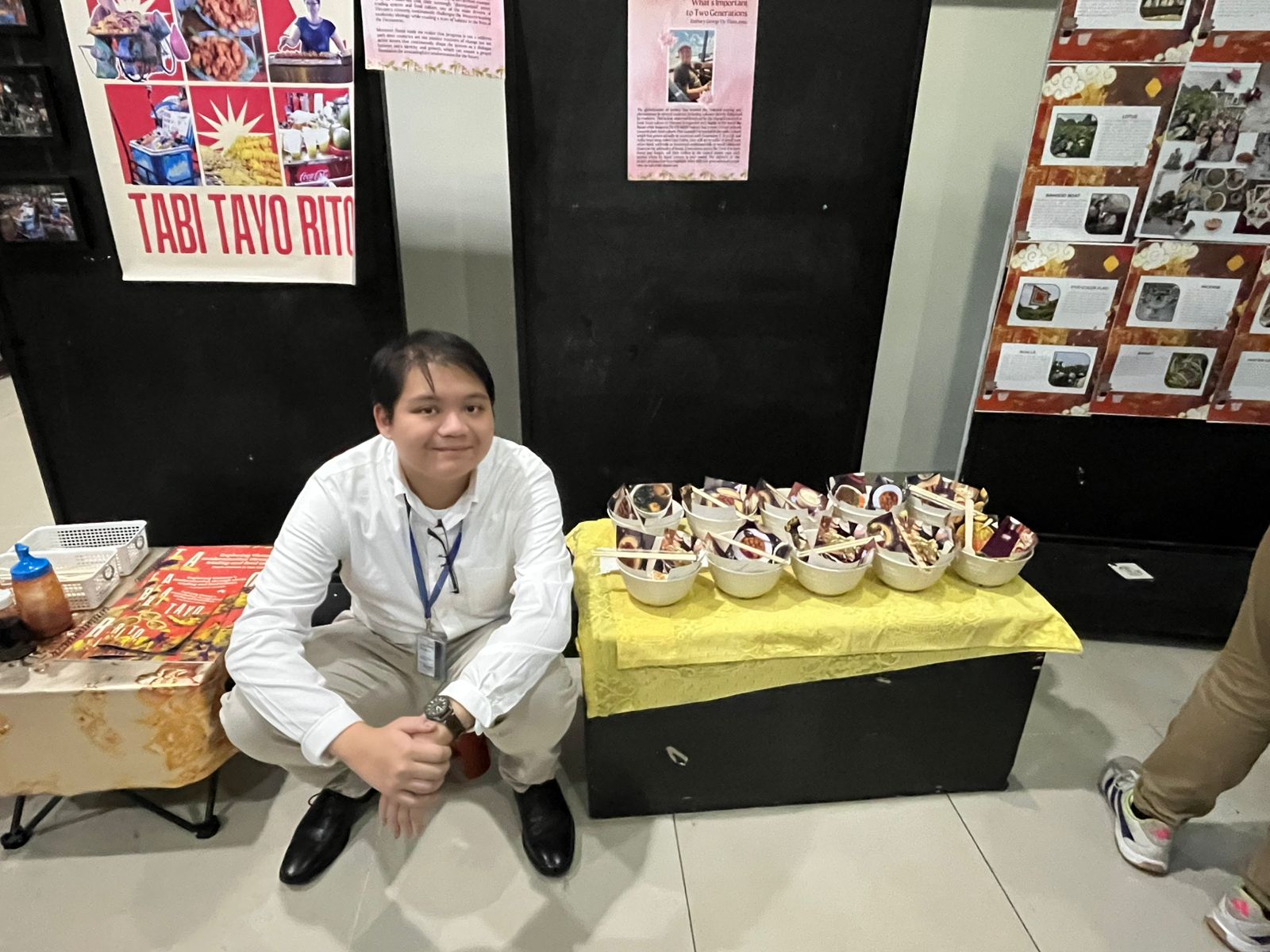
“Tabi tayo rito” by Paula Joanna D San Luis, a 3 AB Diplomacy and International Relations student, produced a photobook that invites viewers to see that modernity wears many faces since history and culture are embedded in it and are essential in ensuring that the system works for the people. Hanoi, Vietnam's capital city, is an excellent example of it, for she observed that their seemingly "disorganized" street trading system and food culture, one of the main drivers of Vietnam's economy, continuously challenges the Western-leaning modernity ideology while exuding a state of balance in the lives of the Vietnamese.
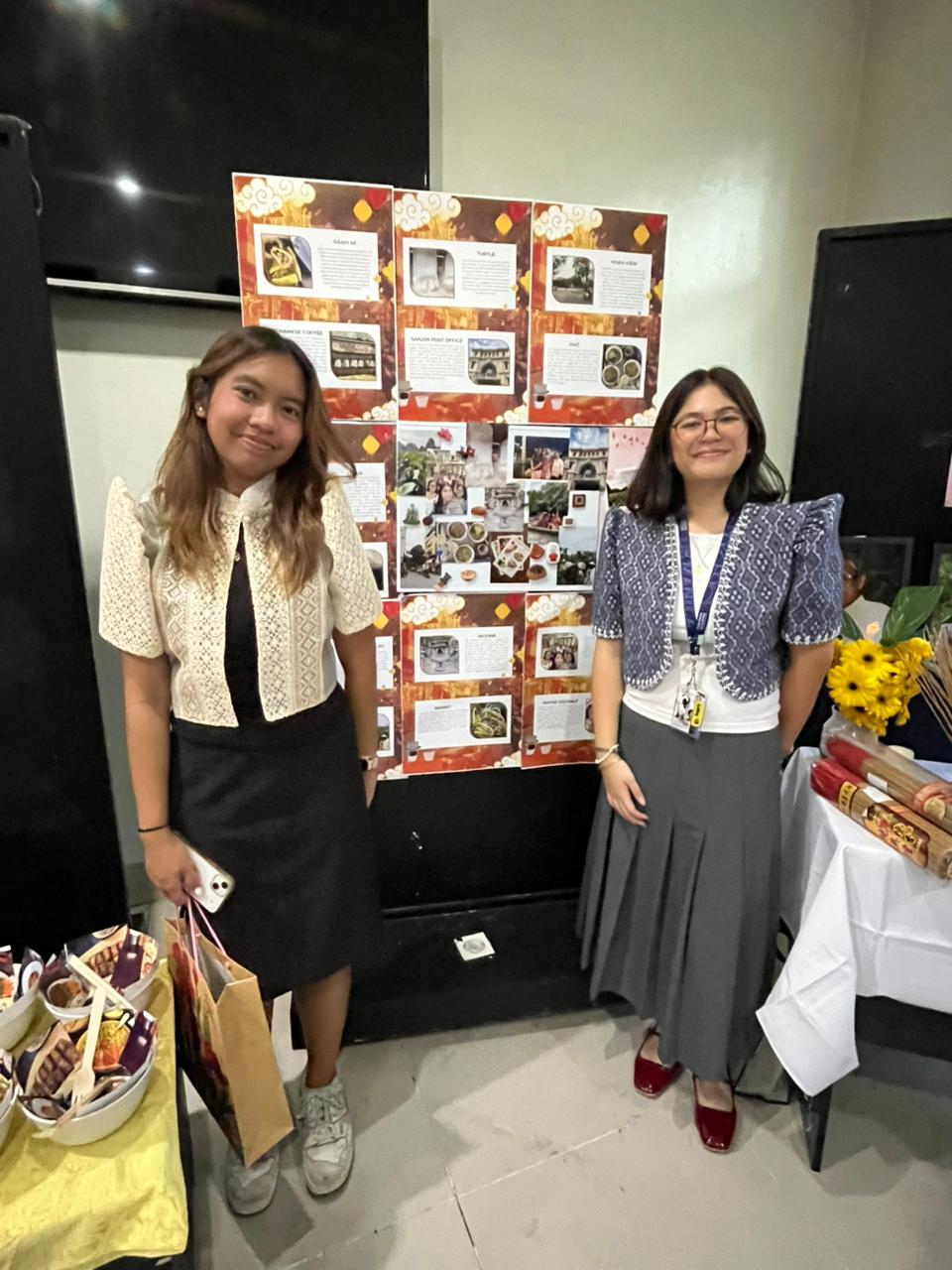
Zachary George Uy-Tioco, another 3 AB Political Science student, presented his project titled “What’s Important to Two Generations” which aimed to highlight what different generations of people view as culturally important, as centered around the food culture and its many expressions among the Vietnamese population.
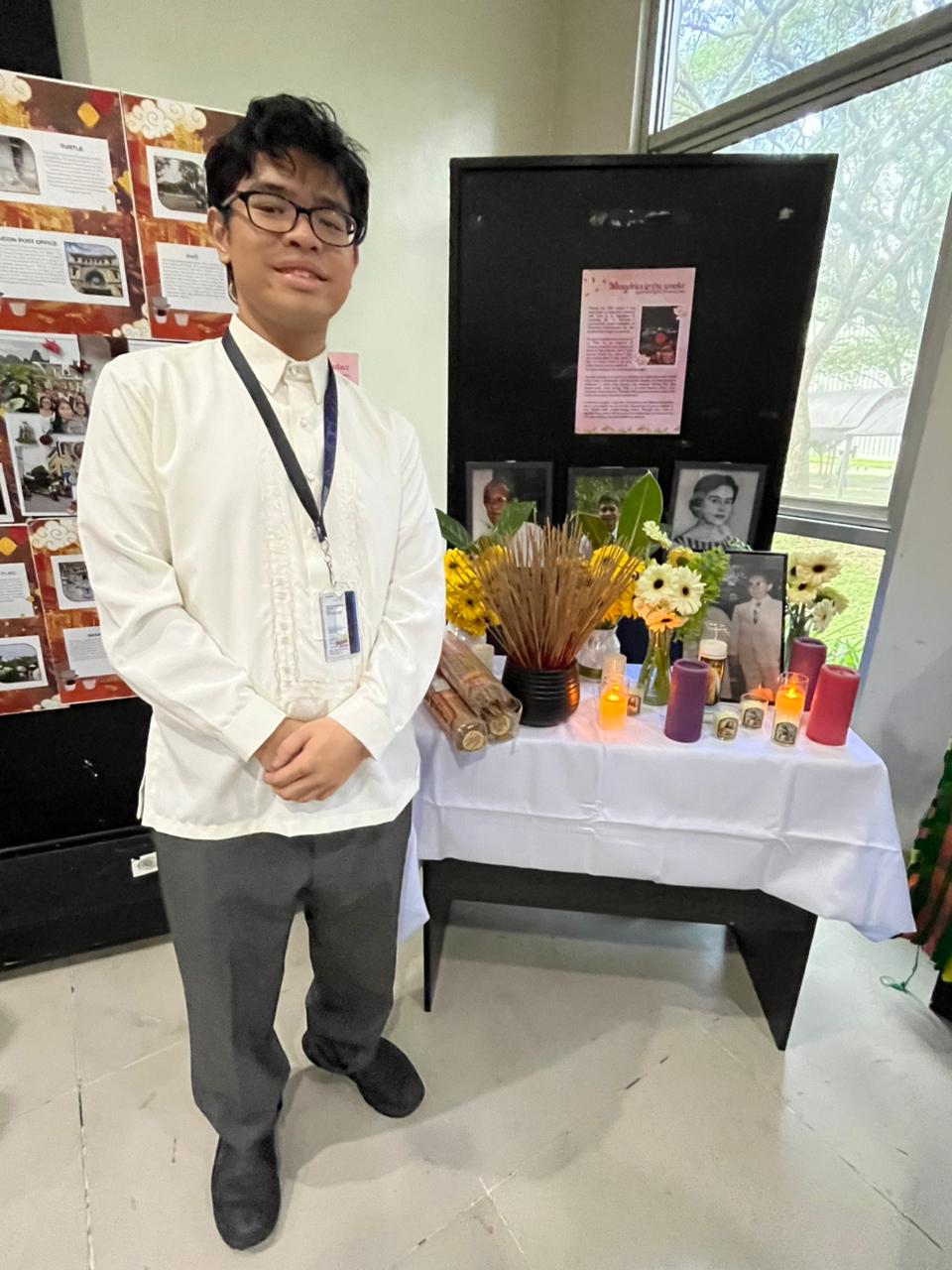
Lastly, “Memories in the smoke” by Jonathan Elijah C Alvarez of 3 AB History is inspired by his fascination with historical memory and how it is ingrained in everyday life. Alvarez’s work sheds light on how a universal act such as remembering is practiced in the everyday and how it is done in different cultures, especially between the Philippines and Vietnam.
The field study and multimedia exhibit were made possible through the support of AISEAS partners. AISEAS extends its gratitude to the following for their invaluable contributions: the Embassy of the Socialist Republic of Vietnam of the Philippines, the Department of Foreign Affairs, the Commission on Higher Education, the Vietnam National University - University of Economics and Business (VNU-UEB), the Hanoi National University of Education (HNUE), and the Saigon Business School.
The In-Country Field School is offered every intersession by the Ateneo Initiative for Southeast Asian Studies (AISEAS), in direct collaboration with the Ricardo Leong Institute for Global and Area Studies (RLIGAS), as a 6-unit undergraduate course SEAS 101. Over the years, at least forty students have participated in the AISEAS field schools under the Dr Rosita G Leong School of Social Sciences. Prior in-country field studies visited Brunei (2017), Surabaya, Indonesia (2023), and Malaysia Borneo (2024). These field schools provide a great immersive experience for students to learn first-hand the complex dimensions of politics, economics, history, and culture in the diverse region that is Southeast Asia.
Recent News
You may also like these articles
[Hot Off the Press] Arkipelago
New book from the Ateneo Press Arkipelago provides a fascinating and fantastical twist on Philippine politics and history Our country is an archipelago of stories
Protecting Creativity: AIPO and Rizal Library Host Copyright Awareness Session for the Ateneo Community
On March 18, 2026, the Ateneo Intellectual Property Office (AIPO), in collaboration with the Rizal Library, successfully conducted a Copyright Awareness Session held on the
Holy Week 2026 Holidays (Memo # UHR2526-038)
Memo # UHR2526-038 31 March 2026 TO: All Employees FROM: [Sgd] Maria Victoria T Cortez, PhD Vice President for University Human Resources SUBJECT: Holy Week
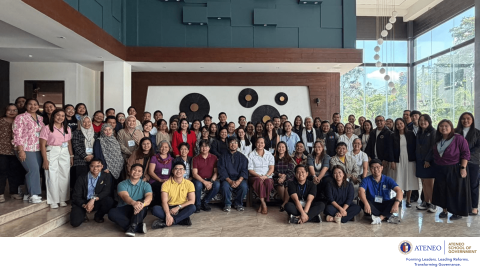
ASOG’s Tobacco Control initiatives spotlighted in DOH National Technical Working Group for Tobacco Prevention and Control
On March 10 to 12, 2026, the Ateneo School of Government (ASOG), through its research and public policy unit, the Ateneo Policy Center, participated in
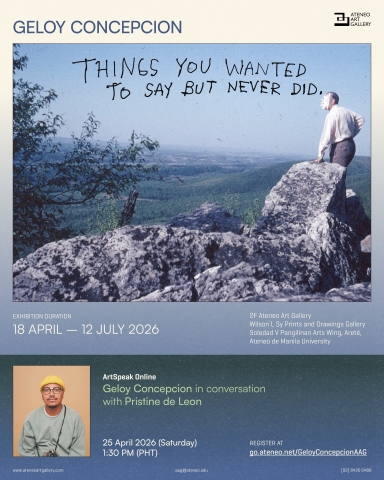
Things You Wanted to Say But Never Did: Geloy Concepcion’s six-year project makes Its exhibition debut at the Ateneo Art Gallery
Geloy Concepcion’s Things You Wanted To Say But Never Did comes to the Ateneo Art Gallery this 18 April 2026. After receiving almost 300,000 messages
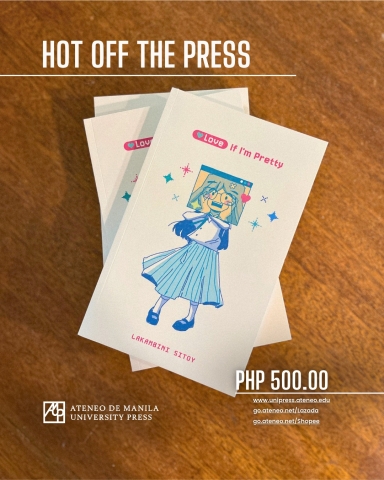
[Hot Off the Press] Love If I'm Pretty
New YA Release from the Ateneo Press Love If I’m Pretty tackles the nuances of growing up through complex characters and straightforward prose What do