ASOG delivers statement on CITIRA
04 Oct 2019

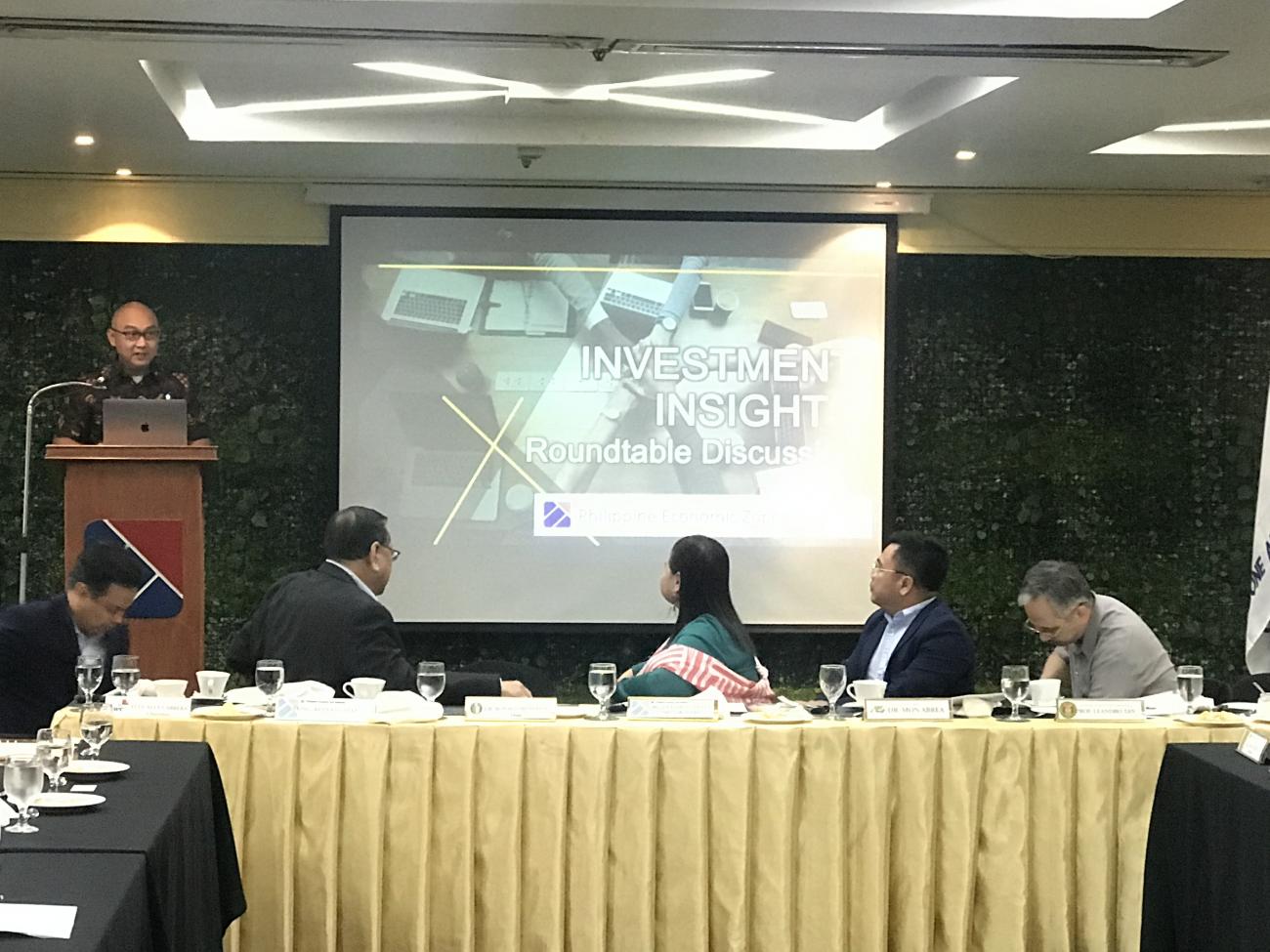
Last 08 October 2019, Ateneo School of Government Dean Ronald Mendoza expressed his views on the recent passage of HB 7982 or the Corporate Income Tax and Incentive Reform Act (CITIRA) in the lower chamber at a roundtable discussion organized by the Philippine Economic Zone Authority. The roundtable discussion was attended by representatives from joint business chambers, lead representatives of export-oriented sectors, tax experts, think tanks, and the academe.
Read full statement below.
------------------------------------------------
Preliminary Comments on CITIRA
The enactment of TRAIN Law (RA 10963) in December 2017, Rice Tariffication (RA 11203) in February 2019, and the recent passage of HB 7982 or the Corporate Income Tax and Incentive Reform Act (CITIRA) in the lower chamber signal significant steps in the Duterte administration’s Comprehensive Tax Reform Program (CTRP). These reforms are heralded as much-needed steps to make the Philippine tax system fairer, simpler, and more efficient. Moreover, these are also expected to help finance infrastructure projects, social investments of the government and boost foreign direct investments (FDI).
More specifically, TRAIN1 is primarily about correcting inequities in our tax systems through the reduction of personal income taxes. The law also repealed exemptions associated with the value-added tax, increased excise tax on petroleum products, and introduced new taxes such as the sweetened beverage and cosmetic surgery taxes. Rice tariffication enabled the country to finally comply with World Trade Organization (WTO) commitments, and the increased competition in the rice sector is expected to make rice much more affordable for the vast majority of Filipinos. Meanwhile, the second tranche of Duterte’s tax reform program—CITIRA—intends to lower corporate income tax (CIT) and harmonize fiscal incentives.
CITIRA is the main focus of this note, and the rationale behind it is clear. At present, our system of corporate income taxation is characterized by a narrow base and a one of the highest tax rates in ASEAN at 30%. On top of this is a complicated system of fiscal incentives for investors, which include a few incentives which are not timebound. Analysts suggest that the usefulness of these types of incentives wanes over time, since the incentives are untied to further goals (e.g. re- investment, job creation, technology transfer, etc).
Nevertheless, there are clear issues for clarification as regards CITIRA. The reform package is expected to be revenue-neutral, so that the reduction of CIT will likely be compensated by the rationalization of fiscal incentives. This suggests that some sectors will definitely face reduced incentives—and it is an empirical question as to the possible investment and job impacts of this adjustment. Another set of empirical questions relate to the projected investment and job- creation impact (if at all) of the CIT tax cut. The net impact of all these adjustments could better inform us of the full implications—hence the necessary safety nets and policy roll out protocols— supporting this reform. Yet a cursory review of the evidence so far suggests that we do not yet have this evidence and information.
In general, the government must lay out a concrete plan and safeguards for the roll out of all of its reforms—particularly those triggering massive structural adjustments in key economic sectors with vulnerable populations (e.g. farmers, workers, etc). The clear challenge presently is to better understand the consequences of reform roll-out so that government and the private sector are better prepared for any potential unintended consequences and in order to offer adequate safety nets for the groups most affected by dramatic structural adjustments.
Recall the roll out of TRAIN-1 vis-à-vis high inflation (which could have been an issue of bad timing more than causality) and Rice Tarriffication Law vis-à-vis farmers that suffered from depressed palay prices. Both these earlier reforms should offer much food for thought when embarking on further reforms, given that their roll out issues have not yet been fully sorted out. There are even reports that the cash transfers to protect poor and low income households from the impact of TRAIN1 have not even been fully paid out—even as the law was passed in 2017.
The present seeming disagreement on evidence and data emphasizes the need to review the empirical evidence related to CITIRA, juxtaposing this reform proposal with what we know—as well as what we presently do not yet know. The evidence should unite us in support of a well designed and well rolled-out reform.
And we should be careful in interpreting the present set of mixed results on the effectiveness of incentives to attract FDI. Studies suggest that investors are influenced more by strong economic fundamentals of the host economy. The evidence suggests that the effectiveness of incentives is highly context (e.g. time and geography) dependent. In other words, in addition to the prevailing tax policy and regime in a country, investment decisions are also driven by market and political factors such as market size and income level, labor productivity, type and availability of infrastructure, and political and macroeconomic stability.
One must be careful in interpreting these empirical results, however. One cannot jump to the simplistic conclusion that investor incentives are not needed, since investments into any one country or any one sector are typically made while taking into consideration the aggregate investor landscape in the country (which includes the incentives), as well as in other “competitor countries” which may also host the investment. In our analysis, if investment studies show that the evidence on incentives is mixed, this could mean that incentives across countries may tend to cancel each other out – but that does not mean automatically that they are not effective, nor that removing them will necessarily have no consequences on future and present investments. One might be able to argue this particularly for countries like the Philippines that still lag in improvements in other FDI- attracting factors such as ease of doing business. And our competitiveness and EODB indicators have not dramatically improved in the past few years—all while our competitors have.
We are also concerned with the general weakness presently in our “whole of government” approach to help ensure these reforms are more successful. Economic reforms must be supported by strong safety nets and adjustment mechanisms to make their full positive impact much more robust and inclusive. Many agencies have to work more effectively together. Otherwise we may see unintended consequences all over again.
As a final note, evidence based debate is useful to bring us closer to more effective reforms. Debate must be encouraged, and certainly evidence must be vetted and carefully reviewed. We must learn from our roll out of earlier reforms—and humility could be very useful. We need to more effectively prevent unintended consequences and further strengthen the partnership with key stakeholders, notably the private sector and our foreign investors. That stronger partnership should be among the main goals of these reforms.
Recent News
You may also like these articles

Protecting Creativity: AIPO and Rizal Library Host Copyright Awareness Session for the Ateneo Community
On March 18, 2026, the Ateneo Intellectual Property Office (AIPO), in collaboration with the Rizal Library, successfully conducted a Copyright Awareness Session held on the

Class and work arrangements for March 30-April 1, 2026 (Memo No. AGSB-DO-2526-043)
AGSB-DO-2526-043 28 March 2026 TO: AGSB Community FROM: (sgd.) Jowett Cecilio F. Magsaysay, MBA, PhD Dean SUBJECT: Class and work arrangements for March 30-April 1
Class and work arrangements for March 26-27, 2026 (Memo No. AGSB-DO-2526-042)
AGSB-DO-2526-042 25 March 2026 TO: AGSB Community FROM: (sgd.) Jowett Cecilio F. Magsaysay, MBA, PhD Dean SUBJECT: Class and work arrangements for March 26-27, 2026

QS Subject Rankings 2026: Ateneo in top 100 for theology; ranked in 7 subject areas
Ateneo de Manila University is among the top institutions in seven subject areas, and among the top 100 for theological and religious studies, according to
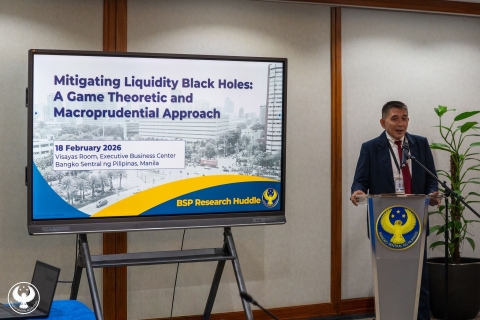
New study from JGSOM proposes framework to address sudden market liquidity collapses
Ateneo de Manila Assistant Professor Emmanuel Richard B Madarang of the John Gokongwei School of Management (JGSOM) presented his research paper “Mitigating Liquidity Black Holes
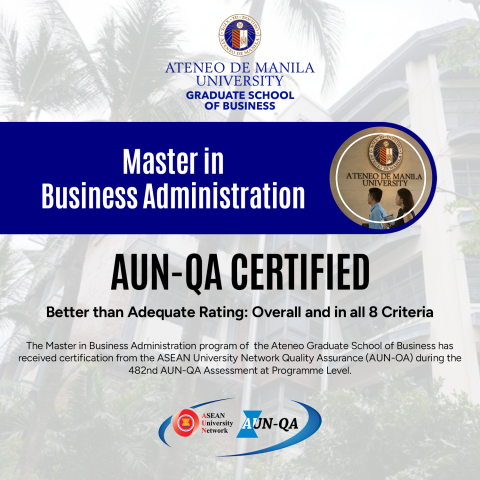
Better than adequate: AGSB's Master in Business Administration program receives AUN-QA certification
The Master in Business Administration (MBA) program of the Ateneo Graduate School of Business (AGSB) celebrates the certification received from the ASEAN University Network –