Nourish the nation: Advocacies on nutrition
10 Jun 2024 | Clariz S Pillos 2 BS Chemistry




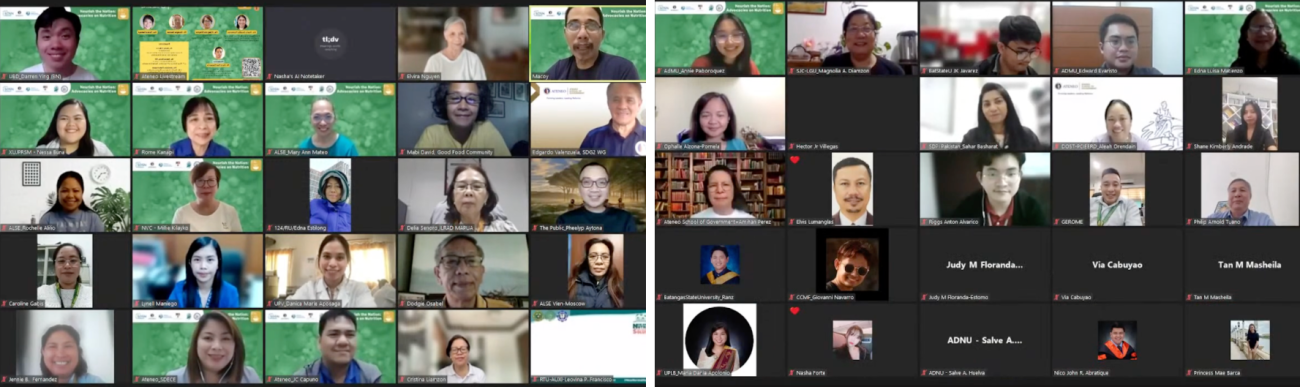
A webinar, entitled "Nourish the Nation: Advocacies on Nutrition” was held on 12 March 2024. The webinar gathered experts to address hunger, malnutrition and its effect on children under the age of five. The webinar was organized by the Sustainable Development Solutions Network Philippines (SDSN PH), hosted by the Ateneo Institute of Sustainability at Ateneo de Manila University. The webinar aimed to show sustainable ways to scale up and solve malnutrition through a whole-of-society approach, ensuring action for the most vulnerable.
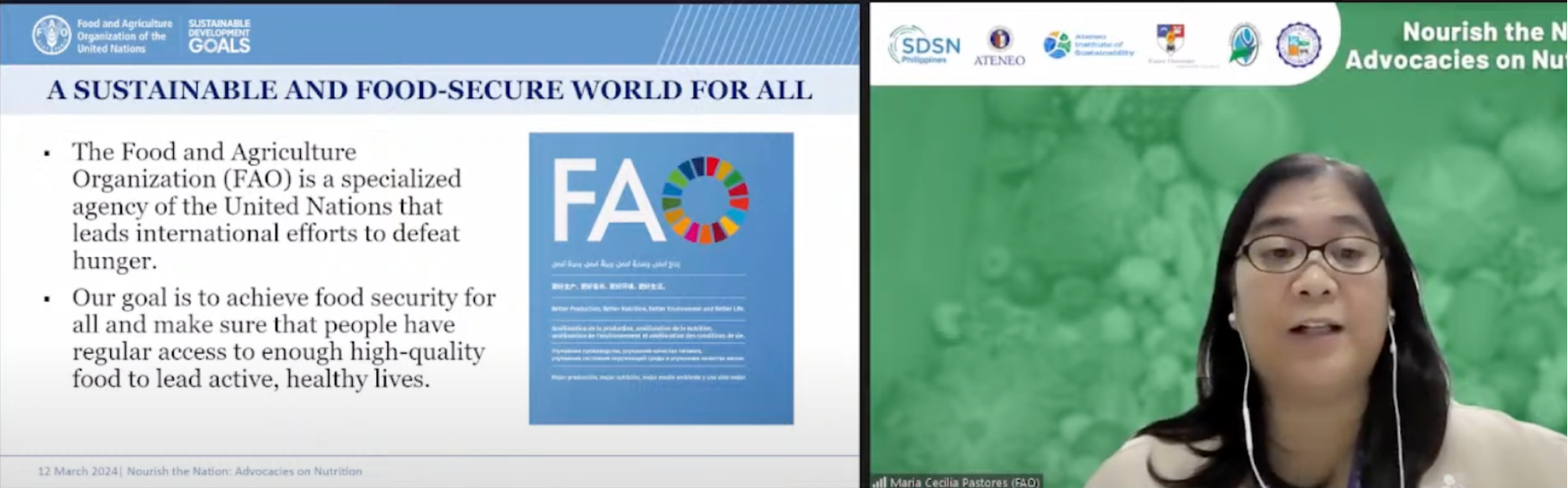
Maria Cecilia Pastores, a representative from the United Nations - Food and Agriculture Organization - Philippines, emphasized that successful nutrition education requires active participation, awareness of nutrition problems, and willingness to change from the people involved. She detailed FAO’s project in BARMM entitled, Strengthening the Youth’s Participation in Agriculture, where they aimed to capacitate the youth in agri-food systems and integrate nutrition activities into the Junior Farmer Field School model, a structured, non-formal learning program. This initiative addresses the looming issue of the aging farmer population in the Philippines and helps ensure SDG2 is achieved.
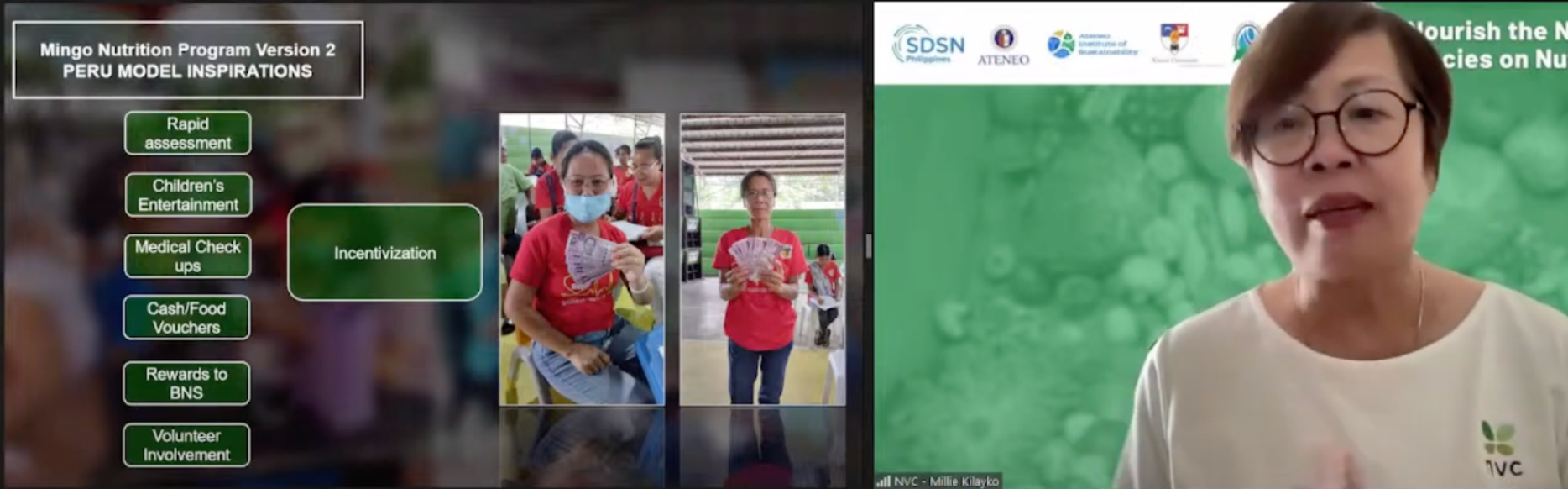
Milly Kilayko shared the mission of her organization, Negrense Volunteers for Change (NVC) Foundation, which is to provide health intervention for toddlers, as nutrition missed during this period cannot be fully compensated later. NVC developed Mingo, a complementary food made of rice, mongo, and malunggay. They successfully employed a home-based feeding program protocol. Their latest program targets stunting by providing Mingo to the enrolled child and their siblings, alongside milk and vitamins, and utilizes quarterly cash/food vouchers for mothers to ensure compliance.
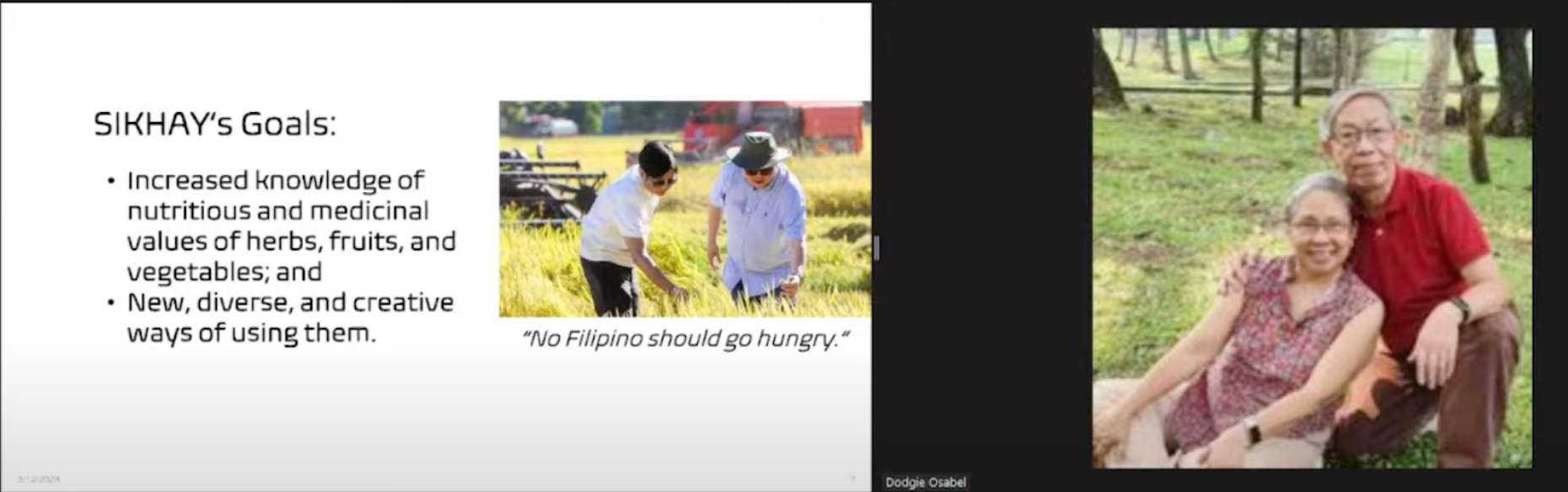
Dodgy Osabel, a senior advocate for food and nutrition security, stressed the need for awareness regarding the negative impact of high consumption of sugar, salt, fat, and processed foods on health. He pointed out the ironic economic reality where rising inflation and limited supply make some vegetables more expensive than fish and meat. He called for systemic change, urging elected officials to prioritize "food first" programs over political self-interest and family dynasties.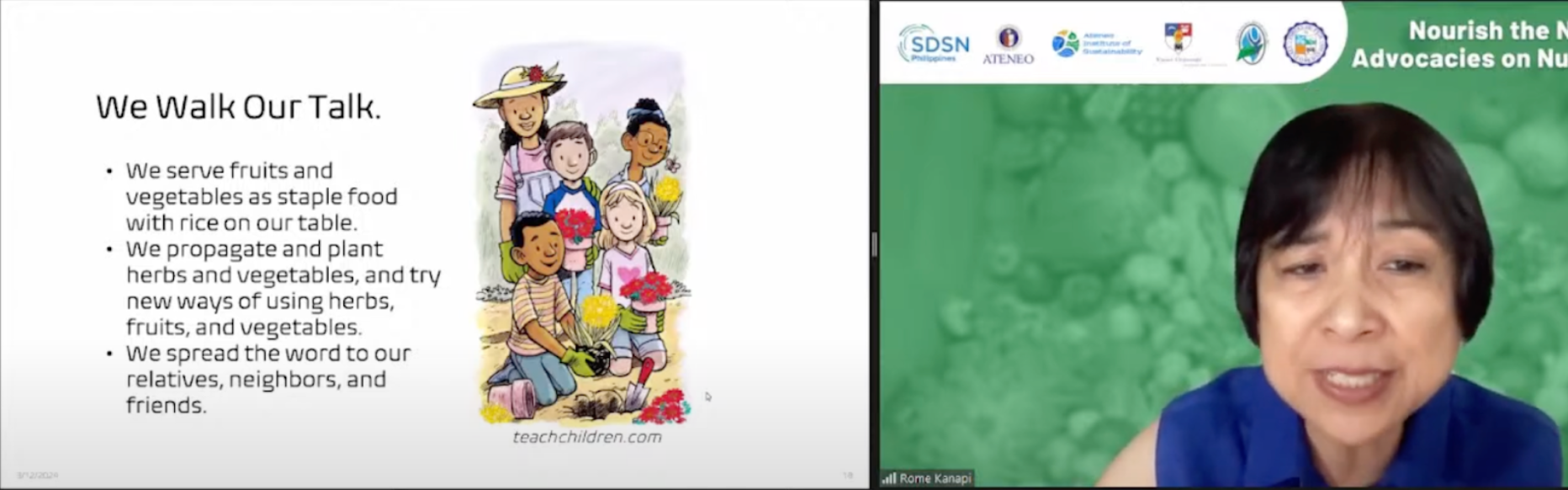
Rome Kanapi, shared about their NGO, Sikhai, that promotes health and wellness through calendar and cookbook publications and hands-on demonstrations. The organization promotes education to communities and teaches them the nutritious and medicinal value of affordable, locally-grown greens like kangkong and talinum. Sikhai uses fun techniques, like coloring rice naturally with blue ternate or turmeric, to entice children and families toward healthier eating habits.
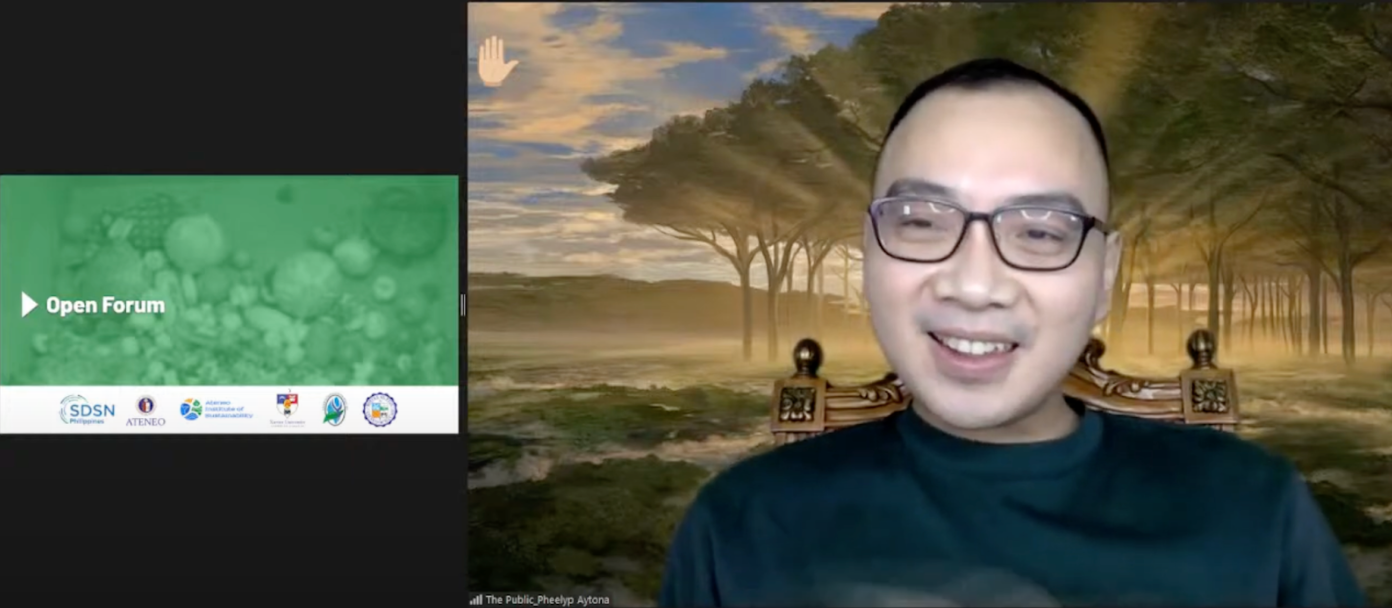
Mabi David, Deputy Secretary General of the Kilusang Magbubukid ng Pilipinas (KMP), one of the reactors of the webinar, noted that CSOs and advocates create public pressure, which is critical for making crimes against farmers visible and preventing the assumption that their lives are disposable. She cited the mass arrests of the Tinang farmers, where public outcry helped secure their release, emphasizing the need to create a mass movement for farmer liberation.
The path forward emphasizes three key elements: collaboration, youth engagement, and securing buy-in from families and local government units (LGUs). Ed Valenzuela reinforced that the transformation is needed for a better world and better nutrition: it"really has to start with ourselves". The final message was a powerful call to action: "Nutrition should not be at our discretion, but it should be our direction".
Recent News
You may also like these articles

[Hot Off the Press] Arkipelago
New book from the Ateneo Press Arkipelago provides a fascinating and fantastical twist on Philippine politics and history Our country is an archipelago of stories
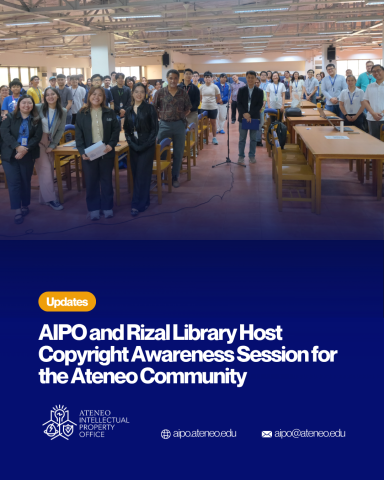
Protecting Creativity: AIPO and Rizal Library Host Copyright Awareness Session for the Ateneo Community
On March 18, 2026, the Ateneo Intellectual Property Office (AIPO), in collaboration with the Rizal Library, successfully conducted a Copyright Awareness Session held on the
Holy Week 2026 Holidays (Memo # UHR2526-038)
Memo # UHR2526-038 31 March 2026 TO: All Employees FROM: [Sgd] Maria Victoria T Cortez, PhD Vice President for University Human Resources SUBJECT: Holy Week
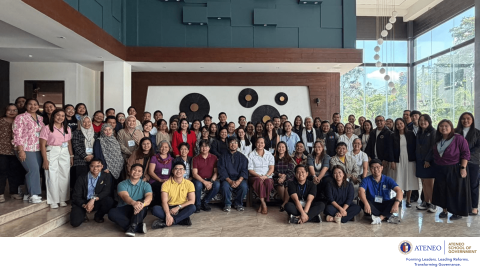
ASOG’s Tobacco Control initiatives spotlighted in DOH National Technical Working Group for Tobacco Prevention and Control
On March 10 to 12, 2026, the Ateneo School of Government (ASOG), through its research and public policy unit, the Ateneo Policy Center, participated in
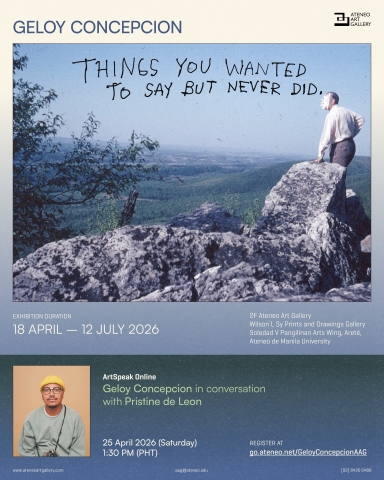
Things You Wanted to Say But Never Did: Geloy Concepcion’s six-year project makes Its exhibition debut at the Ateneo Art Gallery
Geloy Concepcion’s Things You Wanted To Say But Never Did comes to the Ateneo Art Gallery this 18 April 2026. After receiving almost 300,000 messages

[Hot Off the Press] Love If I'm Pretty
New YA Release from the Ateneo Press Love If I’m Pretty tackles the nuances of growing up through complex characters and straightforward prose What do