Digitizing food systems to bridge the rural divide
15 Sep 2024 | Princess Jhode Datu, 2 BS Legal Management









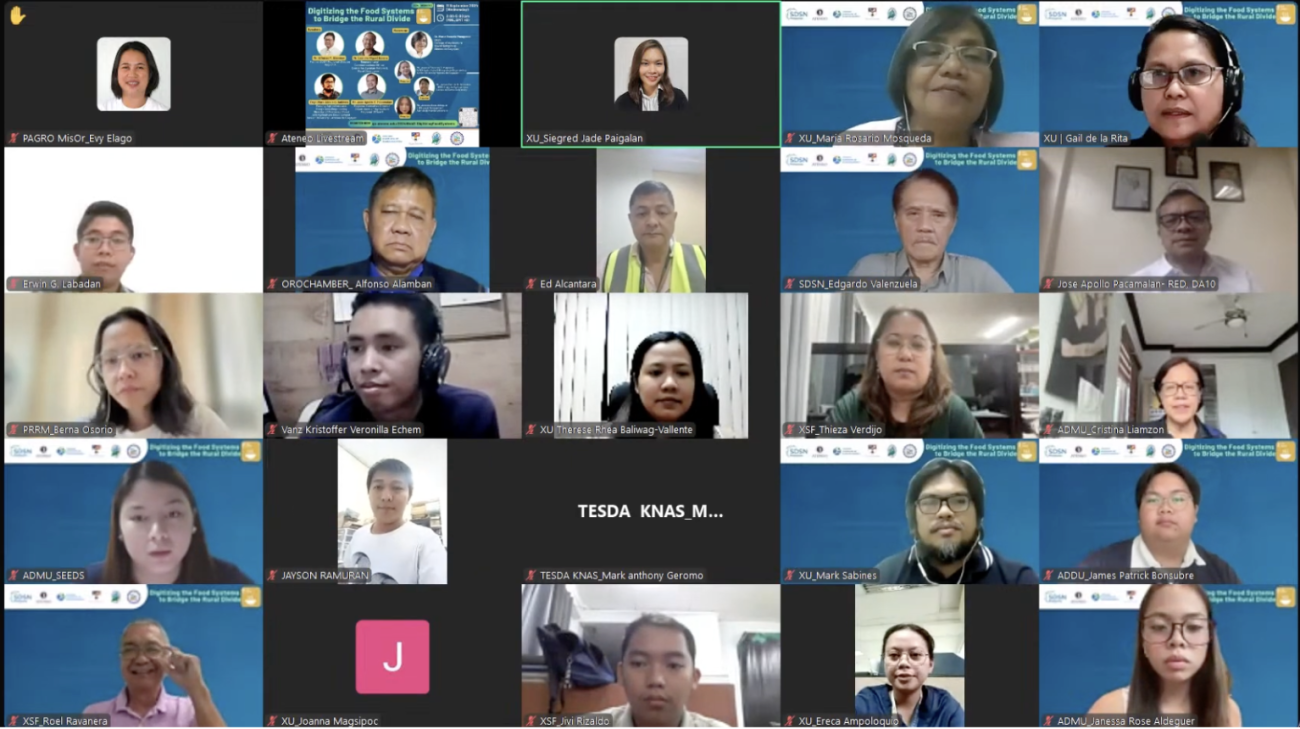
On 11 September 2024, Xavier University-Ateneo de Cagayan and the Xavier Science Foundation hosted a webinar entitled “Digitizing the Food Systems to Bridge the Rural Divide”. The session explored how farming, one of the world's oldest professions, is now entering the digital revolution. The event was organized in collaboration with Ateneo de Manila University, Ateneo de Davao University, and SDSN Philippines.
Moderated by Dr Maria Rosario Mosqueda, Dean of the College of Agriculture at Xavier University, the discussion showcased practical applications of technology in agriculture, spanning food safety systems and disaster sensors to telehealth stations and drone-assisted mapping.
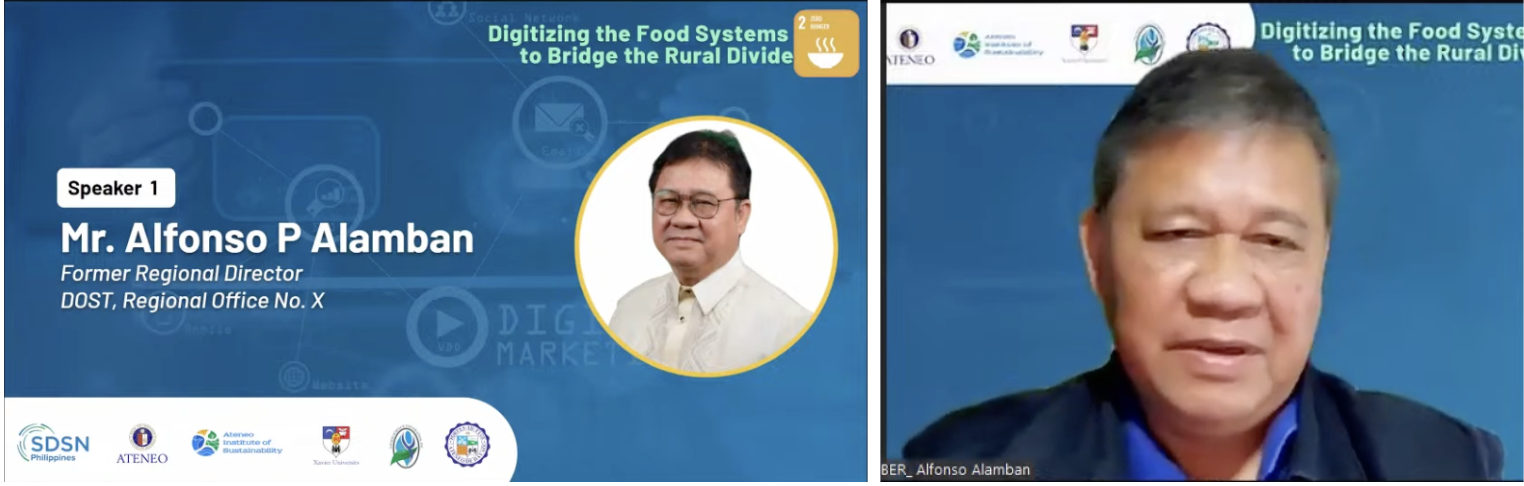
Alfonso P Alamban, former DOST Regional Director for Northern Mindanao, opened the session by presenting real-world digital tools. His team developed Save Food Bite, an app designed to ensure food safety for consumers during the pandemic. He highlighted the deployment of over a thousand weather stations for Project NOAH (Nationwide Operational Assessment of Hazards). These stations provide real-time data on rainfall and river levels every ten minutes, providing the community with actionable information for disaster preparedness.
Mr Alamban further explained the role of LiDAR technology in creating high-tech 3D maps. These digital models allow Local Government Units (LGUs) to identify safe zones for settlements and optimal areas for farming. Additionally, he introduced the SARAI (Smarter Approaches to Reinvigorate Agriculture as an Industry in the Philippines) system, which acts as a "digital farming coach," by offering guidance on planting techniques and disease diagnosis for crops like rice, corn, and coffee. Mr Alamban noted that digital adoption still faces hurdles, such as the lingering need for face-to-face interactions in government licensing and the challenge of scaling startups like Galansang (drone reforestation) and Frisco Green Mind (urban agri-sensors).
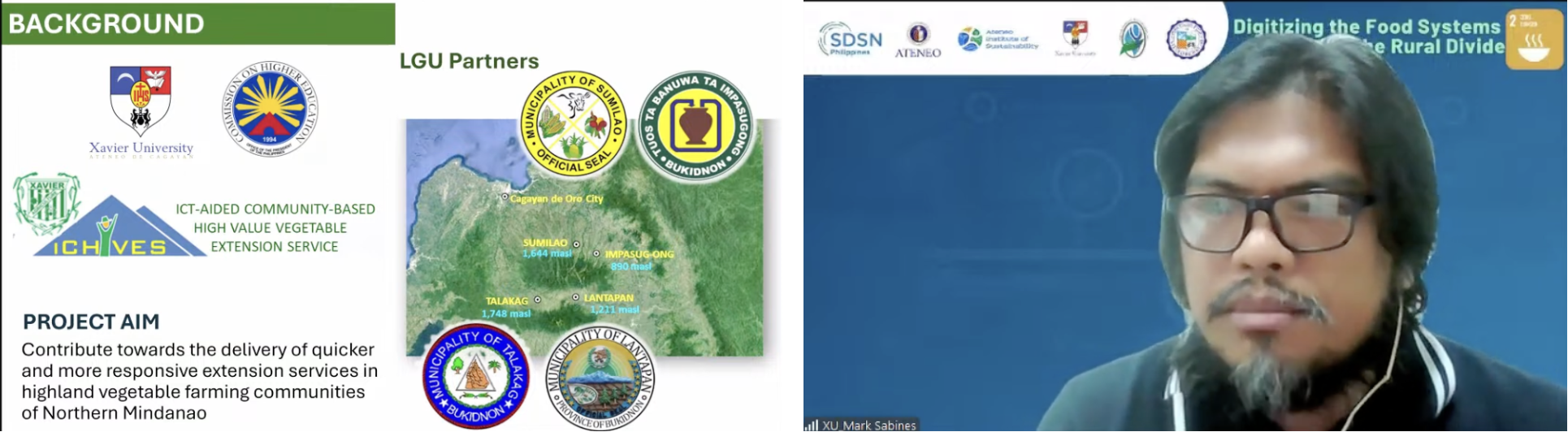
Representing Xavier University, Engr Mark Alexis O Sabines, Director of the Masterson Food and Agriculture Development Office, introduced a suite of farmer-first applications designed to streamline agricultural management. These tools include Abuno for calculating precise fertilizer requirements, FarmBuild for production and break-even planning, and PEST-ika for the digital pest identification. Additionally, PROMISE (Project Management and Monitoring System) provides real-time market transparency by sending daily vegetable prices from Cagayan de Oro’s Bulua market directly to farmers via text message. Central to these innovations is Engr. Sabines’ insight that digital farming must remain human-centric; he emphasized the necessity of a hybrid system that rejects a fully automated approach in favor of a meaningful combination of ICT tools and human expertise.
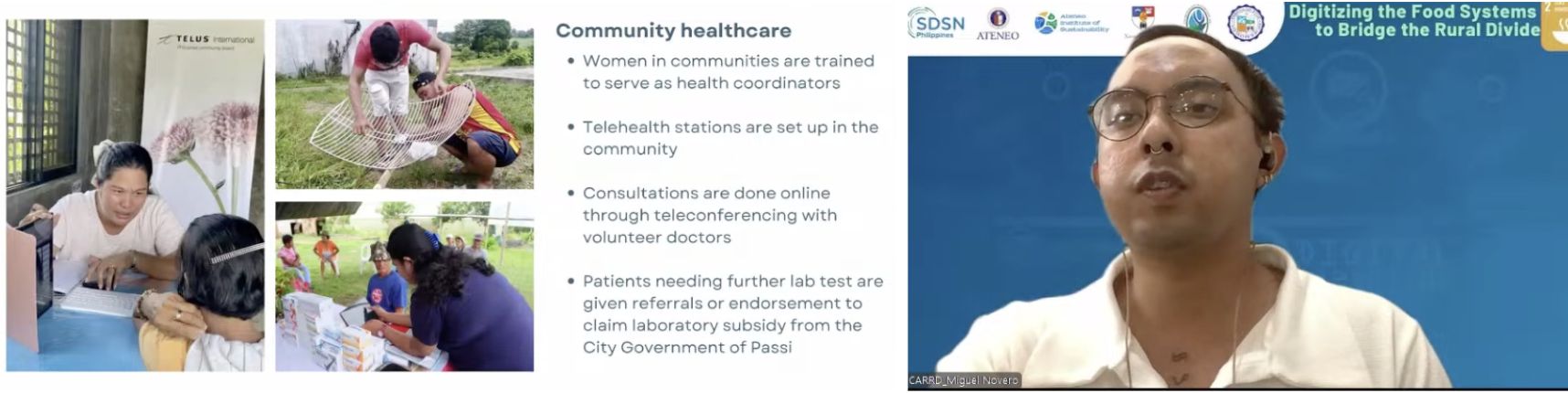
Leandro Miguel Novero, Research and Communications Officer for the Center for Agrarian Reform and Rural Development (CARRD), demonstrated how technology supports rights and services. Through participatory Geographic Information Systems, communities can resolve land title overlaps and track agricultural projects, such as sugar greenway survival across 16 barangays. Furthermore, their telehealth partnership with the University of San Agustin and Pasig City LGU has facilitated over 500 consultations for farmer-patients, providing vital medical access to remote areas.
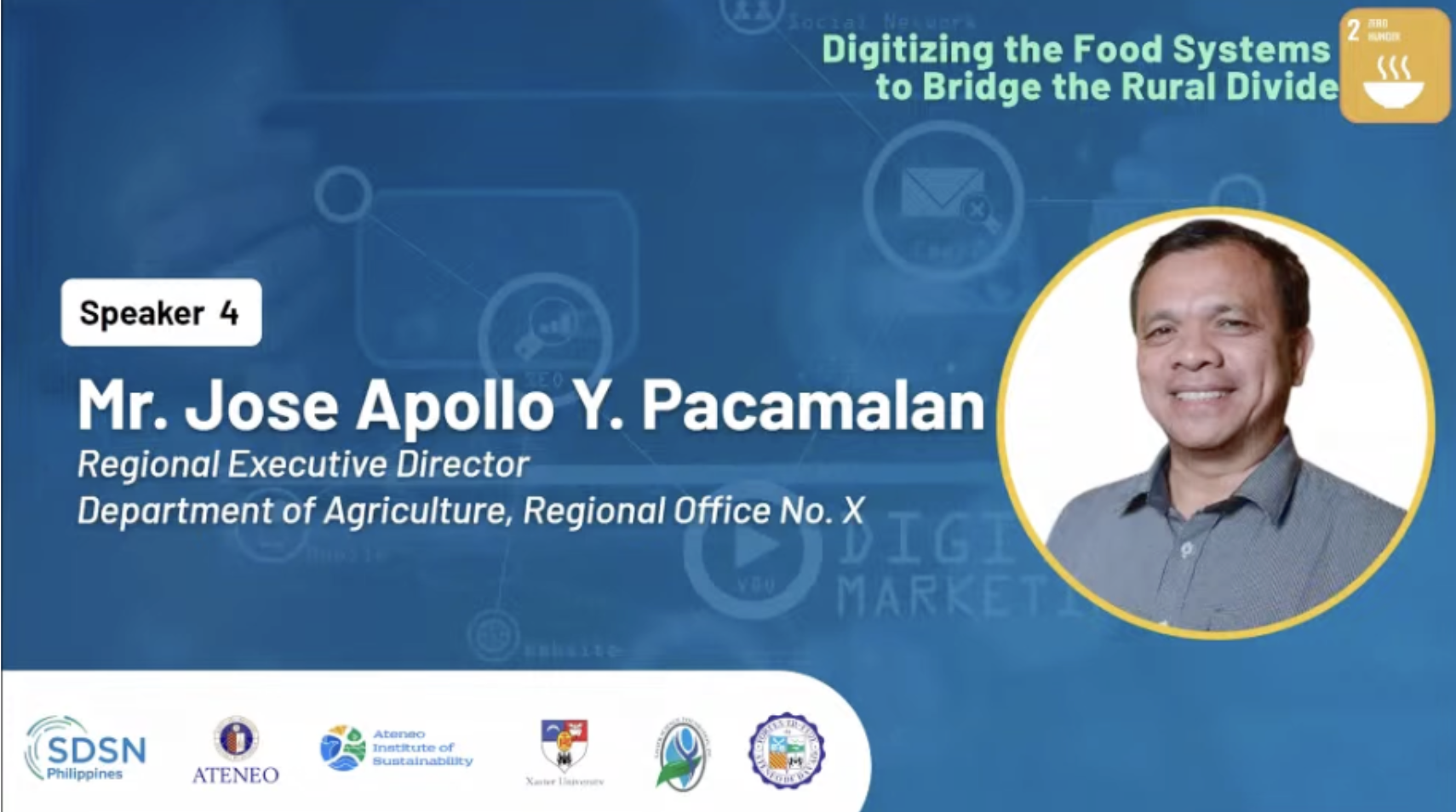
Finally, Mr Jose Apollo Y Pacamalan, Regional Executive Director of the Department of Agriculture Region X, illustrated the power of scale. He highlighted a new coconut processing plant that utilizes drone mapping to select high-yield trees. This facility currently processes 60,000 nuts daily and pays farmers one peso above the standard farm-gate price. For Pacamalan, the future lies in "offline-ready" systems that ensure technology works even in areas with poor connectivity.
The discussion crystallized into three core truths: technology must remain hybrid and people-first; success requires cross-sectoral commitment; and systems must be constantly updated to stay relevant. A student reactor echoed a common sentiment among farmers: “To see is to believe.” This underscores the necessity of on-the-ground demonstrations. Whether it is a simple text message regarding market prices or a telehealth corner in a barangay, these tools bridge the digital divide. By providing direct access to data, farmers transition from being "price-takers" at the mercy of traders to informed negotiators with greater agency over their livelihoods.
As the webinar concluded, the message was unmistakable: the future of food is already digital. The challenge now is to ensure these advancements are reachable, reliable, and real for every Filipino farmer.
Recent News
You may also like these articles

[Hot Off the Press] Arkipelago
New book from the Ateneo Press Arkipelago provides a fascinating and fantastical twist on Philippine politics and history Our country is an archipelago of stories
Protecting Creativity: AIPO and Rizal Library Host Copyright Awareness Session for the Ateneo Community
On March 18, 2026, the Ateneo Intellectual Property Office (AIPO), in collaboration with the Rizal Library, successfully conducted a Copyright Awareness Session held on the
Holy Week 2026 Holidays (Memo # UHR2526-038)
Memo # UHR2526-038 31 March 2026 TO: All Employees FROM: [Sgd] Maria Victoria T Cortez, PhD Vice President for University Human Resources SUBJECT: Holy Week
ASOG’s Tobacco Control initiatives spotlighted in DOH National Technical Working Group for Tobacco Prevention and Control
On March 10 to 12, 2026, the Ateneo School of Government (ASOG), through its research and public policy unit, the Ateneo Policy Center, participated in
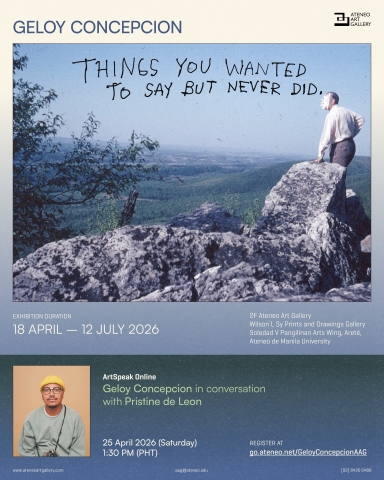
Things You Wanted to Say But Never Did: Geloy Concepcion’s six-year project makes Its exhibition debut at the Ateneo Art Gallery
Geloy Concepcion’s Things You Wanted To Say But Never Did comes to the Ateneo Art Gallery this 18 April 2026. After receiving almost 300,000 messages

[Hot Off the Press] Love If I'm Pretty
New YA Release from the Ateneo Press Love If I’m Pretty tackles the nuances of growing up through complex characters and straightforward prose What do