Clues of advanced ancient technology found in the Philippines and Island Southeast Asia
21 Feb 2025 | Timothy James M. Dimacali






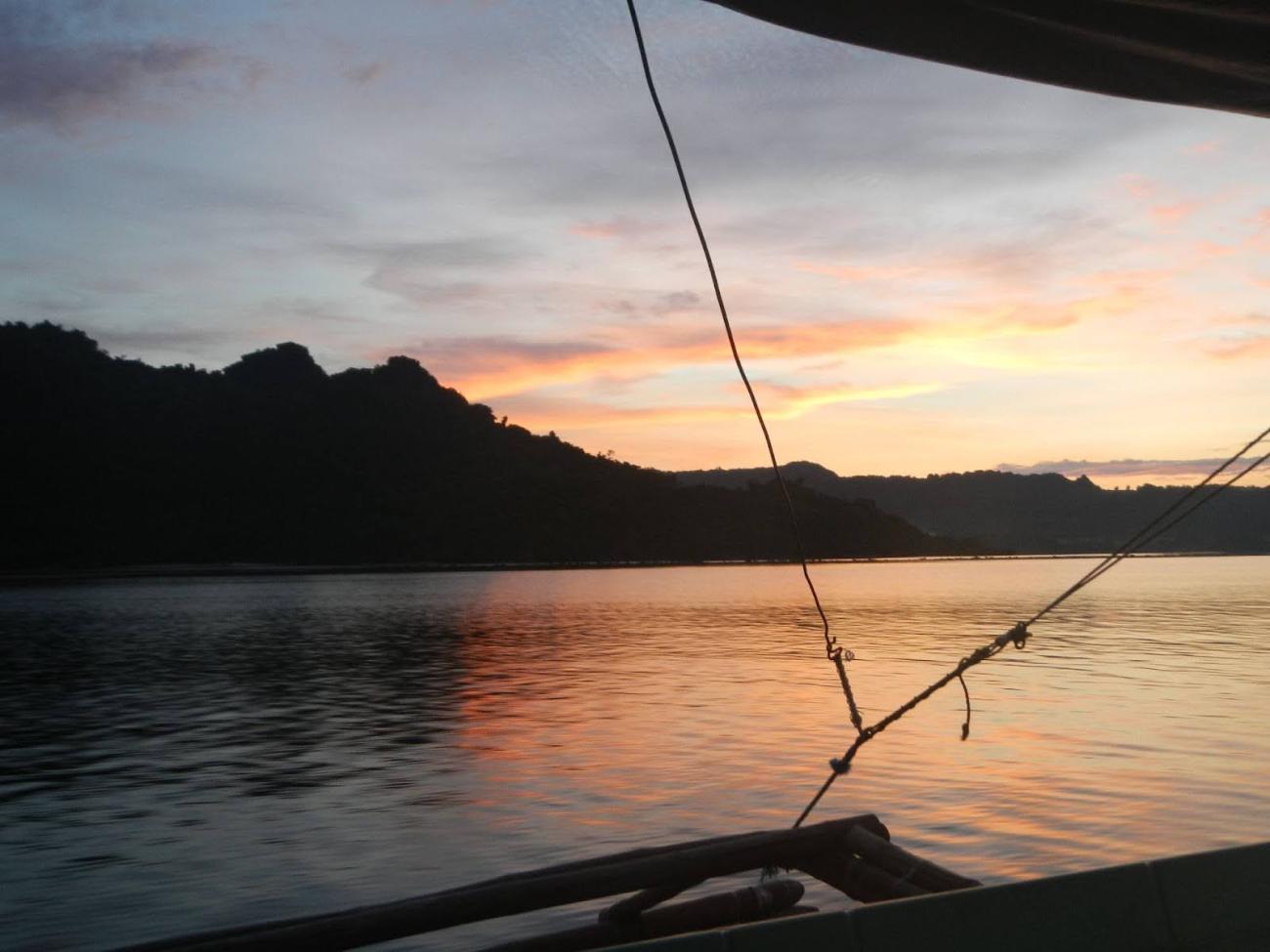
The ancient peoples of the Philippines and of Island Southeast Asia (ISEA) may have built sophisticated boats and mastered seafaring tens of thousands of years ago—millennia before Magellan, Zheng He, and even the Polynesians.
In a new paper coming out in the April 2025 issue of the Journal of Archaeological Science: Reports, researchers Dr Riczar Fuentes and Dr Alfred Pawlik from the Department of Sociology and Anthropology (DSA) of Ateneo de Manila University's Dr Rosita G Leong School of Social Sciences (RGL SOSS) challenge the widely-held contention that technological progress during the Paleolithic only emerged in Europe and Africa.
They point out that much of ISEA was never connected to mainland Asia, neither by land bridges nor by ice sheets, yet it has yielded evidence of early human habitation. Exactly how these peoples achieved such daring ocean crossings is an enduring mystery, as organic materials like wood and fiber used for boats rarely survive in the archaeological record. But archaeological sites in the Philippines, Indonesia, and Timor-Leste are now providing strong evidence that ancient seafarers had a technological sophistication comparable to much later civilizations.
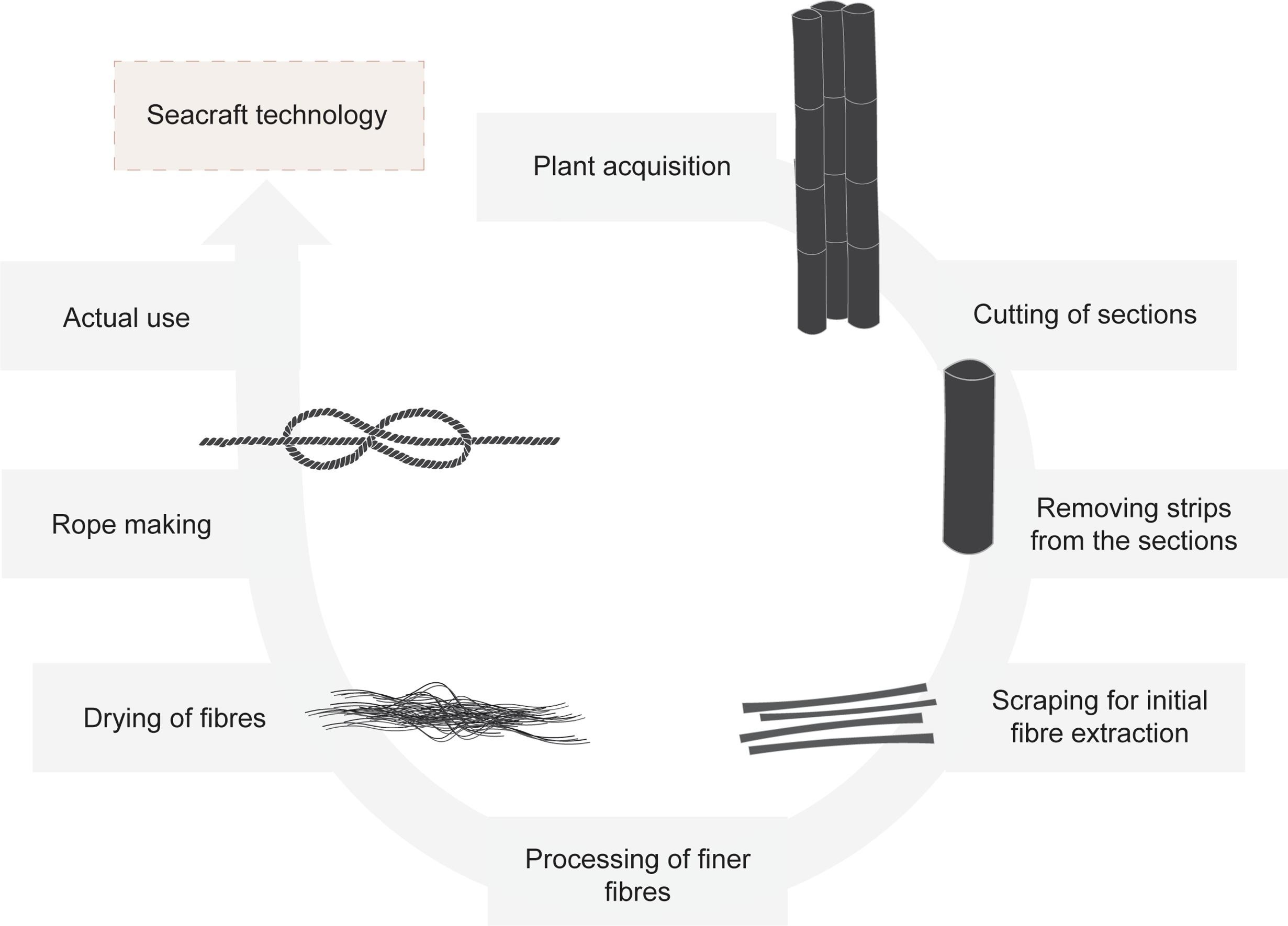
Microscopic analysis of stone tools excavated at these sites, dating as far back as some 40,000 years ago, showed clear traces of plant processing—particularly the extraction of fibers necessary for making ropes, nets, and bindings essential for boatbuilding and open-sea fishing. Archaeological sites in Mindoro and Timor-Leste also yielded the remains of deep ocean fish such as tuna and sharks as well as fishing implements such as fishing hooks, gorges, and net weights.
“The remains of large predatory pelagic fish in these sites indicate the capacity for advanced seafaring and knowledge of the seasonality and migration routes of those fish species,” the researchers said in their paper. Meanwhile, the discovery of fishing implements “indicates the need for strong and well-crafted cordage for ropes and fishing lines to catch the marine fauna.”
This body of evidence points to the likelihood that these ancient seafarers built sophisticated boats out of organic composite materials held together with plant-based ropes and also used the same rope technology for open-sea fishing. If so, then prehistoric migrations across ISEA were not undertaken by mere passive sea drifters on flimsy bamboo rafts but by highly skilled navigators equipped with the knowledge and technology to travel vast distances and to remote islands over deep waters.
Several years of fieldwork in Ilin Island, Occidental Mindoro, inspired the researchers to think of this topic and to test this hypothesis. Together with naval architects from the University of Cebu, they recently started the First Long-Distance Open-Sea Watercrafts (FLOW) Project, supported by a research grant from Ateneo de Manila University, with the aim of testing raw materials that were probably used in the past, and to design and test scaled-down seacraft models.
The presence of such advanced maritime technology in prehistoric ISEA highlights the ingenuity of early Philippine peoples and their neighbors, whose boat-building knowledge likely made the region a center for technological innovations tens of thousands of years ago and laid the foundations for the maritime traditions that still thrive in the region today.
SOURCE:
https://archium.ateneo.edu/sa-faculty-pubs/156
https://doi.org/10.1016/j.jasrep.2025.105020
For interview requests and other inquiries, please email media.research@ateneo.edu. Visit archium.ateneo.edu for more information about our latest research and innovations.
Recent News
You may also like these articles

[Hot Off the Press] Arkipelago
New book from the Ateneo Press Arkipelago provides a fascinating and fantastical twist on Philippine politics and history Our country is an archipelago of stories

Protecting Creativity: AIPO and Rizal Library Host Copyright Awareness Session for the Ateneo Community
On March 18, 2026, the Ateneo Intellectual Property Office (AIPO), in collaboration with the Rizal Library, successfully conducted a Copyright Awareness Session held on the

Holy Week 2026 Holidays (Memo # UHR2526-038)
Memo # UHR2526-038 31 March 2026 TO: All Employees FROM: [Sgd] Maria Victoria T Cortez, PhD Vice President for University Human Resources SUBJECT: Holy Week
ASOG’s Tobacco Control initiatives spotlighted in DOH National Technical Working Group for Tobacco Prevention and Control
On March 10 to 12, 2026, the Ateneo School of Government (ASOG), through its research and public policy unit, the Ateneo Policy Center, participated in

Things You Wanted to Say But Never Did: Geloy Concepcion’s six-year project makes Its exhibition debut at the Ateneo Art Gallery
Geloy Concepcion’s Things You Wanted To Say But Never Did comes to the Ateneo Art Gallery this 18 April 2026. After receiving almost 300,000 messages

[Hot Off the Press] Love If I'm Pretty
New YA Release from the Ateneo Press Love If I’m Pretty tackles the nuances of growing up through complex characters and straightforward prose What do