Philippine islands had technologically advanced maritime culture 35,000 years ago
05 Jun 2025 | Timothy James M Dimacali






In 15 years of groundbreaking archaeological research, scientists from Ateneo de Manila University, working with international experts and institutions, have established compelling evidence of the pivotal role of the Philippine archipelago in ancient maritime Southeast Asia. They uncovered a story of effective human migration, advanced technological innovation, and long-distance intercultural relations dating back over 35,000 years.

The Ateneo researchers' latest publication presents a wealth of data and materials from the Mindoro Archaeology Project, including some of the oldest evidence of the presence of anatomically modern humans (Homo sapiens) in the Philippine archipelago, in Occidental Mindoro—particularly on Ilin Island; San Jose; and Sta Teresa, Magsaysay.
Mindoro, like most of the main Philippine islands except for Palawan, was never connected to mainland Southeast Asia, neither by land bridges nor by ice sheets, and sea-crossings were always necessary to reach it. This likely spurred the development of sophisticated technologies for traversing and surviving this environment.
Evidence of sophisticated ancient technology on Philippine islands
A variety of finds such as human remains, animal bones, shells, and tools made from stone, bone and shell show that Mindoro’s early inhabitants successfully harnessed both terrestrial and marine resources such that, over 30,000 years ago, they already possessed seafaring capabilities and specific fishing skills that enabled them to catch predatory open-sea fish species, such as bonito and shark, and to establish connections with distant islands and populations in the vast maritime region of Wallacea.
Particularly noteworthy is the innovative use of shells as raw material for tools since more than 30,000 years ago. This culminated in the manufacture of adzes from giant clam shells (Tridacna species), dating back 7,000-9,000 years ago. These bear a striking similarity to shell adzes found across the region of Island Southeast Asia and as far as Manus Island in Papua New Guinea, over 3,000 kilometers away.

The researchers also found on Ilin Island a human grave dating to around 5,000 years ago, with the body laid to rest in a fetal position and bedded and covered with limestone slabs. The manner of burial was similar to other flexed burials found across Southeast Asia, suggesting shared ideological and social influences and an emerging social complexity across a vast area from the mainland to distant islands.
Mindoro hints at vast, advanced maritime network
Mindoro’s archaeological sites have yielded evidence of culturally sophisticated inhabitants who were behaviorally and technologically adapted to coastal and marine environments. Collectively, these discoveries suggest that Mindoro and nearby Philippine islands were part of an extensive maritime network that existed already during the Stone Age and facilitated cultural and technological exchange between early human populations across Island Southeast Asia for many millennia.
By documenting human habitation over a long period of time, with the emergence of advanced subsistence strategies and maritime technologies, the Mindoro Archaeology Project not only fills critical gaps in the prehistoric record of the Philippines but also redefines the region’s significance in the broader narrative of human migration and adaptation in Island Southeast Asia.
The latest publication of the Mindoro Archeology Project is authored by the Ateneo de Manila University Department of Sociology and Anthropology’s Dr Alfred F Pawlik, Dr Riczar B. Fuentes, and Dr Tanya Uldin; together with Dr Marie Grace Pamela G Faylona of the University of the Philippines - Diliman Department of Anthropology, De La Salle University Department of Sociology and Behavioral Sciences, and Philippine Normal University College of Advanced Studies; and Trishia Gayle R Palconit, PhD student at the University of Ferrara, Italy.
SOURCE:
https://archium.ateneo.edu/sa-faculty-pubs/160/
For interview requests and other inquiries, please email media.research@ateneo.edu. Visit archium.ateneo.edu for more information about our latest research and innovations.
Recent News
You may also like these articles

[Hot Off the Press] Arkipelago
New book from the Ateneo Press Arkipelago provides a fascinating and fantastical twist on Philippine politics and history Our country is an archipelago of stories
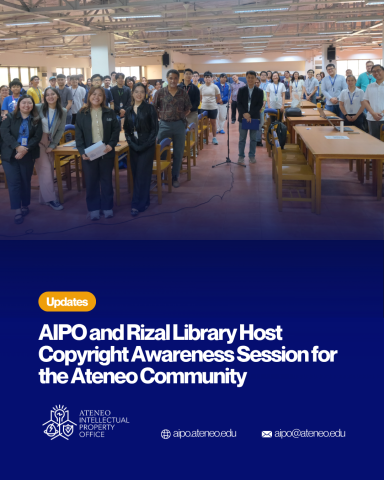
Protecting Creativity: AIPO and Rizal Library Host Copyright Awareness Session for the Ateneo Community
On March 18, 2026, the Ateneo Intellectual Property Office (AIPO), in collaboration with the Rizal Library, successfully conducted a Copyright Awareness Session held on the

Holy Week 2026 Holidays (Memo # UHR2526-038)
Memo # UHR2526-038 31 March 2026 TO: All Employees FROM: [Sgd] Maria Victoria T Cortez, PhD Vice President for University Human Resources SUBJECT: Holy Week
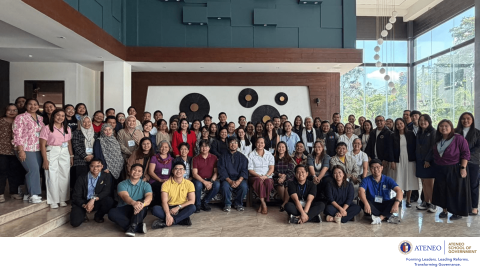
ASOG’s Tobacco Control initiatives spotlighted in DOH National Technical Working Group for Tobacco Prevention and Control
On March 10 to 12, 2026, the Ateneo School of Government (ASOG), through its research and public policy unit, the Ateneo Policy Center, participated in

Things You Wanted to Say But Never Did: Geloy Concepcion’s six-year project makes Its exhibition debut at the Ateneo Art Gallery
Geloy Concepcion’s Things You Wanted To Say But Never Did comes to the Ateneo Art Gallery this 18 April 2026. After receiving almost 300,000 messages

[Hot Off the Press] Love If I'm Pretty
New YA Release from the Ateneo Press Love If I’m Pretty tackles the nuances of growing up through complex characters and straightforward prose What do