Dr Maria Mercedes T Rodrigo keynotes at AIED 2025
28 Jul 2025



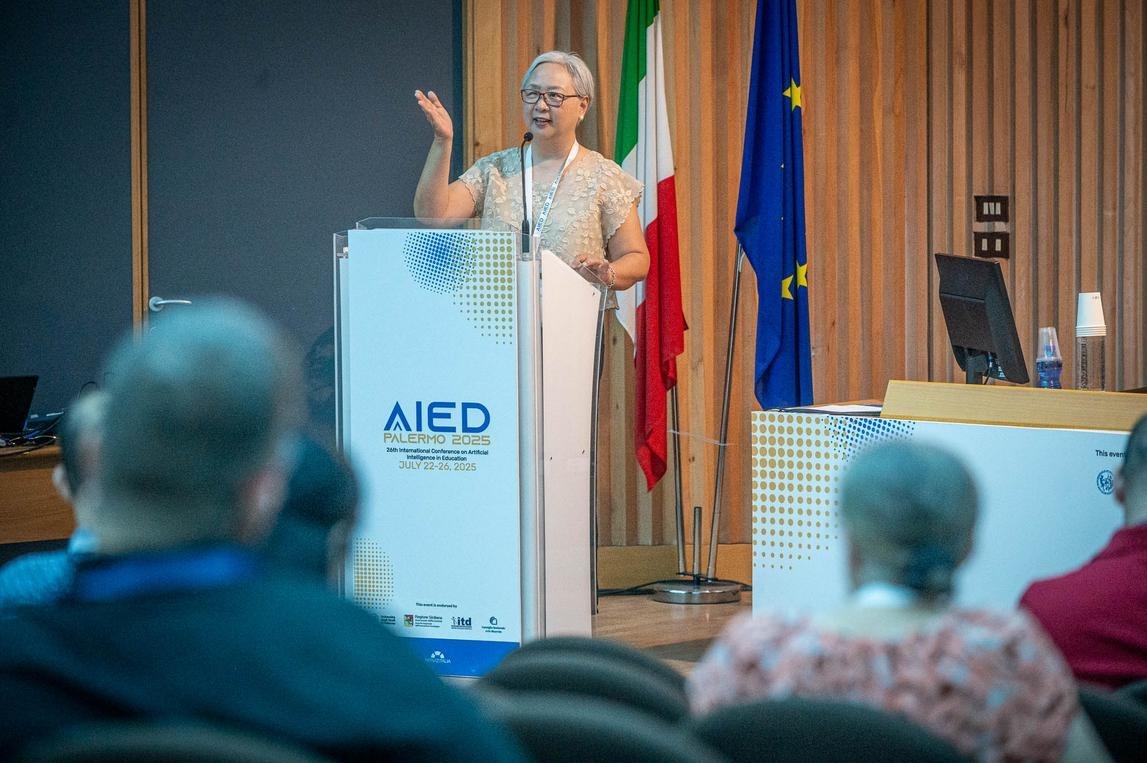
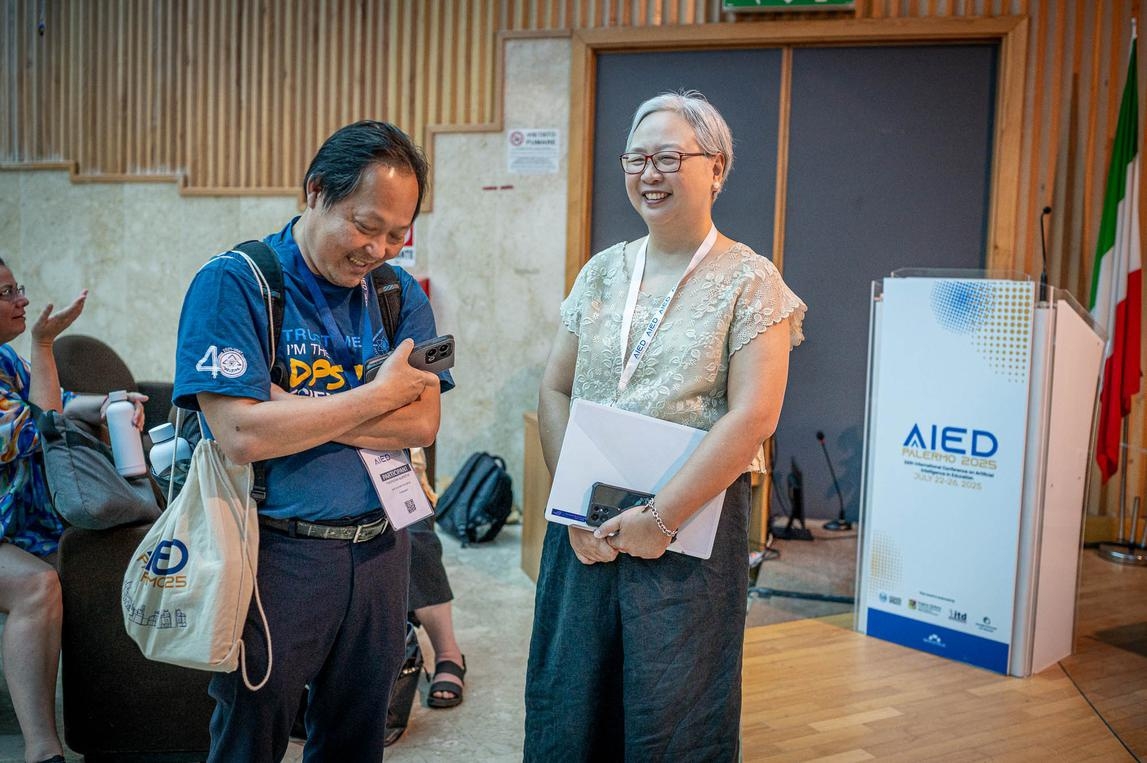
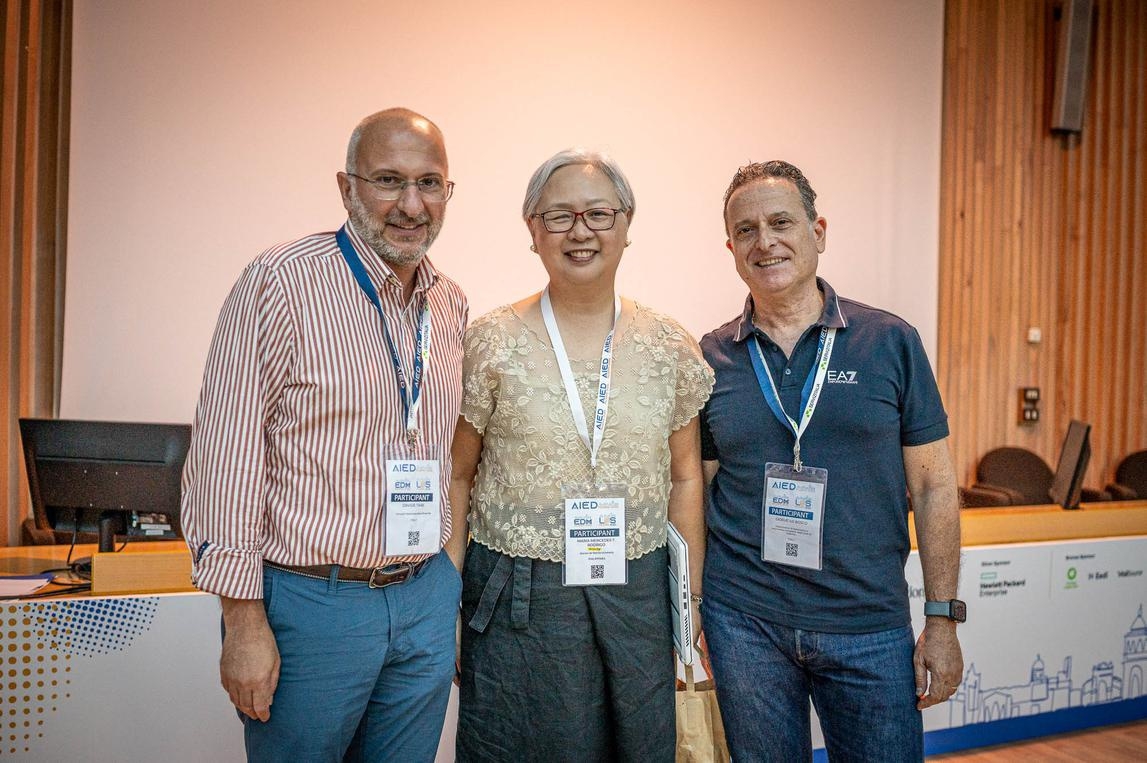
Dr Maria Mercedes T Rodrigo delivered one of the keynote talks at the 26th International Conference on Artificial Intelligence in Education (AIED 2025) held at the University of Palermo in Italy from 22 to 26 June. Dr Rodrigo is a professor at the Department of Information Systems and Computer Science, head of the Ateneo Laboratory for the Learning Sciences (ALLS), and co-head of the Ateneo Virtual, Augmented, and Mixed Reality Laboratory (VAMR).
Her talk was entitled “The Technopolitics of AIED: A Developing Country’s Perspective.” In it, she discussed the constraints that limit the adoption of AIED technologies in the developing world and how political actions and technological innovations shape each other. Since AI power is concentrated in a few rich states and corporations, she raised questions about the developing world’s capacity to negotiate with these entities. She asked how the developing world can use AI to promote resilience, as a protective rather than a risk factor.
Rodrigo joined two other keynote speakers: Kristen DiCierbo, Chief Learning Officer of Khan Academy, and Francesca Pozzi, Director of CNR – Institute for Educational Technology.
AIED is the flagship conference of the International Artificial Intelligence in Education, a professional organization comprised of the world’s top AI in education researchers. The conference theme for 2025 was “AI as a catalyst for inclusive, personalized, and ethical education: Empowering teachers and students for an equitable future.” The AIED proceedings are published by Springer and indexed in both Scopus and Web of Science, and are ranked A in Computer Research and Education (CORE). This year’s AIED welcomed 800 researchers, academics, and industry practitioners from around the world.
Dr Rodrigo attended her first AIED conference in 2007. She has been a member of the executive committee of the AIED Society since 2019. She also serves as an associate editor of the Society's journal, the International Journal of Artificial Intelligence in Education. Published by Springer, the journal has a 5-year impact factor of 8.8.
Recent News
You may also like these articles
Protecting Creativity: AIPO and Rizal Library Host Copyright Awareness Session for the Ateneo Community
On March 18, 2026, the Ateneo Intellectual Property Office (AIPO), in collaboration with the Rizal Library, successfully conducted a Copyright Awareness Session held on the
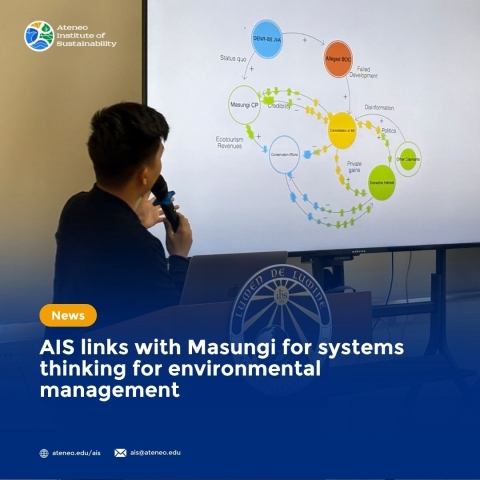
AIS links with Masungi for systems thinking for environmental management
Last 23-24 March 2026, the Ateneo Institute of Sustainability (AIS) , which manages the My Climate Risk – Ateneo de Manila University Regional Hub

Contingency Measures in Higher Education in the Face of a Worldwide Energy Crisis (HE Memo#Y4.16)
In response to the energy crisis caused by escalating tensions in West Asia, Ateneo Higher Education will implement the following class and operational adjustments.
Basic Education Class Schedules March – June 2026 (OVPBE memo)
In alignment with DepEd Memorandum No. 018, s. 2026, and our own commitment to Cura Personalis, we are refining our operations for the remainder of the school year to ensure that we finish strong, safe, and sustainable.
URH residency application for Intersession SY 2026-2027 now open
Hey, Blue Eagles! Big news — URH INTERSESSION RESIDENCY SY 2026-2027 is NOW OPEN! Apply now to live where the vibes are unmatched! What’s in
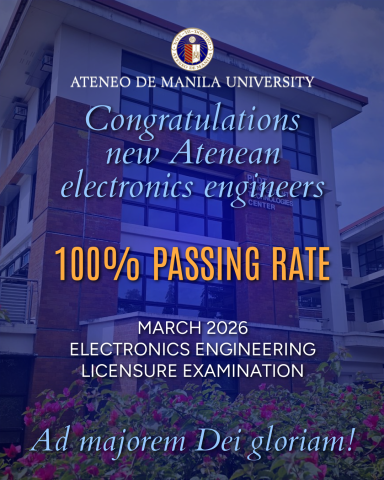
Ateneo achieves 100% passing rate in March 2026 Electronics Engineering Licensure Exam
Ateneo de Manila University celebrates an outstanding performance in the March 2026 Electronics Engineering Licensure Examination, achieving an impressive 100% passing rate as released by