Farms, food, and the Filipino future: Building nutrition from the ground up
14 Aug 2025 | Kimmy Cabulong, 4 BS Psychology







In a country where hunger and malnutrition remain persistent, how can we reshape our food systems to nourish every Filipino? The webinar “Institutions, Food Security and Nutrition: A Philippine Experience” held on 4 March 2025, invited experts and youth voices alike to tackle this question. With speakers from the Philippine Institute for Development Studies (PIDS), Gawad Kalinga’s SEED-PH sector, and academic institutions, the conversation explored the intersections of agriculture, governance, and nutrition. A theme surfaced from the discussion: systemic problems require collaborative, community-led and focused solutions.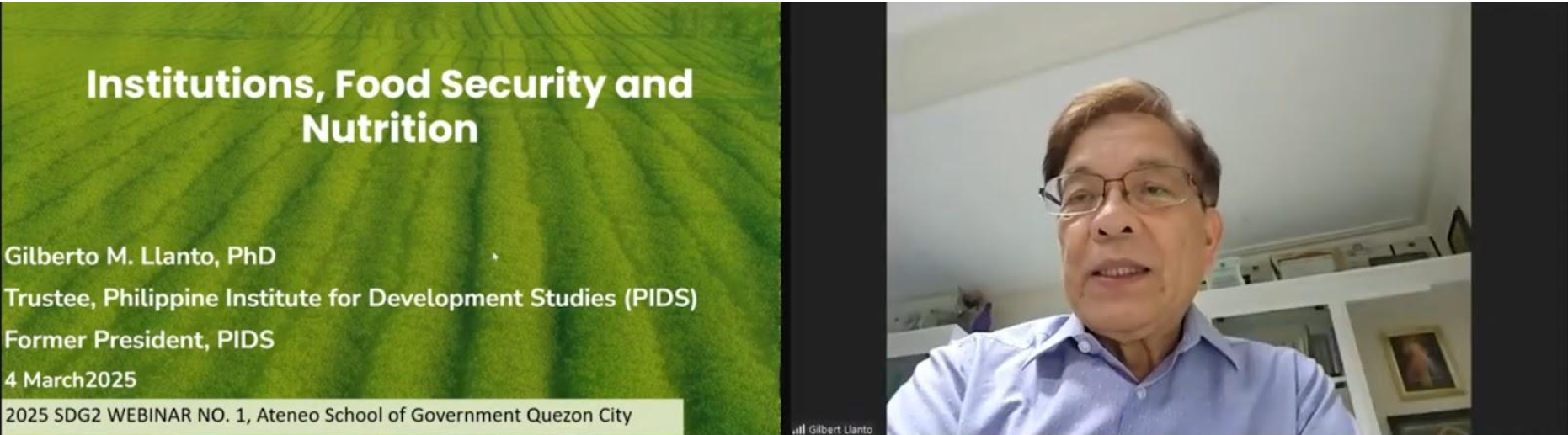
Dr Gilberto Llanto, trustee and former president of PIDS, emphasized the grim state of food security in the Philippines. At present, the situation is marked by chronic undernourishment, children who are stunted or wasted, and the socio-economic toll of malnutrition. He emphasized that the country’s food system is vulnerable to political interference, climate change, and governance gaps. Dr Llanto advocated for a dual-track policy approach and stronger institutions to address these concerns. Targeting the immediate nutritional needs of the poor while pushing for long-term agricultural reform should be at the heart of the movement against hunger and malnutrition. “In matters of food security and nutrition, it’s a whole-of-nation approach,” he said, highlighting the need for horizontal and vertical coordination across all sectors.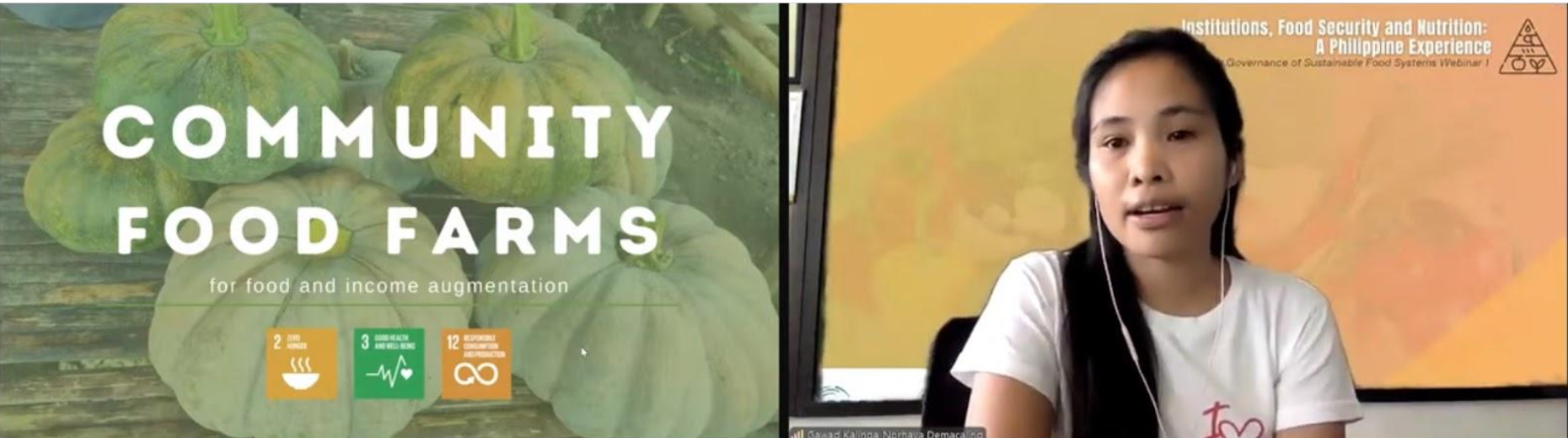
To provide insights on the current actions towards food security, Ms Norhaya Demacaling, Chief Agriculturist of SEED PH, shared the ground-up solutions championed by Gawad Kalinga’s agri-school system. She highlighted the harsh realities of the country’s agricultural and fisheries sector: aging farmers and fisherfolk, youth disinterest in agriculture, and poverty in the sectors. As such, SEED PH has built local sources of food and income called community food farms - plots managed by families and local sectors alike - in urban and rural areas alike. From Tondo to Quezon province, these farms fed over 1200 families and promoted sustainable eating and economic empowerment. Ms Demacaling emphasized, “we need a lot of stakeholders to work hand in hand,” underscoring the importance of LGU and NGO involvement for scale and sustainability.
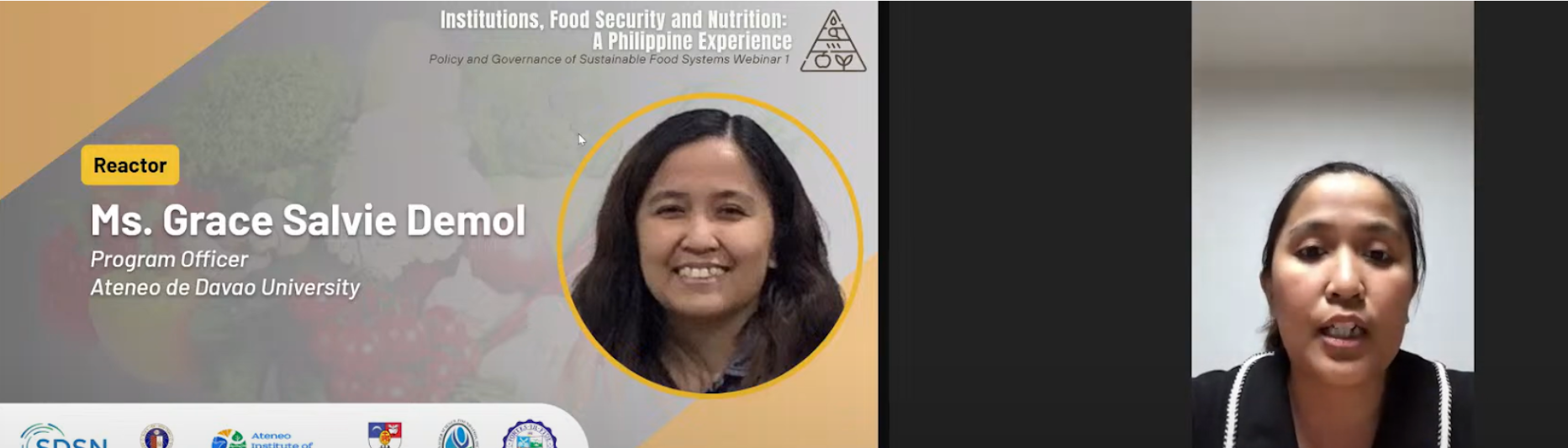
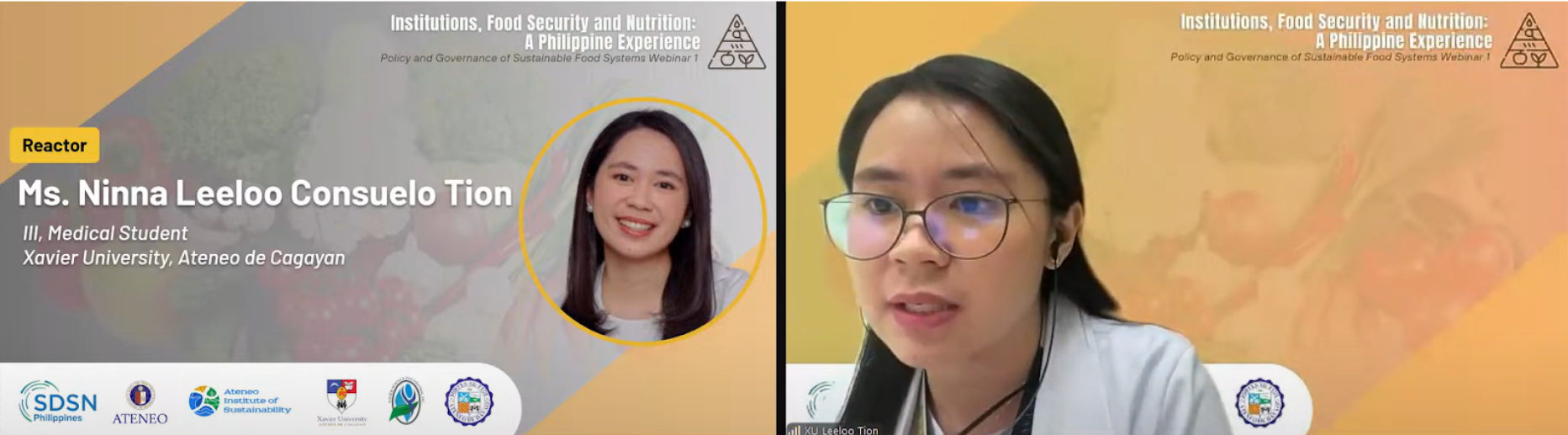
To deepen the conversation, Ms Grace Salvie Demol, Program Officer of Ateneo de Davao University voiced the ethical urgency of malnutrition, “How can we ever stop this?” She urged the continuation of discernment and action, especially for the children. Ms Ninna Leeloo Consuelo Tan from Xavier University presented a comparative look between urban and rural malnutrition—pointing to overconsumption of processed food in cities and nutrient deficiency in provinces. She called for problem identification, risk stratification, and targeted implementation.
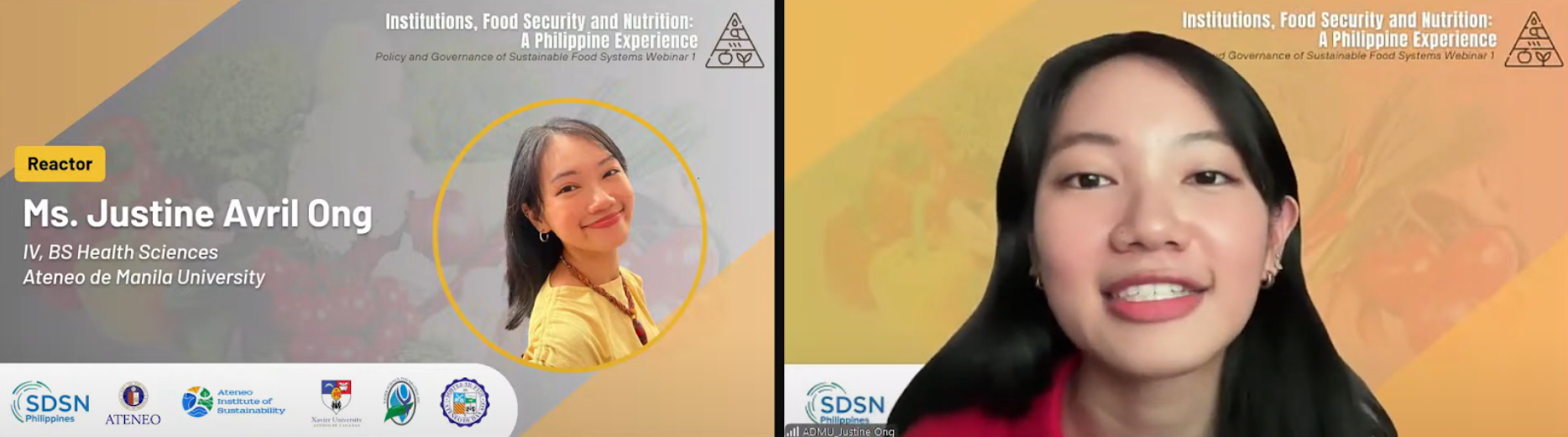
Ms. Justine Avril Ong, a fourth year BS Health Sciences of Ateneo de Manila University, drew the link between hunger and school performance, stressing that access means nothing without affordability, “It’s important to not just ensure that there are spaces or avenues for everyone to buy food […] but [that] they also have the means to do so.”
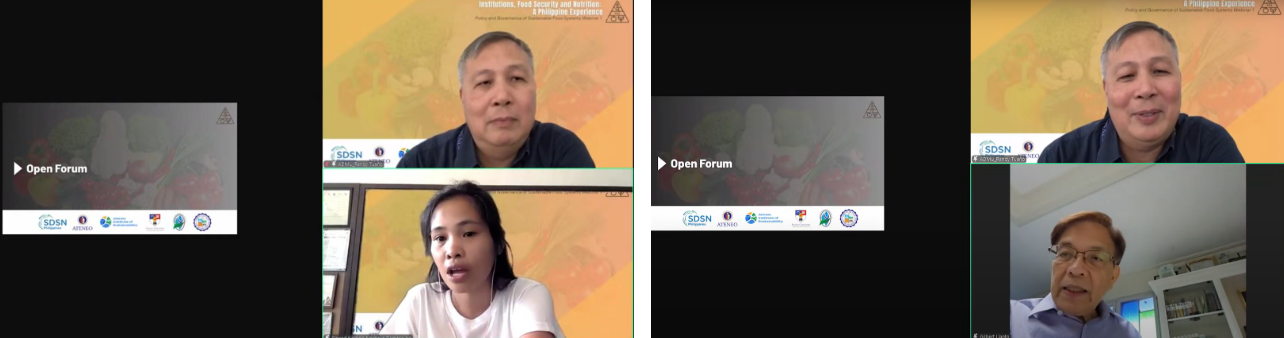
During the Open Forum, key questions also addressed policy gaps and potential pathways. Dr. Llanto responded to a question on replicating community food farms by reiterating the importance of localized, community-driven approaches. He recommended the book Post Pandemic Policy for Food Security as a resource. When asked why institutions like the National Nutrition Council and DepEd weren’t emphasized more, he acknowledged the need for better integration of health, agriculture, and education. Dr. Tuano, moderator of the webinar, echoed the call for the integration of nutrition literacy to curricula early on.
The webinar reaffirmed that food security is not just a matter of production, but of power, participation, and policy. Institutions must be made accountable, farmers must be empowered, and every Filipino child deserves not just to eat - but to thrive. The path forward demands collective effort from national policies down to barangay initiatives. If we want to break the cycle of hunger and malnutrition, we must grow not just crops, but communities, equity, and justice.
Recent News
You may also like these articles

[Hot Off the Press] Arkipelago
New book from the Ateneo Press Arkipelago provides a fascinating and fantastical twist on Philippine politics and history Our country is an archipelago of stories
Protecting Creativity: AIPO and Rizal Library Host Copyright Awareness Session for the Ateneo Community
On March 18, 2026, the Ateneo Intellectual Property Office (AIPO), in collaboration with the Rizal Library, successfully conducted a Copyright Awareness Session held on the
Holy Week 2026 Holidays (Memo # UHR2526-038)
Memo # UHR2526-038 31 March 2026 TO: All Employees FROM: [Sgd] Maria Victoria T Cortez, PhD Vice President for University Human Resources SUBJECT: Holy Week
ASOG’s Tobacco Control initiatives spotlighted in DOH National Technical Working Group for Tobacco Prevention and Control
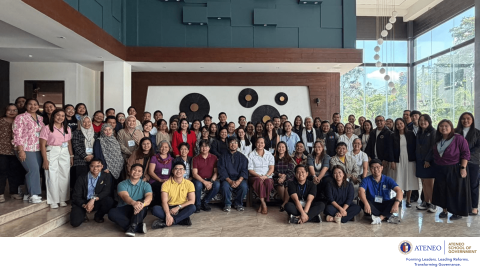
On March 10 to 12, 2026, the Ateneo School of Government (ASOG), through its research and public policy unit, the Ateneo Policy Center, participated in
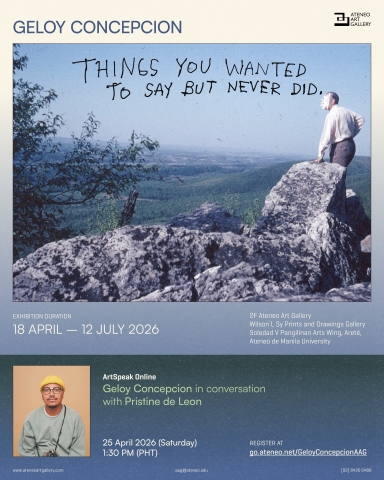
Things You Wanted to Say But Never Did: Geloy Concepcion’s six-year project makes Its exhibition debut at the Ateneo Art Gallery
Geloy Concepcion’s Things You Wanted To Say But Never Did comes to the Ateneo Art Gallery this 18 April 2026. After receiving almost 300,000 messages

[Hot Off the Press] Love If I'm Pretty
New YA Release from the Ateneo Press Love If I’m Pretty tackles the nuances of growing up through complex characters and straightforward prose What do