PSHEV holds international labor and the working class conference
15 Aug 2025

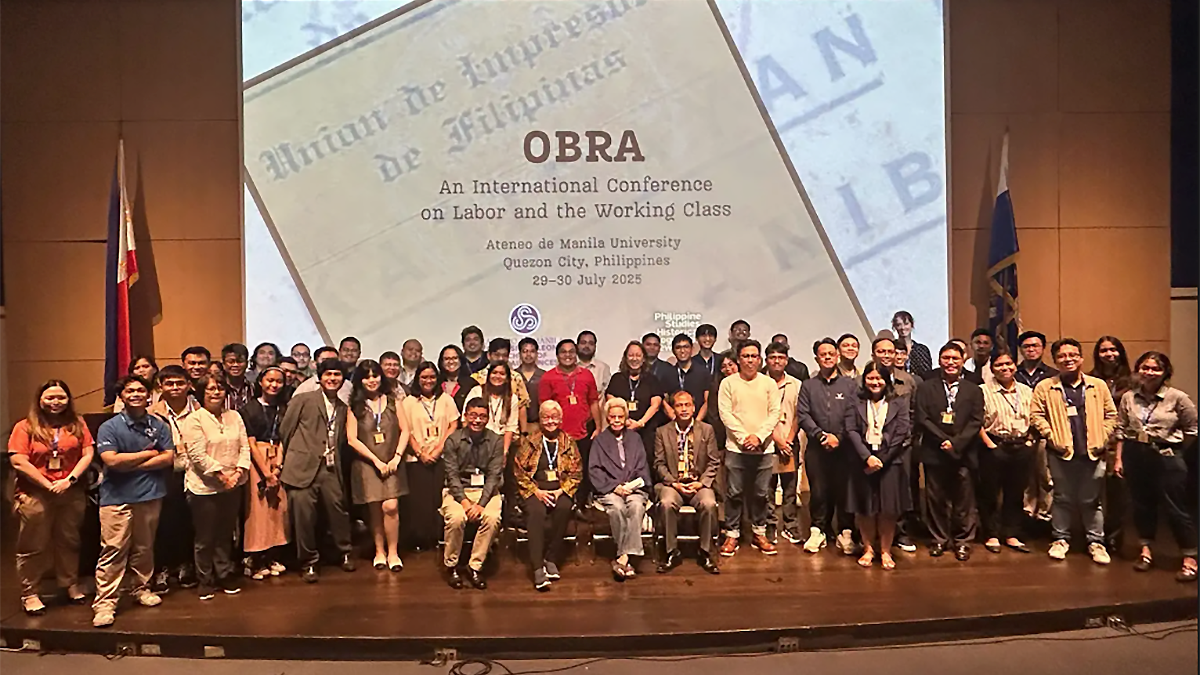
On 29–30 July 2025, Philippine Studies: Historical and Ethnographic Viewpoints (PSHEV), an internationally refereed journal published quarterly by the Dr Rosita G Leong School of Social Sciences, held "OBRA: An International Conference on Labor and the Working Class."
In recognition of the labor movement’s historic role and immeasurable contribution to Philippine society, PSHEV gathered established and early-career scholars from different disciplines, both in the Philippines and overseas, to analyze a range of issues associated with labor as a historical actor and as a sector of society in the present.
PSHEV’s chief editor, Dr Michael Pante, gave an overview of the conference. The conference was held in anticipation of 125 years of trade unionism with the founding of the country's first industrial union, the Unión de Impresores (UI), in June 1901, composed of printers for the Manila Times. On 2 February 1902, the Unión Obrera Democrática (UOD), the first labor federation, was established by Isabelo de los Reyes. It organized a mass demonstration on 4 July, with around 70,000 participants demanding Philippine independence from the US. Later, it adopted the name Unión Obrera Democrática Filipina after Dominador Gómez was elected president. The UI and the UOD will mark their 125th anniversary in 2026 and 2027, respectively. The current labor movement—fighting for wages, conditions, and jobs—will lead these commemorations despite facing hardships and repression.
In her opening remarks, Dr Czarina Saloma-Akpedonu, Dean of the Dr Rosita G Leong School of Social Sciences, highlighted the role of labor as an important topic of social inquiry, then and now.
The two keynote addresses were delivered by Dr Judy Taguiwalo, former Secretary of the Department of Social Welfare and Development; and Rev Ben Ngaya-an of St Andrew’s Theological Seminary. Dr Elizabeth Uy Eviota of Ateneo De Manila University and Dr Ramon Guillermo of the University of the Philippines Diliman served as their discussants, respectively.
Local and international scholars from various institutions and organizations presented their papers in the ten panels during the two-day conference. The themes of the panels included labor and gender, labor and colonialism, labor and education, migrant labor, the transport industry, the sugar industry, and contemporary unionism.
Dr Katherine Lacson, Associate Editor of PSHEV, formally concluded the write-shop on the afternoon of 30 July. She discussed post-write-shop plans and gave an overview of the journal’s publication process.
Recent News
You may also like these articles

[Hot Off the Press] Arkipelago
New book from the Ateneo Press Arkipelago provides a fascinating and fantastical twist on Philippine politics and history Our country is an archipelago of stories
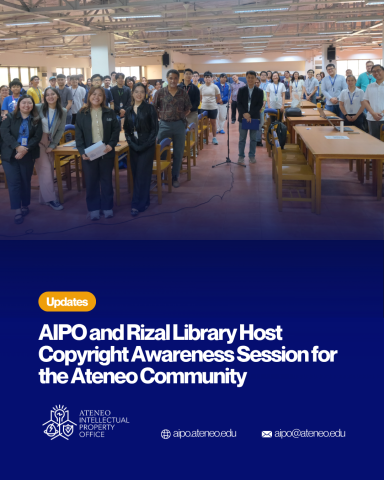
Protecting Creativity: AIPO and Rizal Library Host Copyright Awareness Session for the Ateneo Community
On March 18, 2026, the Ateneo Intellectual Property Office (AIPO), in collaboration with the Rizal Library, successfully conducted a Copyright Awareness Session held on the

Holy Week 2026 Holidays (Memo # UHR2526-038)
Memo # UHR2526-038 31 March 2026 TO: All Employees FROM: [Sgd] Maria Victoria T Cortez, PhD Vice President for University Human Resources SUBJECT: Holy Week
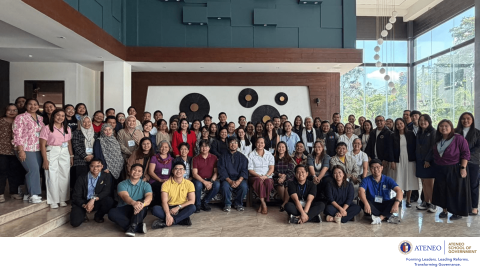
ASOG’s Tobacco Control initiatives spotlighted in DOH National Technical Working Group for Tobacco Prevention and Control
On March 10 to 12, 2026, the Ateneo School of Government (ASOG), through its research and public policy unit, the Ateneo Policy Center, participated in
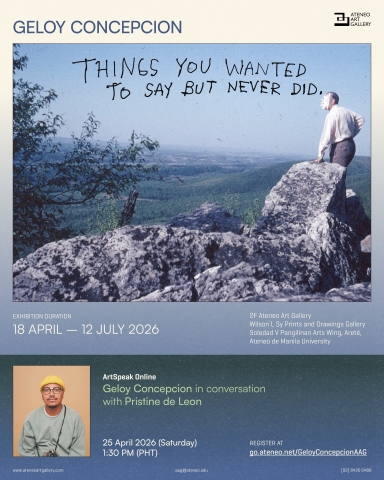
Things You Wanted to Say But Never Did: Geloy Concepcion’s six-year project makes Its exhibition debut at the Ateneo Art Gallery
Geloy Concepcion’s Things You Wanted To Say But Never Did comes to the Ateneo Art Gallery this 18 April 2026. After receiving almost 300,000 messages

[Hot Off the Press] Love If I'm Pretty
New YA Release from the Ateneo Press Love If I’m Pretty tackles the nuances of growing up through complex characters and straightforward prose What do