Quezon City and Ateneo Policy Center collaborate on design thinking for sustainable health financing
18 Aug 2025

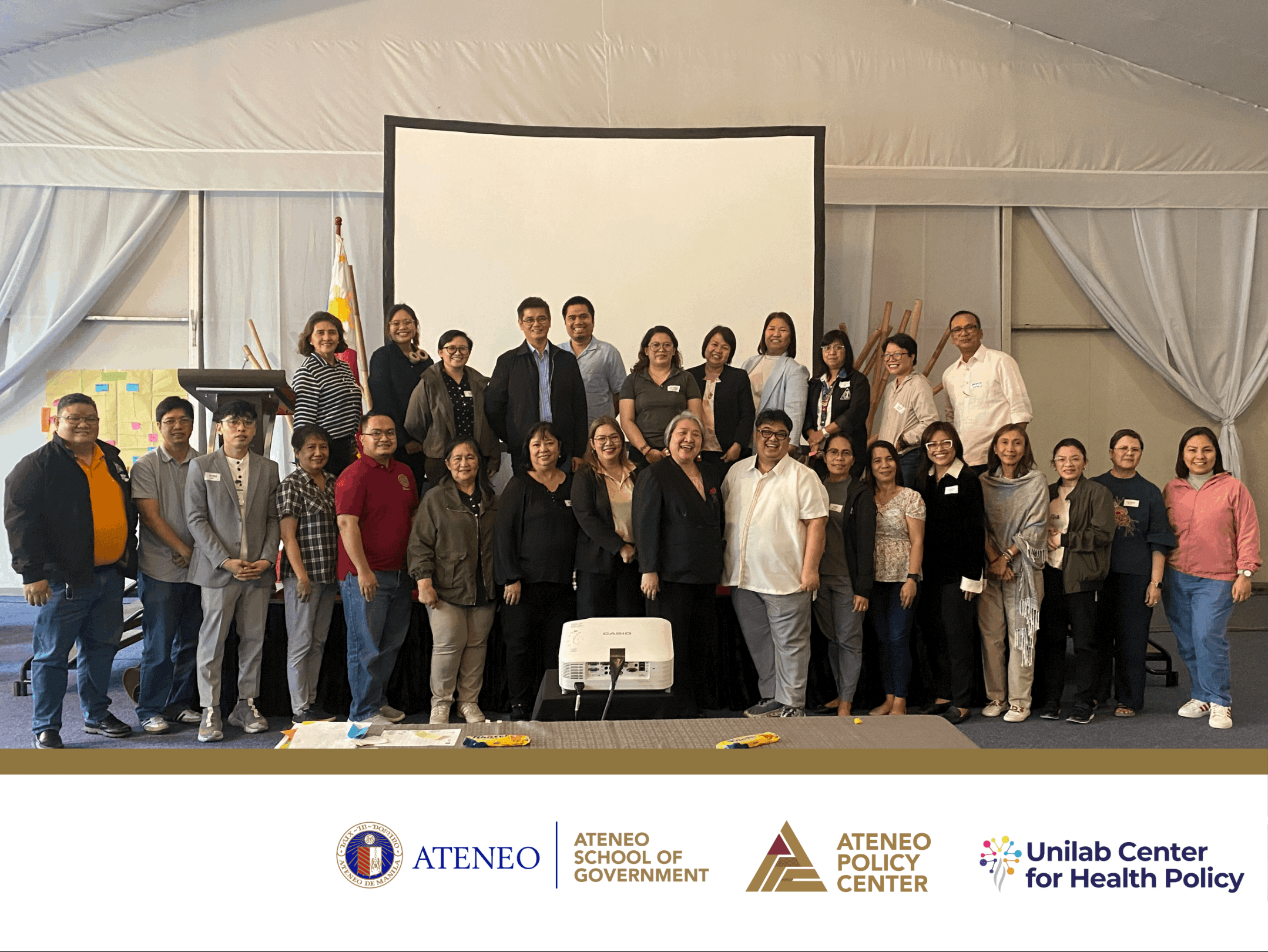
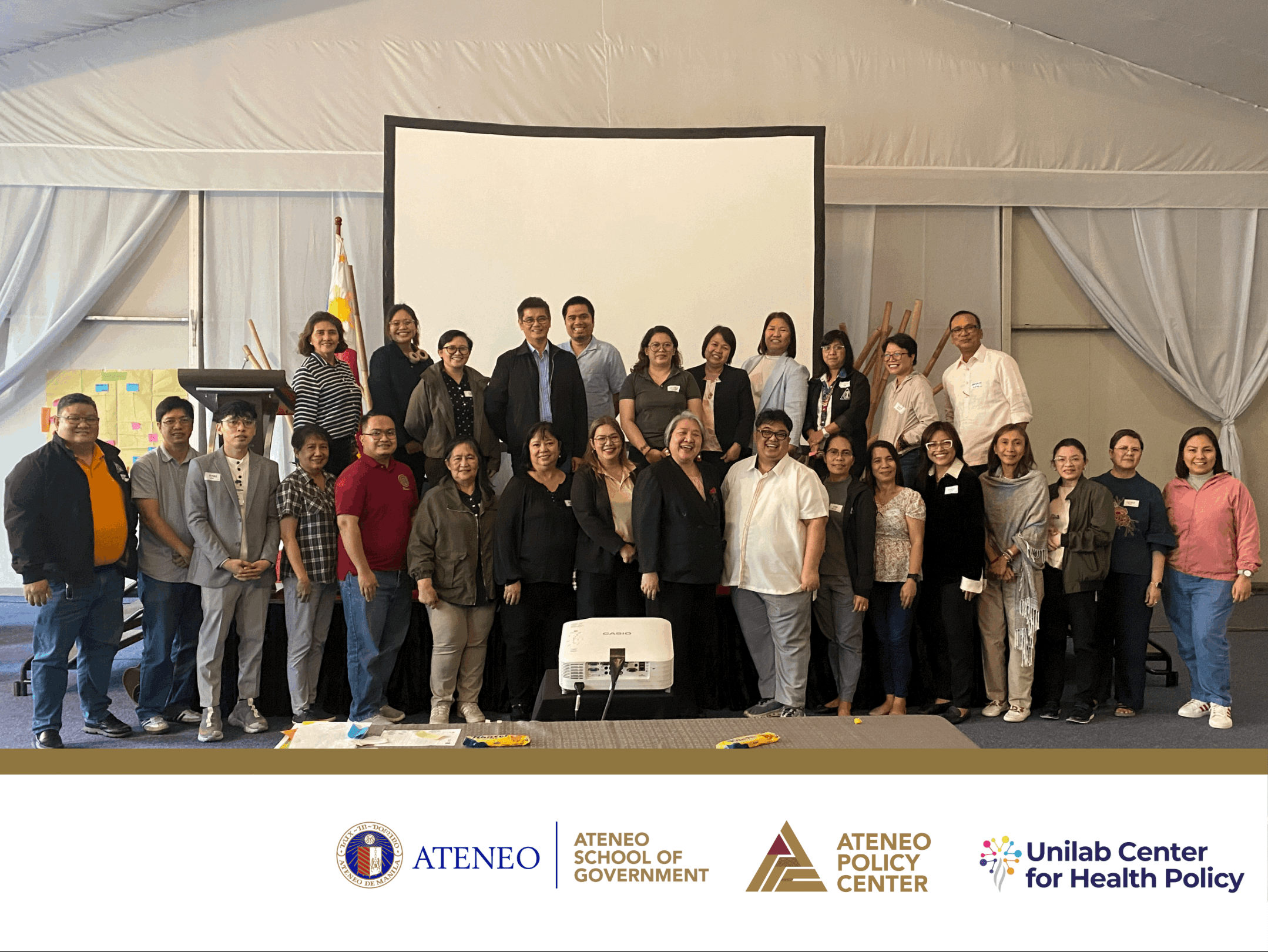
The Ateneo School of Government, through the Ateneo Policy Center, facilitated a two-day Design Thinking Workshop with the Quezon City Government on 5 to 6 August 2025. This initiative is part of their project titled Maximizing Local Government Fiscal Performance of Health Budget, supported by the Unilab Center for Health Policy.
Participants included representatives from key Quezon City offices and institutions involved in health and fiscal management, such as the Quezon City Health Department, Accounting Office, Internal Audit, City Treasurer’s Office, and Budget Office. Also present were staff from the Office of the Vice Mayor, Health Promotion Unit, Chair of the Health Committee, and health facilities including Rosario Maclang Bautista General Hospital, Novaliches District Hospital, and Quezon City General Hospital. Together, they examined public financial management challenges and collaboratively developed practical strategies to enhance health budgeting and expenditure.
Day 1 (5 August 2025): Surfacing Pain Points Across the Budget Cycle
On 5 August, the first day of the workshop centered on empathizing with stakeholders by mapping out pain points across the four phases of the public financial management (PFM) cycle: preparation, authorization, execution, and review and accountability.
The discussion opened by surfacing the gaps between urgent health service needs and fiscal constraints. Fiscal experts urged hospitals to improve PhilHealth collections and manage claims to boost revenue, while the health department emphasized diversifying funding sources to better support services.
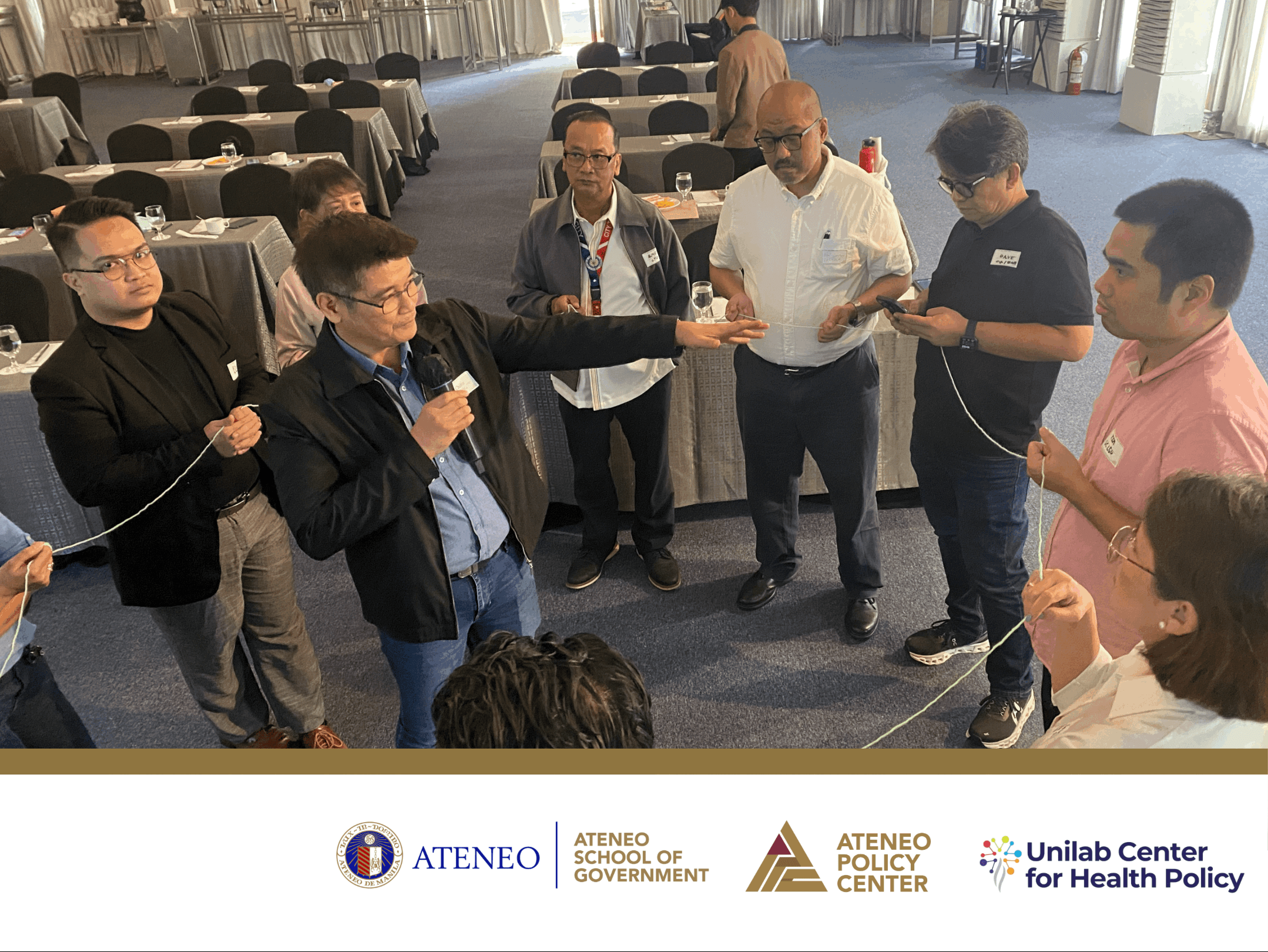
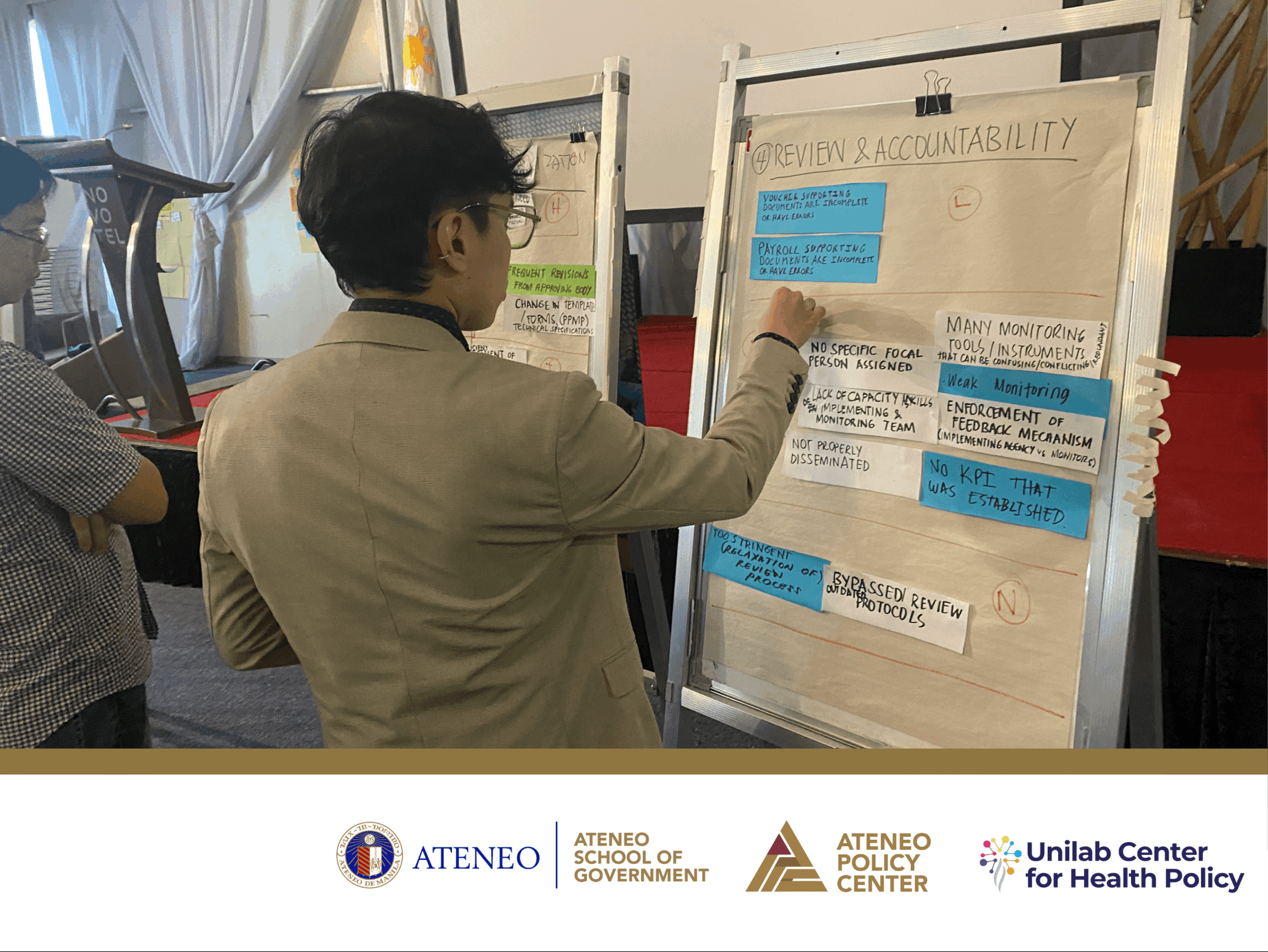
The day culminated in the creation of journey maps visualizing these challenges. Among the mapped pain points were delays in procurement planning and misalignment between actual health needs and proposed budgets during the budget preparation phase; compressed review timelines and repeated revisions during authorization; execution challenges such as unsuccessful bidding processes, stock shortages, and stringent fiscal controls; and, during review and accountability, gaps in monitoring systems, incomplete documentation, and insufficient manpower.
Day 2 (6 August 2025): Defining Priorities and Co-Creating Solutions
Synthesizing insights from Day 1, the second day of the workshop began with the development of human-centered problem statements based on the PFM challenges identified to be the most critical by the participants. Key issues included the need to address information gaps and capacity limitations that hinder alignment with strategic plans during budget preparation, the rigidity of annual budget ceilings that restrict responsiveness during authorization, procurement delays caused by failed bidding and market mismatches during execution, and weak monitoring systems compounded by insufficient personnel during review and accountability.
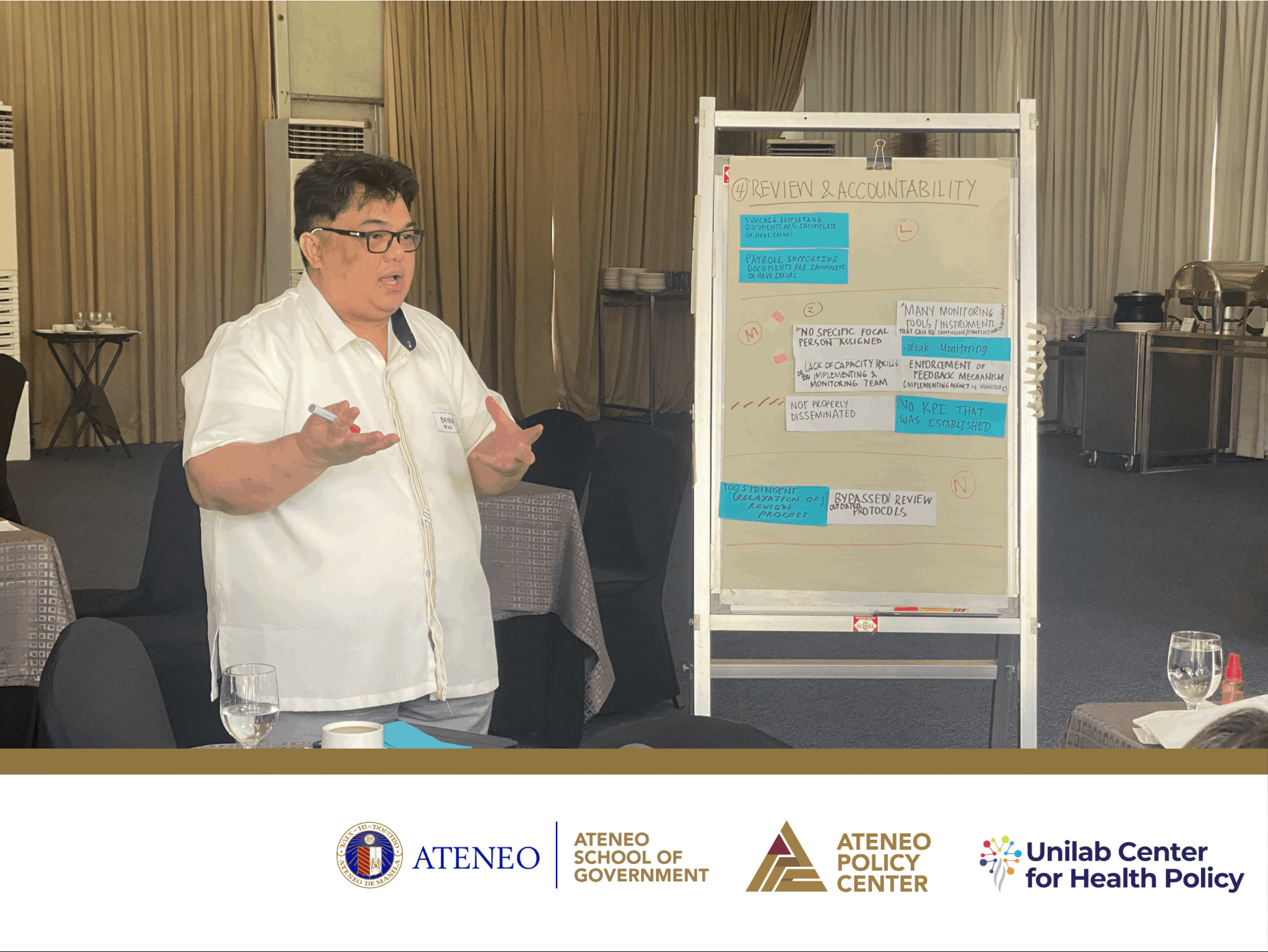
Through structured ideation, stakeholders proposed innovative solutions aimed at enhancing data coordination, strengthening capacity in health informatics and budget planning, creating more flexible budgeting frameworks, improving procurement market studies, and expanding monitoring and feedback mechanisms.
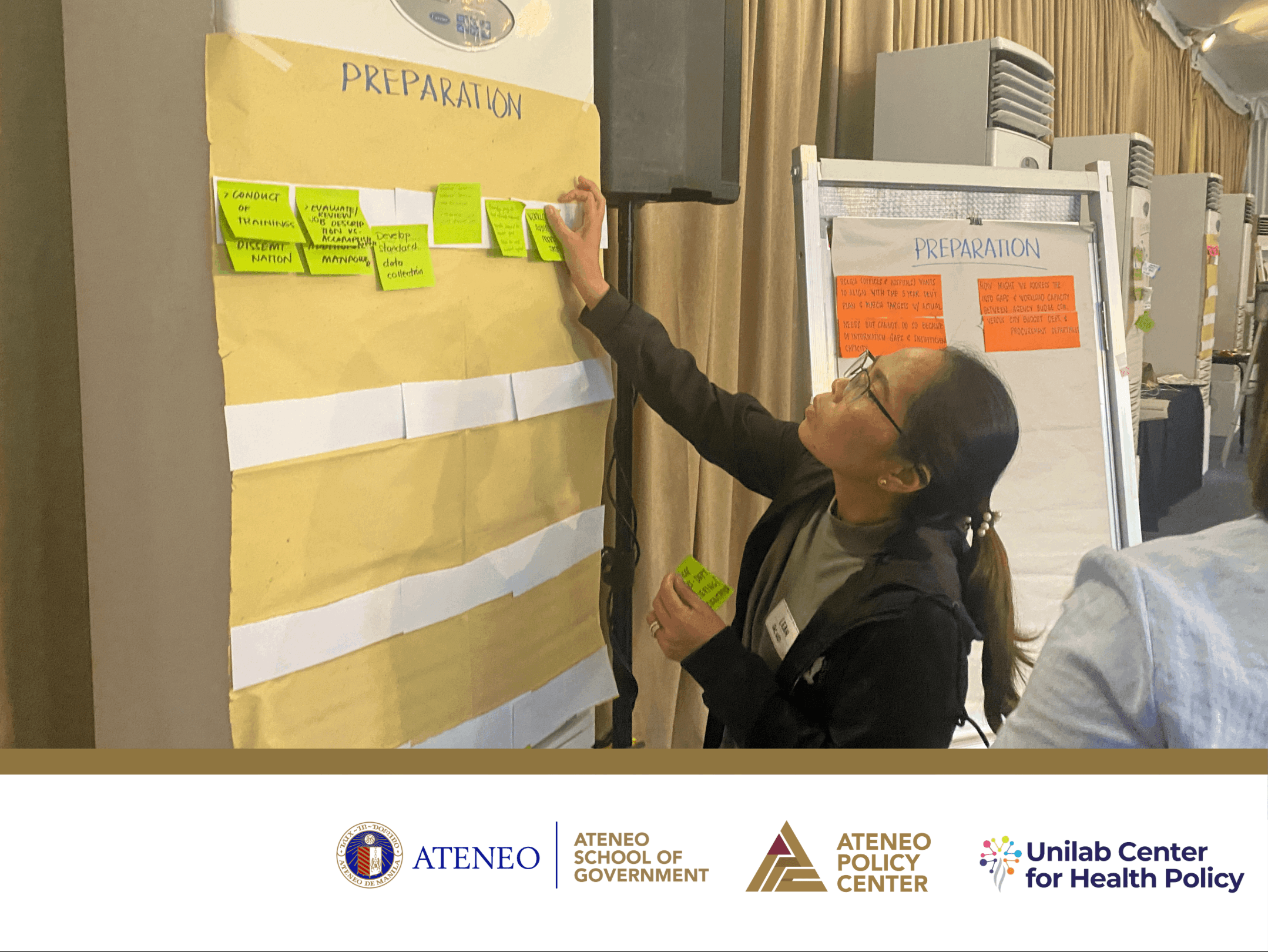
The event concluded with the development of a power-interest matrix, identifying key stakeholders critical to driving meaningful reforms in health budget processes.
For Sustainable Health Financing in Quezon City and Beyond
The workshops anchored on Quezon City’s unique position as a ‘model city’ faced with complex health financing challenges. Participants from different offices actively engaged in identifying barriers and generating practical solutions to optimize local health budgets. These collaborative efforts laid a strong foundation for innovative but practicable approaches tailored to the city’s dynamic service delivery landscape.
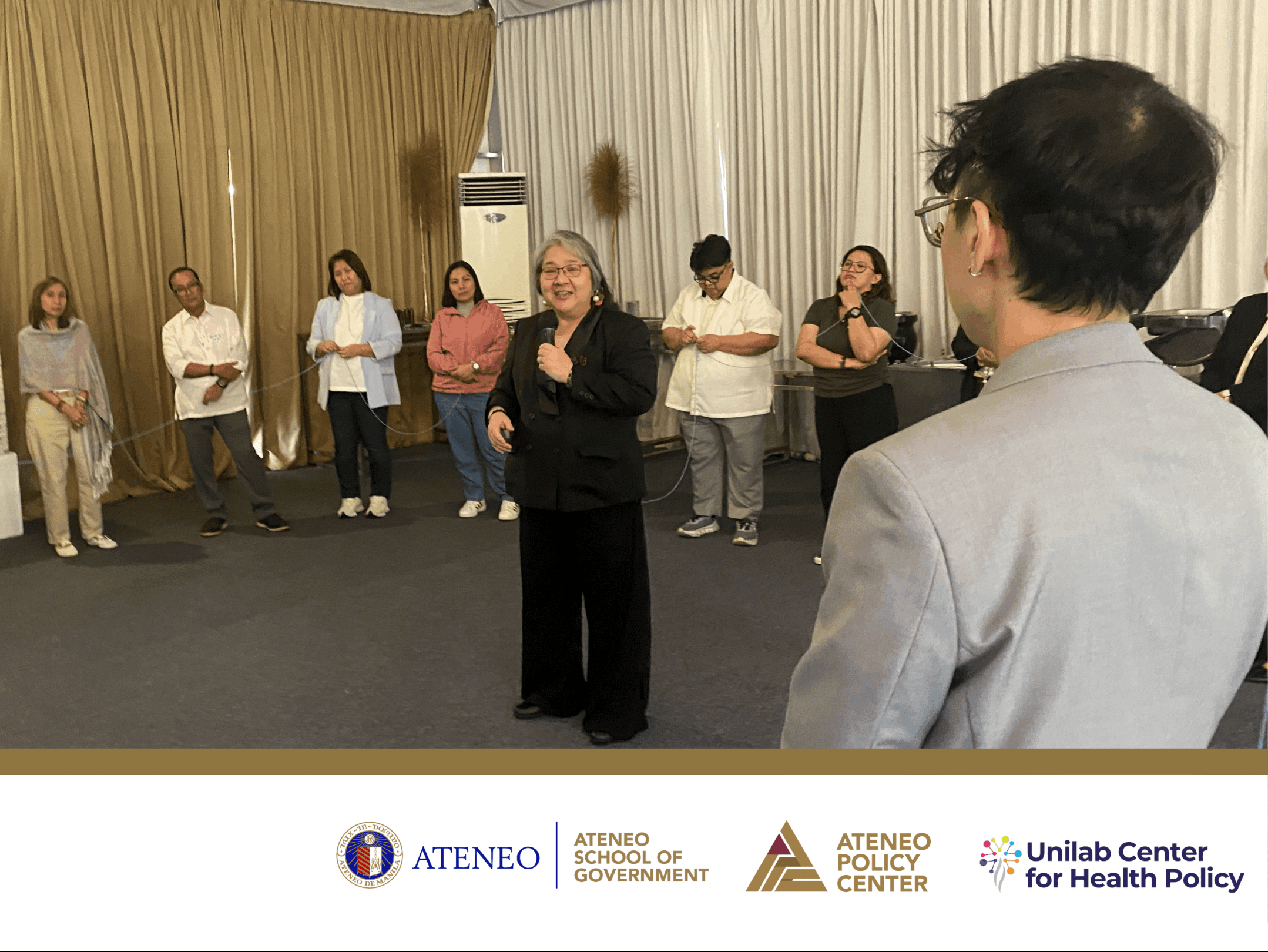
Moving forward, these insights will guide targeted policy recommendations designed to enhance not only Quezon City’s fiscal performance in health but those of other urban local government units. These outcomes aim to support evidence-based and sustainable fiscal practices that can serve as a blueprint for other LGUs striving to achieve UHC goals.
Recent News
You may also like these articles

[Hot Off the Press] Arkipelago
New book from the Ateneo Press Arkipelago provides a fascinating and fantastical twist on Philippine politics and history Our country is an archipelago of stories
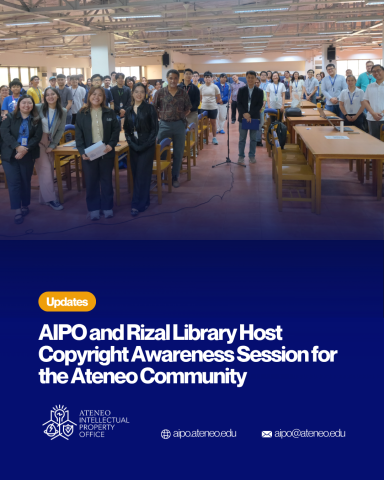
Protecting Creativity: AIPO and Rizal Library Host Copyright Awareness Session for the Ateneo Community
On March 18, 2026, the Ateneo Intellectual Property Office (AIPO), in collaboration with the Rizal Library, successfully conducted a Copyright Awareness Session held on the

Holy Week 2026 Holidays (Memo # UHR2526-038)
Memo # UHR2526-038 31 March 2026 TO: All Employees FROM: [Sgd] Maria Victoria T Cortez, PhD Vice President for University Human Resources SUBJECT: Holy Week
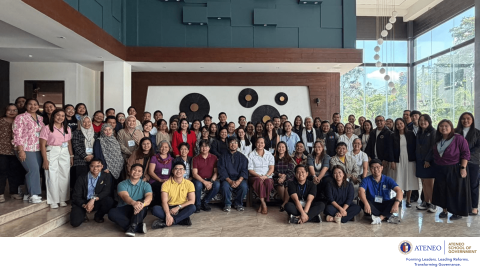
ASOG’s Tobacco Control initiatives spotlighted in DOH National Technical Working Group for Tobacco Prevention and Control
On March 10 to 12, 2026, the Ateneo School of Government (ASOG), through its research and public policy unit, the Ateneo Policy Center, participated in
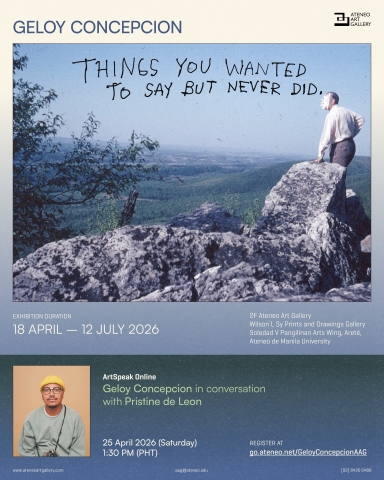
Things You Wanted to Say But Never Did: Geloy Concepcion’s six-year project makes Its exhibition debut at the Ateneo Art Gallery
Geloy Concepcion’s Things You Wanted To Say But Never Did comes to the Ateneo Art Gallery this 18 April 2026. After receiving almost 300,000 messages

[Hot Off the Press] Love If I'm Pretty
New YA Release from the Ateneo Press Love If I’m Pretty tackles the nuances of growing up through complex characters and straightforward prose What do