DepEd and Ateneo de Manila Basic Education host first ever Anti-Bullying Summit
04 Sep 2025 | Joanna Ruiz

Despite heavy rains and class suspensions, Ateneo de Manila University Basic Education, in partnership with the Department of Education (DepEd) and several non-governmental organizations, pushed through with a half-day Anti-Bullying Summit marked by meaningful dialogue and collaboration.
Held on 1 September 2025 at Singson Hall, Ateneo Grade School, the pioneering event brought together educators, policy makers, and civil society partners to share insights and best practices in implementing anti-bullying policies across basic education institutions.
Organized by the DepEd Central Office, in collaboration with Ateneo de Manila Basic Education, the summit featured nine talks and two panel discussions centered on creating safer and more compassionate school environments. The event was led by Undersecretary for Strategic Management Ronald U Mendoza, PhD, and Assistant Secretary for Strategic Management Dexter A Galban, PhD, with support from Ateneo’s Office of the Vice President for Basic Education.
Billed as a first-of-its-kind initiative, the summit underscored the importance of stakeholder engagement, the contextualization of DepEd policy, and the promotion of empathy among learners as critical strategies in addressing bullying in schools. The program was moderated by DepEd education policy analyst Jemima Relos, who facilitated the sessions with clarity and thoughtfulness.
In his opening remarks, Ateneo de Manila University Vice President for Basic Education Fr Joaquin Jose Mari “Jonjee” C Sumpaico III SJ hailed educators as “heroes” who are choosing to show love to the current generation of learners, who will hopefully “make the same decision to do good.” In the context of the mission of preventing bullying and teaching compassion, he quoted Ateneo philosopher Fr Roque Ferriols SJ as saying, “Huwag mong tanungin kung mahirap; tanungin mo kung mahalaga.”
RA 10627; forms and consequences of bullying
Leading the talks were DepEd Legal Service’s Atty Czarina Michaella “Mica” Pleyto and Atty Nadine Francesca Ong, who gave a refresher on the DepEd’s Revised Implementing Rules and Regulations (IRR) of the Anti-Bullying Act of 2013 (Republic Act No 10627). From definitions, prohibited acts, mandatory adoption, standard policy, procedures and due process, among others, to the role of school personnel and the importance of confidentiality, the presentation was proof of how the DepEd has worked to adapt RA 10627 to changing times, circumstances, and practices.
Going deeper into the different forms of bullying and its impact and consequences was Mr Ysrael “Ace” Diloy, child protection specialist of Stairway Foundation Inc, a non-government organization that worked with the DepEd in crafting the department’s anti-bullying policy. Mr Diloy also shared a little about the foundation’s “Be a Buddy Not a Bully” e-learning course, which is free to access from the Stairway Foundation website.
All speakers during the first part of the program emphasized the importance of localizing or contextualizing the guidelines set forth by the DepEd in the Anti-Bullying Act. Besides contextualization being a stated policy, Mr Diloy said that involvement of all school sectors in the contextualization effort will result in greater “ownership” of the resulting school policies.
DepEd schools’ best practices
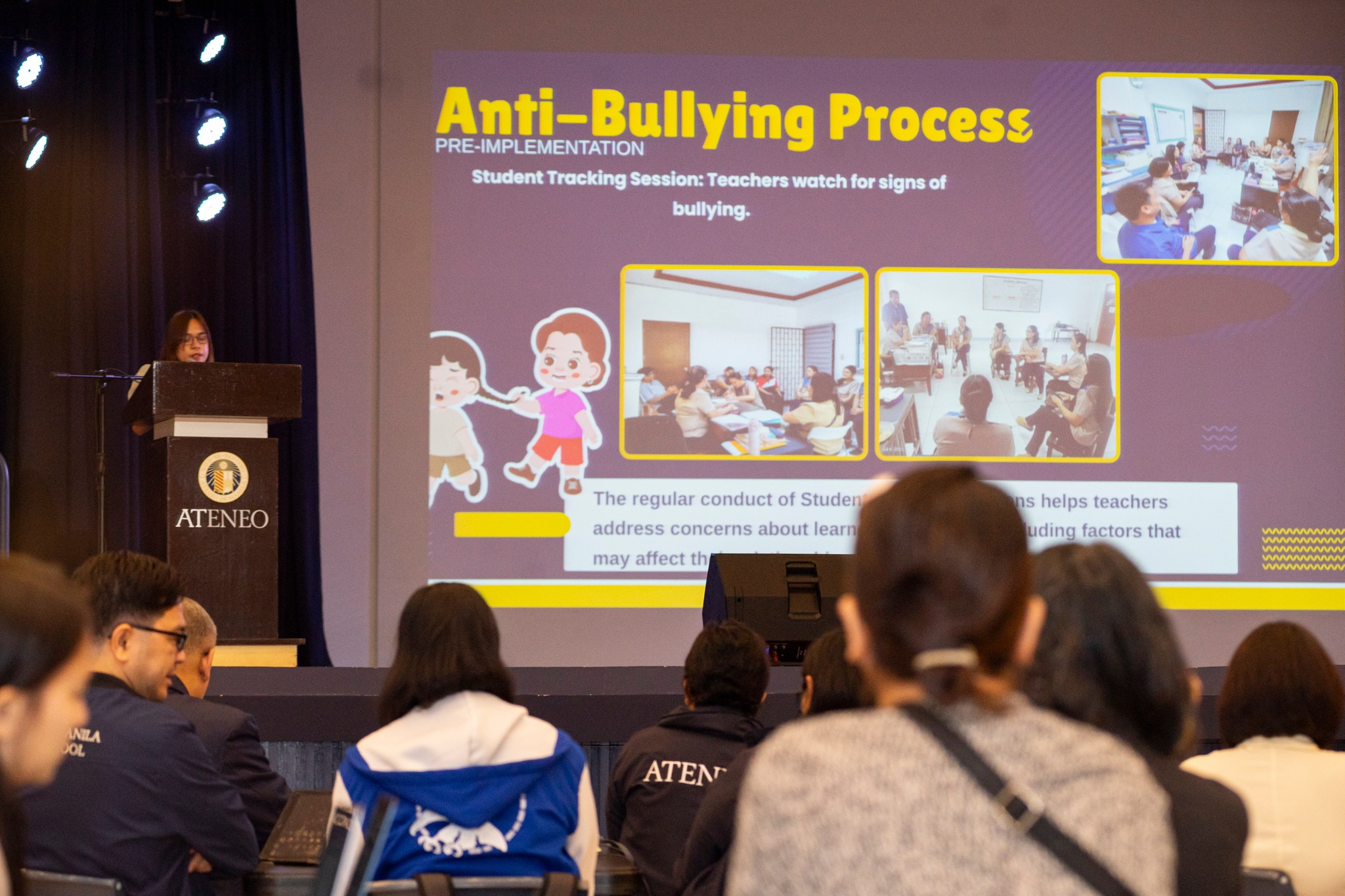
Best anti-bullying practices in DepEd schools were shared by speakers Ms Reingelyn Donato, Principal of the Concepcion Elementary School (Marikina City), and Ms Genefer Bermundo, Head Teacher at Batasan Hills National High School (Quezon City). Both schools involve the whole community—students, teachers, administrators, school staff, parents, and barangay—in their anti-bullying campaigns. Parents are given orientations at the start of the school year, students are empowered to advocate against bullying, and in case of bullying incidents, procedures and sanctions are clear and documentation is complete. Batasan Hills, noting that many bullying cases are gender-related, has installed “pink” cubicles in their restrooms for the use of LGBTQIA+ community members, with staff stationed in each restroom to ensure that students are not harassed therein. Also at Batasan Hills, there is an Anti-Bullying Campaign Club whose members reach out to fellow students to assure them of a listening ear and a helping hand.
Challenges faced by schools
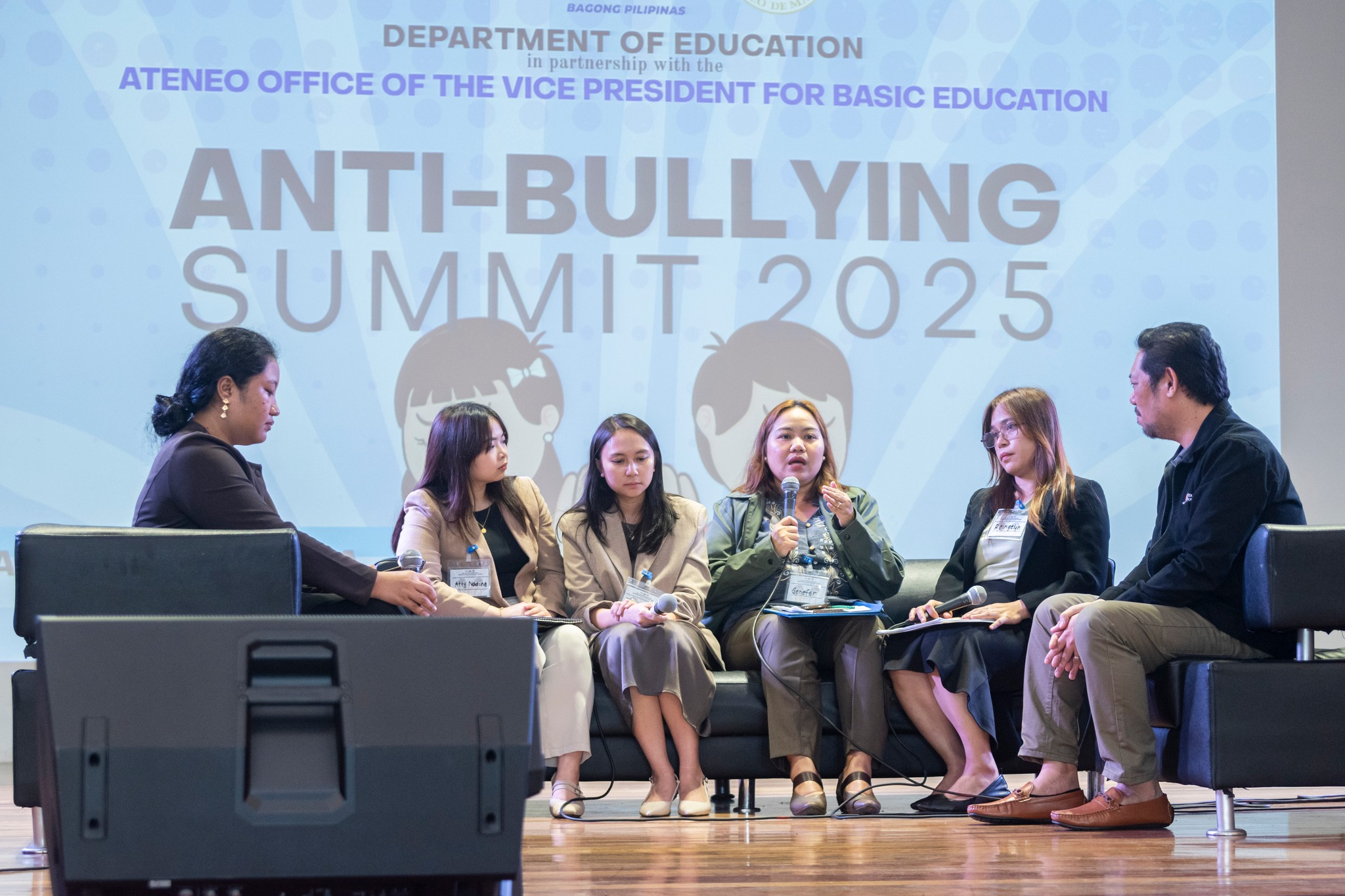
The challenge of navigating cyberspace also figured prominently in the discussion, particularly given learners’ heavy use of social media. Atty Pleyto explained how, in cases of cyberbullying, the DepEd is limited in the responses it can offer, and said that it is the National Bureau of Investigation (NBI) that has the authority and capacity to investigate these complaints. Mr Diloy shared that incidents may be reported to the DepEd’s Learner’s TeleSafe Contact Center, a phone and email hotline which provides support and resources for learners facing child protection challenges, including online safety. Bullying posts may also be directly reported to the online platform, e.g. Facebook, where they are posted. Atty Pleyto remarked that Facebook is responsive to reports, and works in a timely way to take down harmful content. Mass reporting, she said, has been shown to be an effective strategy against the spread of bullying content.
The Ateneo’s Basic Education schools—Grade School, Junior High School, and Senior High School—shared how a culture of respect rooted in Christ-centeredness and Ignatian values is shaping a new generation of learners and the community of formators and parents around them.
Mrs Virgie Esteves, Assistant Headmaster for Formation of the Grade School, shared that “a culture of greeting twenty years ago grew into a culture of respect today.” She emphasized that the AGS’ anti-bullying program is truly systemic—“woven into our policies, practices, and curriculum.” Every year, all members of the school community—including teachers, students, parents, guards, custodians, bus drivers, and bus mothers—participate in seminars. This year’s seminar focused on micro-aggressions, in response to the revised DepEd IRR on precursors to bullying. Mrs Esteves also presented a short video highlighting AGS’ whole-school approach to combating bullying (watch the video below).
Meanwhile, the talks delivered by Mr. Bernie Santos and Mrs. Jennifer Concepcion, Assistant Principals for Formation of the Junior High School and Senior High School, respectively, outlined detailed definitions, policies, processes, and practices. These reflect Ateneo Basic Education’s commitment to a firm and decisive, yet compassionate and transformative, approach to justice.
Forming safe communities
Like all the other schools presenting that day, Ateneo Basic Education actively involves its community in anti-bullying efforts. Parents are offered orientations, seminars, family masses, and recollections, and learners organically imbibe a mindset of kindness and inclusivity through their subjects, counseling sessions, daily and schoolwide masses, yearly Ignatian retreat, weekly formation sessions and numerous student activities. All teachers, staff, maintenance, and security receive first responder training. Student groups such as the ASHS’ Mapulon (mental health), Mayari (first response), and Lakambini (LGBTQ), along with university offices such as the University Gender Hub, are empowered to promote the safe spaces that learners need.
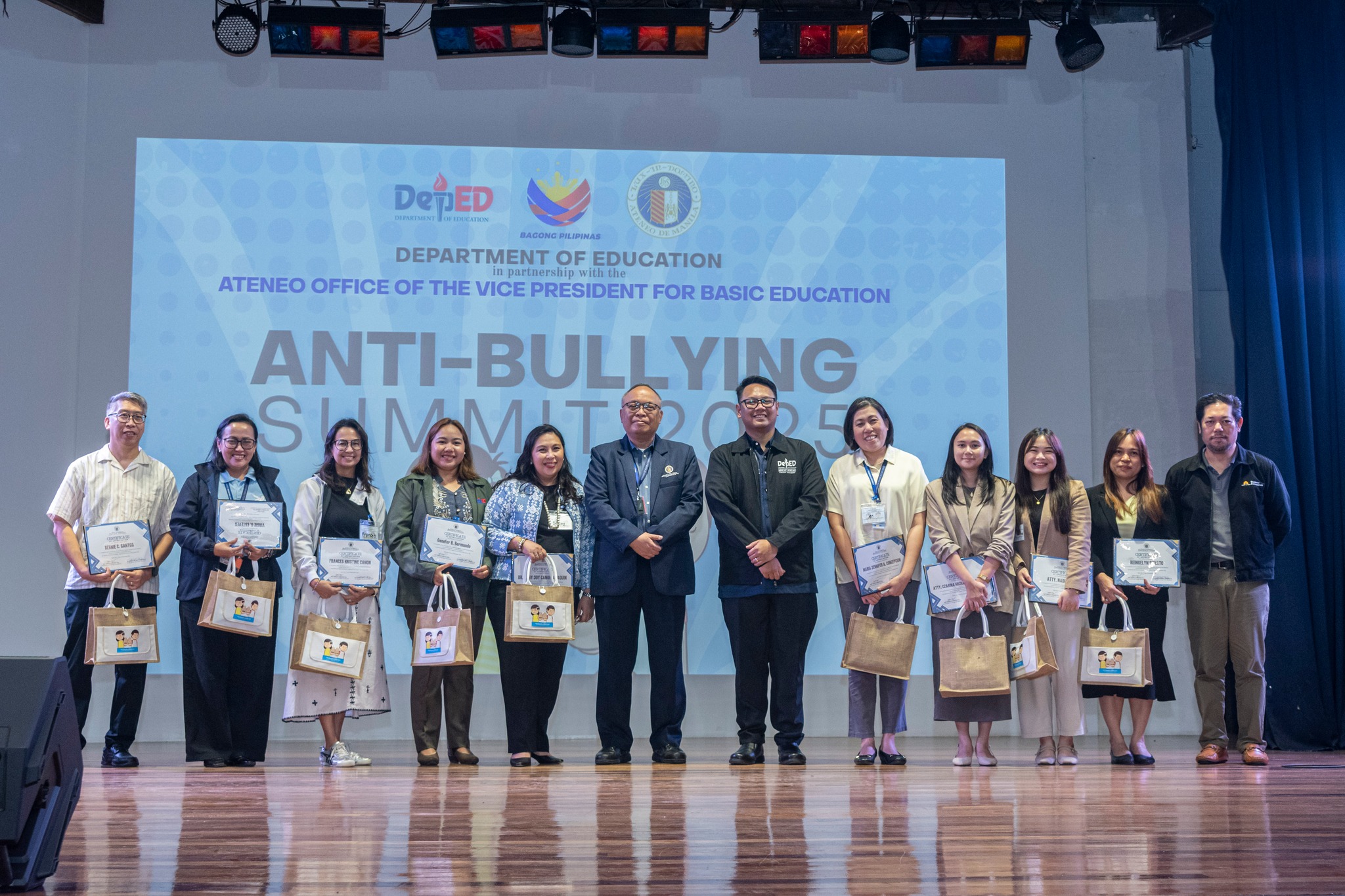
To be sure, each school has had its share of bullying incidents, and the bullying remains a constant possibility. As Mr Santos says, “As a community, we are still learning, and taking steps in the direction of positive change.” Through the cooperation between the DepEd, schools, and other concerned groups, school communities are learning that, in the words of child trauma and development expert Dr Gabor Maté, “Safety is not the absence of threat. It is the presence of connection.”
Recent News
You may also like these articles

[Hot Off the Press] Arkipelago
New book from the Ateneo Press Arkipelago provides a fascinating and fantastical twist on Philippine politics and history Our country is an archipelago of stories
Protecting Creativity: AIPO and Rizal Library Host Copyright Awareness Session for the Ateneo Community
On March 18, 2026, the Ateneo Intellectual Property Office (AIPO), in collaboration with the Rizal Library, successfully conducted a Copyright Awareness Session held on the
Holy Week 2026 Holidays (Memo # UHR2526-038)
Memo # UHR2526-038 31 March 2026 TO: All Employees FROM: [Sgd] Maria Victoria T Cortez, PhD Vice President for University Human Resources SUBJECT: Holy Week
ASOG’s Tobacco Control initiatives spotlighted in DOH National Technical Working Group for Tobacco Prevention and Control
On March 10 to 12, 2026, the Ateneo School of Government (ASOG), through its research and public policy unit, the Ateneo Policy Center, participated in

Things You Wanted to Say But Never Did: Geloy Concepcion’s six-year project makes Its exhibition debut at the Ateneo Art Gallery
Geloy Concepcion’s Things You Wanted To Say But Never Did comes to the Ateneo Art Gallery this 18 April 2026. After receiving almost 300,000 messages

[Hot Off the Press] Love If I'm Pretty
New YA Release from the Ateneo Press Love If I’m Pretty tackles the nuances of growing up through complex characters and straightforward prose What do