Ateneo de Manila University hosts the first Laudato Si' Summit and Festival
25 Sep 2025 | Office of the Assistant Vice President for Social and Environmental Engagement for Development and Sustainability


















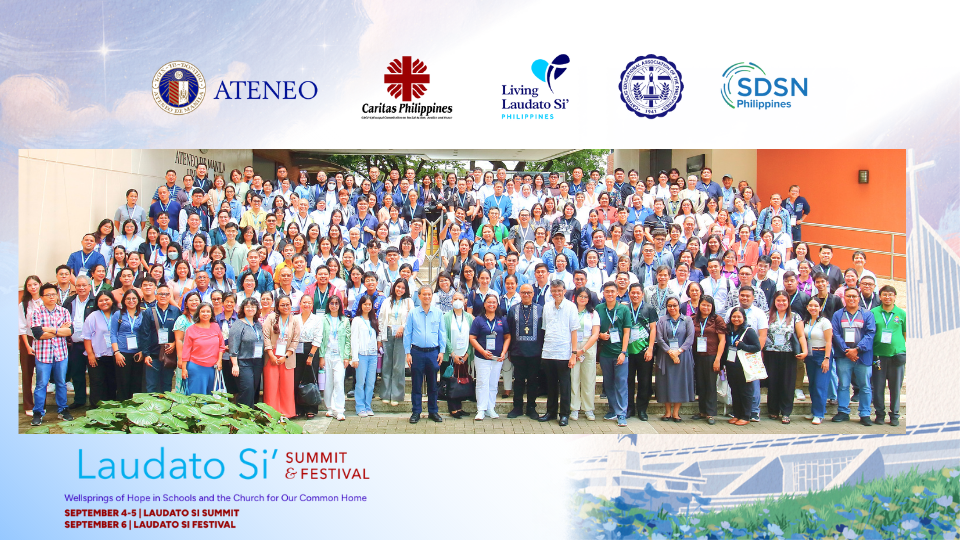
In celebration of the 10th anniversary of Laudato Si’, Ateneo de Manila University, in partnership with Caritas Philippines, Living Laudato Si’ Philippines, the Catholic Educational Association of the Philippines (CEAP), and the Sustainable Development Solutions Network (SDSN), organized a nationwide Laudato Si' Summit and Festival. Held at the Ateneo de Manila University's Loyola Heights campus, the event, with the theme "Wellsprings of Hope in Schools and the Church for our Common Home," was attended by more than 250 church workers, church leaders, and academic personnel and administrators. The summit, which ran from 4 to 5 September, was followed by a Laudato Si’ Festival on 6 September, which featured a series of talks and tours.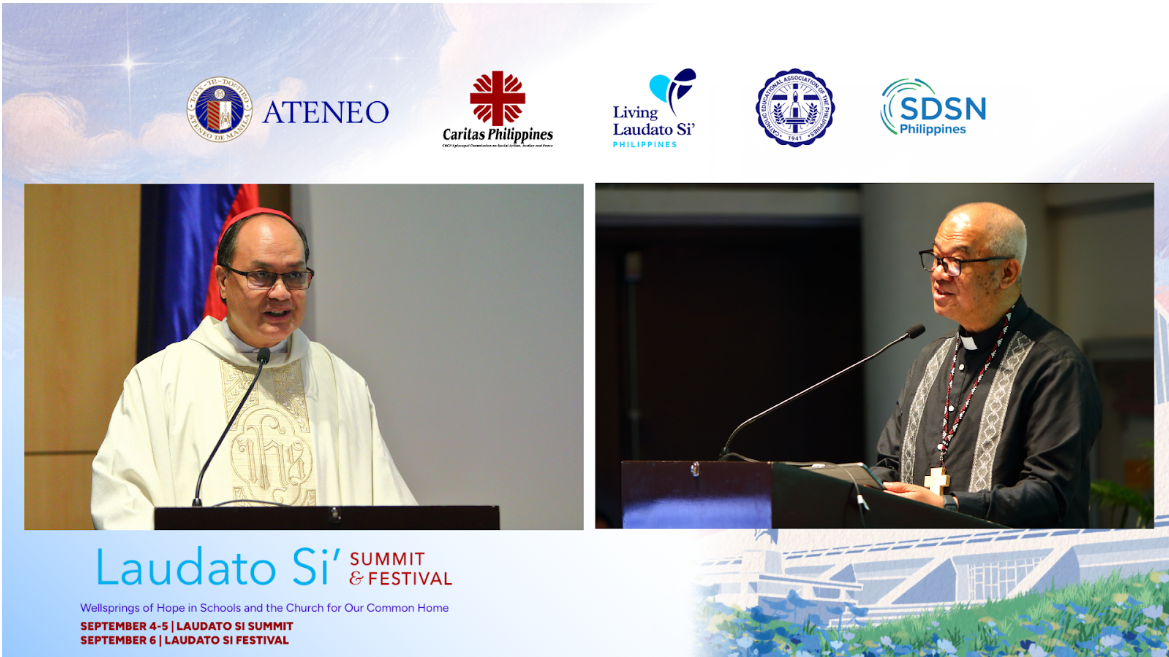
The summit began with a Mass presided over by Cardinal Pablo “Ambo” Virgilio David, President of the Catholic Bishops' Conference of the Philippines. In his homily, Cardinal David stressed that avarice was the root cause of evil, as seen in the current Philippine landscape. He connected the suffering of the environment to the suffering of people and reminded attendees to put Christ at the very heart of creation, stating that harming the environment equated to harming Jesus.
Bishop Gerry Alminaza, the Champion on Integral Ecology for the CBCP, Vice President of Caritas Philippines, and Bishop of the Diocese of San Carlos in Negros Occidental, reiterated this message in his keynote address. He emphasized the important role of schools and young people in caring for the present for the future of the next generation.
Bishop Gerry challenges the dioceses and schools to plant trees, segregate waste, question the misuse of public funds, and demand accountability.
The Catholic Church is not silent. The church’s responses include establishing Integral Ecology ministries in every diocese and is committed to divesting from companies profiting from coal and mining. The Church will also reject donations from destructive industries and advocate for debt cancellation for poor nations, transforming these debts into investments in climate resilience. Furthermore, Bishop Gerry affirms the Church’s stand in solidarity with vulnerable nations, demanding climate justice and reparations from major polluters. He also shared that Caritas is implementing sustainable projects such as Integrated Bamboo Forests, solid waste management programs, and an Institutional Green Audit to ensure its own operations are environmentally responsible.
He advocated for the adoption of ecological conversion not just for individuals but also within institutions. He said, "A society that cannot be honest in governance will never be honest in protecting creation."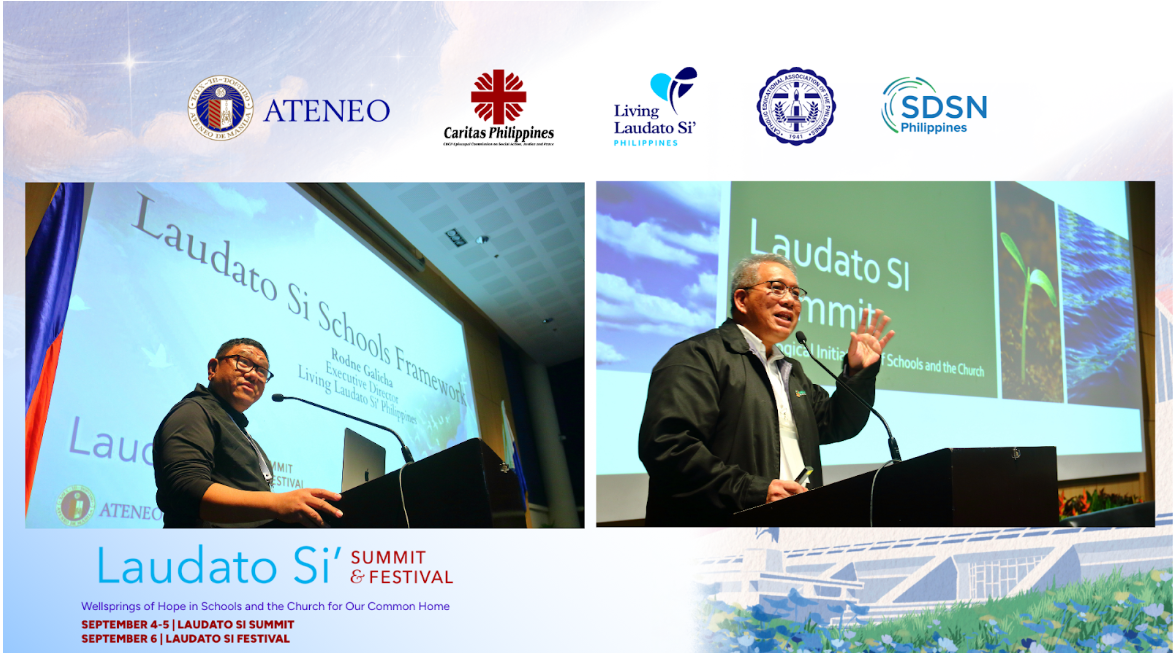
The keynote was followed by a plenary presentation on the Laudato Si’ Schools Framework by Rodne Galicha, Executive Director of Living Laudato Si' Philippines, and a presentation of the survey results on ecological initiatives of schools and the Church by Antonio Maralit, Executive Director of De La Salle University Sustainability Office. In the afternoon, participants were divided into small groups to discuss and share their thoughts and realizations from the homily and plenary sessions. This was facilitated by Rizalina Simpas, Assistant Vice President of Ignatian Spirituality Formation of Ateneo de Manila University.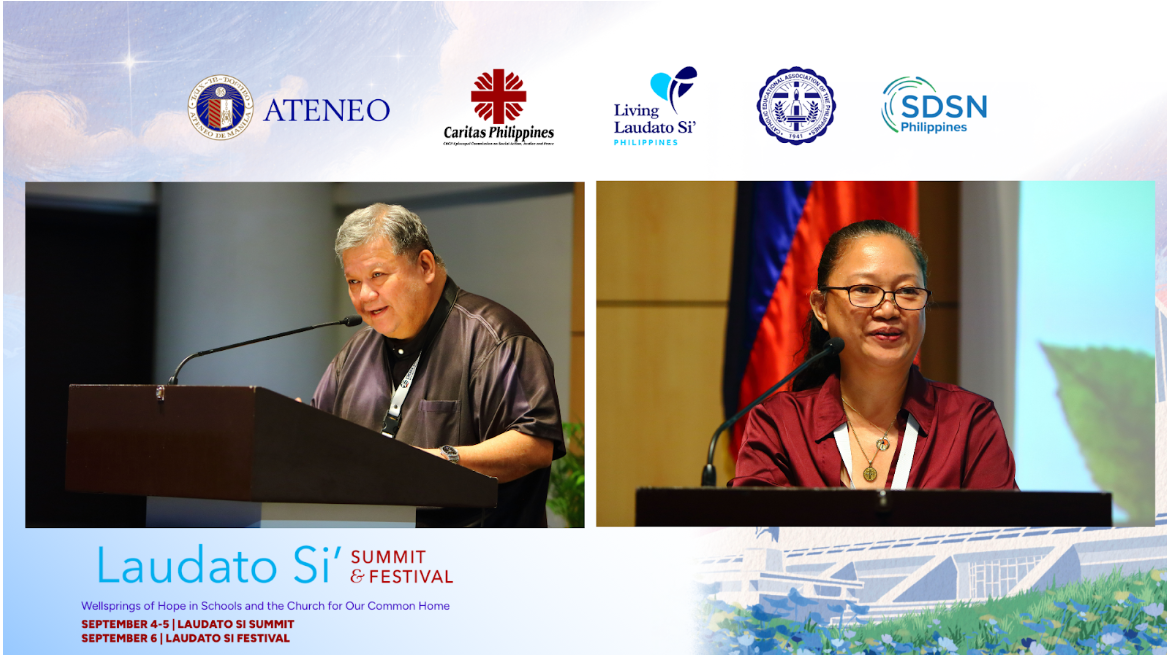
The second day of the Summit transitioned to specific, actionable insights. The day was opened by a plenary session with Rev. Fr. Francis Gustilo, SDB, President and Resident Professor of Don Bosco School of Theology, who presented the School’s Laudato Si’ Certified Environmental Trainer course. Cheryl Dugan, Director for Asia Pacific and Member Leadership of the Laudato Si' Movement, then shared the organization's struggles and accomplishments.
The participants were then invited to join several breakout sessions led by experts and champions in promoting ecological practices within various institutions in the country.
The morning breakout sessions included four distinct topics:
The session on Sources of Hope and Challenges in Green Finance and Green Purchasing was led by speakers Manuel Goseco, Chairman of the Board, Philippine Commercial Capital Inc.; Raul Martin Pedro, Board Advisor, Grow Asia Capital Ltd; and Michael C. Sanchez, Country Head, Procurement and Materials Management Division of Konecranes.
The session on Sources of Hope and Challenges in Greening Operations featured speakers Geraldine C. Zamora, Director for Campus Sustainability Office, and Rick Benjie Perdigones, Pollution Control Officer, both from De La Salle University – Dasmariñas.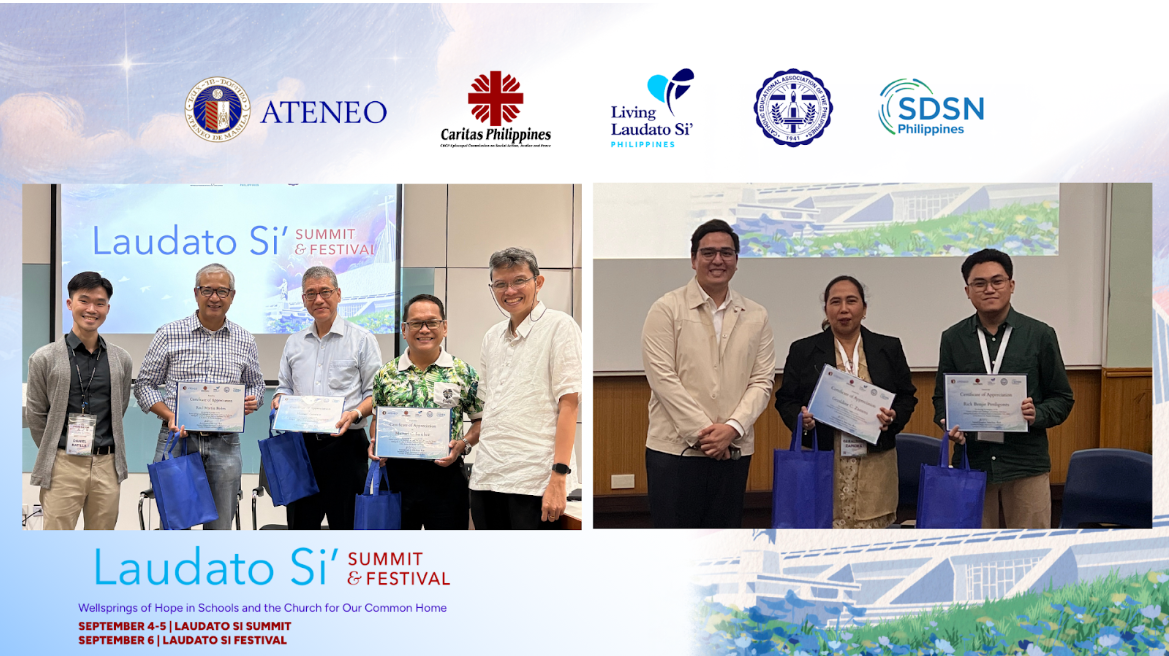
The session on Sources of Hope and Challenges in Promoting Ecological Spirituality was led by Sr. Teresa Dagdag, MM, of the Maryknoll Ecological Sanctuary, and Rev. Fr. Reynaldo D. Raluto, of the Diocese of Malaybalay.
The session on Sources of Hope and Challenges in Research, Advocacy, and Community Engagement for Integral Ecology included Sr. Marvie Misolas, MM, of the Miriam College Environmental Studies Institute, and Mark Paul Samante of Ateneo de Davao University.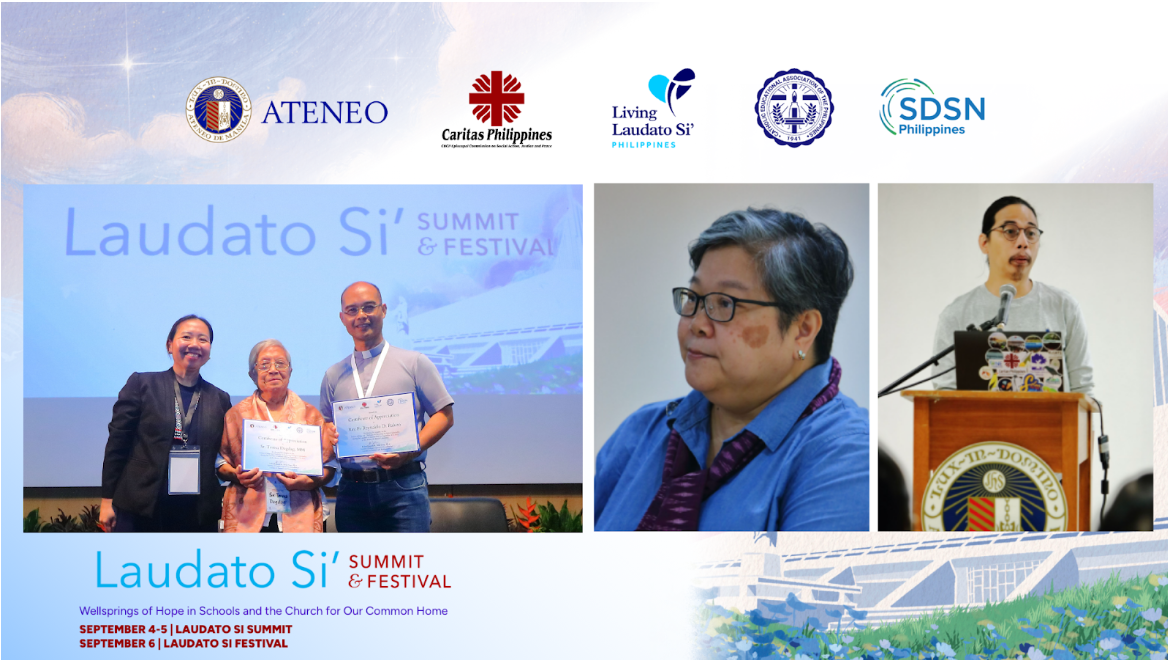
In the afternoon, participants were invited to join sessions on ecological education within the educational sector. These included two sessions:
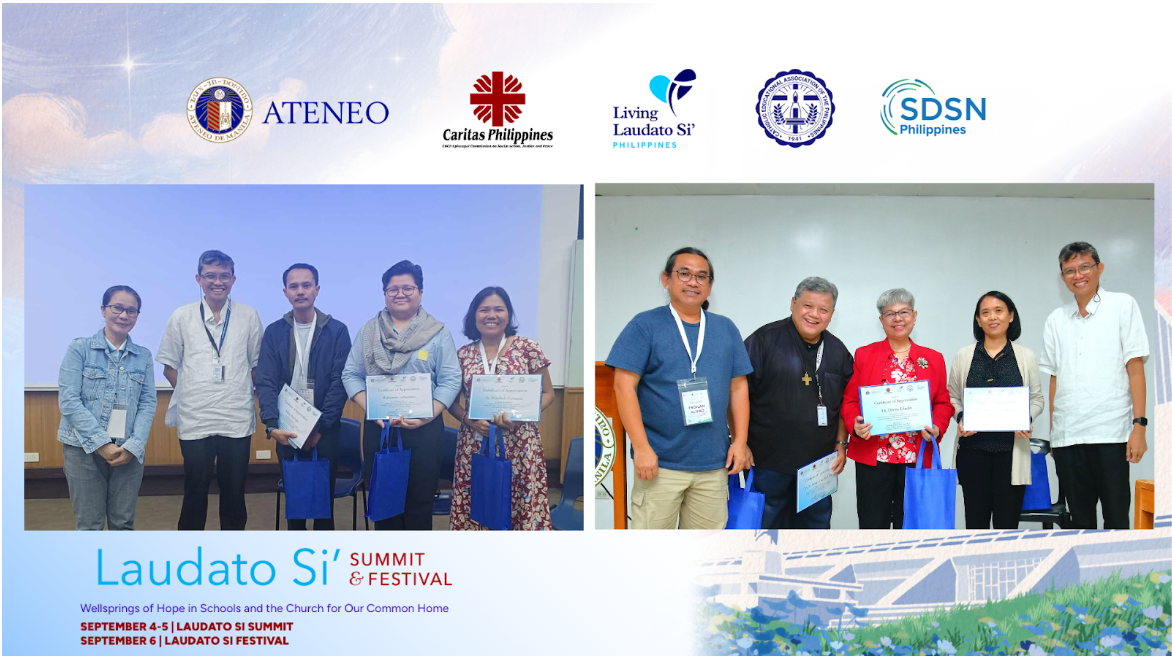
The session on Public and Basic Education featured speakers Khitz Mayuga, Former Alay Kapwa at Kalikasan Subject Team Leader from Assumption Antipolo; Sr. Elizabeth Carranza, Acting LSM Pilipinas Chapter Coordinator of Laudato Si' Movement Pilipinas; and Katherine Sarmiento, Partnerships Manager of the Oscar M. Lopez Center for Climate Change Adaptation and Disaster Risk Management Foundation.
The session on Higher Education and Religious Formation featured Dr. Divina Edralin, Vice President and Academics Director of the Research and Development Center of San Beda University; Dr. Assunta Cuyegkeng, Executive Director of the Lily Gokongwei Ngochua Leadership Academy of the Ateneo de Manila University and the Managing Editor of the Management for Global Sustainability; and Rev. Fr. Francis Gustilo, SDB, President and Resident Professor of Don Bosco School of Theology.
These sessions offered diverse perspectives on how to integrate sustainability into daily life and institutional practices.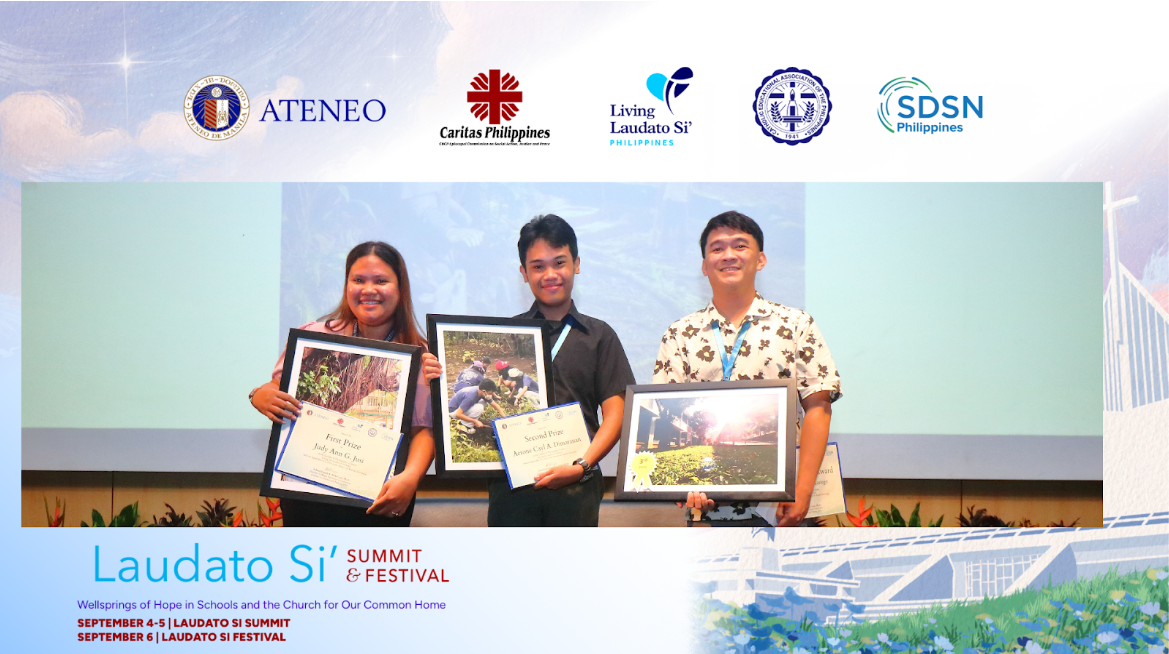
The summit concluded with an awards ceremony for a photo contest organized by the Office of Campus Ministry. The contest received 29 entries.
The momentum carried over to Saturday with the Laudato Si’ Festival. The event offered a mix of tours within and outside Ateneo, as well as talks showcasing sustainable practices and promoting environmental care and awareness.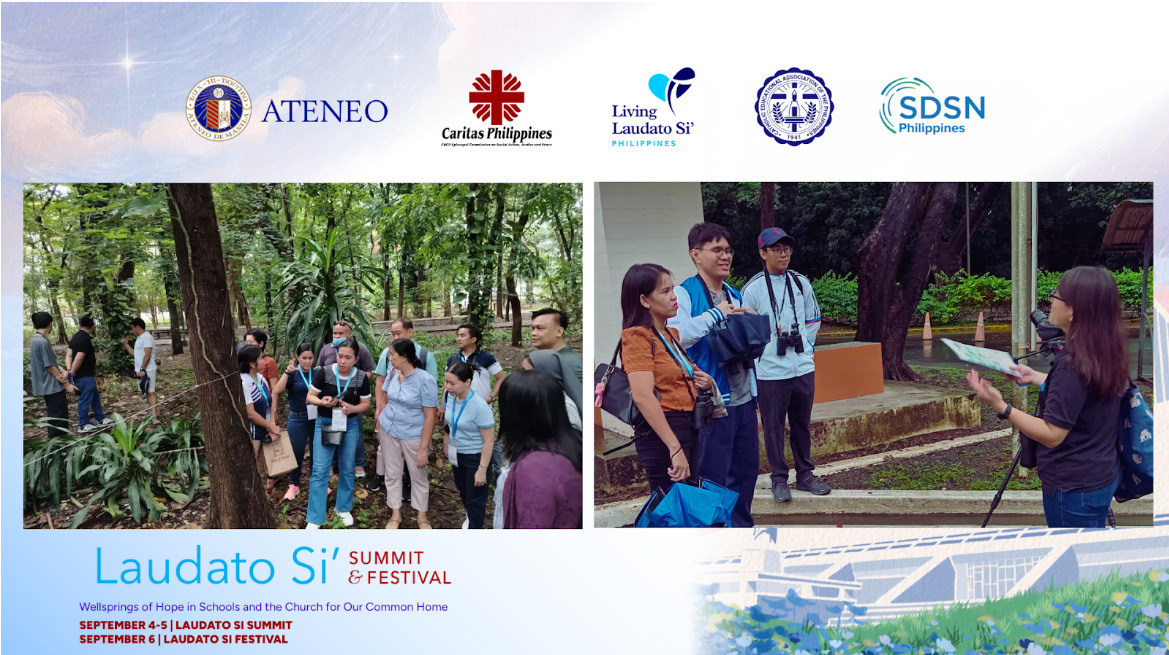
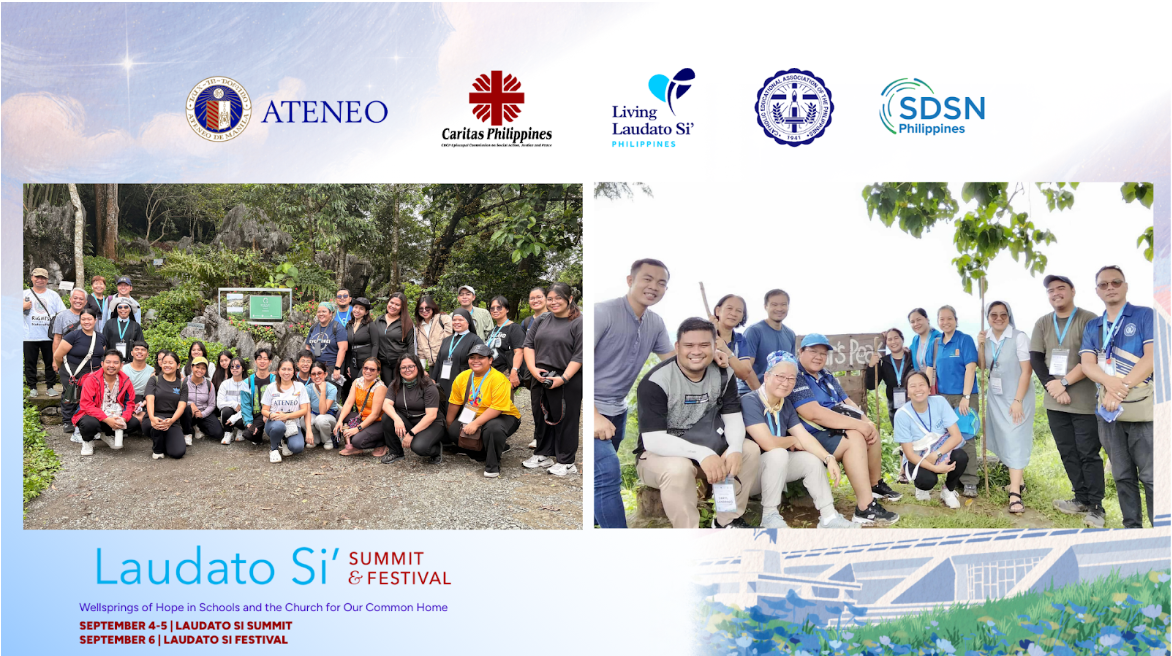
Some attendees explored Ateneo's sustainability initiatives with the help of the Campus Facilities Management Office and our campus biodiversity with the help of The Ateneo Wild, while others ventured out to the Masungi Georeserve and Mt. Purro Nature Reserve for a closer look at conservation efforts.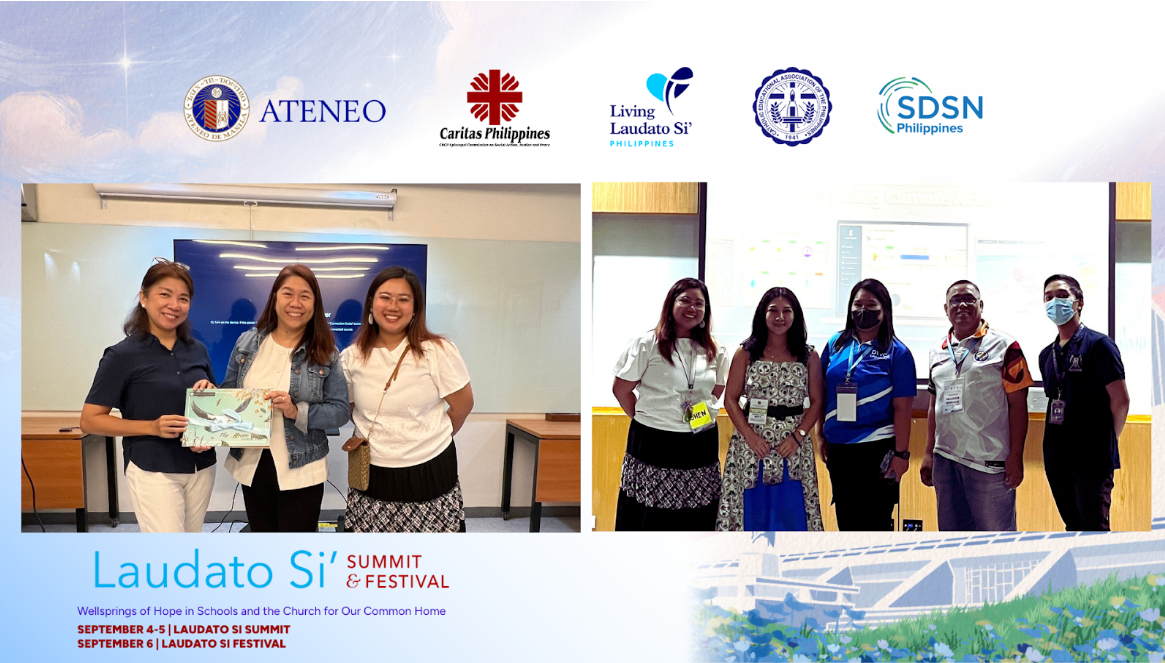
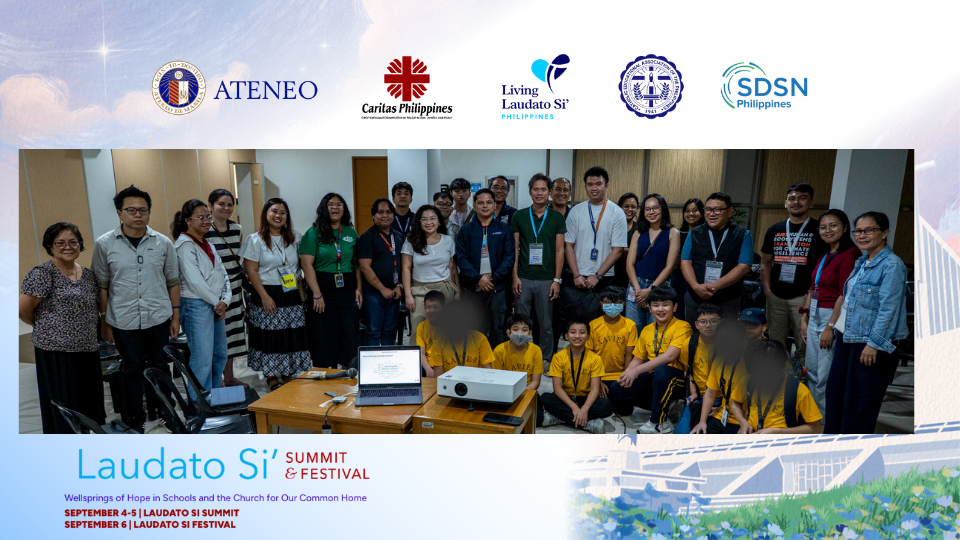
Talks covered a range of topics, including the Back2Basics EcoStore, the Philippine Environmental Situationer, Komunidad (a platform that forecasts the weather), Global Ethical Stocktake Dialogue, and the tales of displacement of tribes from Kaliwa Dam and Bugsuk Island.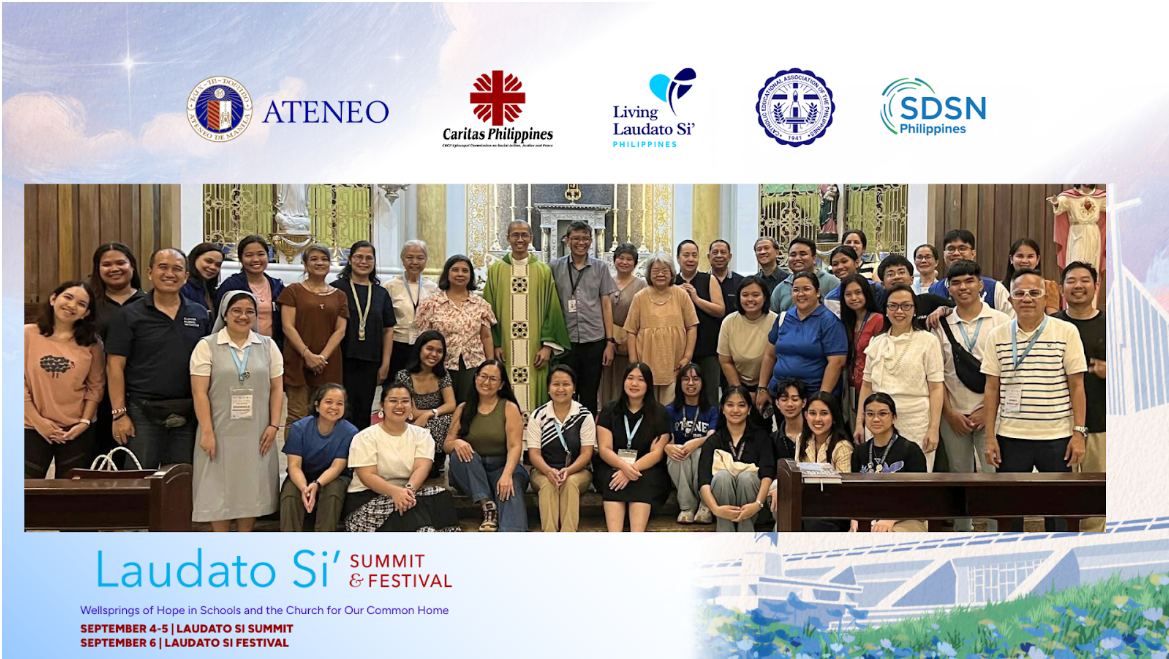
The festival culminated with a closing Mass presided over by Father JM Manzano SJ, bringing the community together for a shared purpose.
“The event was a resounding success, with engaging discussions that sparked valuable insights. I gained a wealth of knowledge from the keynote speakers, who shared their expertise and compelling stories. The group sessions fostered an atmosphere of collaboration and learning, allowing participants to dive deep into the topics at hand.”
- Laudato Si' Summit and Festival participant
This three-day Laudato Si’ Summit and Festival was more than just an academic exercise—it was a call to action, providing a platform for dialogue, inspiration, and concrete steps toward a more hopeful future for all.
Recent News
You may also like these articles

[Hot Off the Press] Arkipelago
New book from the Ateneo Press Arkipelago provides a fascinating and fantastical twist on Philippine politics and history Our country is an archipelago of stories
Protecting Creativity: AIPO and Rizal Library Host Copyright Awareness Session for the Ateneo Community
On March 18, 2026, the Ateneo Intellectual Property Office (AIPO), in collaboration with the Rizal Library, successfully conducted a Copyright Awareness Session held on the
Holy Week 2026 Holidays (Memo # UHR2526-038)
Memo # UHR2526-038 31 March 2026 TO: All Employees FROM: [Sgd] Maria Victoria T Cortez, PhD Vice President for University Human Resources SUBJECT: Holy Week
ASOG’s Tobacco Control initiatives spotlighted in DOH National Technical Working Group for Tobacco Prevention and Control
On March 10 to 12, 2026, the Ateneo School of Government (ASOG), through its research and public policy unit, the Ateneo Policy Center, participated in
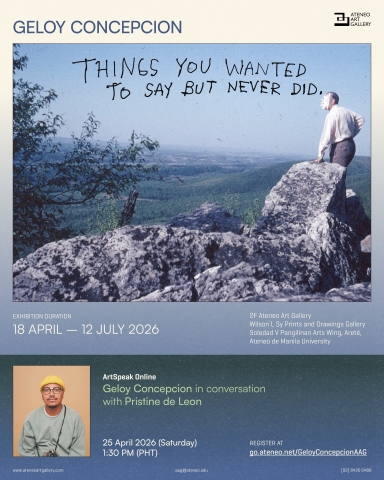
Things You Wanted to Say But Never Did: Geloy Concepcion’s six-year project makes Its exhibition debut at the Ateneo Art Gallery
Geloy Concepcion’s Things You Wanted To Say But Never Did comes to the Ateneo Art Gallery this 18 April 2026. After receiving almost 300,000 messages

[Hot Off the Press] Love If I'm Pretty
New YA Release from the Ateneo Press Love If I’m Pretty tackles the nuances of growing up through complex characters and straightforward prose What do