Ateneo Policy Center and Isabela City chart collaborative pathways for sustainable health financing
25 Sep 2025

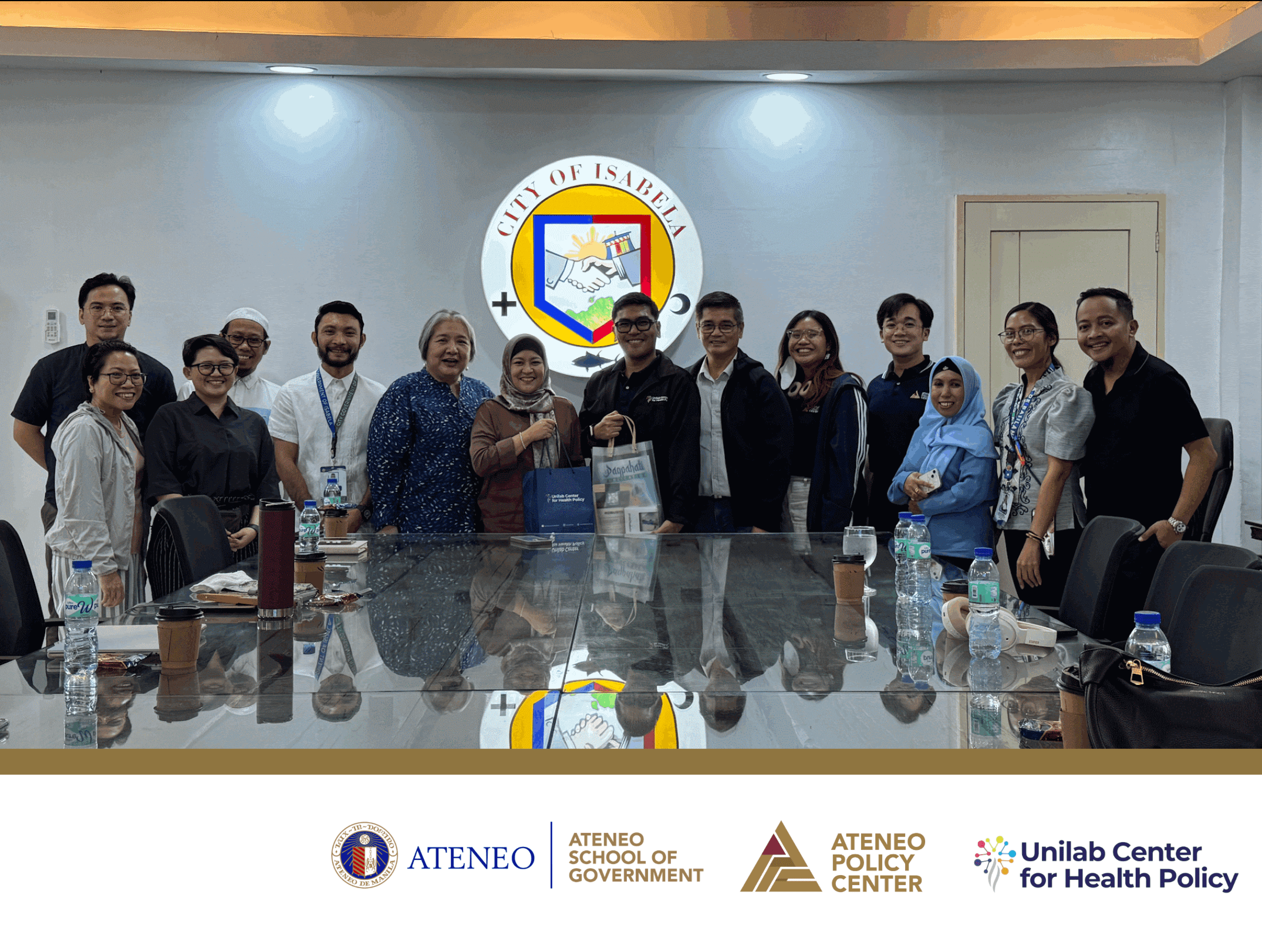
On 15 to 17 September 2025, the Ateneo School of Government, through the Ateneo Policy Center, facilitated design thinking workshops with the Isabela City Government in Basilan Province. This activity forms part of its project Maximizing Local Government Fiscal Performance of Health Budget, supported by the Unilab Center for Health Policy.
Participants included representatives from key agencies involved in health and budget, such as the Office of the City Mayor, City Health Office, City Planning and Development Office, City Department of Health Office, PhilHealth, Accounting Office, City Human Resource Management Office, City Treasurer Office, and Sangguniang Panglungsod.
Day 1 (15 September 2025): Courtesy Call with the Office of the City Mayor
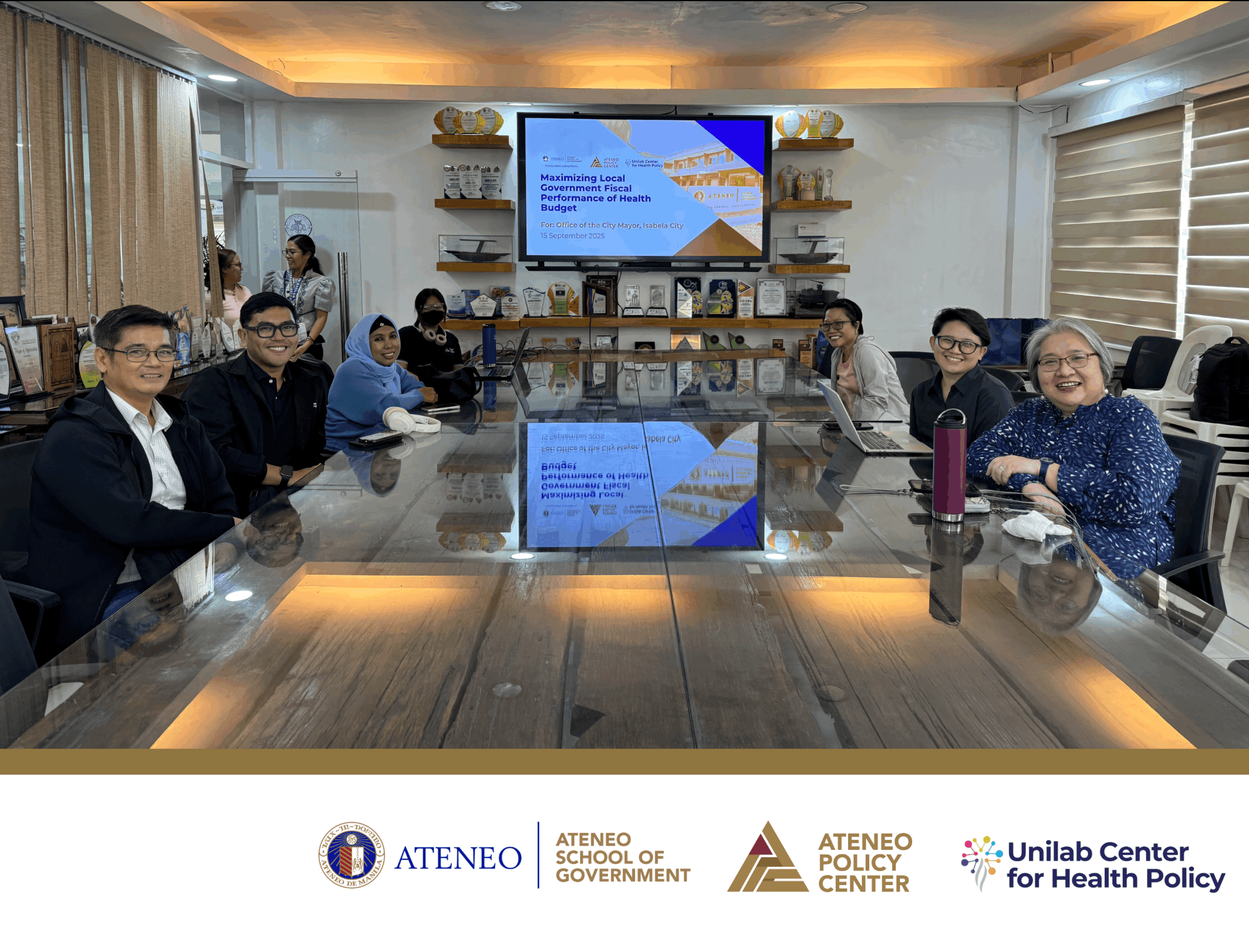
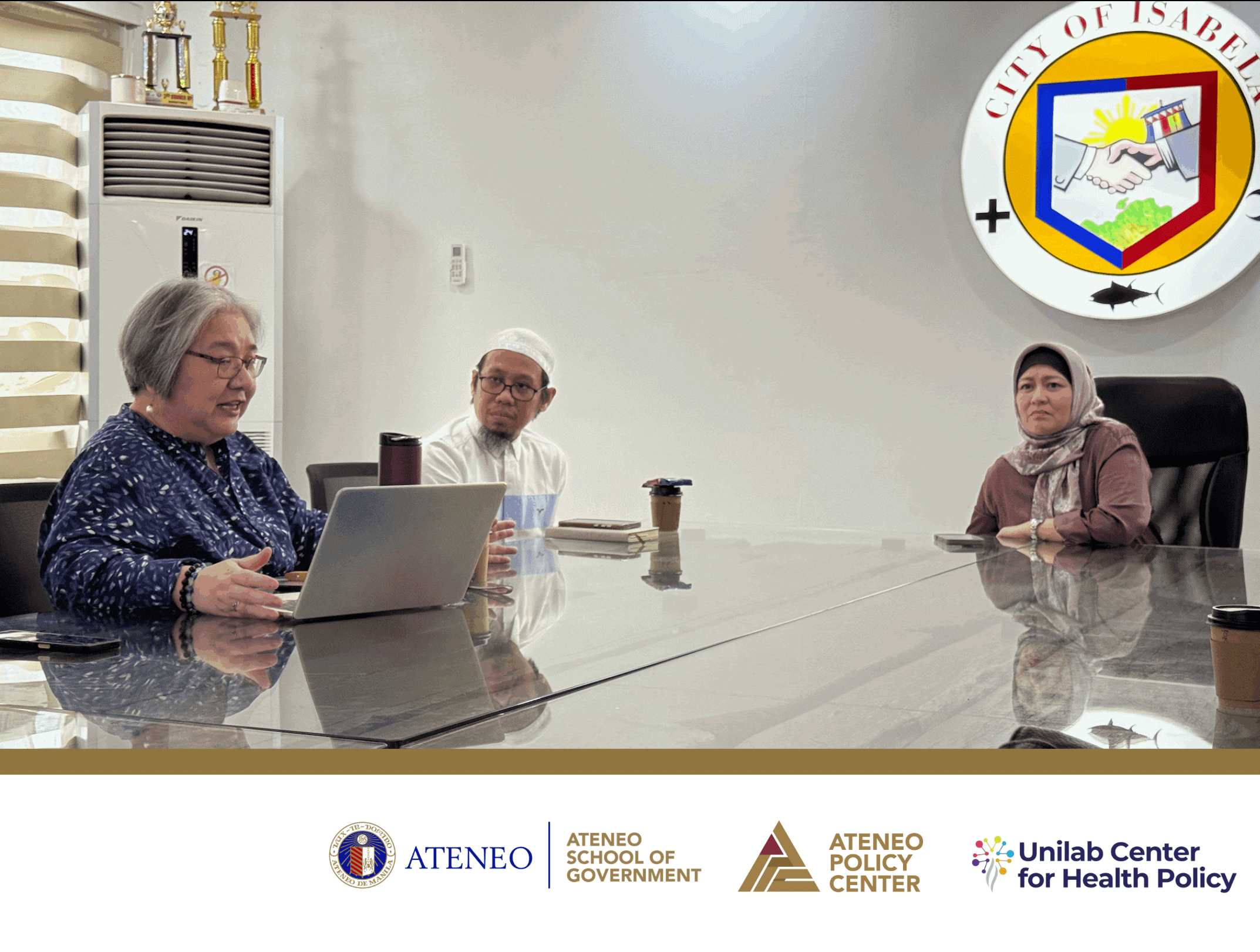
The fieldwork began with a courtesy call with Isabela City Mayor Sitti Djalia A. Turabin-Hataman. Vice Mayor Ar-Jhemar Ajibon, City Councilor Al-Ameen Camlian, who also chairs the Committee on Health, Sanitation, and Nutrition, and City Health Officer Dr. Mohrein Ismael, VI were also in attendance. The team presented the project objectives and secured the city leadership’s support for the activity.
Day 2 (16 September 2025): Understanding Budget Pain Points
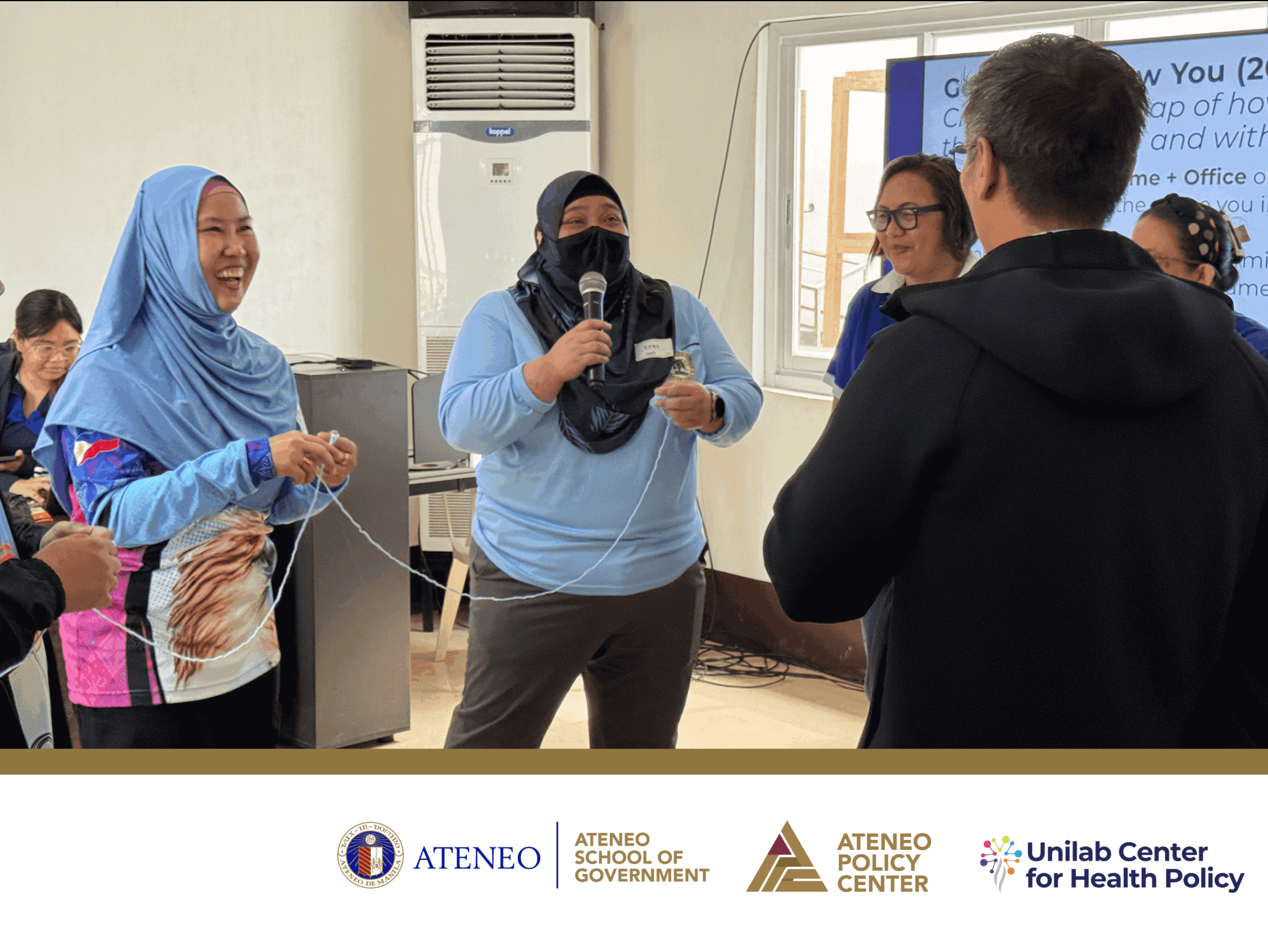
The first day of the workshop opened with an introduction activity, where participants shared their role in the budget cycle and how they connect with the other offices. During expectation-setting, participants emphasized the desire to strengthen planning capacities, clarify budget flows, and improve alignment between proposals and execution.
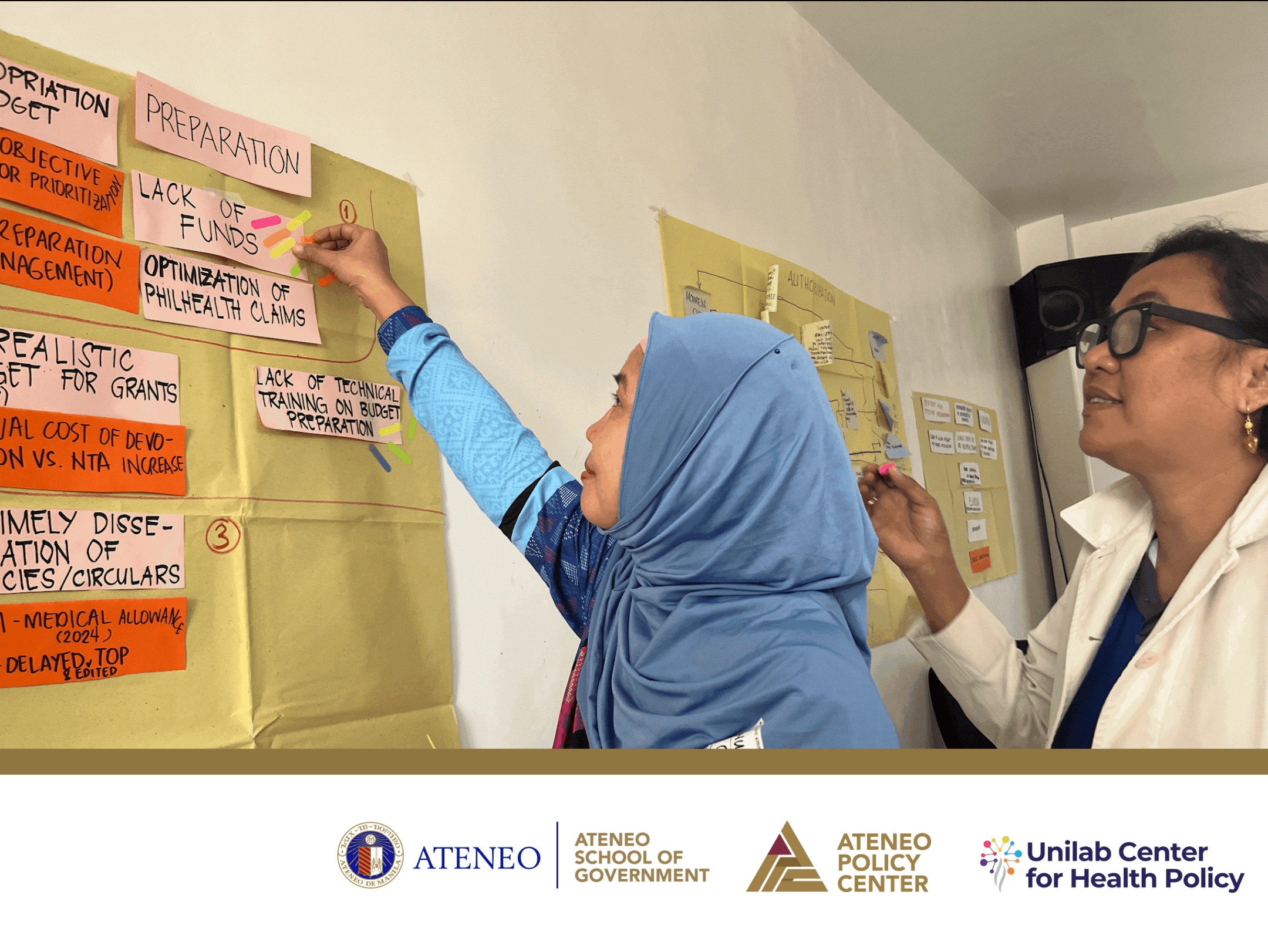
Through the Empathize stage, participants mapped pain points across the public financial management cycle, citing issues such as lack of funds, overlapping priorities, and limited training in preparation; late submissions and unclear prioritization during authorization; communication gaps and delayed procurement in execution; and reimbursement delays with misaligned reporting in review and accountability.
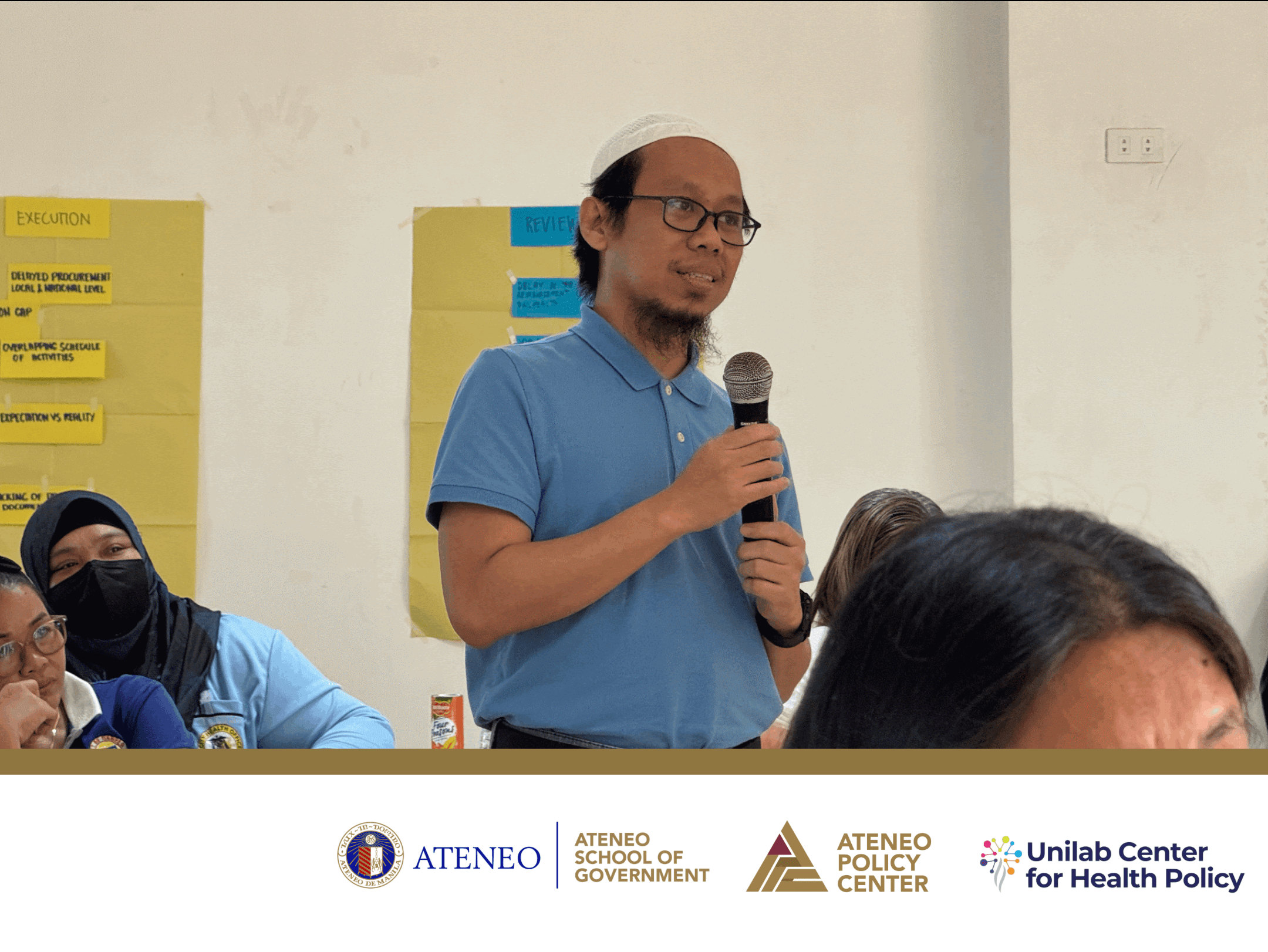
Structural issues were also surfaced, particularly the siloed implementation of devolution, which transferred more responsibilities to LGUs without proportionate increases in resources, creating gaps in human resource financing and service delivery.
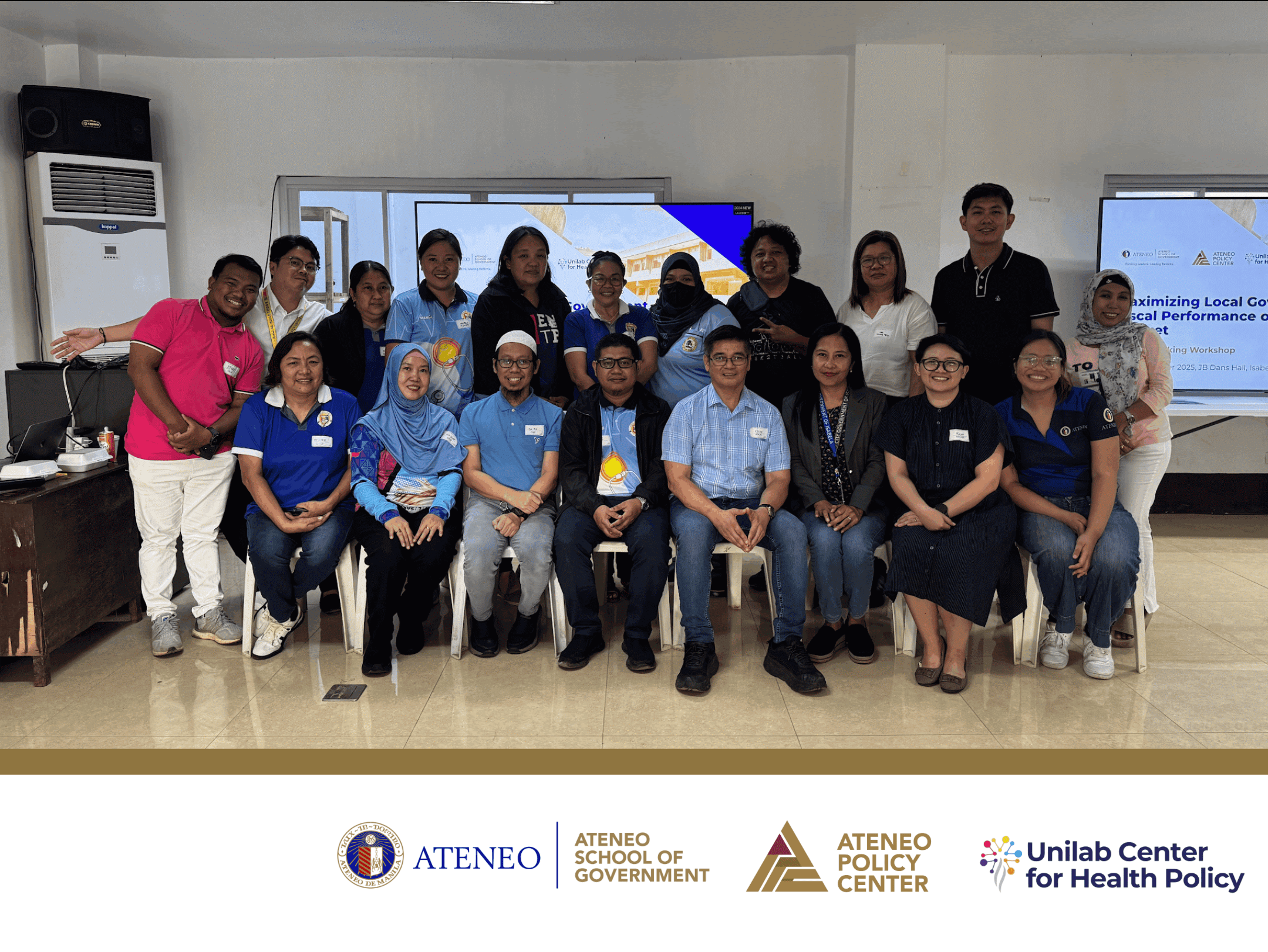
Day 3 (17 September 2025): From Problems to Solutions
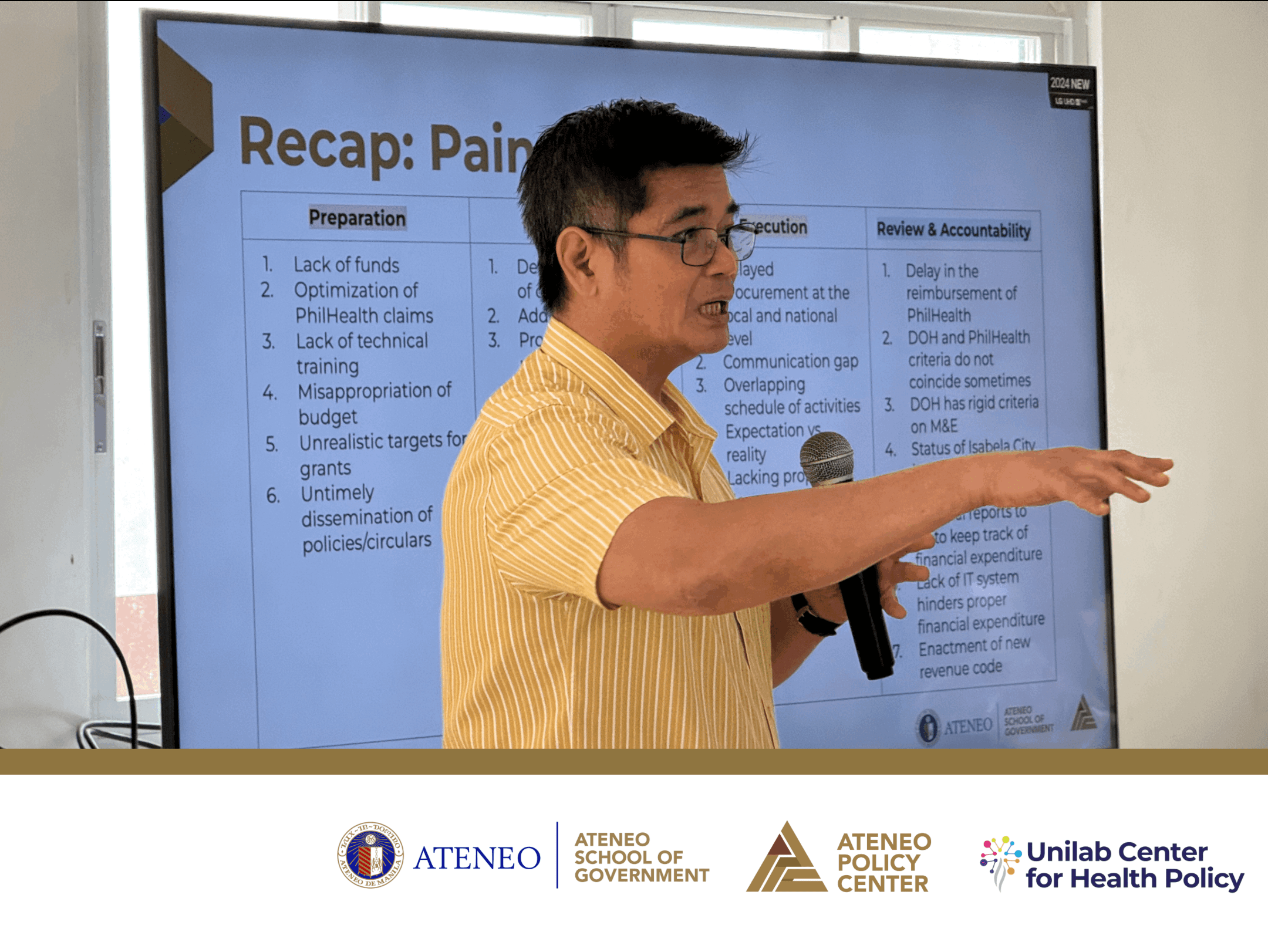
On the second day, participants revisited these challenges and reframed the problem statements into “How Might We” questions. Through this step, participants transitioned to the Ideate phase, wherein they generated creative and practical solutions for the identified problems.
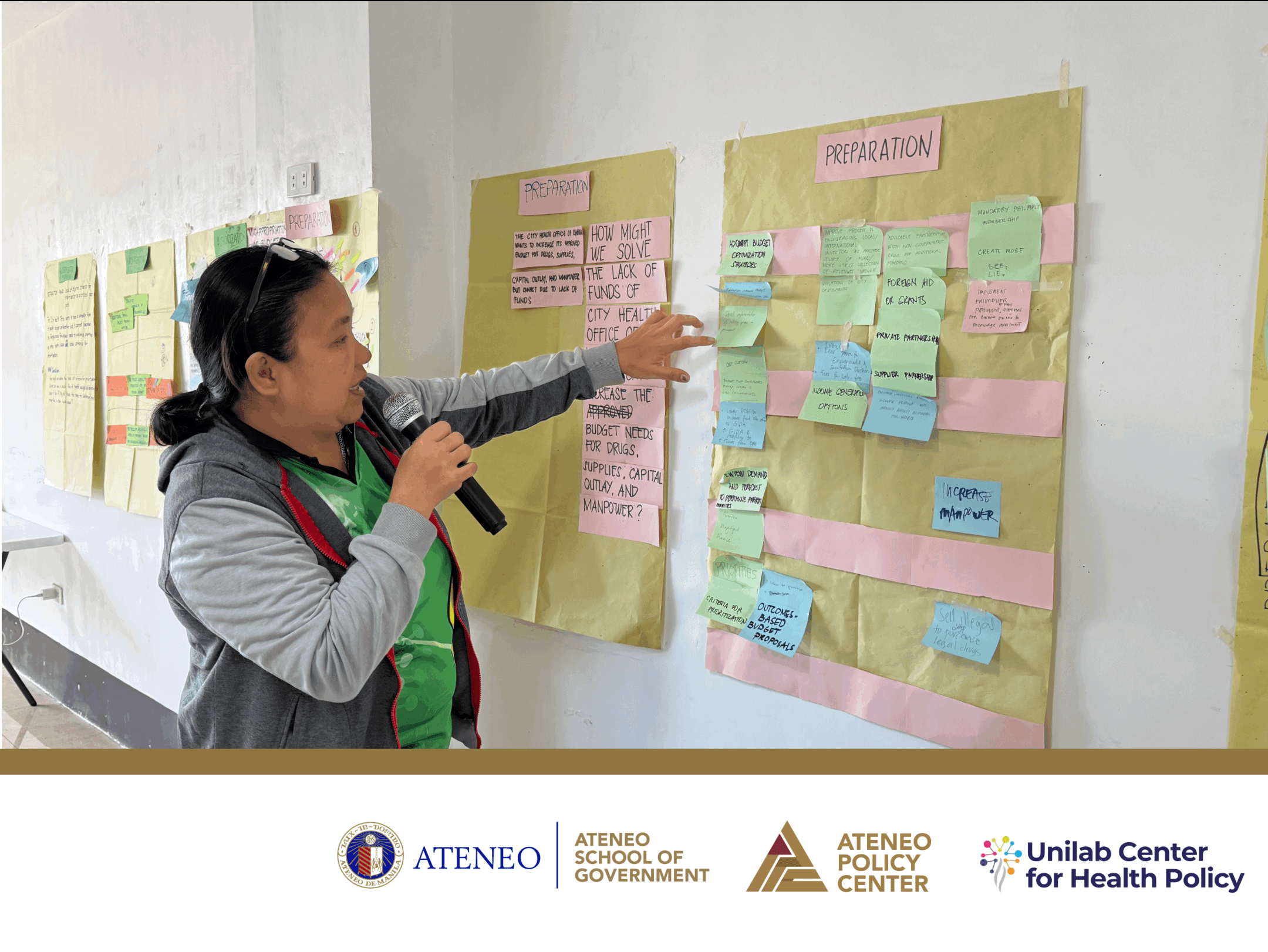
Proposed solutions centered on mobilizing additional resources, strengthening planning capacity, and improving prioritization of health spending. They also emphasized digitalizing processes, enhancing coordination, and establishing stronger financial monitoring and accountability systems. Forecasting emerged as the most innovative idea, and mandatory PhilHealth membership as the most urgent and practical reform.
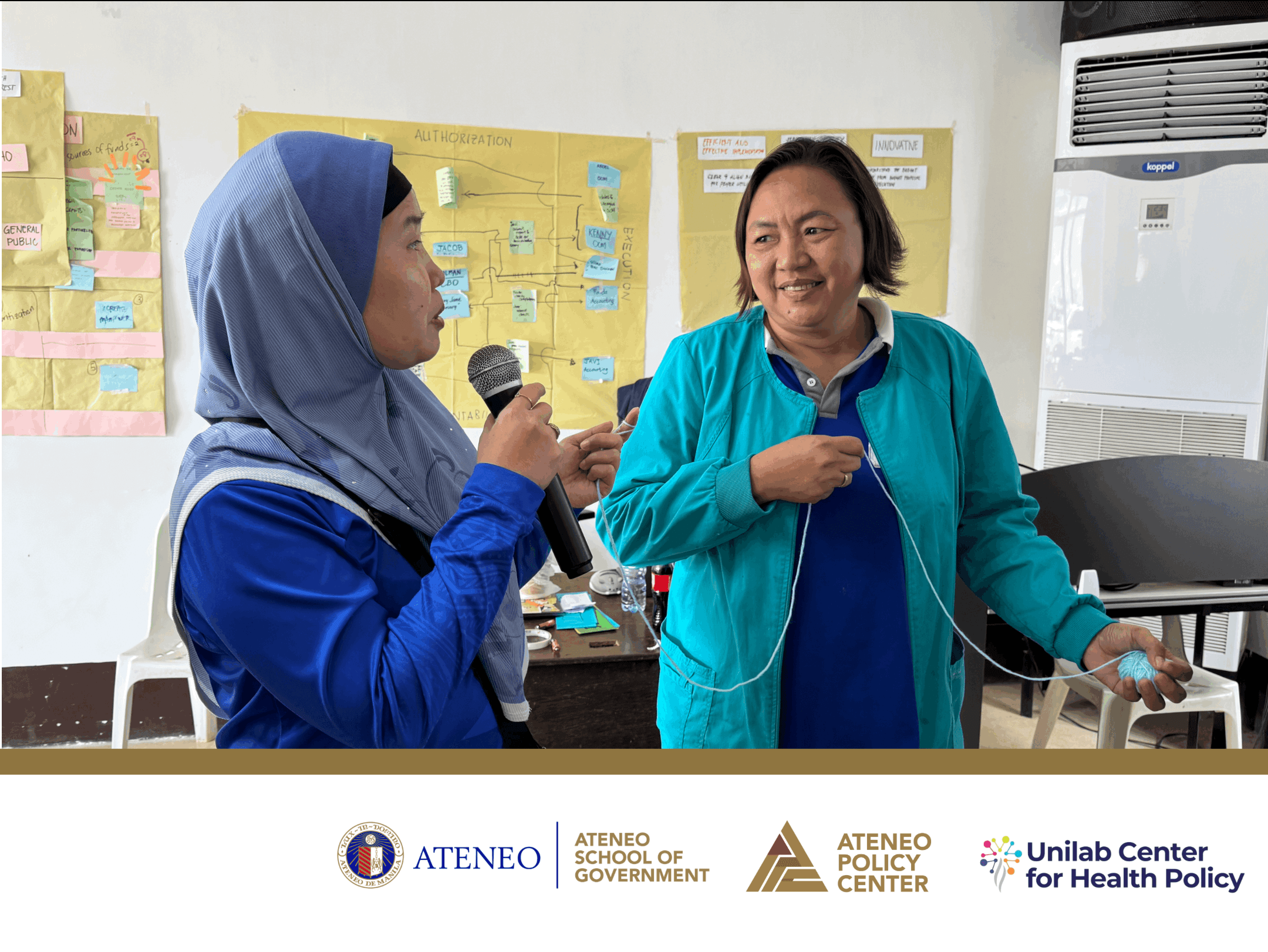
Collaborative Pathways to Stronger Health Financing
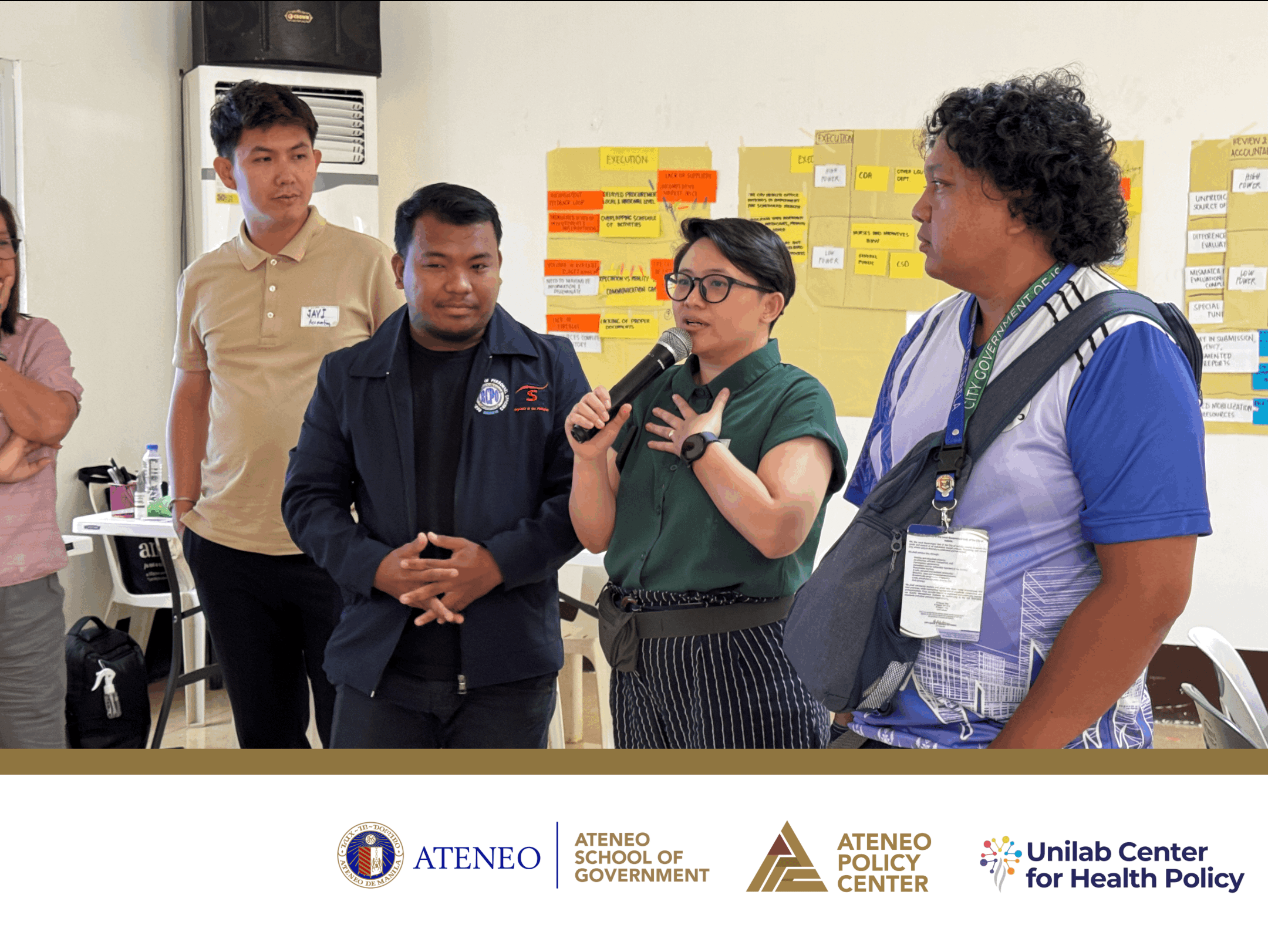
The workshop highlighted the interdependence of local actors in health financing. Participants stressed that beyond increasing funds, proper prioritization, coordination, and digitalization are key to more responsive and sustainable health spending.
The outputs from these sessions, including journey maps, power-interest matrices, problem statements, and solution ideas, will inform Ateneo Policy Center’s ongoing research and policy development, contributing to technical guidance and tools for LGUs.
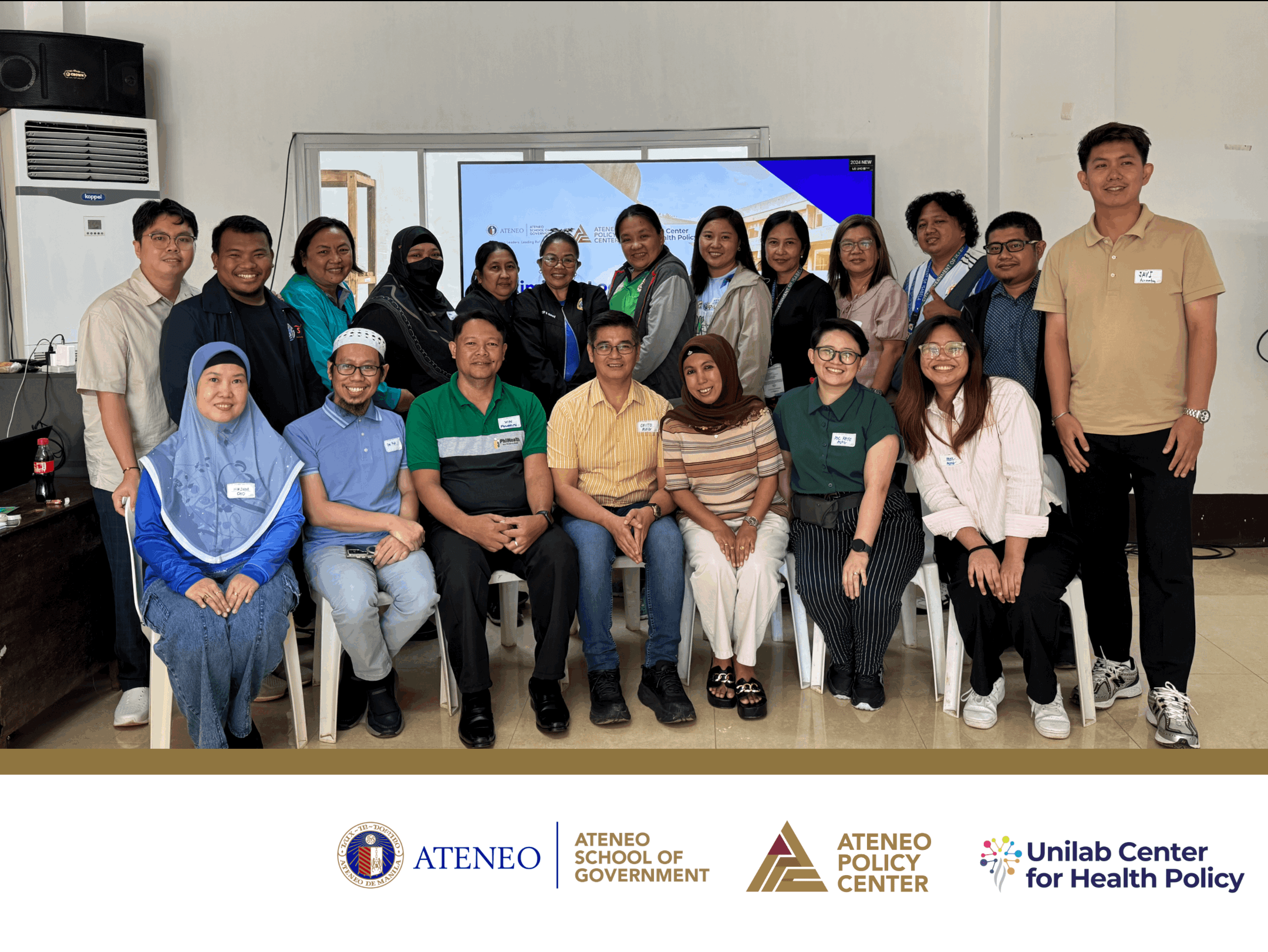
Looking ahead, the insights from Isabela City will shape targeted policy recommendations to enhance Isabela City’s health financing and strengthen its capacity to achieve UHC goals. These are significantly important in light of Isabela City, Basilan’s unique position of being a non BARMM LGU within a BARMM Province. The city’s experience demonstrates the value of collaborative and evidence-informed local solutions can inspire other LGUs to pursue more equitable health systems.
Recent News
You may also like these articles

[Hot Off the Press] Arkipelago
New book from the Ateneo Press Arkipelago provides a fascinating and fantastical twist on Philippine politics and history Our country is an archipelago of stories
Protecting Creativity: AIPO and Rizal Library Host Copyright Awareness Session for the Ateneo Community
On March 18, 2026, the Ateneo Intellectual Property Office (AIPO), in collaboration with the Rizal Library, successfully conducted a Copyright Awareness Session held on the

Holy Week 2026 Holidays (Memo # UHR2526-038)
Memo # UHR2526-038 31 March 2026 TO: All Employees FROM: [Sgd] Maria Victoria T Cortez, PhD Vice President for University Human Resources SUBJECT: Holy Week
ASOG’s Tobacco Control initiatives spotlighted in DOH National Technical Working Group for Tobacco Prevention and Control
On March 10 to 12, 2026, the Ateneo School of Government (ASOG), through its research and public policy unit, the Ateneo Policy Center, participated in
Things You Wanted to Say But Never Did: Geloy Concepcion’s six-year project makes Its exhibition debut at the Ateneo Art Gallery
Geloy Concepcion’s Things You Wanted To Say But Never Did comes to the Ateneo Art Gallery this 18 April 2026. After receiving almost 300,000 messages

[Hot Off the Press] Love If I'm Pretty
New YA Release from the Ateneo Press Love If I’m Pretty tackles the nuances of growing up through complex characters and straightforward prose What do