Gregorio Concepcion Brillantes (18 December 1932 – 26 September 2025)
27 Sep 2025 | Jonathan O Chua



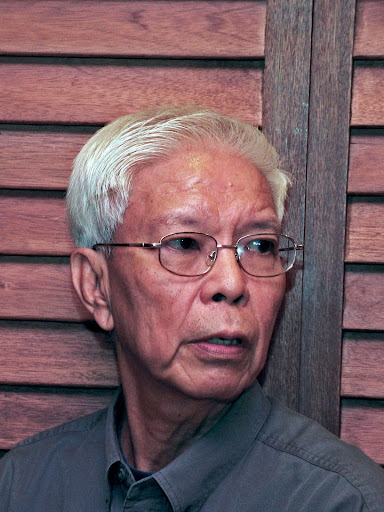
Photo by B. J. Patiño
The School of Humanities mourns the loss of fictionist Gregorio Concepcion Brillantes, who passed away on 26 September 2025. He was 92.
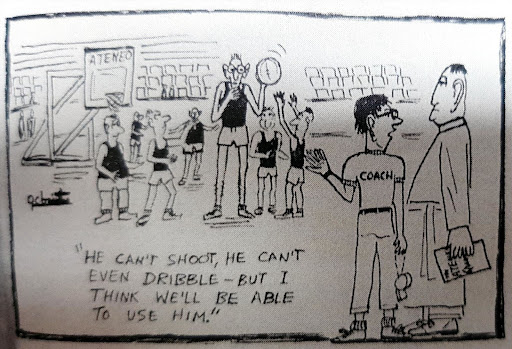
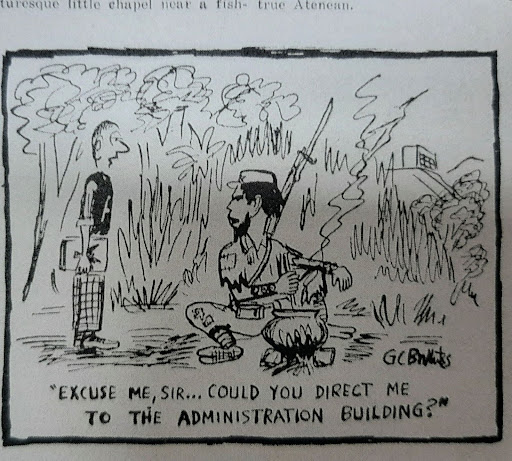
Brillantes was born on December 18, 1932, in Camiling, Tarlac, where he set a number of his stories. He attended Ateneo de Manila, then in Manila, in 1948 and completed a BLitt, Major in Journalism, in 1952, when the campus had recently moved to Loyola Heights. He had wanted to be a basketball player but ended up as a writer and cartoonist while in college, contributing to The GUIDON and later editing the literary magazine Ateneo Quarterly, the predecessor of Heights. He was in the company of the poet Emmanuel S Torres, who would be the long-time curator of the Ateneo Art Gallery.
After college, he taught English at Ateneo High School and later at the Far Eastern University, while also contributing short stories to national magazines. He was several times a winner at the annual short story contest of the Philippines Free Press, receiving the top prize in 1953 (for “The Living and the Dead”), 1954 (for “A Wind over the Earth”), and 1956 (for “The Distance to Andromeda”). “Faith, Love, Time, and Dr Lazaro” received the second prize at both the Free Press contest and the Carlos Palanca Memorial Awards in 1960.
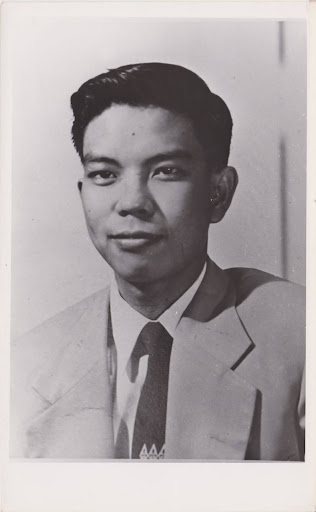
In 1960, his first collection of short stories, The Distance to Andromeda and Other Stories, was published, for the tenor of which he was dubbed a “Catholic writer.”
In the decades that followed, Brillantes grew in his craft, receiving more awards for his stories, including first prizes at the Palanca Awards for “The Cries of Children on an April Afternoon in the Year 1957” (1974), “Janis Joplin, the Revolution, and the Melancholy Widow of Gabriela Silang Street” (1977), and “The Flood in Tarlac” (1988). The stories from the 1960s onward show his experimentation with modes of storytelling and a broadening of thematic scope, which both situate his works within a definite Philippine context and evince his evolving craftsmanship. In its handling of time, “The Cries of Children ...” has come to be the work most admired by his fellow writers, including Jose Y. Dalisay, Jr. and National Artist Gemino Abad, and is one of the masterpieces of Philippine fiction written in English. His stories from this period were collected in The Apollo Centennial (1980) and On a Clear Day in November, Shortly Before the Millennium (2000).
Brillantes was equally a master of non-fiction. His work with the Philippines Free Press, and later the Asia-Philippines Leader, the Manila Review, and Midweek, combines incisive takes on national and international issues with flawless prose. Along with Nick Joaquin and Jose F. Lacaba, Brillantes set new standards for reportage and critical commentary. His non-fiction has been collected in three volumes: Looking for Jose Rizal in Madrid, Chronicles of Interesting Times, and The Cardinal’s Sins, the General’s Cross, the Martyr’s Testimony and Other Affirmations, all published in 2005. His recollections of the Ateneo de Manila in the immediate post-war years, including the Jesuit teachers, are scattered in a few of his writings.
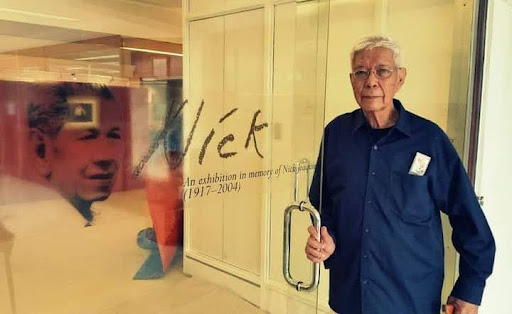
Rizal Library Special Collections Building in 2014
In 2009, on the occasion of its sesquicentennial, Ateneo de Manila University gave him the Tanglaw ng Lahi (with Nicanor G Tiongson and Lacaba as co-recipients). In 2011, a retrospective exhibition entitled “Faith, Love, Time, and Gregorio Brillantes” was mounted by the School of Humanities’ Department of Interdisciplinary Studies and Department of English at the Rizal Library. In 2023, the Ateneo de Manila University Press published his Collected Stories, which eventually received the National Book Award and the Gintong Aklat Award.
He was truly one of the best writers this university has ever produced.
Recent News
You may also like these articles
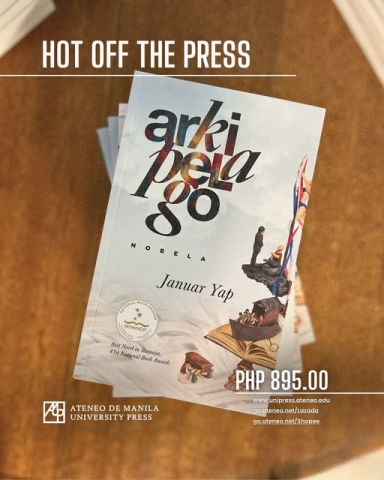
[Hot Off the Press] Arkipelago
New book from the Ateneo Press Arkipelago provides a fascinating and fantastical twist on Philippine politics and history Our country is an archipelago of stories
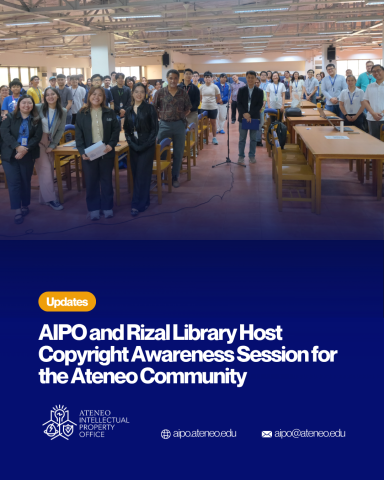
Protecting Creativity: AIPO and Rizal Library Host Copyright Awareness Session for the Ateneo Community
On March 18, 2026, the Ateneo Intellectual Property Office (AIPO), in collaboration with the Rizal Library, successfully conducted a Copyright Awareness Session held on the
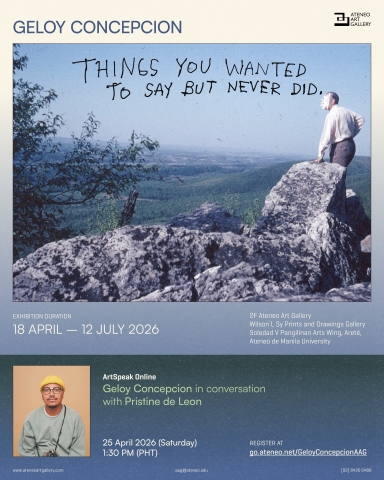
Things You Wanted to Say But Never Did: Geloy Concepcion’s six-year project makes Its exhibition debut at the Ateneo Art Gallery
Geloy Concepcion’s Things You Wanted To Say But Never Did comes to the Ateneo Art Gallery this 18 April 2026. After receiving almost 300,000 messages
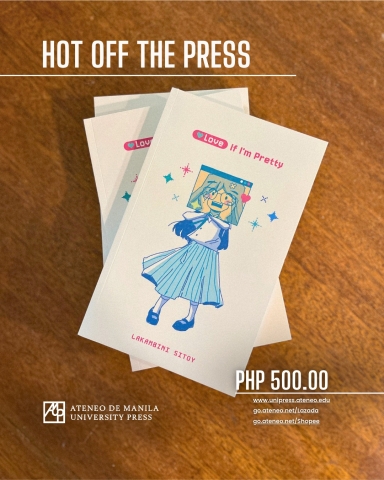
[Hot Off the Press] Love If I'm Pretty
New YA Release from the Ateneo Press Love If I’m Pretty tackles the nuances of growing up through complex characters and straightforward prose What do
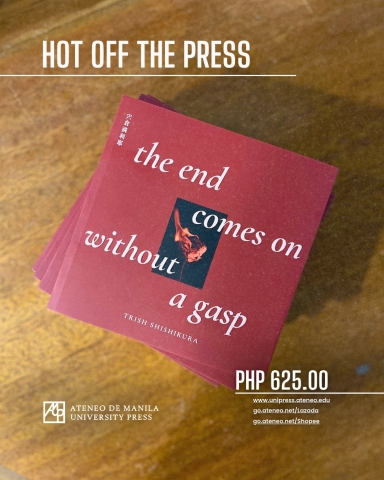
[Hot Off the Press] the end comes on without a gasp
the end comes on without a gasp: Trish Shishikura’s debut poetry collection arrives from Ateneo de Manila University Press (Bughaw) Ateneo de Manila University Press
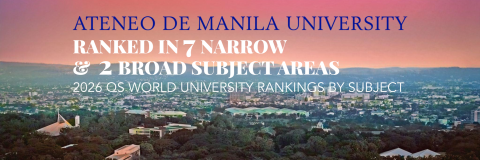
QS Subject Rankings 2026: Ateneo in top 100 for theology; ranked in 7 subject areas
Ateneo de Manila University is among the top institutions in seven subject areas, and among the top 100 for theological and religious studies, according to