ASOG attends the DOH—DPCB Strategic Action Planning for Smoking Cessation Program
06 Oct 2025

From 23 to 24 September 2025, the Ateneo School of Government (ASOG), through the Ateneo Policy Center, participated in the Department of Health—Disease Prevention and Control Bureau Strategic Action Planning for Smoking Cessation held in Tagaytay, Cavite.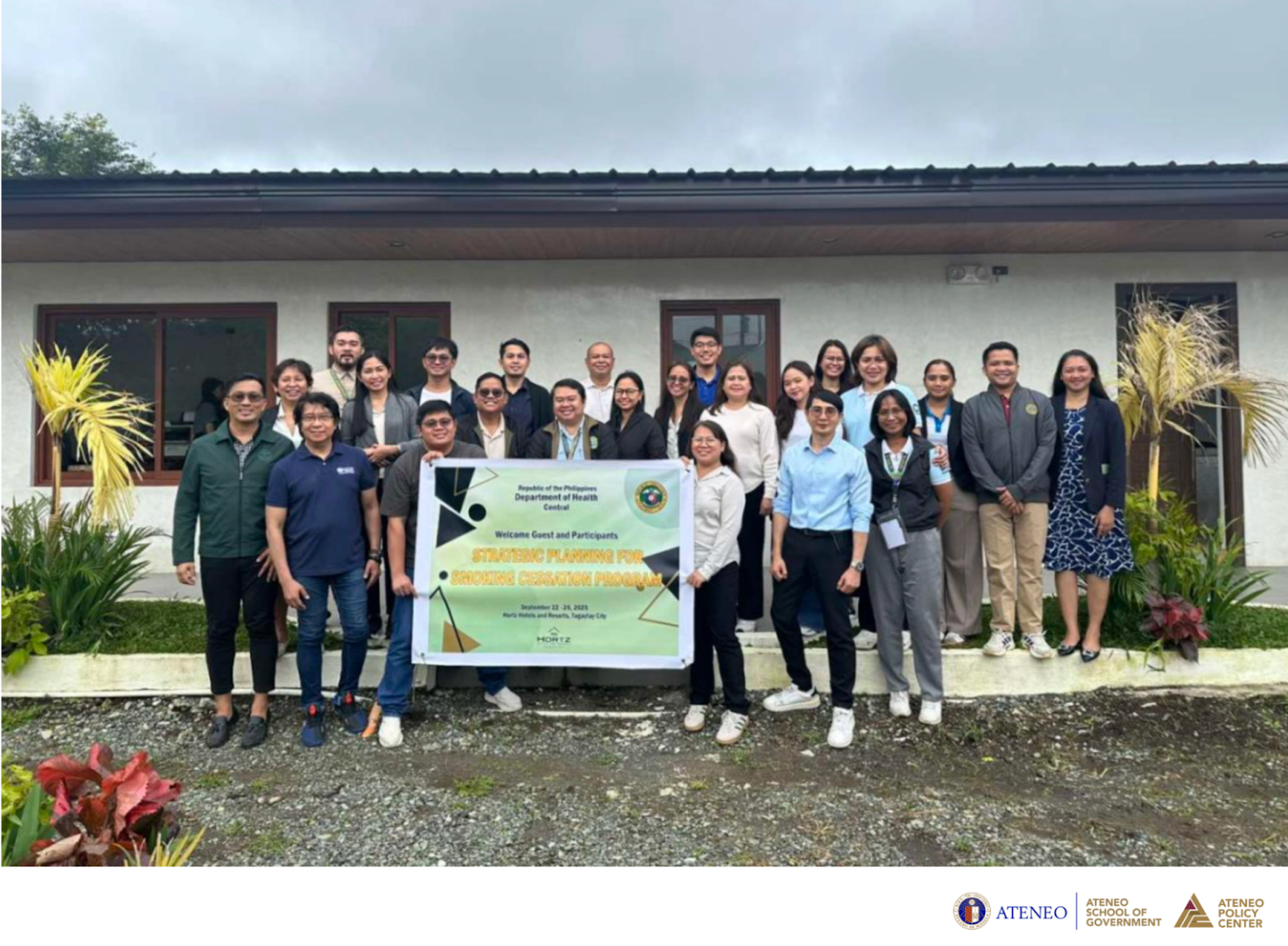
Anchored on the World Health Organization Framework Convention on Tobacco Control and guided by DOH Administrative Order No 2021-0031 on standardized cessation services, the workshop aimed to recalibrate and reinforce the country’s efforts to reduce tobacco demand. In support of the Bagong Pilipinas 8-Point Action Agenda on Health and the World Health Assembly’s call for integrated lung health strategies, the activity gathered key stakeholders to holistically assess program performance, identify gaps, and scale up effective interventions to ensure equitable delivery of smoking cessation services across all levels of care.
Mr Alen Santiago, Program Manager, Mr Rodley Carza, Program Review & Assessment Consultant, and Ms Samantha Ackary, Project Coordinator, represented the Tobacco Control & Governance program to introduce the National Tobacco Cessation Infrastructure Plan 2030, administer the Self-administered Tool for Evaluating Program Success in Tobacco Cessation (STEPS-TC), and facilitate a workshop to refine and improve the infrastructure plan.
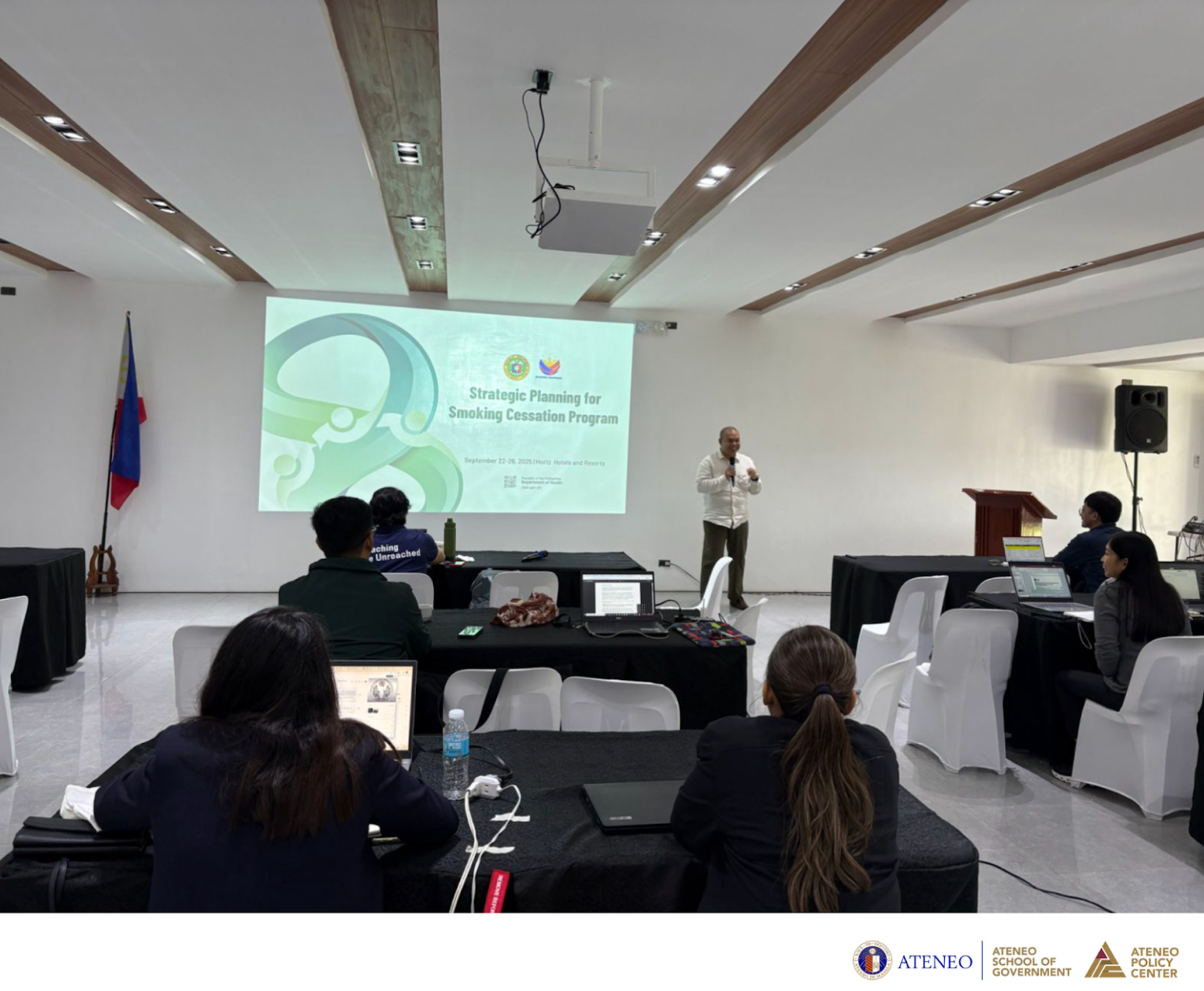
Day 1: Administration of the STEPS-TC Tool
The first day of the workshop featured the administration of the Self-administered Tool for Evaluating Program Success in Tobacco Cessation (STEPS-TC), developed by the ASOG. Designed to assess national and subnational health systems, STEPS-TC evaluates the presence, quality, and integration of tobacco cessation interventions such as Brief Tobacco Interventions (BTI), the Quitline, and mCessation services.
Through this exercise, participants were able to grasp how to systematically measure existing program capacities against global standards, including the WHO FCTC Article 14 guidelines and the National Tobacco Prevention and Control Strategy 2030. The session not only generated critical baseline insights but also provided stakeholders with a structured lens to identify strengths, bottlenecks, and opportunities for improvement across healthcare delivery levels. The findings will serve as foundational evidence to refine local strategies and align cessation services with broader health system goals.
Day 2: Introduction & Workshop to Refine the National Tobacco Cessation Infrastructure Plan 2030
The second day of the workshop featured a multistakeholder consultation led by ASOG with various representatives of Centers for Health Development (CHDs) across the country on the draft National Tobacco Cessation Infrastructure Plan 2025–2030, a comprehensive framework that will guide the expansion and institutionalization of cessation services nationwide. Anchored on Key Strategy 4 of the NTPCS 2030—ensuring access to smoking and vaping cessation services at all levels of care—the draft plan outlines key result areas spanning service delivery, capability building, monitoring and evaluation, financing, and behavioral change.
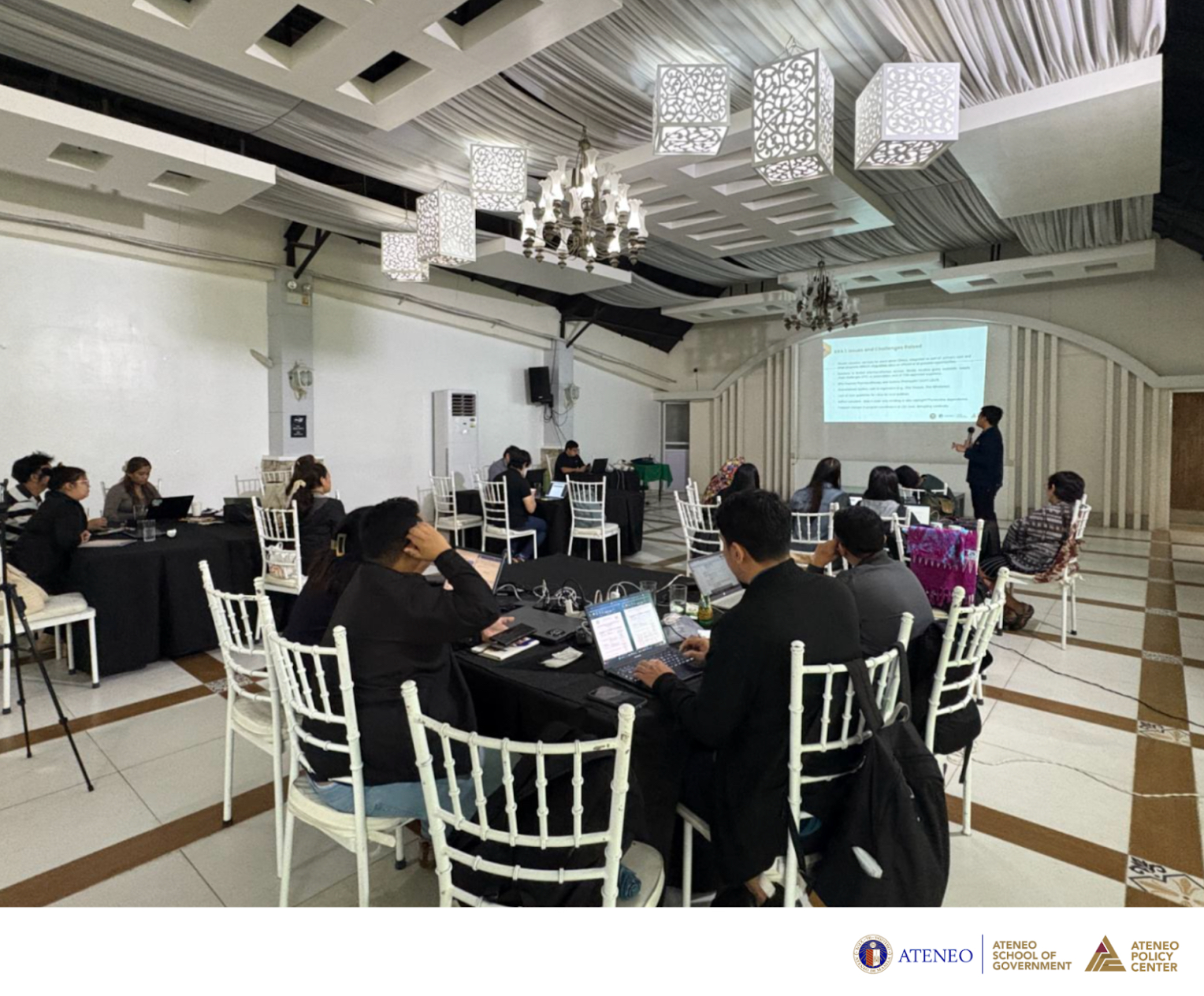
Participants engaged in structured discussions to validate proposed strategies, including the establishment of regional Quitlines, integration of cessation counseling across health programs, development of accredited training systems, and the inclusion of cessation services in financing packages such as PhilHealth. Feedback from this consultation is vital to ensuring that the infrastructure plan reflects the realities of local health systems while remaining ambitious in its vision of achieving a 30% reduction in tobacco use prevalence by 2030.
Closing: Workshop Conclusion
The five-day Strategic Action Planning wrapped up with regional road mapping, synthesis, and commitments that reinforced the Department of Health’s push for a unified approach to tobacco cessation. Over the course of the workshops—from the use of the STEPS-TC tool to the consultation on the Tobacco Cessation Infrastructure Plan 2025–2030—participants identified key gaps, shared solutions, and laid down strategies to expand access to cessation services nationwide. The final sessions on culture-building and long-term planning highlighted the importance of governance, collaboration, and accountability in sustaining momentum. As the activity concluded in Tagaytay, stakeholders affirmed a common goal: to accelerate efforts toward a smoke-free Philippines through decisive leadership and collective action.
Recent News
You may also like these articles

[Hot Off the Press] Arkipelago
New book from the Ateneo Press Arkipelago provides a fascinating and fantastical twist on Philippine politics and history Our country is an archipelago of stories
Protecting Creativity: AIPO and Rizal Library Host Copyright Awareness Session for the Ateneo Community
On March 18, 2026, the Ateneo Intellectual Property Office (AIPO), in collaboration with the Rizal Library, successfully conducted a Copyright Awareness Session held on the

Holy Week 2026 Holidays (Memo # UHR2526-038)
Memo # UHR2526-038 31 March 2026 TO: All Employees FROM: [Sgd] Maria Victoria T Cortez, PhD Vice President for University Human Resources SUBJECT: Holy Week
ASOG’s Tobacco Control initiatives spotlighted in DOH National Technical Working Group for Tobacco Prevention and Control
On March 10 to 12, 2026, the Ateneo School of Government (ASOG), through its research and public policy unit, the Ateneo Policy Center, participated in
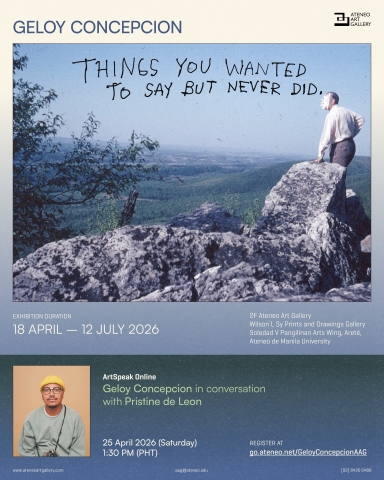
Things You Wanted to Say But Never Did: Geloy Concepcion’s six-year project makes Its exhibition debut at the Ateneo Art Gallery
Geloy Concepcion’s Things You Wanted To Say But Never Did comes to the Ateneo Art Gallery this 18 April 2026. After receiving almost 300,000 messages

[Hot Off the Press] Love If I'm Pretty
New YA Release from the Ateneo Press Love If I’m Pretty tackles the nuances of growing up through complex characters and straightforward prose What do