Ateneo hosts roundtable remembering Francisco “Dodong” Nemenzo and Academic Freedom during the Martial Law years
07 Oct 2025




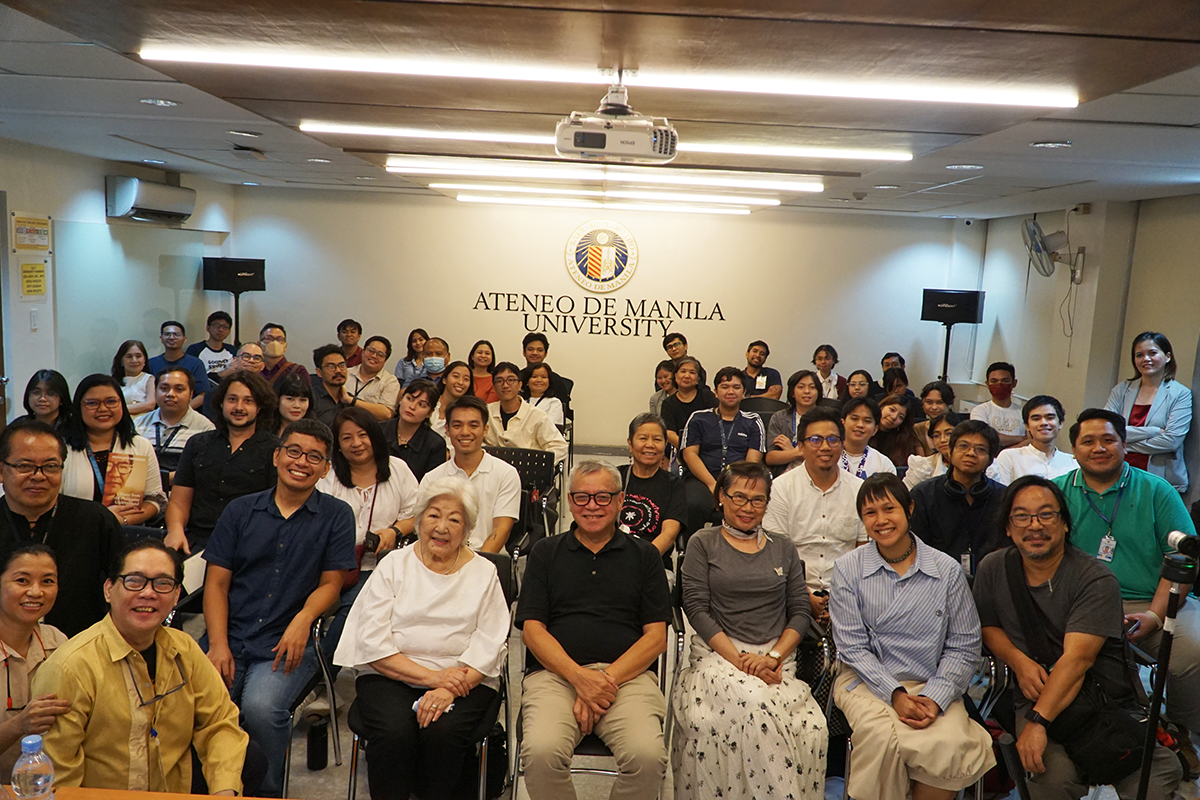
Ateneo de Manila University’s Kritika Kultura, Philippine Studies: Historical and Ethnographic Viewpoints, and Ateneo Martial Law Museum and Library (AMLML) hosted a roundtable discussing academic freedom during the Martial Law years, through the lens of the late Dr Francisco “Dodong” Nemenzo (1939–2024). This event was mainly organized by the Network in Defense of Historical Truth and Academic Freedom. Dr Oscar Campomanes, a faculty member of the Literary and Cultural Studies Program and a representative of the Network, moderated the event.
Dodong Nemenzo was a leading public intellectual, political scientist, academic leader, and tireless defender of academic freedom. He served as dean of the University of the Philippines’ College of Arts and Sciences during the Marcos dictatorship, during which he embodied the struggle to preserve freedom of thought and expression within the academe amidst pervasive repression.
“Like all freedoms, (academic freedom) has value only when actually used,” Nemenzo argued in his seminal 1977 essay “The Continuing Relevance of Academic Freedom.” “And it has usefulness only to those who have ideas to profess which imperil the interests and outrage those in power.”
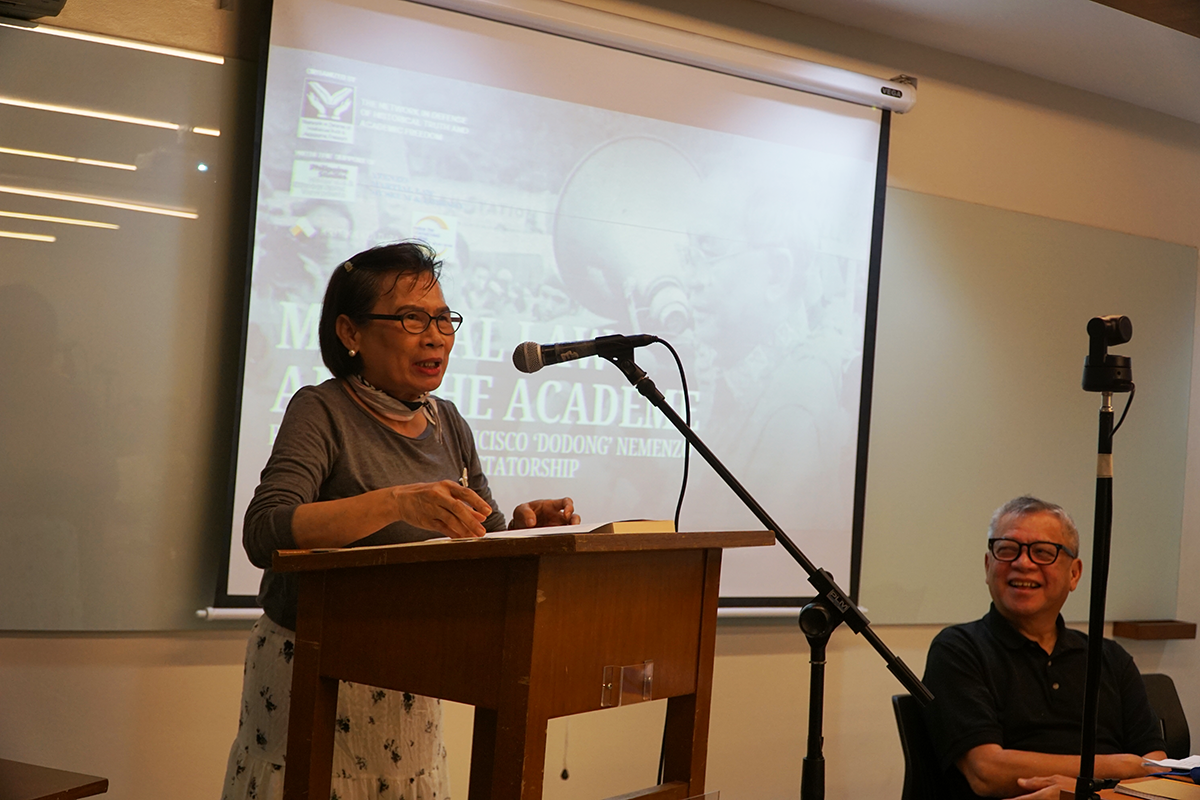
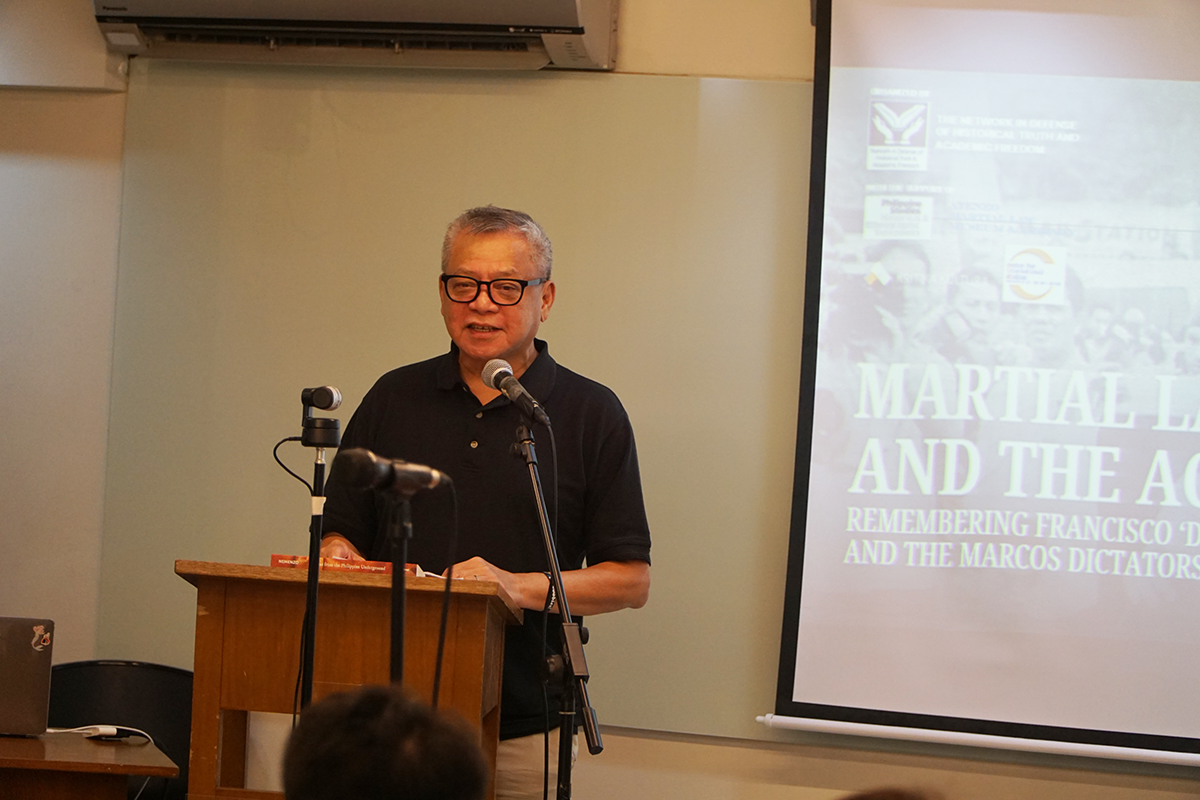
The goal of the roundtable was threefold: to reflect on Nemenzo’s contributions to the defense of academic freedom during Martial Law; to situate his ideas and practice within broader struggles of the academe and Philippine society against dictatorship; and to draw lessons for the current generation of scholars, educators, and students confronting threats to institutional autonomy and freedom of expression. Mr Oliver Quintana, coordinator of AMLML, delivered the opening remarks, drawing connections between the cultures of protest and resistance in Ateneo and UP. Dr Maria Luisa Torres Reyes, editor emerita of Kritika Kultura and a representative of the Network, followed with a brief overview of the organization and its initiatives to promote the importance of academic freedom today.
With this in mind, the organizers invited three speakers to join the panel. These were Dr Patricio “Jojo” Abinales, formerly professor at the School of Pacific and Asian Studies at the University of Hawai’i at Mānoa; Dr Michael D Pante, associate professor at the Department of History, Ateneo de Manila University, and the editor-in-chief of the journal Philippine Studies: Historical and Ethnographic Viewpoints; and Dr Sol Iglesias, associate professor of Political Science at the University of the Philippines.
The roundtable also commemorates the anniversary of the 1972 declaration of Martial Law, and was originally scheduled to take place on 22 September (a day after the anniversary) before Typhoon Opong (Bualoi) caused its postponement to 1 October 2025.
To start, Dr Abinales presented findings from his ongoing research into everyday authoritarianism in the academy during Martial Law. Dr Abinales narrated how, based on his research, early on, many in the academe actually worked with the dictatorship, because they genuinely believed in its supposed agenda of bringing about a “new society.”
“But this is all bupkis, as my Jewish students would say,” Dr Abinales stated. And it soon became clear that these academics were powerless against the machinery of the dictatorship.
“These authoritarians had the police and spies backing them up while their left and liberal opponents had nothing but their voices,” he stated. “Or as the human rights lawyer Rene Saguisag used to put it, ‘how can we be a threat, when the regime is armed to the teeth, and we are only armed with our teeth.’”
Meanwhile, Dr Pante provided a historical perspective on the struggles of Philippine universities under the Marcos dictatorship. In his lecture, based on an excerpt from his upcoming book, he connected these struggles to the challenges these universities face under the current Marcos Jr presidency.
He explained how the dictator tried to woo teachers with stories of how he was supposedly a teacher himself, before he found himself on a different career path towards the presidency. Despite this, and despite his regime's supposed high regard for educators, it actually ended up doing them a disservice.
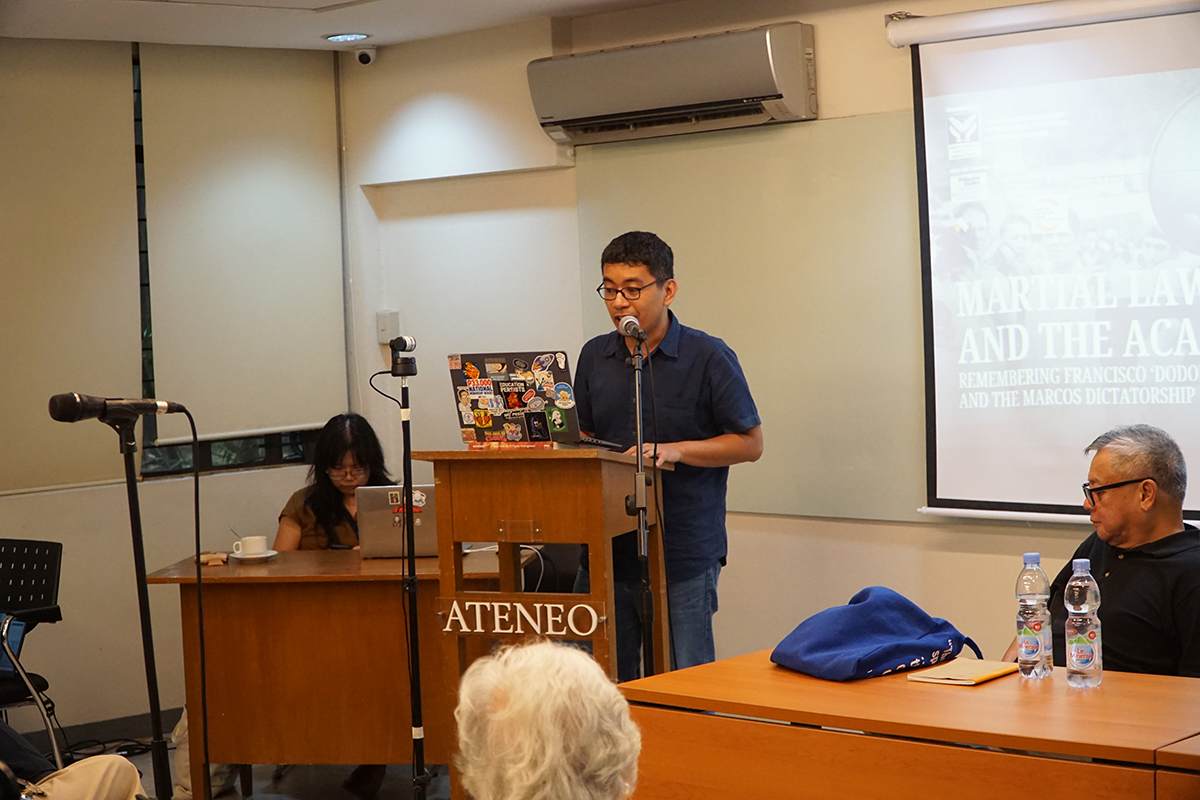
“Despite the president's seeming positive regard for educators, his regime's policies actually turned a once popular occupation into a class of overpaid and underpaid laborers, viewed by many as the do-it-all servants of the state,” Dr Pante explained. “For all of Marcos's lofty ambitions for Philippine education, he neglected the most vital component of that dream, the people who would be the main implementers of whatever pedagogical reforms he wanted, the teachers."
In particular, Dr Pante paid emphasis on the negative effects on higher education. During Martial Law, institutions of higher education – especially state colleges and universities – came further and further under state surveillance and control. This continued even after Martial Law was lifted, with the Education Act of 1982 (Batas Pambansa blng. 232), which led to the creation of the board of higher education to “make policy recommendations regarding the planning and management of the integrated system of higher education and its continuing evaluation.”
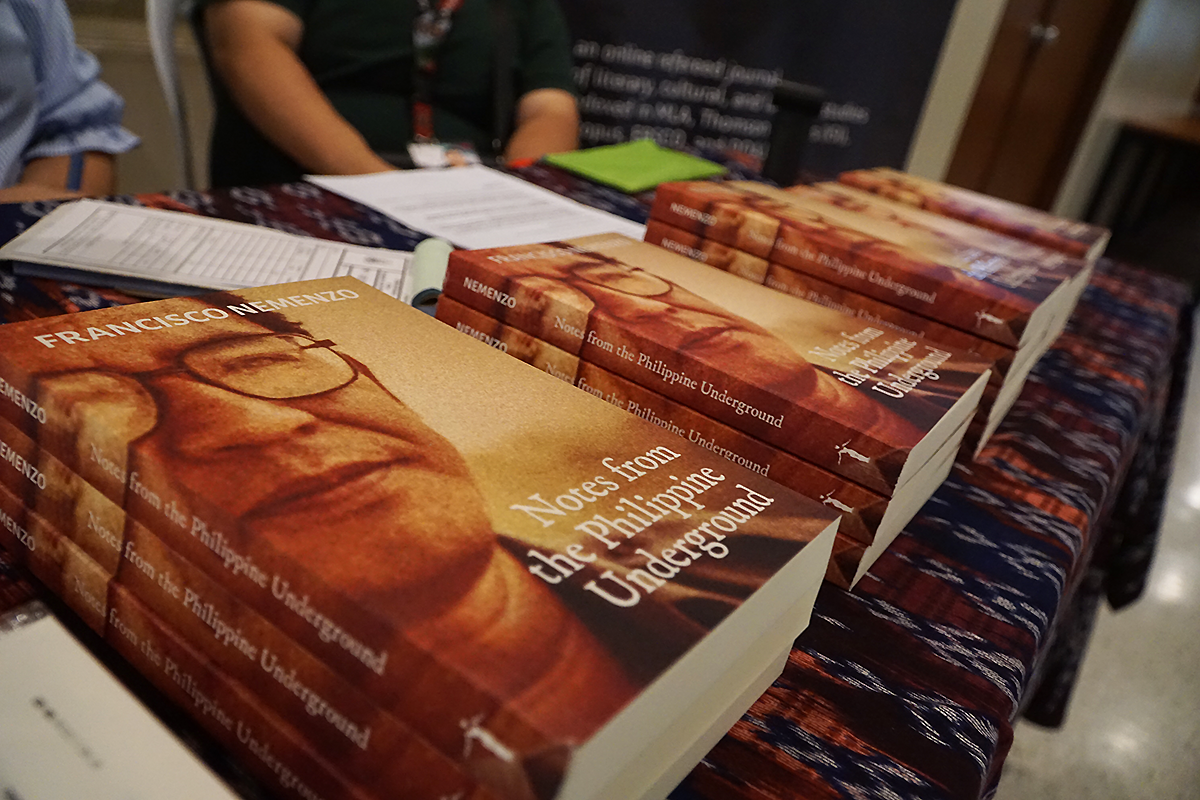
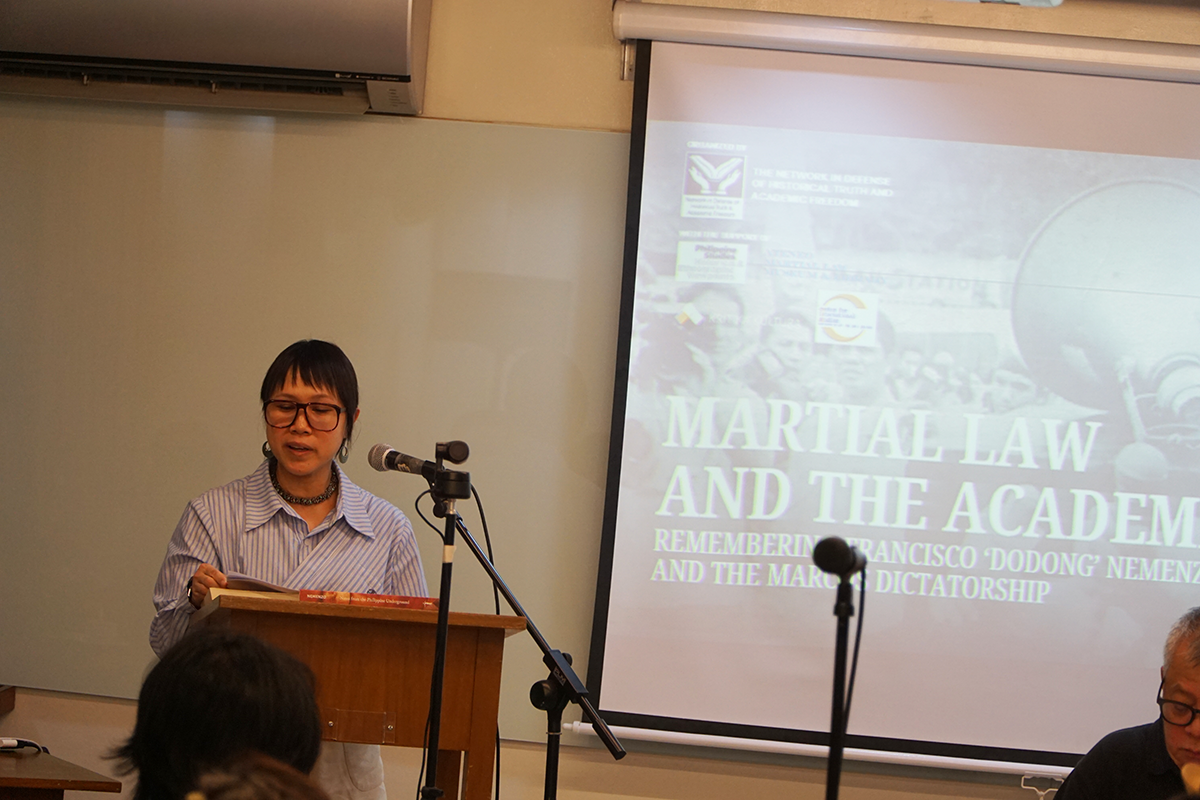
Finally, Dr Iglesias provided commentary on Nemenzo’s final book, Notes from the Philippine Underground, copies of which were also available at the event.
In addition to the theme of academic freedom, particularly UP during the Cold War, Iglesias also touched upon the development of the left and Philippine communism under Martial Law, as covered in the book, including what Nemenzo called “left-wing” pluralism that emerged from the era instead of the expected united front.
On the latter, part of it is due to the Communist Party of the Philippines failing to capitalize on events when the elder Marcos was about to fall, while underestimating the mobilizing power of Corazon Aquino and the Reform the Armed Forces Movement (RAM) mutiny that led to the EDSA “People Power” Revolution.
Following the fall of the dictatorship, leftists, centrists, and even the right saw the Aquino government as only transitional and they were all trying to make it a transition to their desired futures. This meant that the united front that Nemenzo had expected to form never materialized and what happened instead was fragmentation.
And this fragmentation continues today, as can be seen by how the “Drug War” or former President Rodrigo Duterte remained popular at first, even as it clearly hurt the marginalized classes.
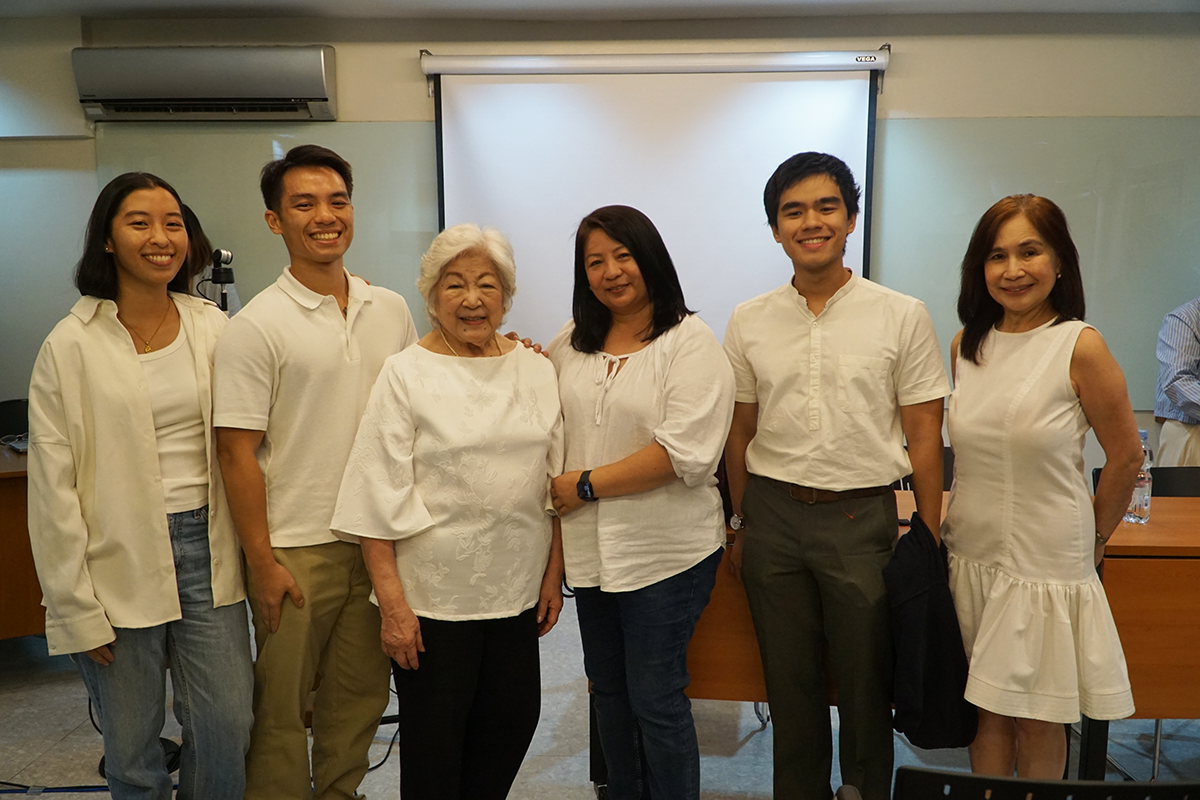
Following the speakers, Ana Maria “Princess” Nemenzo, National Coordinator for WomanHealth Philippines and Citizens’ Initiative for an Independent Foreign Policy, and Dodong Nemenzo’s widow, took to the podium to provide a response to the speakers’ discussions and share her own personal reflections about Martial Law and the dictatorship.
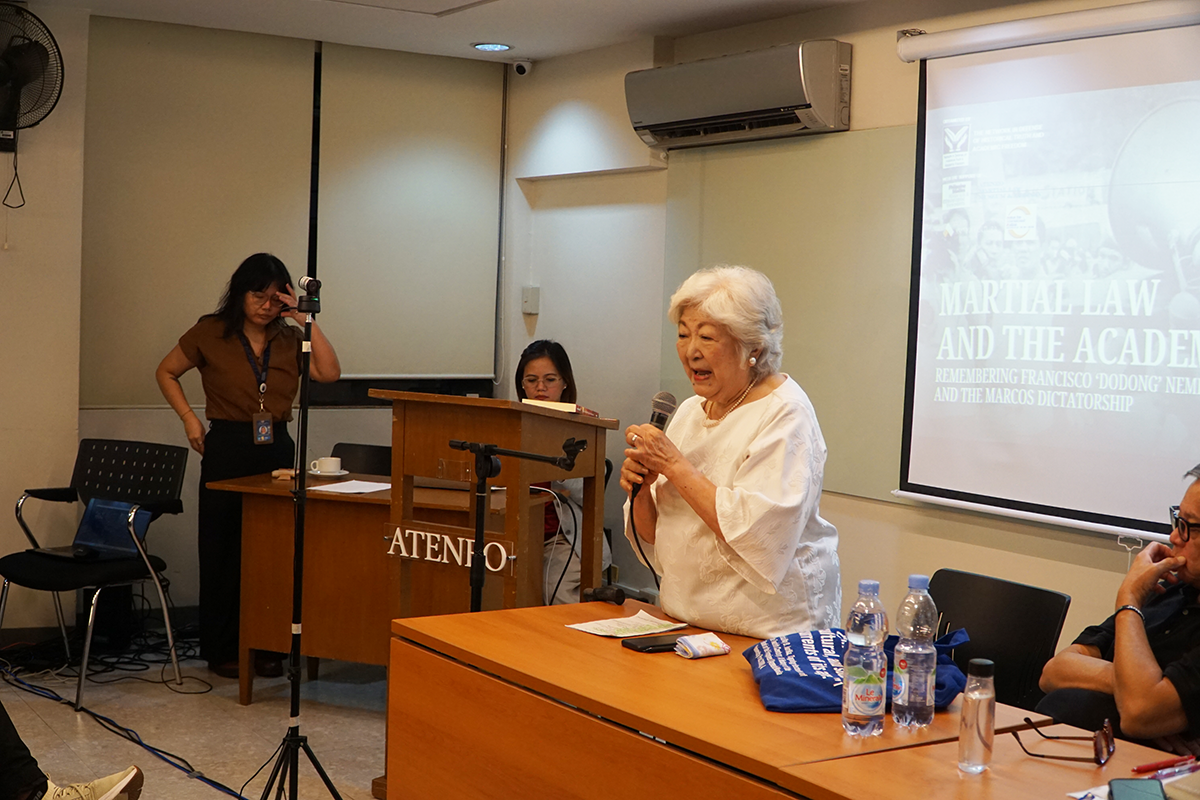
She shared many personal stories of her and Dodong’s experiences during the period leading up to Martial Law, including how the McCarthyism of the time was already negatively affecting them (including how her husband lost his visa, just as he was going to the US to study, resulting him them going to the UK instead). These stories also included their experiences when they were detained under Martial Law, as well as after.
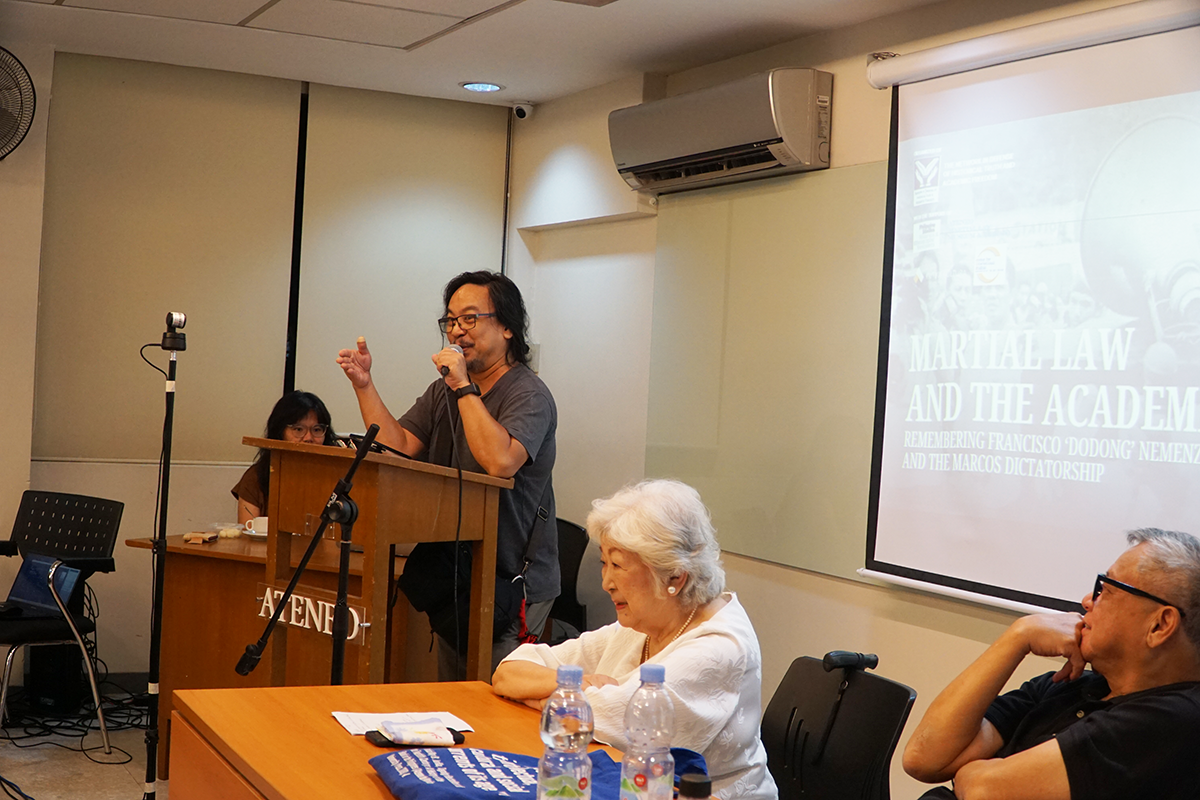
After Ms Nemenzo, a short but lively open forum commenced.
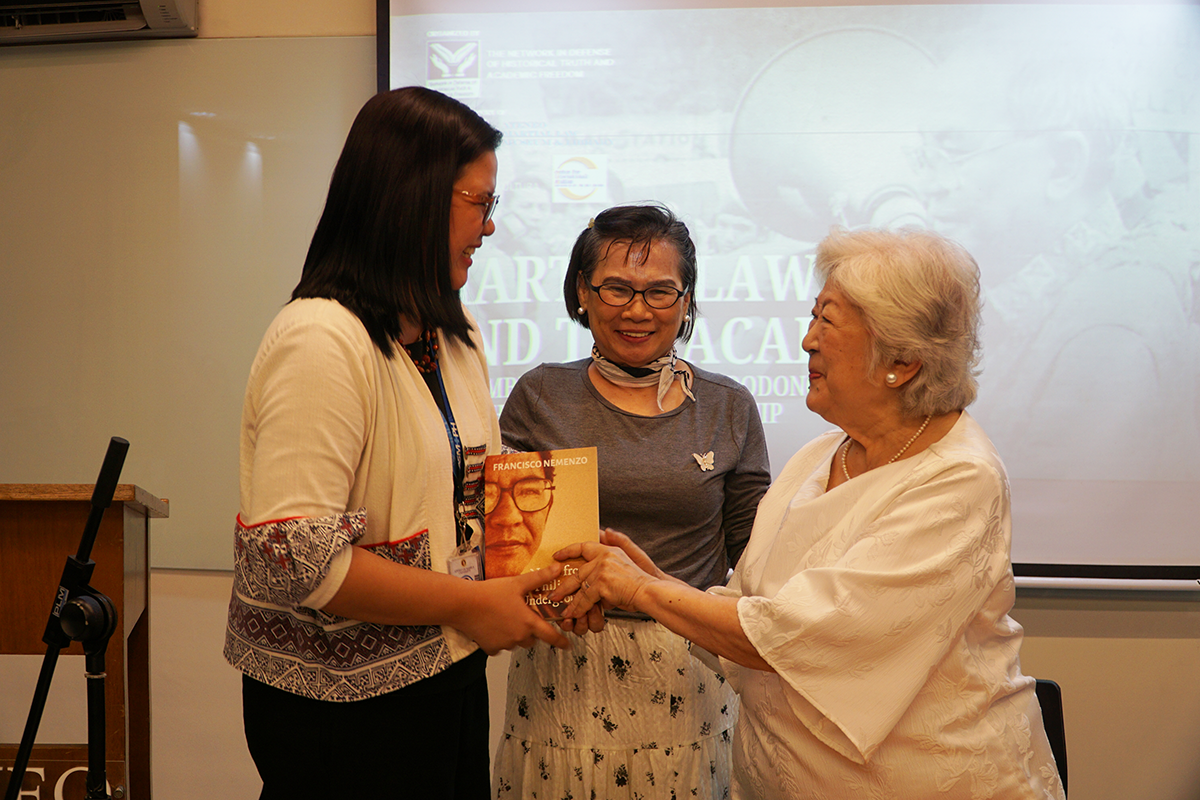
Following this, Ms Joenabie Arevalo of the Rizal Library came forward to receive the donation of Dodong Nemenzo’s book, Notes from the Philippine Underground from Princess Nemenzo and the rest of the Nemenzo family.
Finally, the event was closed by Dr Ramon “Bomen” Guillermo, director of the Center for International Studies (CIS) at the UP Diliman, who reiterated how Dodong Nemenzo’s experiences drove home the importance of academic freedom.
Recent News
You may also like these articles
[Hot Off the Press] Arkipelago
New book from the Ateneo Press Arkipelago provides a fascinating and fantastical twist on Philippine politics and history Our country is an archipelago of stories
Protecting Creativity: AIPO and Rizal Library Host Copyright Awareness Session for the Ateneo Community
On March 18, 2026, the Ateneo Intellectual Property Office (AIPO), in collaboration with the Rizal Library, successfully conducted a Copyright Awareness Session held on the
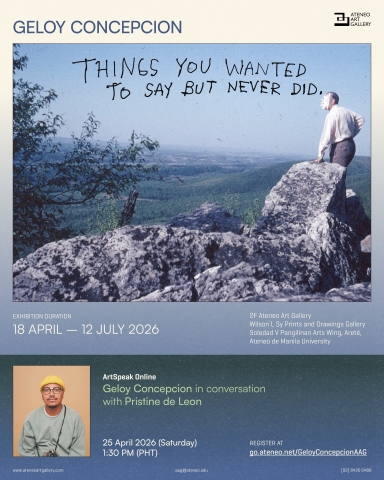
Things You Wanted to Say But Never Did: Geloy Concepcion’s six-year project makes Its exhibition debut at the Ateneo Art Gallery
Geloy Concepcion’s Things You Wanted To Say But Never Did comes to the Ateneo Art Gallery this 18 April 2026. After receiving almost 300,000 messages
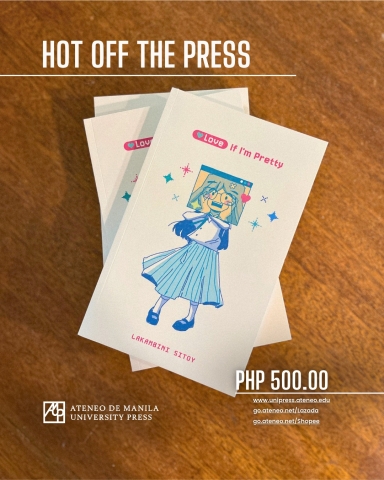
[Hot Off the Press] Love If I'm Pretty
New YA Release from the Ateneo Press Love If I’m Pretty tackles the nuances of growing up through complex characters and straightforward prose What do
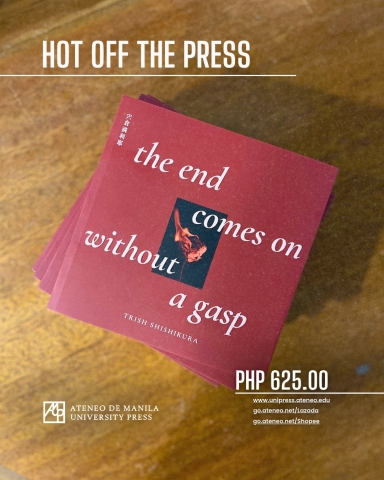
[Hot Off the Press] the end comes on without a gasp
the end comes on without a gasp: Trish Shishikura’s debut poetry collection arrives from Ateneo de Manila University Press (Bughaw) Ateneo de Manila University Press
QS Subject Rankings 2026: Ateneo in top 100 for theology; ranked in 7 subject areas
Ateneo de Manila University is among the top institutions in seven subject areas, and among the top 100 for theological and religious studies, according to