ASOG Conducts Second Cohort of Leadership and Governance in Tobacco Control Executive Course in Iloilo Province
16 Oct 2025

The Ateneo School of Government (ASOG), through the Ateneo Policy Center (APC) and Executive Education (ExecEd), conducted the on-site delivery of the second cohort of the Leadership and Governance in Tobacco Control (LGTC) Executive Course from October 8 to 10, 2025, at Park Inn Hotel, Iloilo City.
The course aims to strengthen the capacity of local leaders to advance effective tobacco control initiatives within their communities. Participants included representatives from 18 local government units (LGUs) in the Province of Iloilo and the Provincial Health Office. The cohort was composed of two vice mayors, thirteen councilors, thirteen municipal health officers, and eight other LGU staff.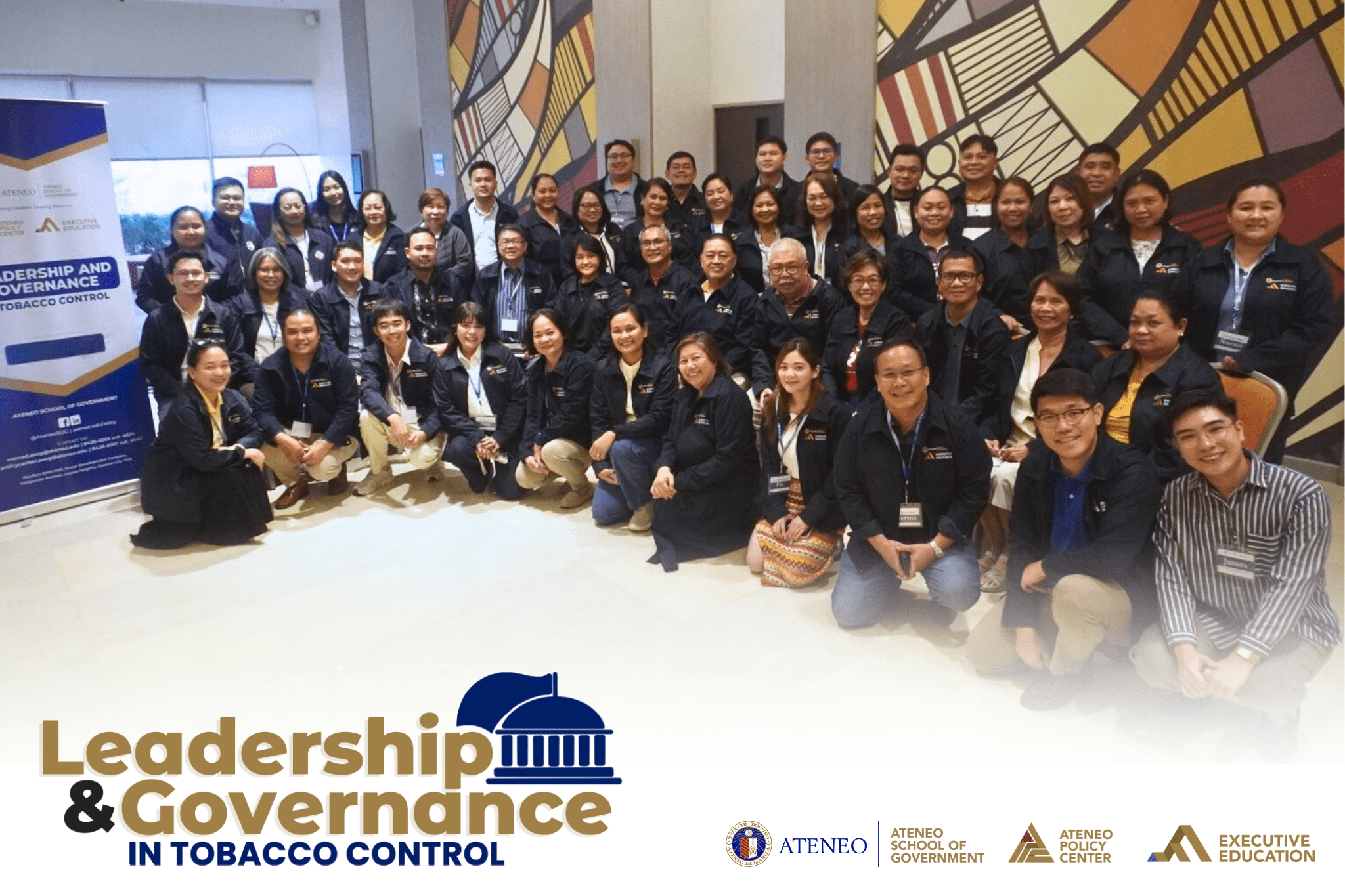
Day 1: Tobacco Prevention and Control 101 and Advancing Robust Tobacco Control Measures and Strategies
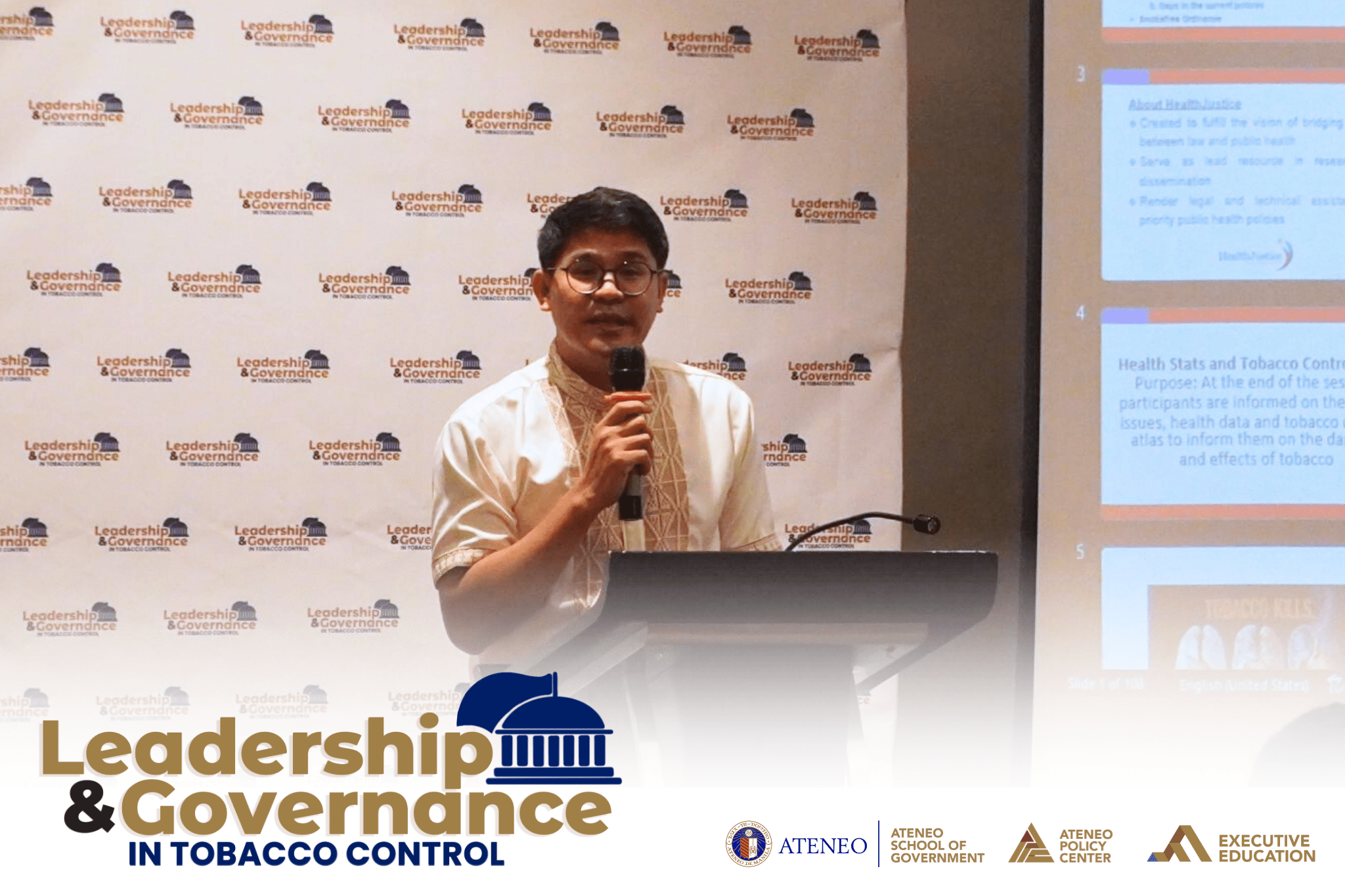
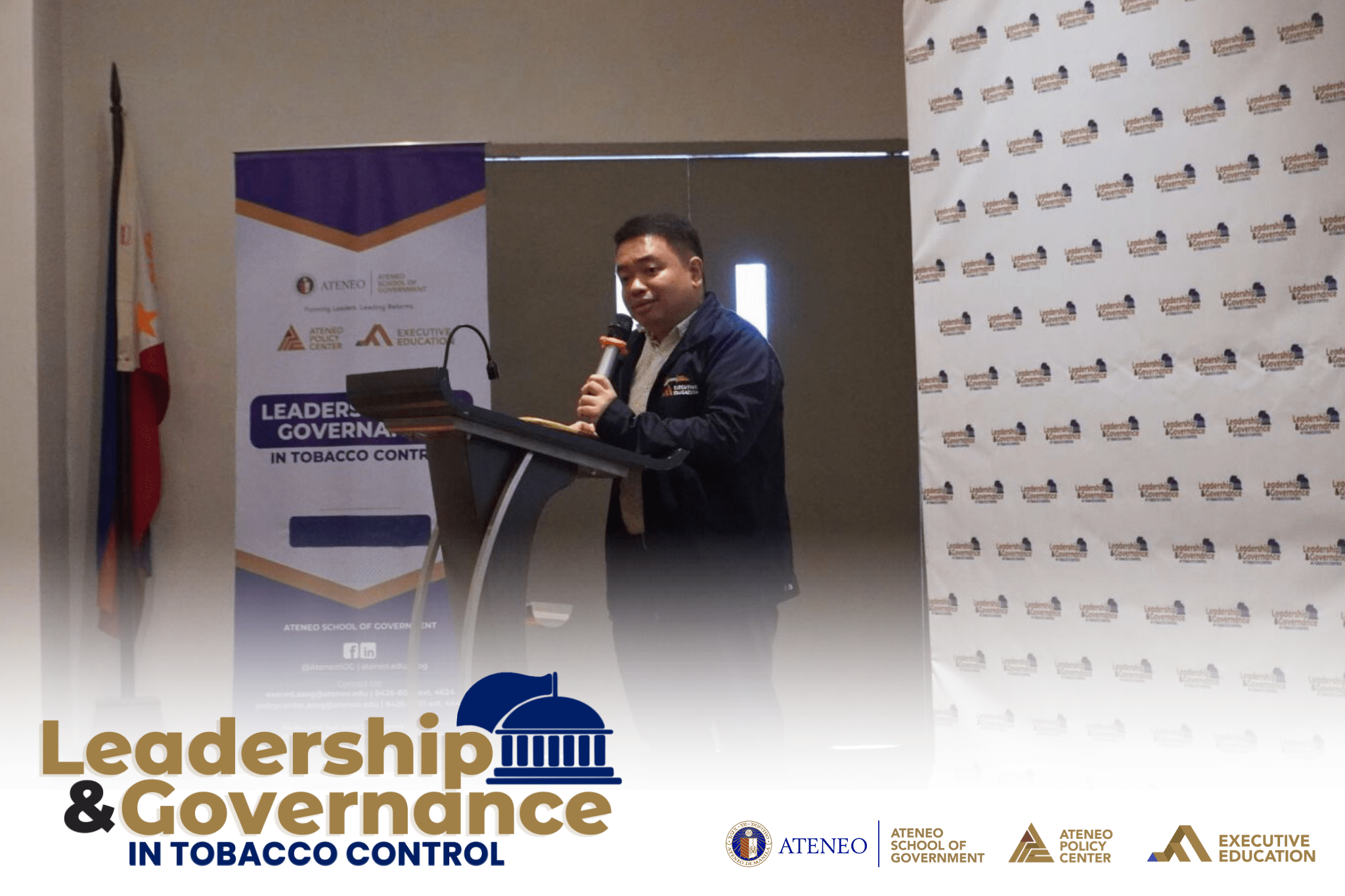
The morning session on Day 1 was opened by Atty. Benedict G. Nisperos, legal consultant of HealthJustice Philippines, who facilitated the first module titled “Tobacco Prevention and Control.” In his lecture, Atty. Nisperos provided an overview of the global and local landscape of tobacco use, emphasizing its far-reaching socio-economic and public health impacts. He explained how tobacco consumption continues to strain healthcare systems, reduce productivity, and perpetuate poverty—particularly in developing countries like the Philippines. Framing tobacco control as a global governance issue, Atty. Nisperos highlighted its alignment with international efforts to promote sustainable health and development goals. He also underscored the importance of evidence-based policies—such as taxation, advertising regulation, and smoke-free environments—in reducing tobacco use and protecting vulnerable populations. Beyond public health, he noted that strong tobacco control measures can prevent costly comorbidities like cardiovascular diseases, cancer, and respiratory illnesses, ultimately alleviating the financial and social burdens they impose on individuals and the nation’s economy.
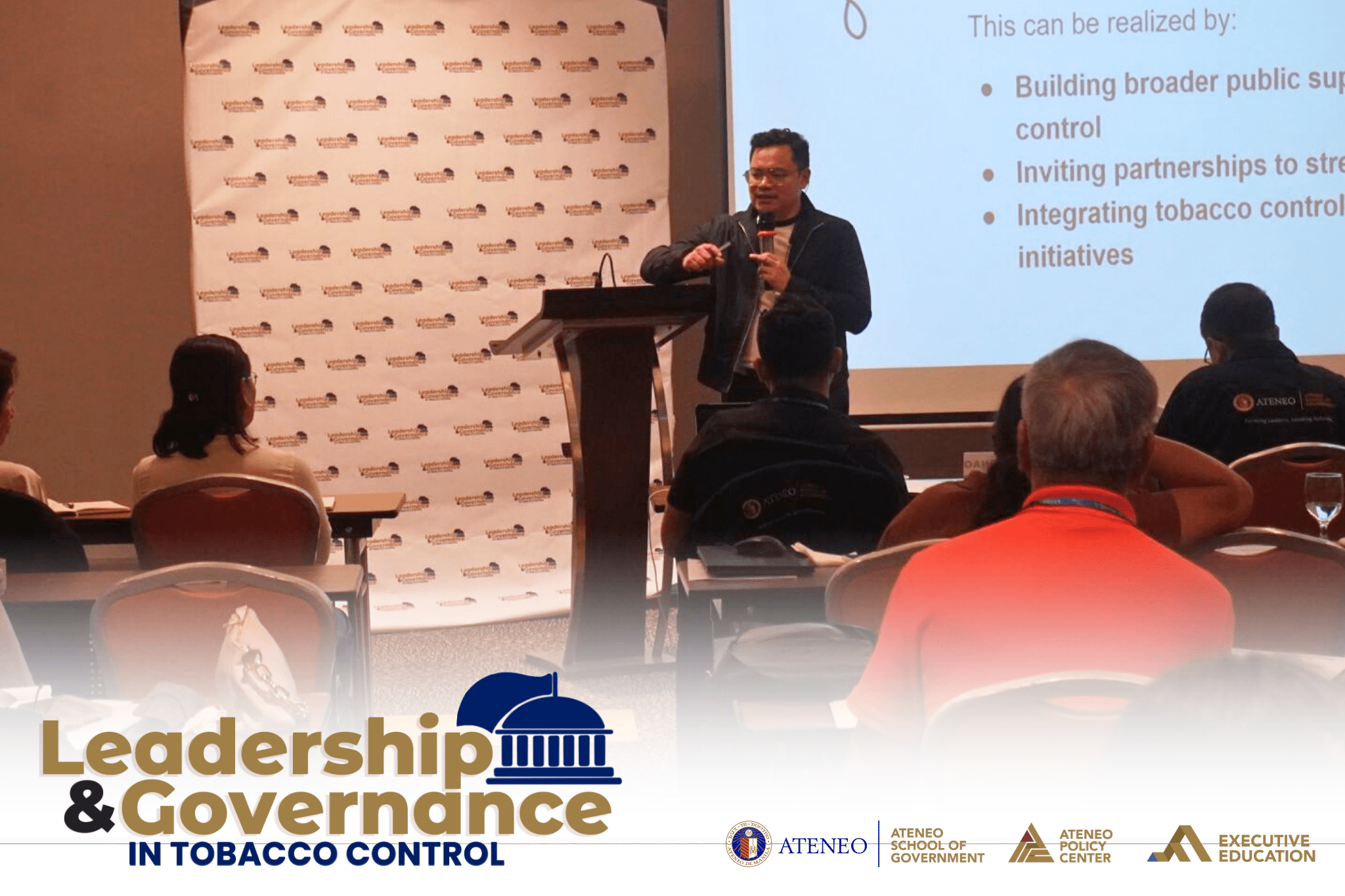
Following this was Atty. Jacky T. Sarita, Managing Director of HealthJustice Philippines, who led Module 2, titled “Advancing More Robust Tobacco Control Measures.” In his session, Atty. Sarita introduced participants to several successful global and local initiatives that have significantly advanced tobacco control efforts, including the Tobacco-Free Generation movement, the MPOWER framework of the World Health Organization (WHO), and other innovative tools and policy models. He discussed how these frameworks provide practical strategies for local governments to design, implement, and strengthen comprehensive tobacco control policies, emphasizing the importance of community engagement and political will in sustaining such efforts. Atty. Sarita encouraged participants to think creatively and collaboratively in crafting local ordinances and policy mechanisms that go beyond compliance—initiatives that not only restrict tobacco use but also foster healthier, smoke-free environments. Through real-world examples and guided discussions, the session inspired participants to envision how evidence-based governance can translate into impactful local action for tobacco control.
Day 2: Tobacco Industry Interference and Ethical Leadership for Impact on Tobacco Control
The second day of the program opened with Mr. Ralph P. Degollacion, Project Manager of HealthJustice Philippines, who delivered Module 3, titled “Tobacco Industry Interference (TII).” In his session, Mr. Degollacion delved into the strategies employed by the tobacco industry to undermine public health policies, influence governance, and weaken tobacco control initiatives. He discussed the tactics of manipulation and misinformation that have historically impeded policy progress and emphasized the importance of transparency, vigilance, and adherence to ethical standards among government officials and advocates. To reinforce the lessons, participants engaged in a group activity where they analyzed various case scenarios of industry interference and proposed concrete solutions to counter such tactics. The exercise allowed participants to apply their learnings in realistic contexts, deepening their understanding of how to uphold integrity and protect public interest in policymaking.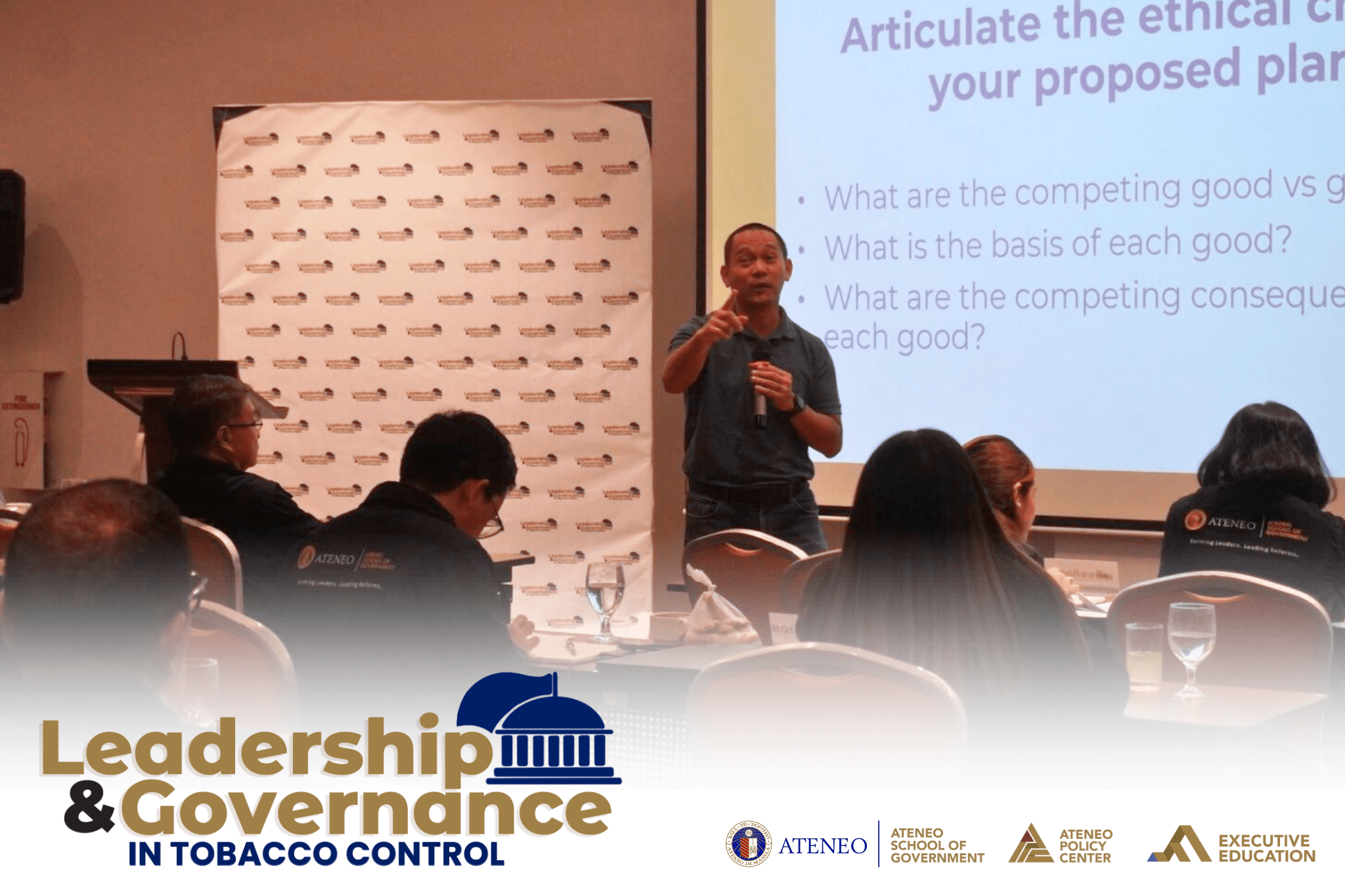
To close the day, Mr. Mark Lawrence B. Cruz of the Ateneo School of Government (ASOG) facilitated a reflective session that invited participants to revisit their motivations for working in tobacco control and to reflect on the role of ethical leadership in public service. His presentation explored the philosophy of ethics, power and accountability, urging participants to view leadership not merely as authority but as a platform for advocacy and social transformation. Mr. Cruz underscored that by embodying ethical and values-based leadership, local leaders can become true champions of tobacco control, driving meaningful change and inspiring healthier, more empowered communities.
Day 3: Using Theory of Change as a Monitoring, Evaluation and Learning (MEL) Tool and Modeling Good Tobacco Prevention and Control at the Local Level
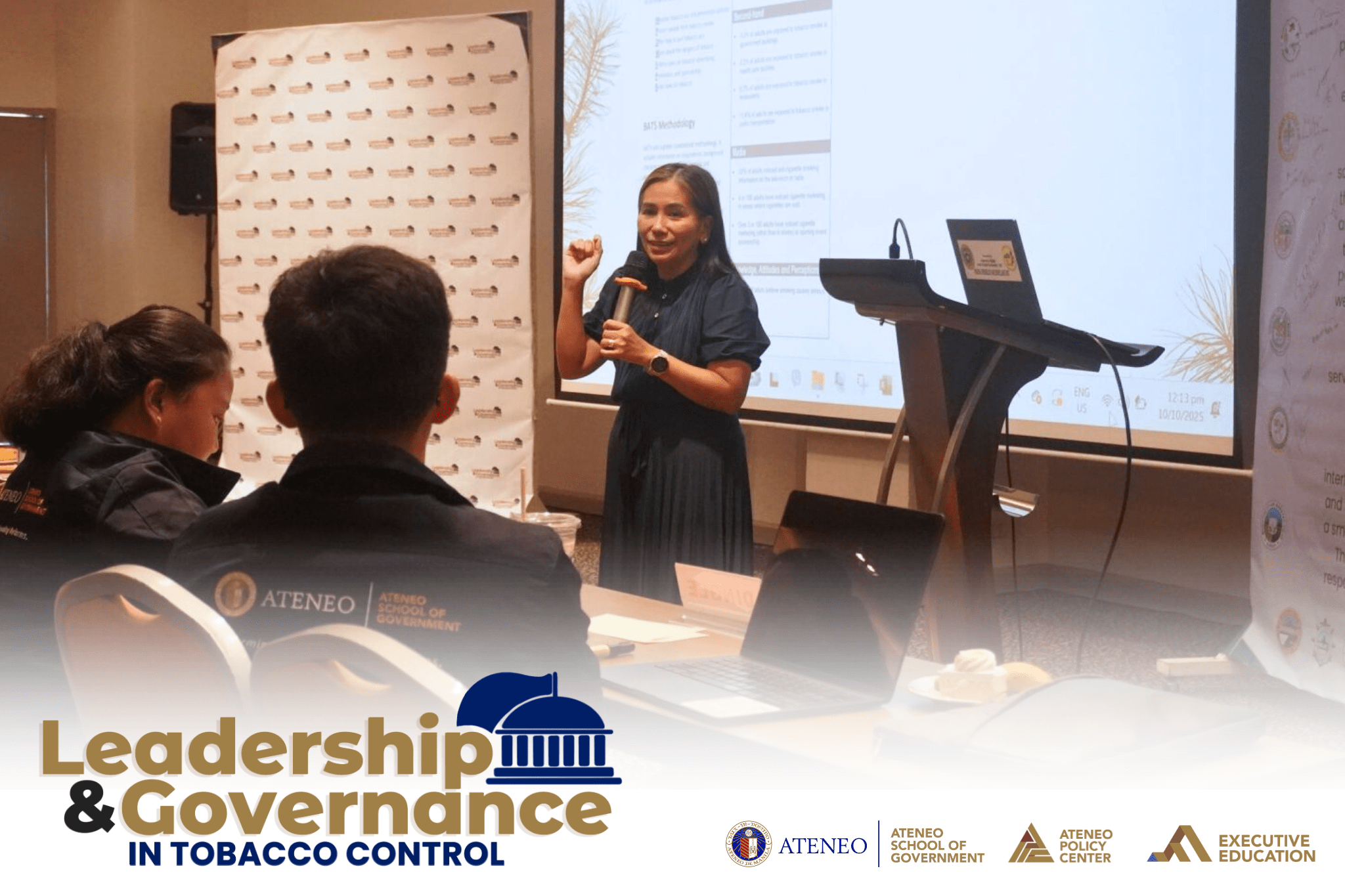
The third and final day of the program featured Dr. Donnabel T. Panes, City Epidemiologist and Medical Officer IV from the Health Services Office of Baguio City, who led an insightful session on the monitoring and evaluation (M&E) aspect of tobacco control. Drawing from her extensive experience in public health management, Dr. Panes emphasized that M&E goes beyond data collection—it serves as a vital mechanism for learning, research, and accountability in advancing effective tobacco control initiatives. She discussed how systematic monitoring enables local governments to assess program impact, identify gaps, and ensure that interventions remain evidence-based and responsive to community needs. Dr. Panes also highlighted the importance of designing transformative tobacco control strategies that consider each locality’s unique strengths, limitations, and historical context, encouraging participants to adopt adaptive, data-driven approaches that promote sustainability. By integrating continuous evaluation with responsive leadership, she underscored, local governments can build more resilient and effective public health systems that not only curb tobacco use but also strengthen overall
To wrap up the course modules, the last topic was led by representatives of three LGU learning partners for the course: Mr. Iñigo D. Garingalao from Iloilo City, Mr. Oliver R. Enriquez from the Provincial Government of Bataan, and Ms. Jasmin P. Lagahit from the Metropolitan Manila Development Authority (MMDA). Each presentation included discussions between the learning partners and the participants, particularly the sharing of insights, challenges, and best practices of tobacco control at the local level.
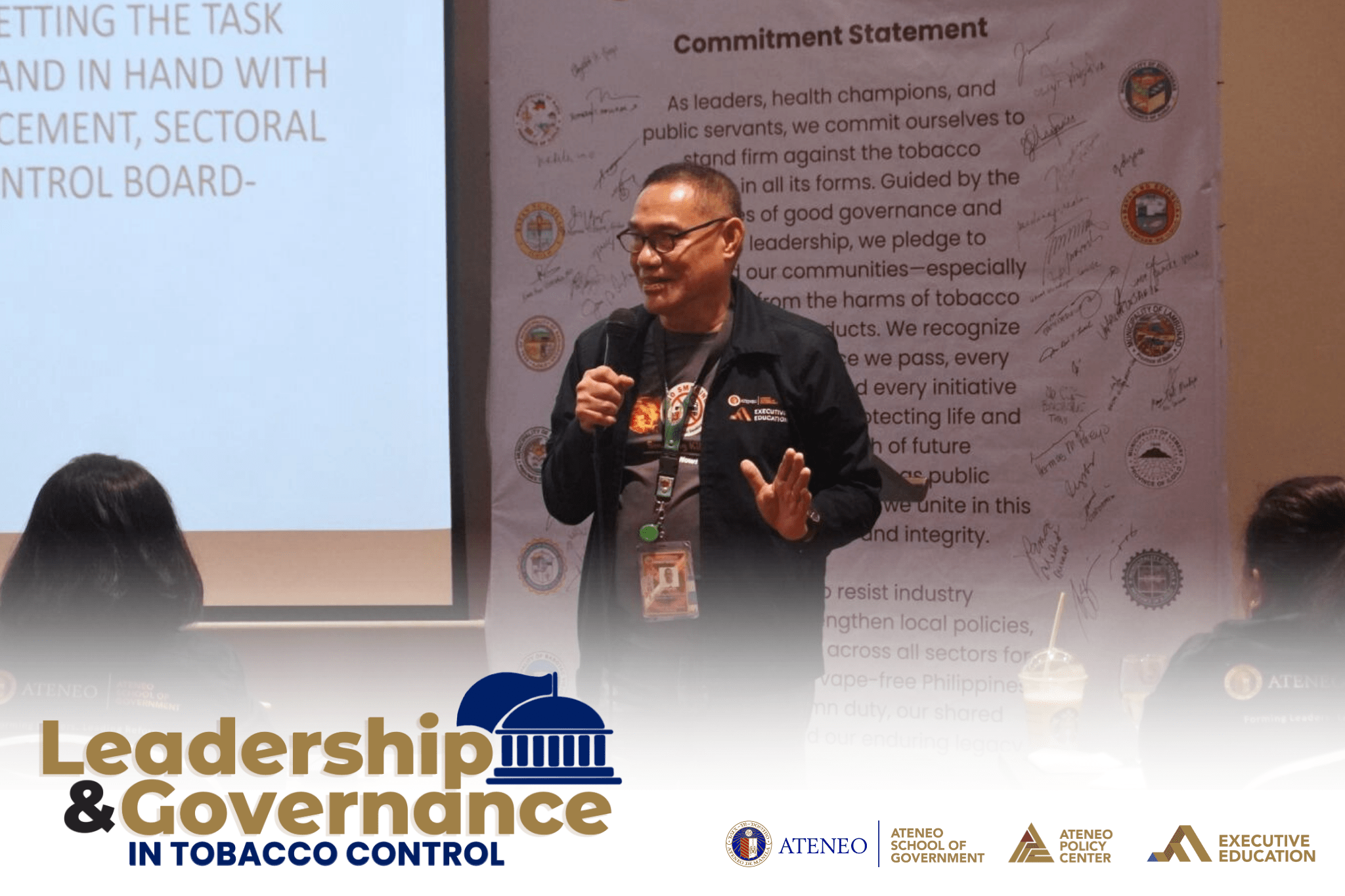
Mr. Iñigo D. Garingalao, Chief of the Iloilo City Agriculture Office, discussed the different key actors and roles that come with tobacco control implementation at the local level. In his discussion, he highlighted the process of creating an effective smoking task force and the components that help sustain the current activities of the Iloilo City Anti-Smoking Task Force (ICAST).
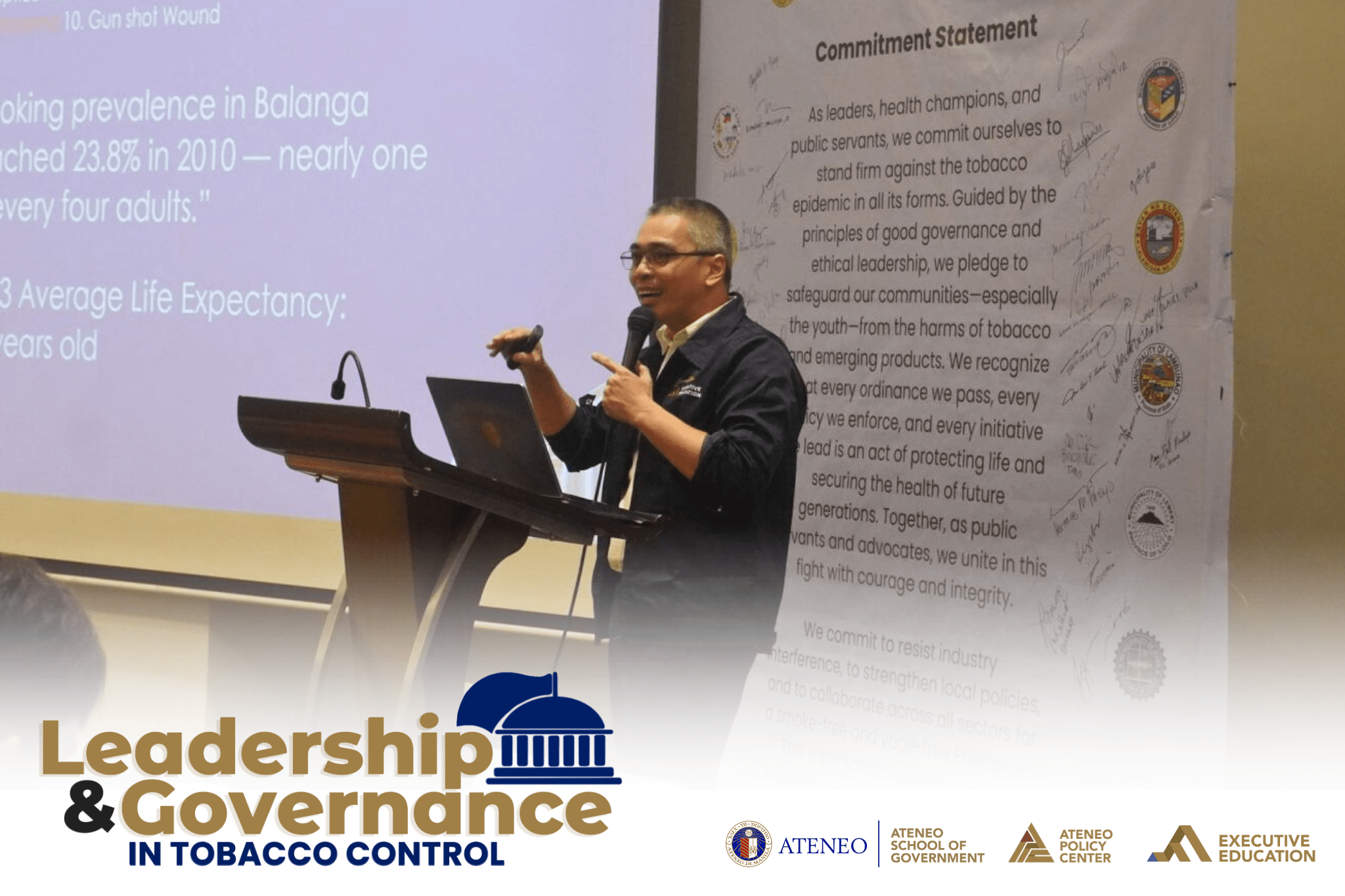
Following up the session was Mr. Oliver R. Enriquez and his presentation on Balanga City’s struggle, where a local ordinance developed into a province-wide initiative that ushered their famous Tobacco Free Generation. He shared creative ways they dealt with policy limitations and reminders for LGUs who might want to adapt similar policies in the future.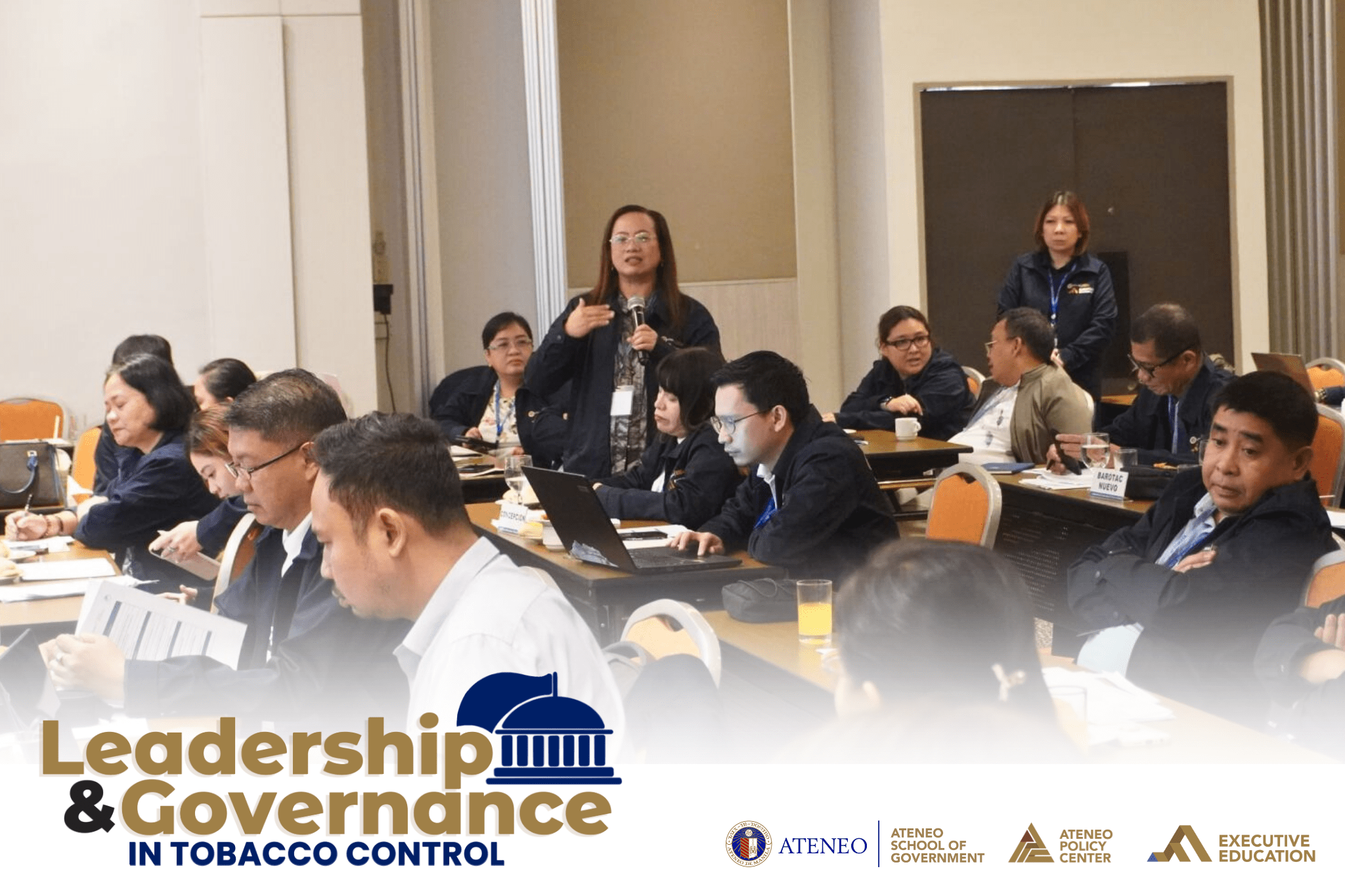
Last but not least, Ms. Jasmin P. Lagahit provided examples from her long experience in tobacco control of her several encounters with the tobacco industry and how each case was handled. Stronger ordinances, tricky cases of implementation, and gaps in previous practices and her learnings from it were a few of the many topics she covered as a learning partner.
Moving Forward
The Leadership and Governance in Tobacco Control (LGTC) Executive Course is set to culminate on November 21, 2025, in Iloilo Province. The fourth and final day will feature the presentation of participants’ final outputs, showcasing the insights and policy proposals they have developed throughout the program. The event will conclude with a graduation ceremony recognizing their successful completion of the course and their commitment to advancing tobacco control in their respective localities. As the program draws to a close, it is hoped that the strengthened collaboration between local government leaders, regional offices, and civil society organizations will pave the way for more comprehensive and sustainable tobacco control policies across the remaining cities and municipalities of Iloilo.
Recent News
You may also like these articles

[Hot Off the Press] Arkipelago
New book from the Ateneo Press Arkipelago provides a fascinating and fantastical twist on Philippine politics and history Our country is an archipelago of stories
Protecting Creativity: AIPO and Rizal Library Host Copyright Awareness Session for the Ateneo Community
On March 18, 2026, the Ateneo Intellectual Property Office (AIPO), in collaboration with the Rizal Library, successfully conducted a Copyright Awareness Session held on the
Holy Week 2026 Holidays (Memo # UHR2526-038)
Memo # UHR2526-038 31 March 2026 TO: All Employees FROM: [Sgd] Maria Victoria T Cortez, PhD Vice President for University Human Resources SUBJECT: Holy Week
ASOG’s Tobacco Control initiatives spotlighted in DOH National Technical Working Group for Tobacco Prevention and Control
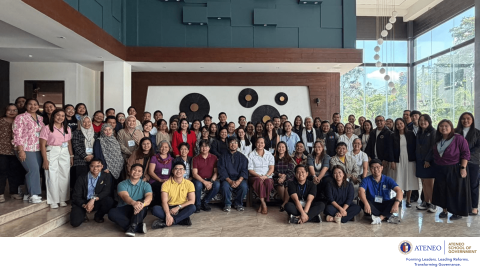
On March 10 to 12, 2026, the Ateneo School of Government (ASOG), through its research and public policy unit, the Ateneo Policy Center, participated in
Things You Wanted to Say But Never Did: Geloy Concepcion’s six-year project makes Its exhibition debut at the Ateneo Art Gallery
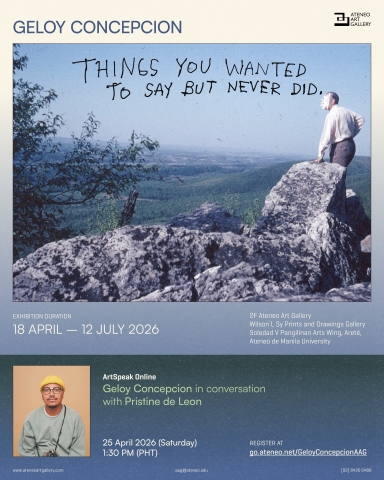
Geloy Concepcion’s Things You Wanted To Say But Never Did comes to the Ateneo Art Gallery this 18 April 2026. After receiving almost 300,000 messages

[Hot Off the Press] Love If I'm Pretty
New YA Release from the Ateneo Press Love If I’m Pretty tackles the nuances of growing up through complex characters and straightforward prose What do