Ateneo CCE conducts outcomes-based education and AI training for resource persons
06 Nov 2025

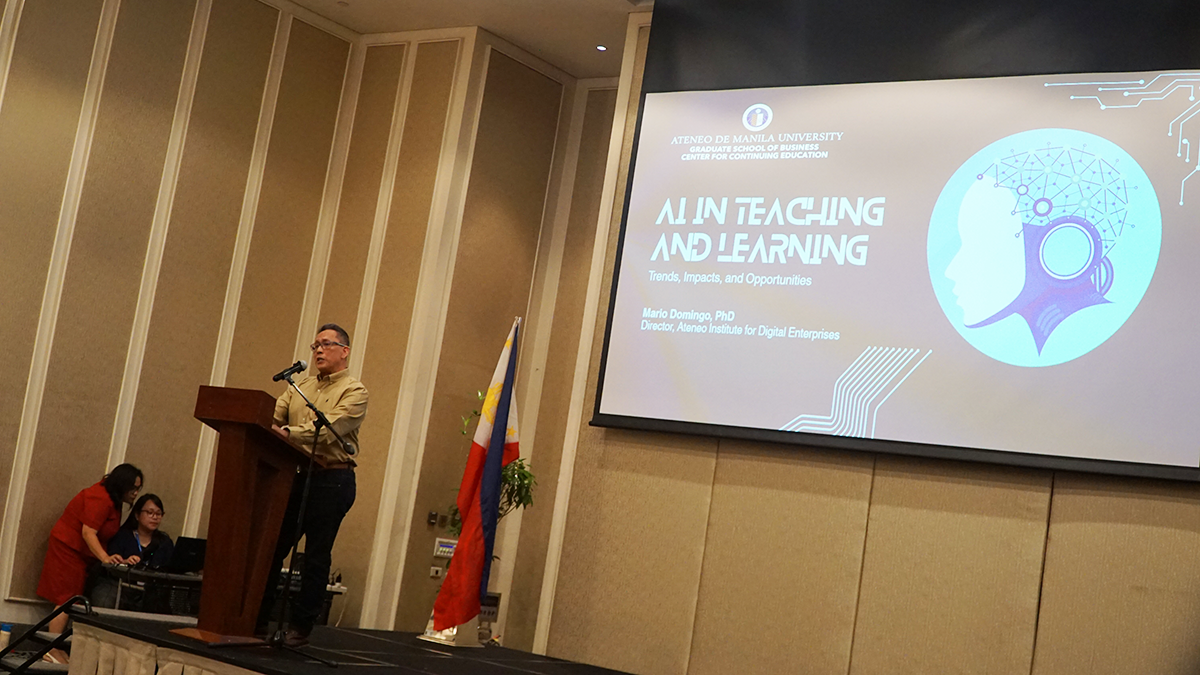
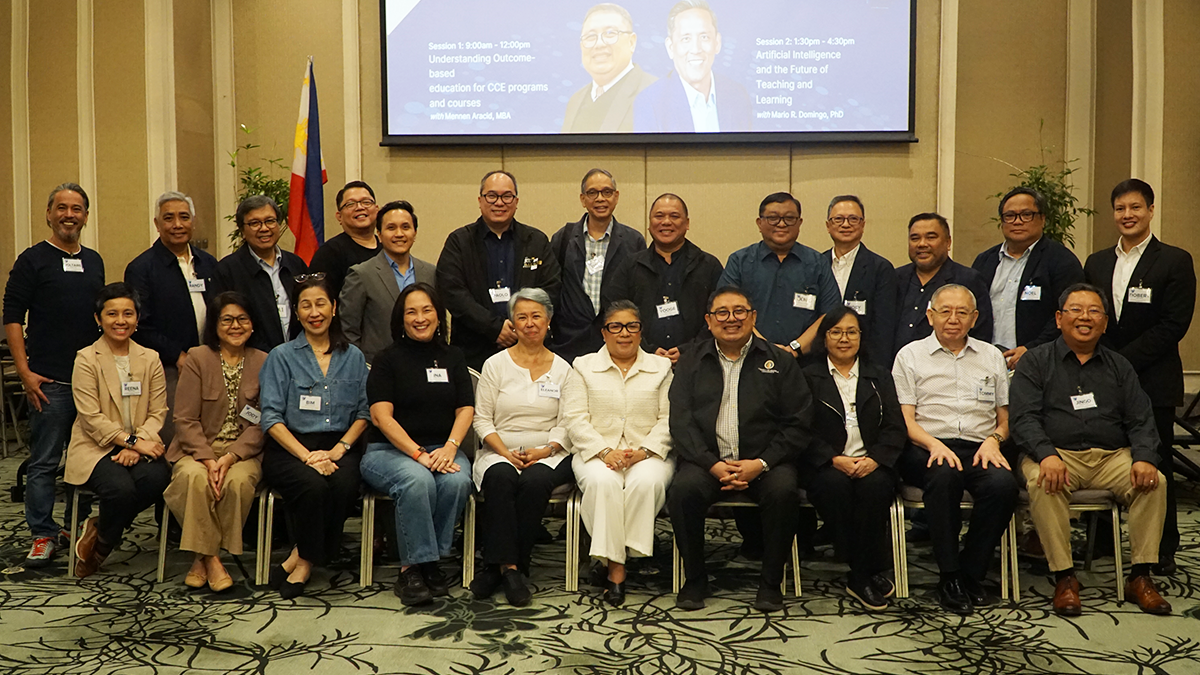
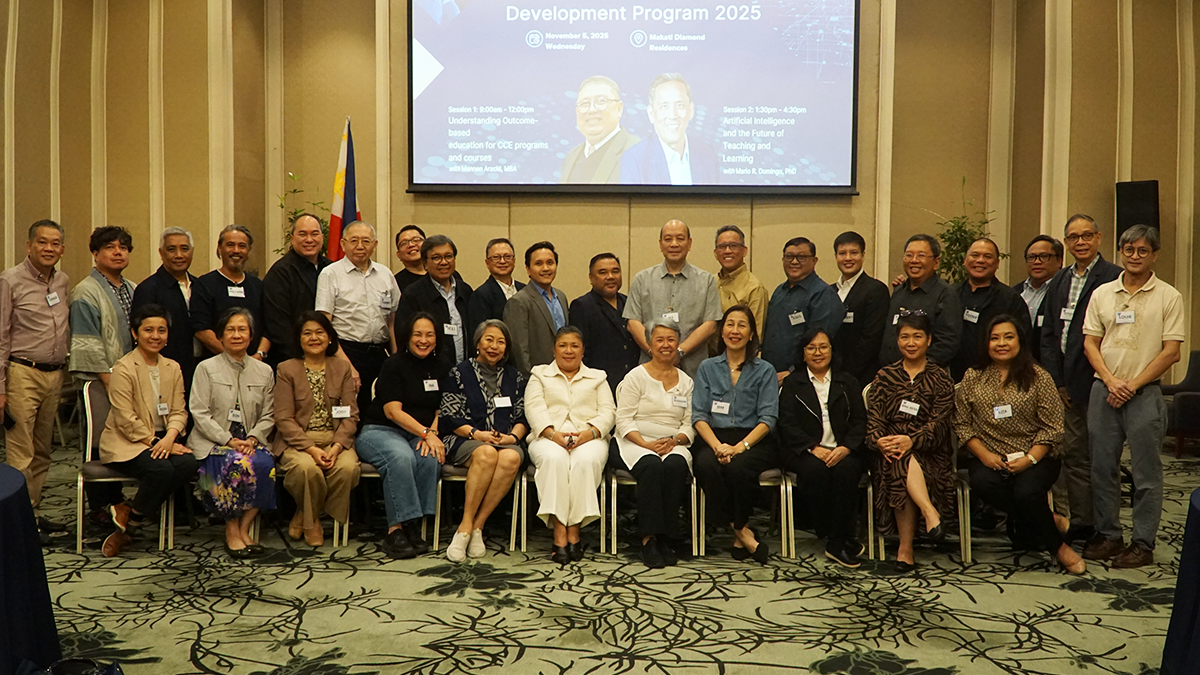
The Ateneo Graduate School of Business's Center for Continuing Education (CCE) hosted a development program for its resource persons on 5 November 2025. The program focused on getting CCE's resource persons up to speed on outcome-based education (OBE) and the proper use of generative artificial intelligence (GenAI) in education.
The development program was held at the Legaspi Ballroom of the Makati Diamond Residences in Makati.
Mennen Aracid, MBA, led the first session with his presentation titled "Understanding Outcome-based education (OBE) for CCE programs and courses." Mr Aracid is an Assistant Professor at the Ateneo Graduate School of Business, where he teaches Operations and Information Technology. He has over 25 years of experience in education and has worked as a human resource and training consultant both locally and internationally, and has worked with various organizations, including Inspire Leadership Consultancy, consultph.com, and the ASEAN University Network.
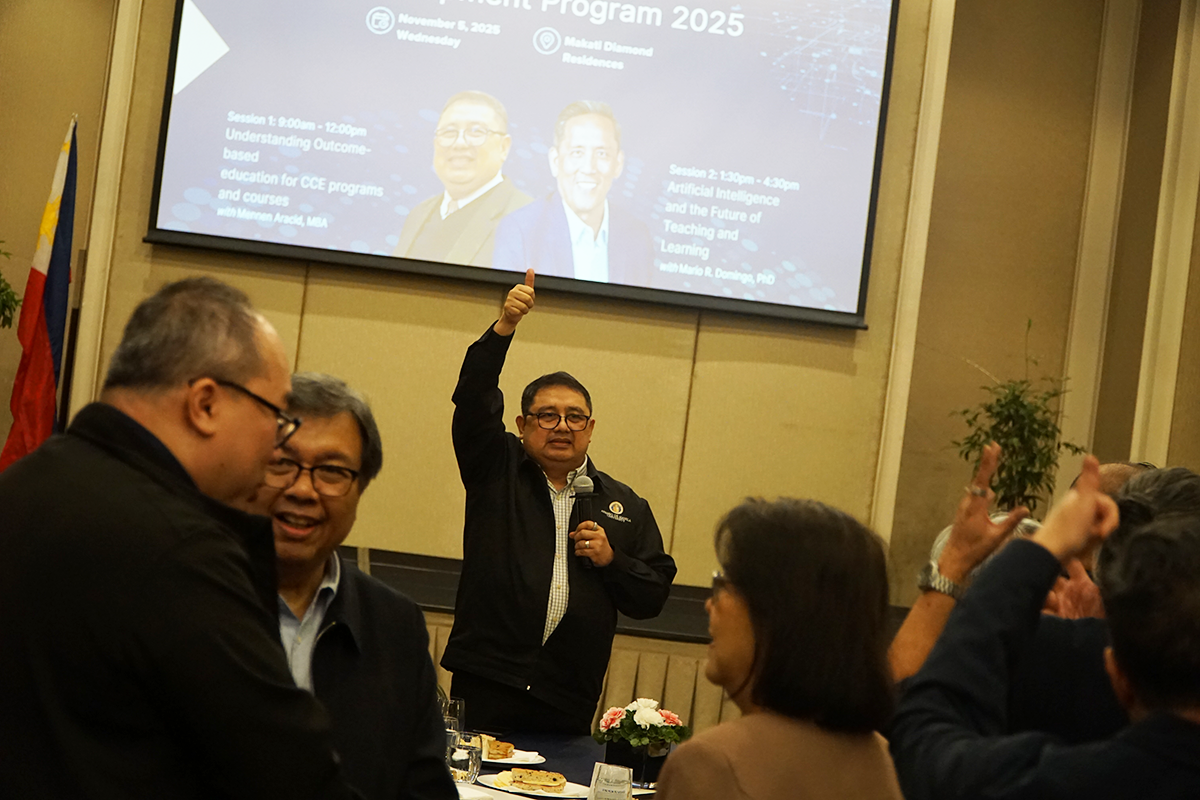
OBE is an educational theory that bases each part of an educational system around goals or outcomes. Unlike traditional approaches to teaching it focuses on what students should be able to know and do by the end of a learning experience, rather than just on the content covered.
Mr Aracid explained that this means that content is no longer the most important thing in the class, rather the teacher and how they deliver the content is just as important. OBE, after all, has no single specified style of teaching or assesment; instead, classes, opportunities, and assessments should all help students achieve the specified outcomes. As such teachers need to be able to change roles into instructor, trainer, facilitator, and/or mentor based on the outcomes targeted.
To help demonstrate this, Mr Aracid had the CCE resource persons break out into group for a number of exercises. These were designed to help the participants learn each other's approaches to learning and consuming information as well as how they dealt with problems.
Additionally, approaching teaching and learning this way can help keep teachers prepared to deal with GenAI in the classroom, which was the focus of the second session in the afternoon.
Mario R Domingo, PhD, led the afternoon session. Dr Domingo is the Director of the Ateneo Institute for Digital Enterprises. He is also the founder of several technology companies in Singapore and the Philippines in the areas of Artificial Intelligence and Advanced Analytics, including DARC Labs, an AI-healthcare tech R&D center where they work on imaging and genomics diagnostics. Prior to this, he spent many years in the telecom and defense & manufacturing technologies industries in the United States.
His presentation, titled "AI in Teaching and Learning: Trends, Impacts, and Opportunities" focused on what teachers need to do to adapt to GenAI in the classroom.
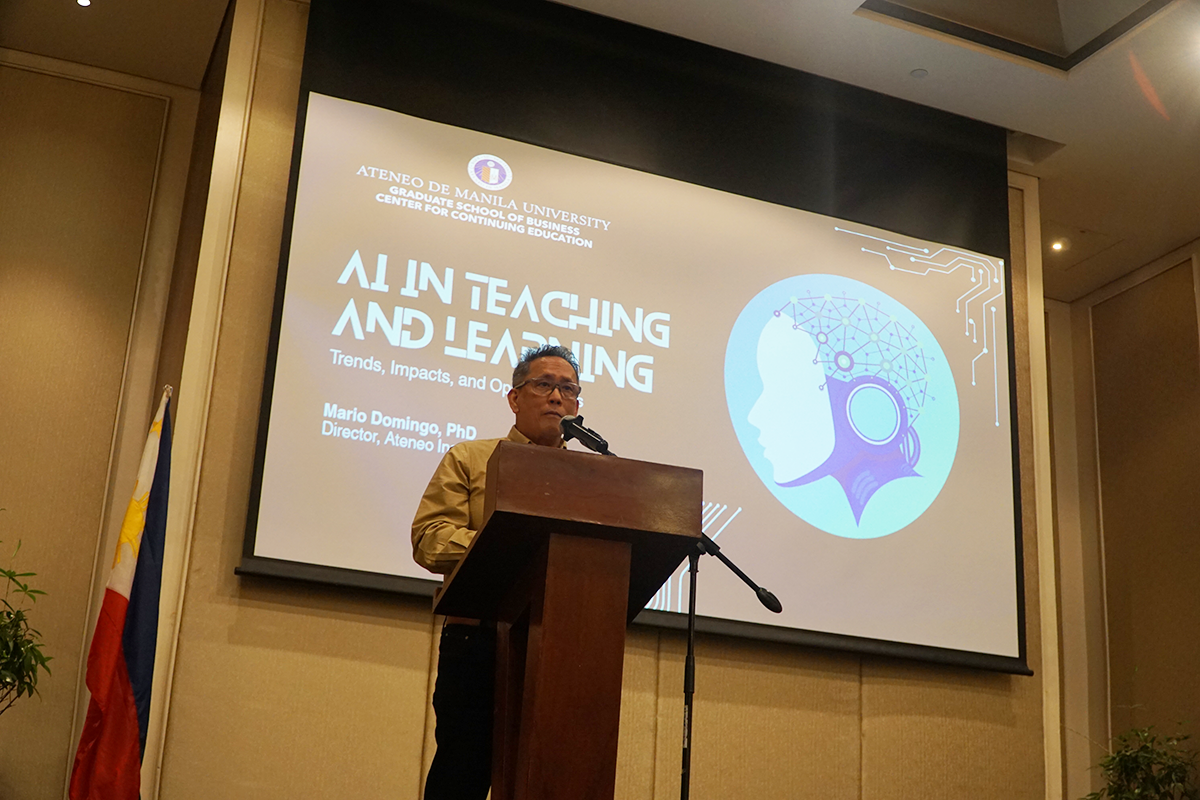
Dr Domingo stated that GenAI is not just a tool, rather it's a new medium for thinking, teaching, and learning. With this in mind, teachers need to shift from being just lecturers, to actual mentors and curators. He quoted research showing that educators are now increasingly guiding critical thinking, ethical reasoning, and context, instead of just presenting content.
With GenAI now handling more of the background content creation, educators need to start designing learning experiences instead of just delivering content. This is because the work that goes into designing personalized learning experiences, interactive activities, and assessments is something that AI cannot fully replicate.The
With this in mind, educators must focus on new competencies when dealing with AI: critical thinking & ethical judgement; AI literacy, and data interpretation.
These help both the teacher and eventually the students to deal with AI's bias and equity issues. After all, AI system inherit biases from their training data, potentially reinforcing cultural, gender, and linguistic stereotypes in learning content, grading, or recommendation systems.
As part of this Dr Domingo game some examples of how he both crafts his own prompts, as well as how he questions these and forces the AI to explain how it got to the answers. Through this, he explained to the resource persons how they can create guardrails when they prompt AI, while at the same time using the same principles to question students and check if they understood the reasons for why AI gave them the results of their own prompts.
Through process like these – critical thinking, verification, cross-checking – both the educators and their students can become more guarded against AI hallucinations and misinformation.
Finally, Dr Domingo concluded his presentation with a short segment on the state of AI governance, or more precisely the lack of it, in the Philippines at the moment. Here, he called on the need for good AI governance, calling it the "invisible infrastructure" that holds innovation up by helping build trust in the technology and resilience and misuse.
Recent News
You may also like these articles

[Hot Off the Press] Arkipelago
New book from the Ateneo Press Arkipelago provides a fascinating and fantastical twist on Philippine politics and history Our country is an archipelago of stories
Protecting Creativity: AIPO and Rizal Library Host Copyright Awareness Session for the Ateneo Community
On March 18, 2026, the Ateneo Intellectual Property Office (AIPO), in collaboration with the Rizal Library, successfully conducted a Copyright Awareness Session held on the
Holy Week 2026 Holidays (Memo # UHR2526-038)
Memo # UHR2526-038 31 March 2026 TO: All Employees FROM: [Sgd] Maria Victoria T Cortez, PhD Vice President for University Human Resources SUBJECT: Holy Week
ASOG’s Tobacco Control initiatives spotlighted in DOH National Technical Working Group for Tobacco Prevention and Control
On March 10 to 12, 2026, the Ateneo School of Government (ASOG), through its research and public policy unit, the Ateneo Policy Center, participated in

Things You Wanted to Say But Never Did: Geloy Concepcion’s six-year project makes Its exhibition debut at the Ateneo Art Gallery
Geloy Concepcion’s Things You Wanted To Say But Never Did comes to the Ateneo Art Gallery this 18 April 2026. After receiving almost 300,000 messages

[Hot Off the Press] Love If I'm Pretty
New YA Release from the Ateneo Press Love If I’m Pretty tackles the nuances of growing up through complex characters and straightforward prose What do