The Excluded at the Heart of Mission: Ateneo hosts TALAB lecture by 2024 Bukas Palad Awardee Fr Flavie Villanueva SVD
04 Nov 2025






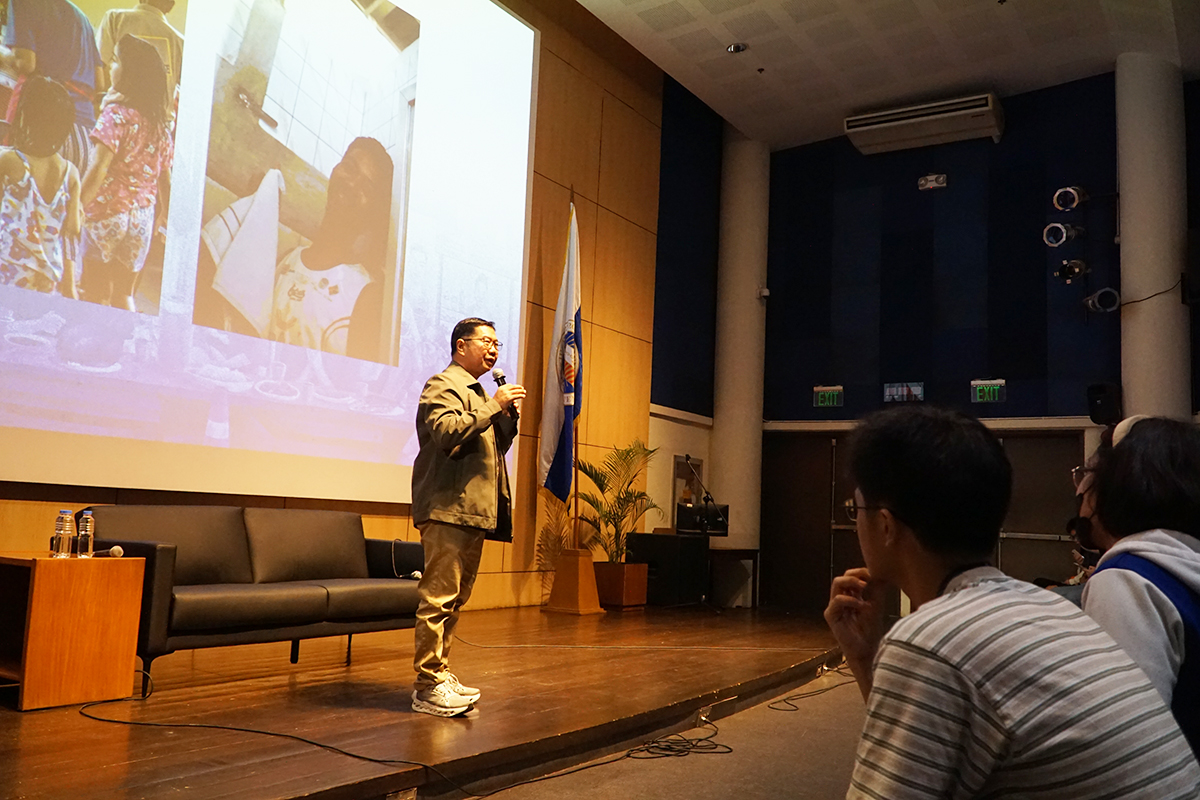
On Tuesday, 14 October 2025, Ateneo de Manila University hosted a lecture by Fr Flaviano L "Flavie" Villanueva SVD, its 2024 Bukas Palad Awardee. Titled "The Excluded at the Heart of Mission: Encountering Christ and Sustaining Hope amid Chaos," the lecture was part of this year's Talakayang Alay sa Bayan (TALAB) event series.
Fr Villanueva is a staunch advocate for people experiencing poverty and homelessness. He founded the Arnold Janssen Kalinga Center in Manila to restore dignity and hope to those in need. Unafraid to condemn the extrajudicial killings during the Duterte administration, he ensured support for the widows and orphans affected by the drug war. Despite government accusations of sedition, he persisted, later establishing Program Paghilom to help families of drug-related victims heal and rebuild their lives.
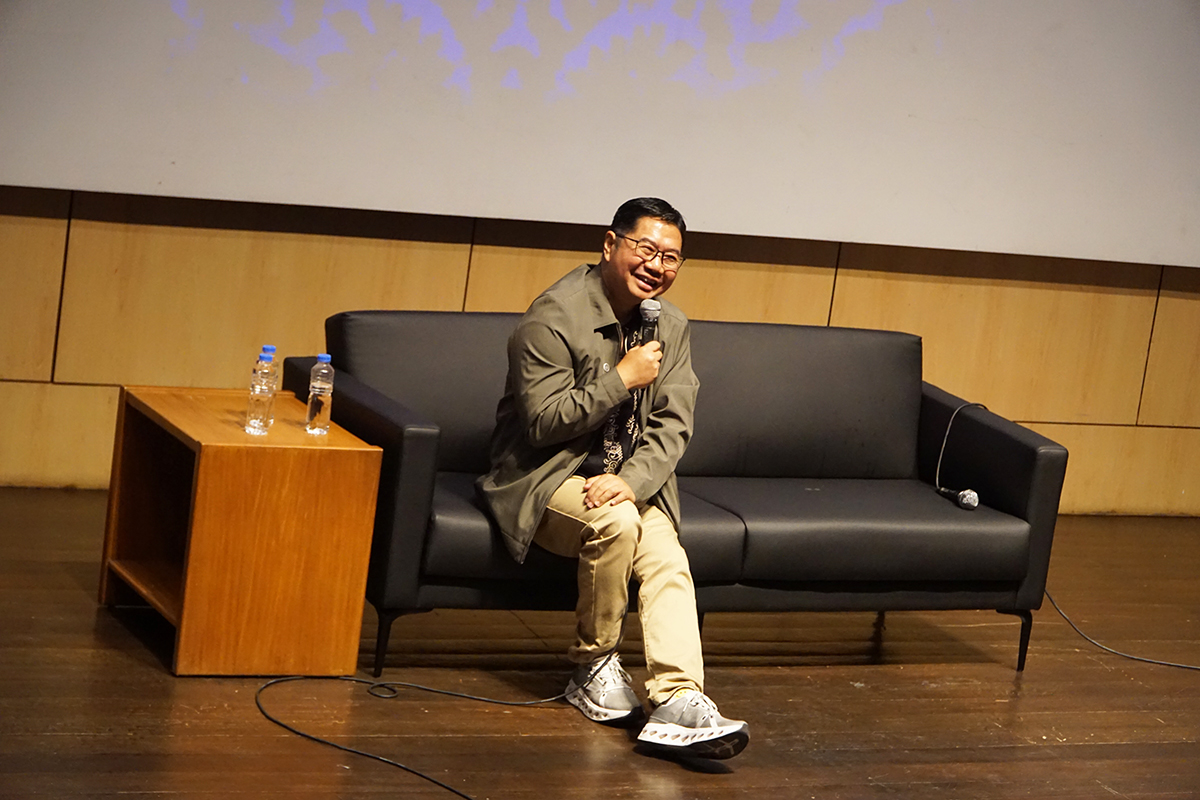
For his TALAB lecture, Fr Villanueva focused on "the Excluded," the poor and less fortunate around us, "who we don't know, and literally who we don't wish to know."
To help illustrate this concept, Fr Villanueva used the parable of the Rich man and Lazarus, with the latter being an example of the excluded. He explained that, in the parable, the rich man wasn't shown to do anything explicitly wrong, except exclude Lazarus.
"He did not see, or chose not to see the poor man at his gate," Fr Villanueva stated.
This, then, is why Lazarus and those like him around us – the poor, the hungry, the disabled, et al – are "the excluded." It is not just because of their circumstances, but because of how many of us "exclude" them from our lives, remaining oblivious to their plight.
"Ang kasalanan ay iyong maging bulag or mag bulag-bulagan," he said. "Kasalanan mag baling ng paninging, kung may nagdurusang kapwa."
Fr Villanueva then transitioned this to the work that they were doing at the Arnold Janssen Kalinga Center in Manila. This includes the different types of care that they give those they serve. These are: Dignified Care, Systemic Care, and Holistic Care.
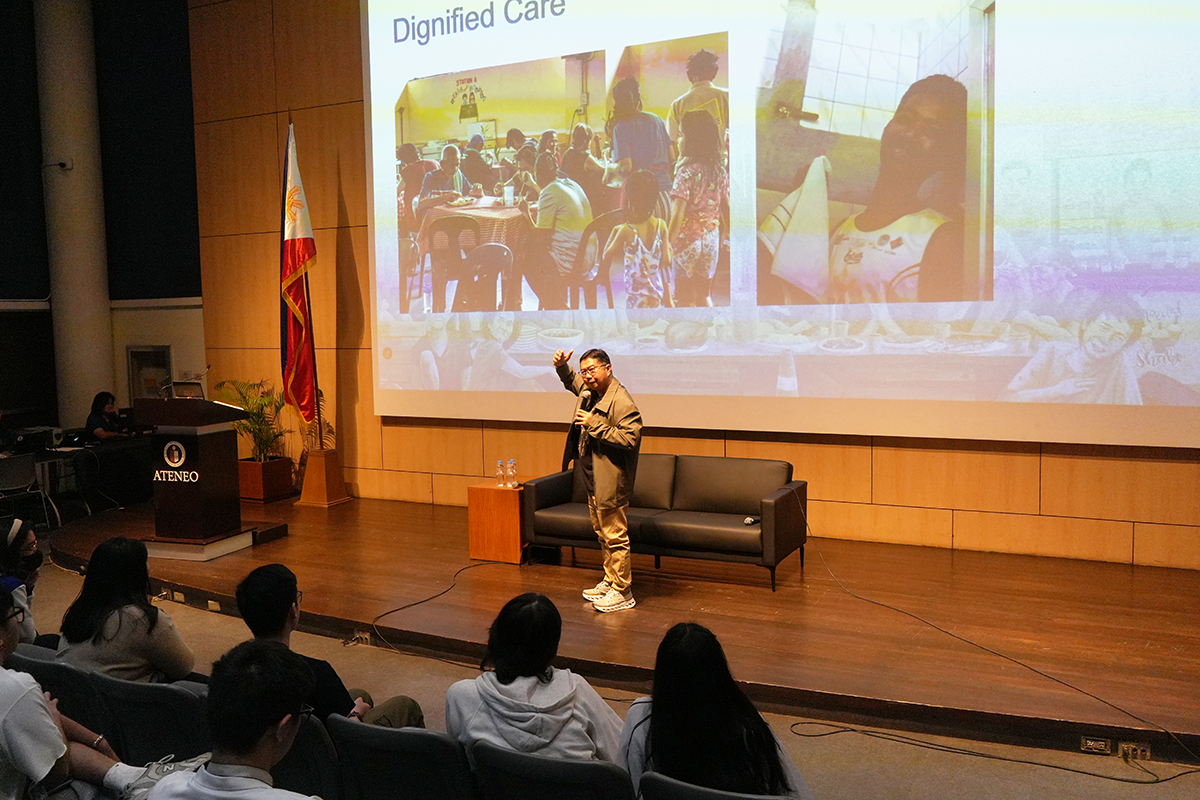
By "Dignified Care" Fr Villanueva says that the Center not only provides them with shelter, but also makes sure to give them the care that any dignified human being deserves. He explained that the experience of poverty can often make people experincing it feel less than human, as such, the Center strives to make them feel like dignified human beings once again.
"Systemic Care" means that there is a process for the care given at the Center. The system, made of up seven steps that Fr Villanueva and the rest of the team at the Center came up with, ensures that everyone who comes in recieves holistic services – showers, means, catechism, and mission – contributing to the dignified care the Center gives.
Finally, "Holistic Care" means giving those who come into the Center more than just their basic needs. Rather, they're also given the opportunities to better themselves. For this, Fr Villanueva told the story of one of their beneficiaries, who, even after facing a number of disciplinary issues while at the Center, was eventually able to work his way to become a government employee.
Additionally, Fr Villanueva discussed the Arnold Janssen Kalinga Center's Program Paghilom.
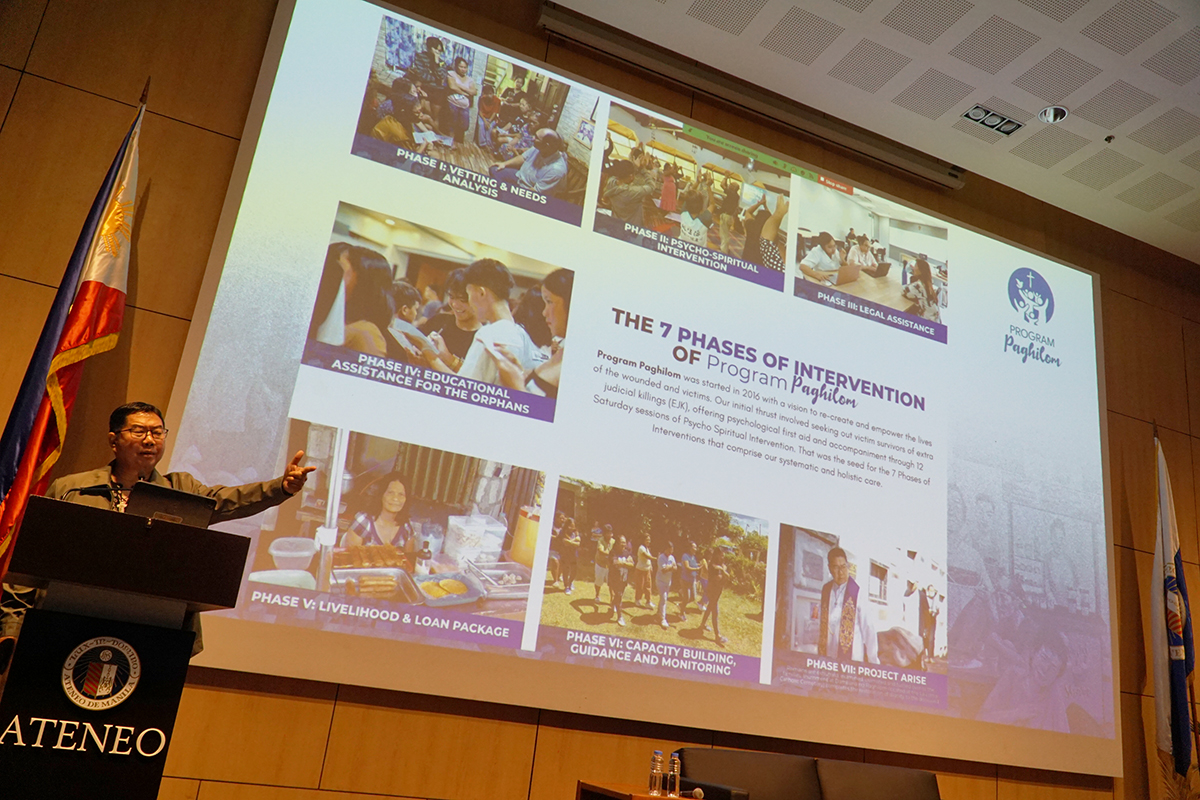
Started in 2016, Program Paghilom was founded with a vision to re-create and empower the lives of the wounded and the victim survivors of the extra judicial killings (EJK) that took place during the Duterte administration's war on drugs. It started out offering psychological first aid and accompaniment through 12 sessions of psycho spiritual intervention.
Through these, Program Paghilom became the seed for the seven phases of interventions that comprise the seven phases of interventions that comprise the Center's systematic and holistic care. These are vetting & needs analysis; psycho spiritual intervention; legal assistance; educational assistance for the orphans; livelihood & loan package; capacity building, guidance & monitoring; and Project ARISE, the last one being an initiative of that helps the families of EJK victims by providing dignified exhumation, autopsy, and burial services for their loved ones
Following this, Fr Villanueva also showed a list bearing the names of 345 victims of EJKs from Duterte's war on drugs – a fraction of the over 6,000 EJK victims recognized by the Philippine National Police, of the 20,000 to 30,000 acknowledged by Human Rights Watch. He used this list as a way to appeal to the students in attendance to act now, to start noticing the excluded in society even while they're still students, and not when they've already graduated.
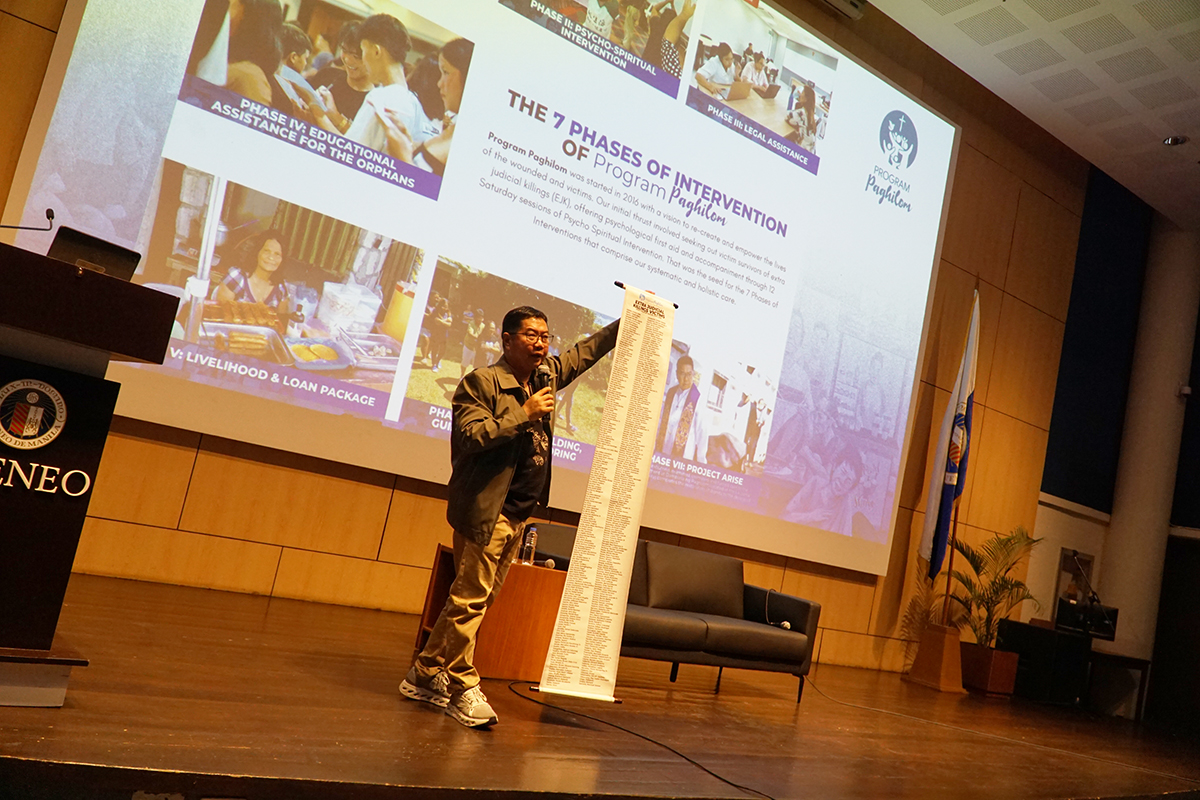
Following Fr Villanueva's lecture, Mr Lance Bolano of Ateneo' Department of Theology led the audience in a 10 minute dyad sharing session based. This was then followed by a lively open forum between Fr Villanueva the audience in attendance.
Watch the entirety of Fr Villanueva's TALAB lecture below.
Recent News
You may also like these articles

[Hot Off the Press] Arkipelago
New book from the Ateneo Press Arkipelago provides a fascinating and fantastical twist on Philippine politics and history Our country is an archipelago of stories
Protecting Creativity: AIPO and Rizal Library Host Copyright Awareness Session for the Ateneo Community
On March 18, 2026, the Ateneo Intellectual Property Office (AIPO), in collaboration with the Rizal Library, successfully conducted a Copyright Awareness Session held on the
Holy Week 2026 Holidays (Memo # UHR2526-038)
Memo # UHR2526-038 31 March 2026 TO: All Employees FROM: [Sgd] Maria Victoria T Cortez, PhD Vice President for University Human Resources SUBJECT: Holy Week
ASOG’s Tobacco Control initiatives spotlighted in DOH National Technical Working Group for Tobacco Prevention and Control
On March 10 to 12, 2026, the Ateneo School of Government (ASOG), through its research and public policy unit, the Ateneo Policy Center, participated in
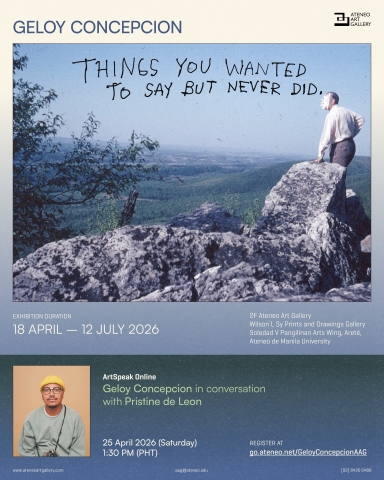
Things You Wanted to Say But Never Did: Geloy Concepcion’s six-year project makes Its exhibition debut at the Ateneo Art Gallery
Geloy Concepcion’s Things You Wanted To Say But Never Did comes to the Ateneo Art Gallery this 18 April 2026. After receiving almost 300,000 messages

[Hot Off the Press] Love If I'm Pretty
New YA Release from the Ateneo Press Love If I’m Pretty tackles the nuances of growing up through complex characters and straightforward prose What do