Kritika Kultura lecture explores Carlos Bulosan as a writer of the Filipino diaspora and class struggle
18 Nov 2025

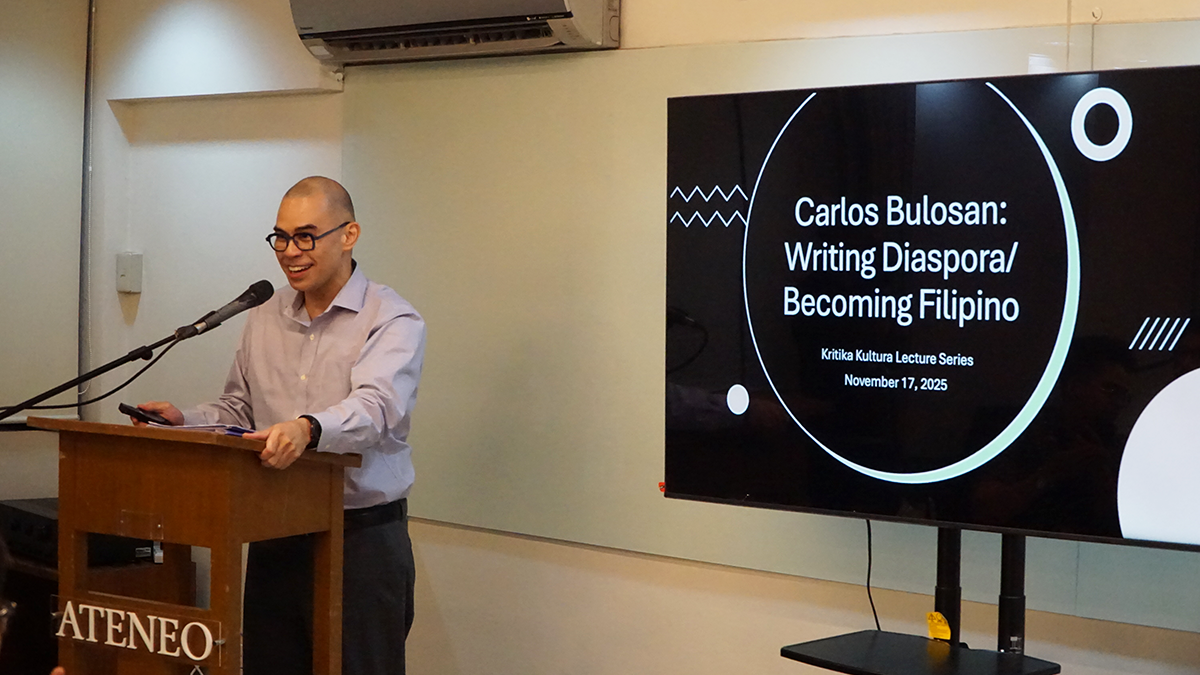
Ateneo's Kritika Kultura, in collaboration with the Literary and Cultural Studies Program (LCSP) and PLUME, hosted a lecture on Carlos Bulosan by Jeffrey Arellano Cabusao on the 17 Nov 2025. The lecture, titled “On Carlos Bulosan: Writing Diaspora, Becoming Filipino,” explored Bulosan's enduring significance in the 21st century.
Jeffrey Arellano Cabusao is a Professor of English and Cultural Studies in the Department of History, Literature, and the Arts at Bryant University, Smithfield, RI, in the US, where he teaches courses in Asian American studies, ethnic studies, literary & cultural studies, and media literacy. He is currently on sabbatical as a Kritika Kultura Visiting Professor jointly affiliated with the LCSP. He is also a member of the International Board of Editors for Kritika Kultura, a co-director emeritus of the NCTE (National Council of Teachers of English) Early Career Educator of Color Leadership Award Program, and the president of the Working-Class Studies Association (WCSA).
Opening the lecture was Dr Claudette M Ulit, Research Coordinator for Ateneo's School of Humanities, who introduced Cabusao.
The lecture aimed to revisit Carlos Bulosan's life and works, exploring his enduring significance in the 21st century. To do this, Cabusao went beyond his reputation as a Filipino diaspora writer, instead positing himself as a theorist grappling with crucial "struggle concepts" such as class, culture, and identity in order to imagine social change. Through a rereading of America Is in the Heart alongside his letters and essays, Cabusao sought to reclaim Bulosan’s intellectual legacy while affirming his continued relevance in contemporary digital and diasporic contexts.
Born in Binalonan, Pangasinan in 1911, Bulosan bore witness to the development of a working-class Filipino diaspora, emigrating to the US in 1930. Through his works, he dramatized the hopes, fears, and aspirations of 150,000 Filipino migrant workers, embodying the “voice” of the Filipino American experience from the 1930s into the 1950s.
While Bulosan may have long passed, Cabusao argues that he and his works continue to speak to us in the 21st century.
As part of this, he examines how Bulosan engages what feminist theorist Teresa Ebert calls “struggle concepts” necessary for social transformation – society, history, class, culture, etc. He looks at Bulosan’s America Is in the Heart in relation to his other writings (letters and essays), examining the “struggle concepts” that are specific to Bulosan’s work – “writing diaspora” and “becoming Filipino.”
In doing so he sheds a new light on Bulosan – long simply categorized as just a poet, short story writer, and novelist – instead positioning him as a theorist who rearticulates struggle concepts such as “class,” “culture,” and “identity,” through the lens of a member of the working-class Filipino diaspora. Specifically, these struggle concepts shed light on the exploitative social relations of production that form the basis of the Filipino condition, both in Bulosan's time, as well as in the current day.
To further this point, Cabusao calls to the decentering approach used by Filipino-American writer Epifanio San Juan Jr. Specifically San Juan Jr decenters the approach to Bulosan by splitting his life and career into three periods. These are his "gestation," Bulosan's "period of youth and adolescenece" from 1911 to 1930; Bulosan's "emergence," his "apprenticeship and maturity" during the Great Depression and the US Popular Front; and his "return to the source" when Bulosan went back to labor union activism.
With this Cabusao breaks with chronological order and focuses on Bulosan’s breakthrough period. Here, he explores Bulosan’s diasporic connections with movements both in the US and the Philippines, providing examples, such as Bulosan asking for support from the US working class for imprisoned writer and labor organizer Amado Hernandez in the 1950s. Cabusao highlights how this diasporic radicalism existed further back into the 1930s, such as Rufino Tumanda’s asking for support from the US-based Filipino Anti-Imperialist League to protest for the freedom of the Partido Komunista ng Pilipinas' Crisanto Evangelista.
In addition, he also showed a short video from the American Public Broadcasting Service (PBS) on how Filipino immigrants, including Bulosan, helped spark the farm workers movement on Southern California.
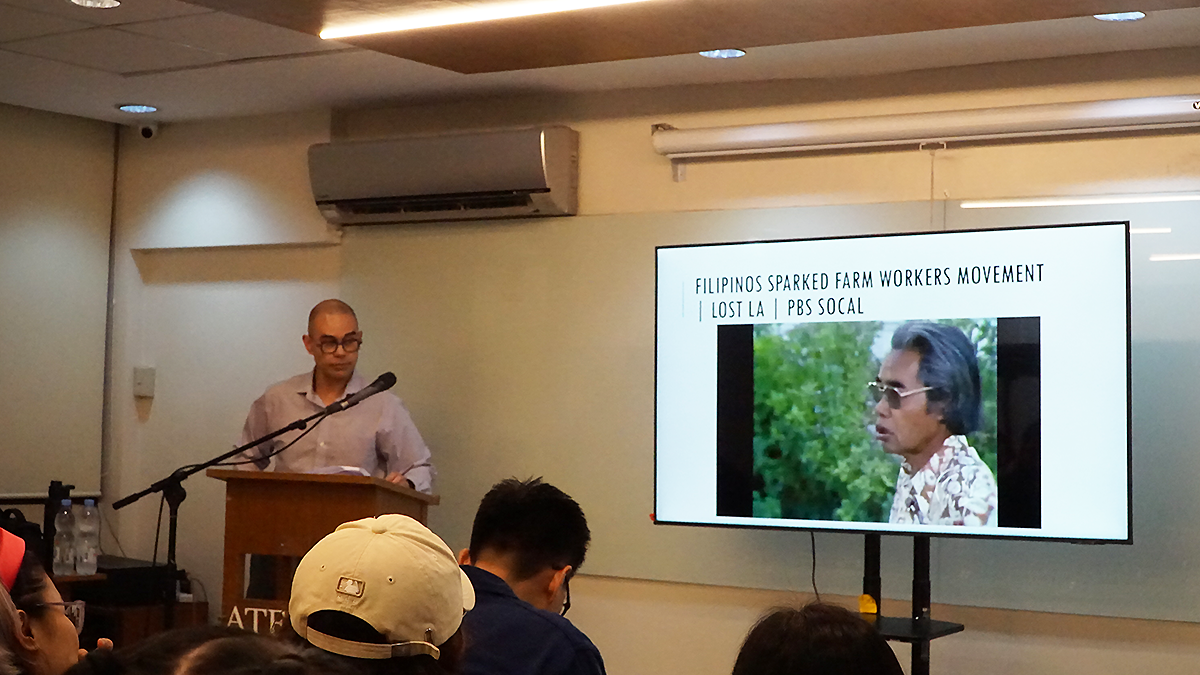
From this, Cabusao explains how for Bulosan, the Filipino identity is an "ongoing political project of self determination," pointing not just to Bulosan's experiences, but to the nation's own history of fighting against colonialism.
He quotes E San Juan Jr's "In Search of Filipino Writing" where the latter states: "Interpellated within the boundaries of empire, Filipinos continue to bear the marks of three centuries of anticolonial insurgency."
Cabusao then relates that to the modern day Filipino identity, broadening our understanding of that identity beyond individualism and other neoliberal notions of agency. Today, he points out, an average of 6,000 Filipinos leave the country searching for better opportunites outside the country, adding to the nearly 12 million already living and working abroad.
Bulosan's experiences are relevant to this ever growing diaspora as they encounter the same struggle concepts that the latter did, through the same lens nearly a century later.
With this, Cabusao also asked the audience to reflect on what is means to be a Filipino, not just for migrant workers, but also for those remaining here in the country. This includes the question of whether there is a difference between just being Filipino and becoming Filipino through these shared experiences of struggle.
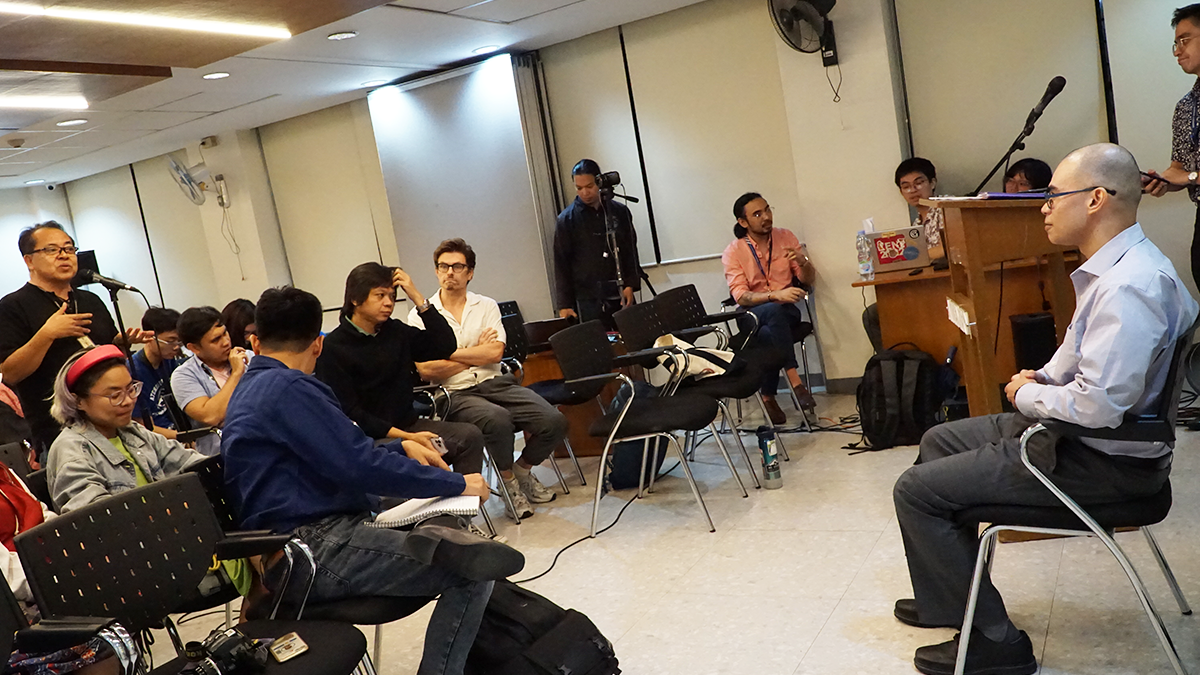
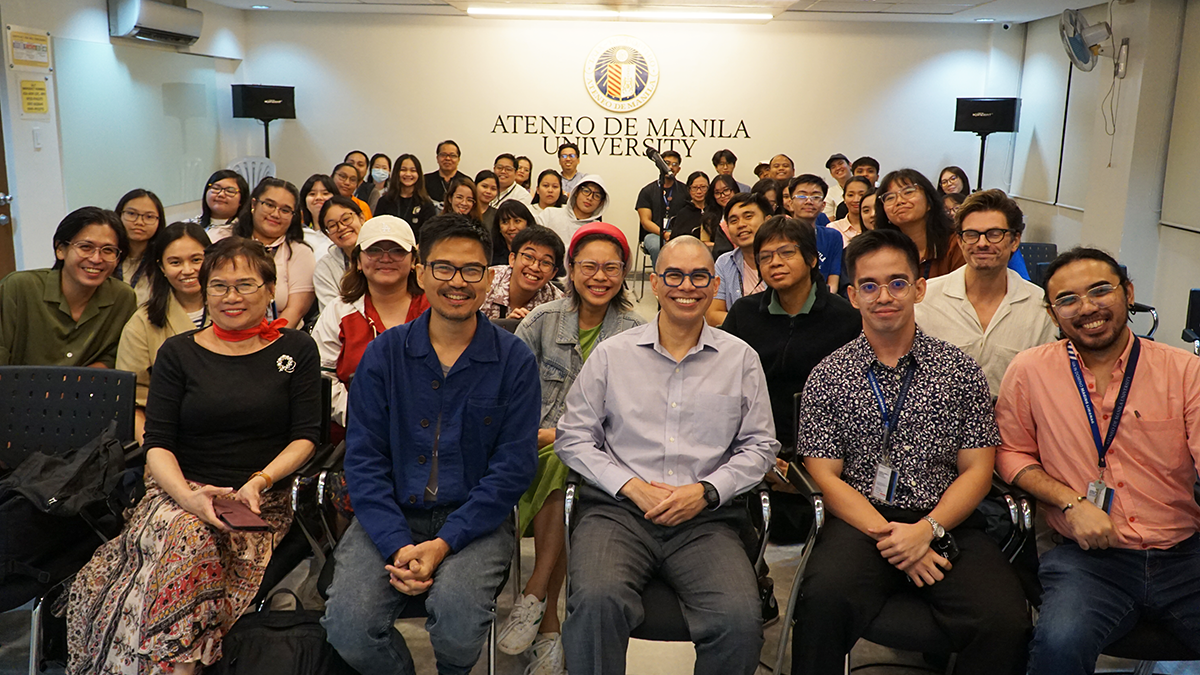
Following his lecture, Cabusao engaged in a lively open forum with the audience, which comprised both students and faculty.
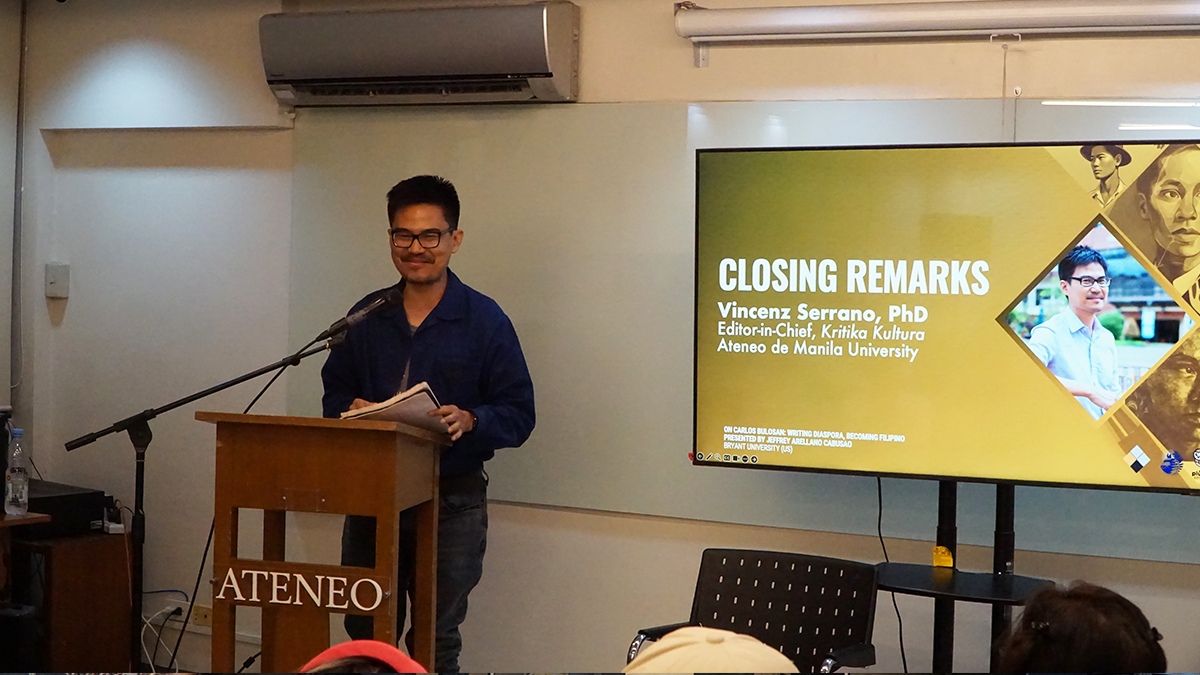
The event was closed by Kritika Kultura Editor-in-Chief Vincenz Serrano, who thanked Cabusao for his insights into Bulosan and the migrant Filipino identity, as well as the audience for their patronage of not just this lecture but of previous Kritika Kultura lectures.
Recent News
You may also like these articles
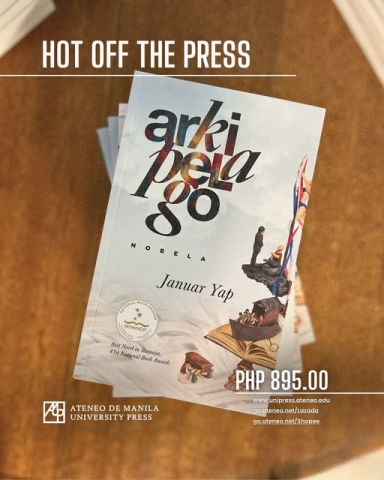
[Hot Off the Press] Arkipelago
New book from the Ateneo Press Arkipelago provides a fascinating and fantastical twist on Philippine politics and history Our country is an archipelago of stories
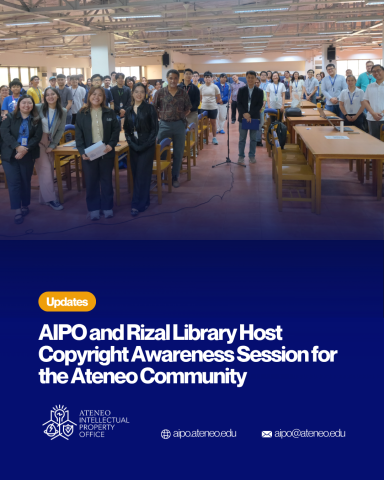
Protecting Creativity: AIPO and Rizal Library Host Copyright Awareness Session for the Ateneo Community
On March 18, 2026, the Ateneo Intellectual Property Office (AIPO), in collaboration with the Rizal Library, successfully conducted a Copyright Awareness Session held on the
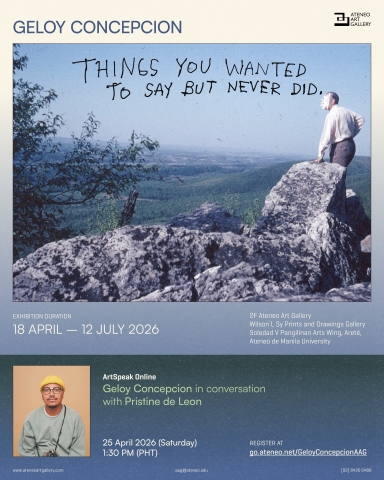
Things You Wanted to Say But Never Did: Geloy Concepcion’s six-year project makes Its exhibition debut at the Ateneo Art Gallery
Geloy Concepcion’s Things You Wanted To Say But Never Did comes to the Ateneo Art Gallery this 18 April 2026. After receiving almost 300,000 messages
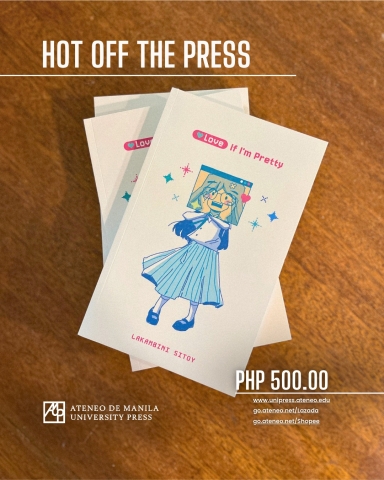
[Hot Off the Press] Love If I'm Pretty
New YA Release from the Ateneo Press Love If I’m Pretty tackles the nuances of growing up through complex characters and straightforward prose What do
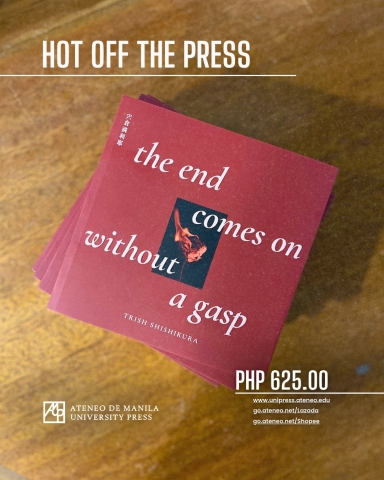
[Hot Off the Press] the end comes on without a gasp
the end comes on without a gasp: Trish Shishikura’s debut poetry collection arrives from Ateneo de Manila University Press (Bughaw) Ateneo de Manila University Press
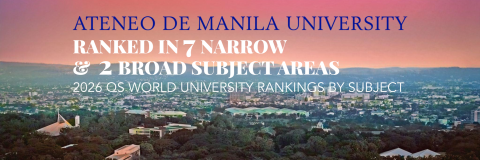
QS Subject Rankings 2026: Ateneo in top 100 for theology; ranked in 7 subject areas
Ateneo de Manila University is among the top institutions in seven subject areas, and among the top 100 for theological and religious studies, according to