CCE Leaders Fellowship learning sessions explore adapting to AI and keeping workers happy
01 Dec 2025

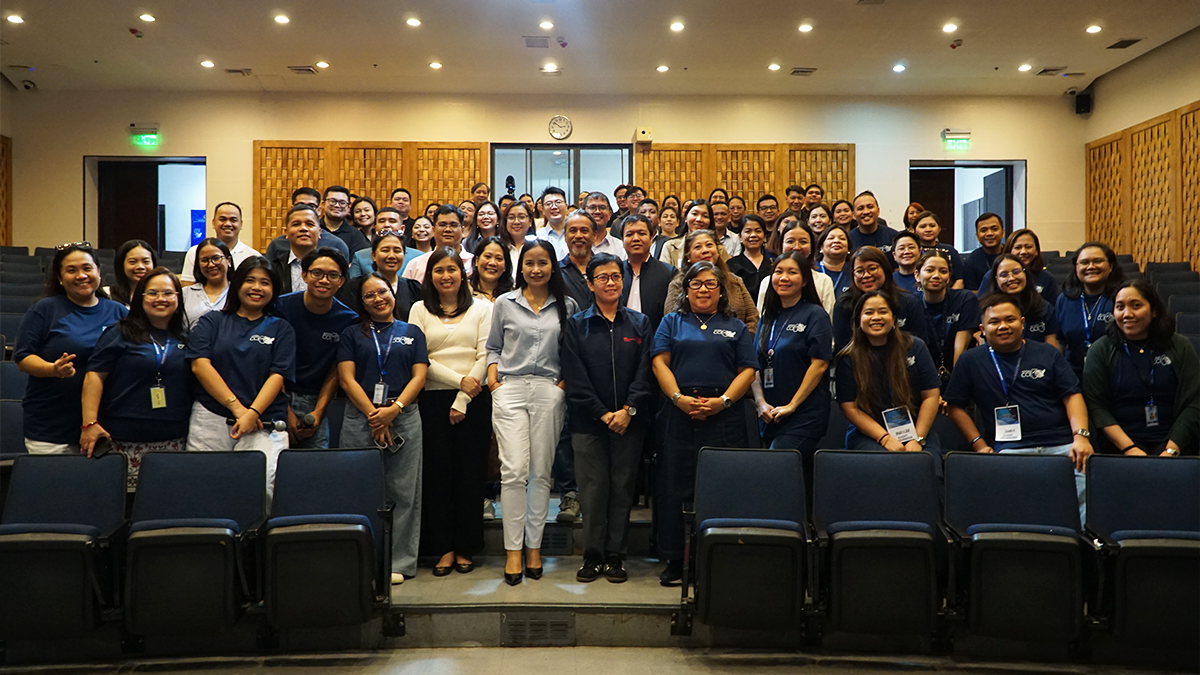
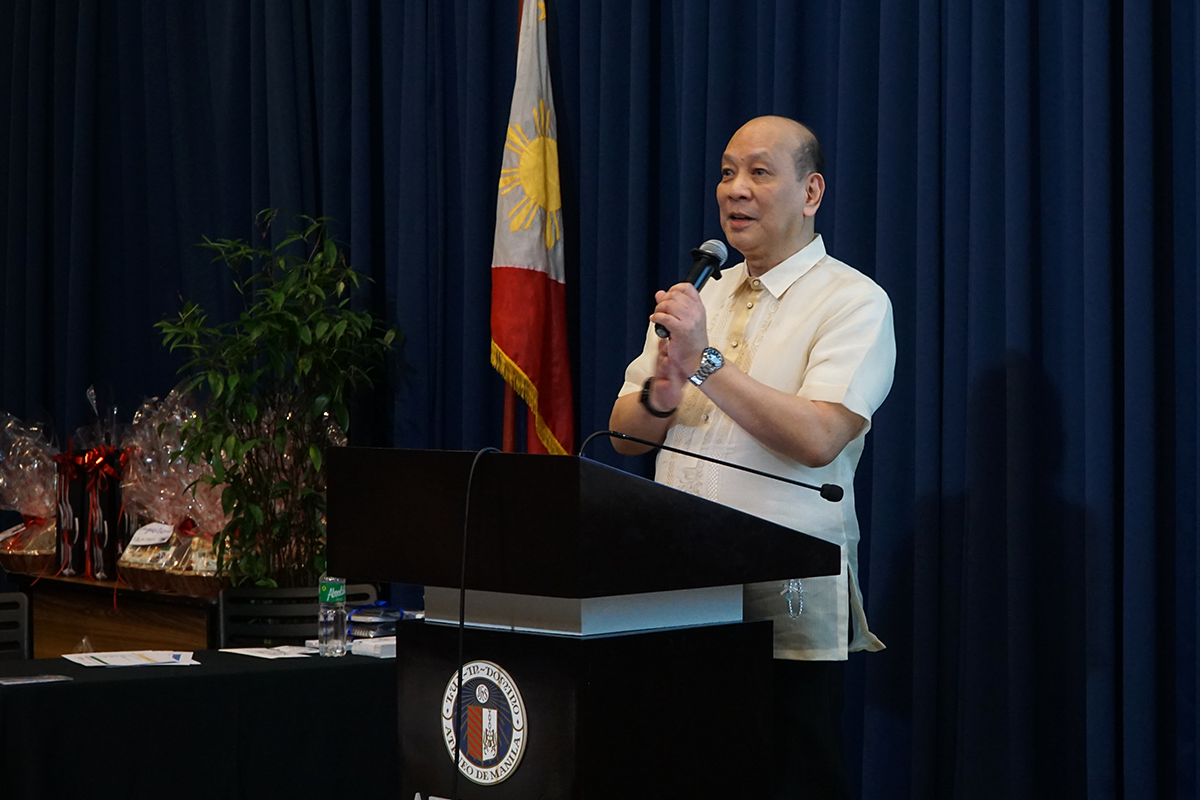
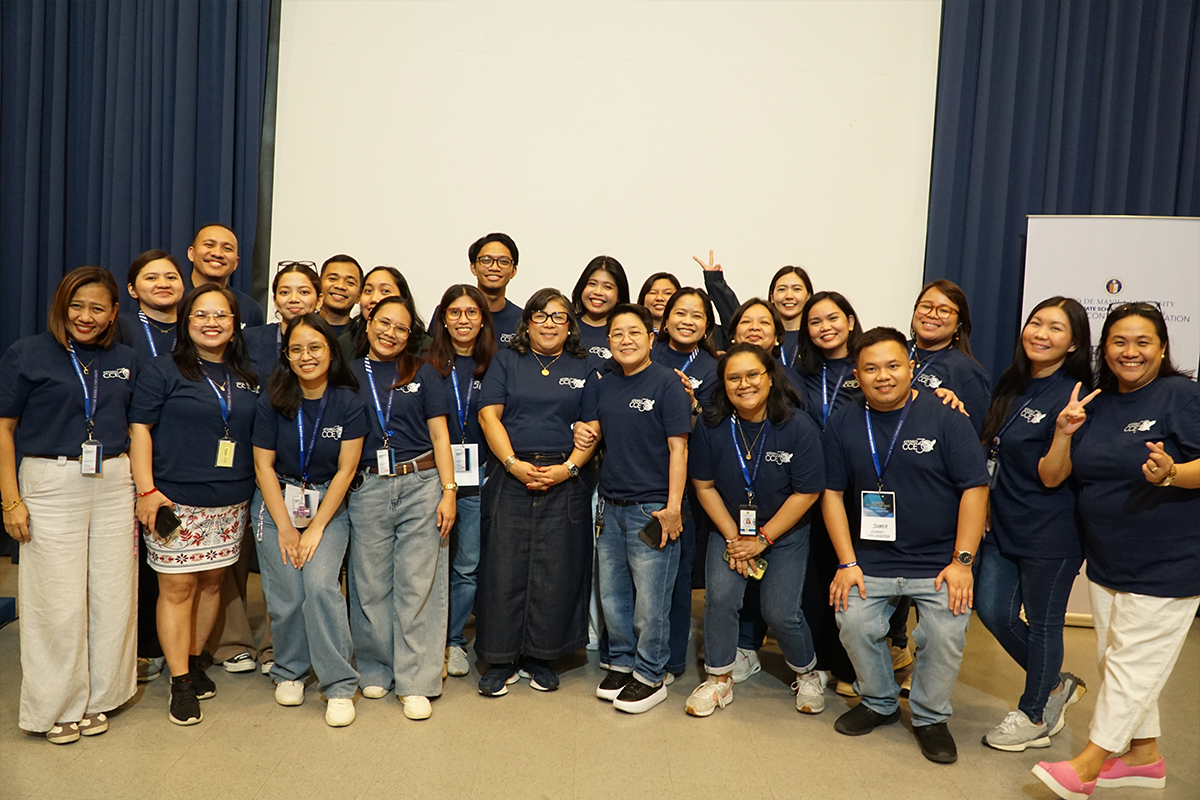
On 28 November 2025, the Ateneo Graduate School of Business's (GSB) Center for Continuing Education hosted its annual Leaders Fellowship the Ateneo Rockwell Campus Auditorium. The event featured two complimentary learning sessions. The first "Leading in the Age of AI: What Every Executive Needs to Know," which explored how AI is transforming leadership, business models, and talent strategies—and how executives can lead responsibly in this evolving landscape. The second was "Joy of Work," which looked at ways to help boost morale at work, especially among the younger generation.
Conducting the first session was Mario Domingo, PhD. Dr Domingo is the Director of the Ateneo Institute for Digital Enterprises. He is also the founder of several technology companies in Singapore and the Philippines in the areas of Artificial Intelligence and Advanced Analytics, including DARC Labs, a non-profit organization focused on creating AI-driven solutions to advance universal healthcare in the Philippines.
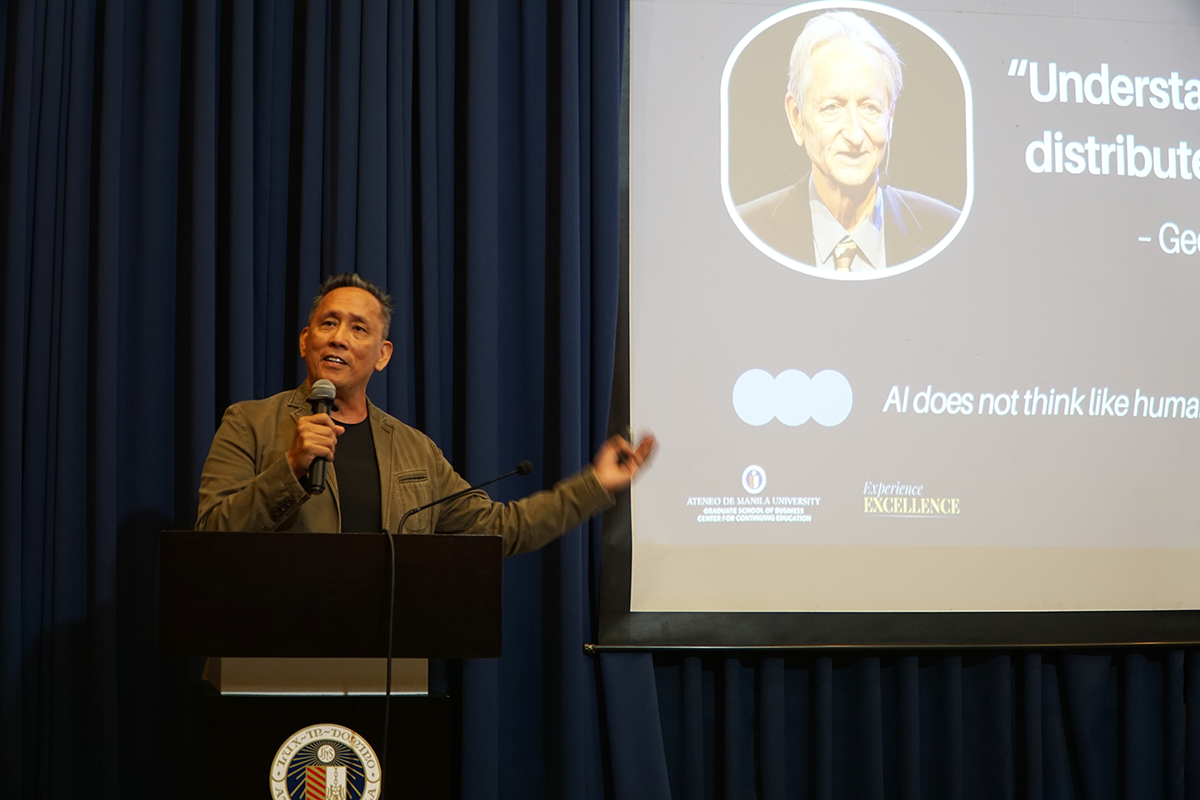
Dr Domingo started by giving a short explanation of what generative AI is. He pointed out that it doesn't think like humans, rather, it's just an algorithm based on a set of rules that looks at the data it's already has to predict the correct answer to what is being asked of it.
He also explained how 2025 to 2035 will be the decade of integration, where AI will become part of almost every process, especially as quantum computing comes in and allows AI to solve problems classical systems cannot. At this point, it is ethics that becomes the differentiator.
He then gave steps leaders can take to go from being curious about AI to being capable of using it. This starts with building gAI intuition as an individual, redesigning work for AI integration as a manager, to building readiness for AI as an organization.
In line with the last point, Dr Domingo also outline an AI readiness model. This starts with identifying the use case for AI, such as market research for SME's; using AI "copilots" for HR, finance, and strategy for corporations; and using it for impact measurement for non-government organizations.
The next steps in the model involve data hygiene – ensuring that the data being fed to the AI is "clean" and accurate, to prevent AI hallucination; model selection and making sure the generative AI model used it up to the task to be given to it; and finally governance – making sure there are safeguards and laws in place to make sure the AI is used in an ethical manner.
Dr Domingo then left the attendees with three questions for reflection and dialogue: What does understanding mean in your organization? Where can AI augment, not replace, humans? What skills must your leaders develop?
He ended his presentation with one message: "AI won't replace leaders — but leaders who use AI will replace those who don't."
Leading the second learning session was Mr Voltaire Gonzales. Mr Gonzales is the Executive Director of Roleplayers Theater for Life. Prior to this, he held other posts, such as: Executive Consultant for Summit Media & Rignier Media Co; House of Investments, Yuchengco Group of Companies; and PGA Cars (Audi, Porsche, Lamborghini and Bentley) among others. He was also the Official Brand Spokesperson and Head of Country Vehicle Sales, Corporate Communication and Sales Training of Honda Cars in the Philippines. He further became the Brand Manager of Honda Motor Co Japan for Asia and Oceania handling automobiles, motorcyles, power and marine products, Formula 1 and ASIMO.
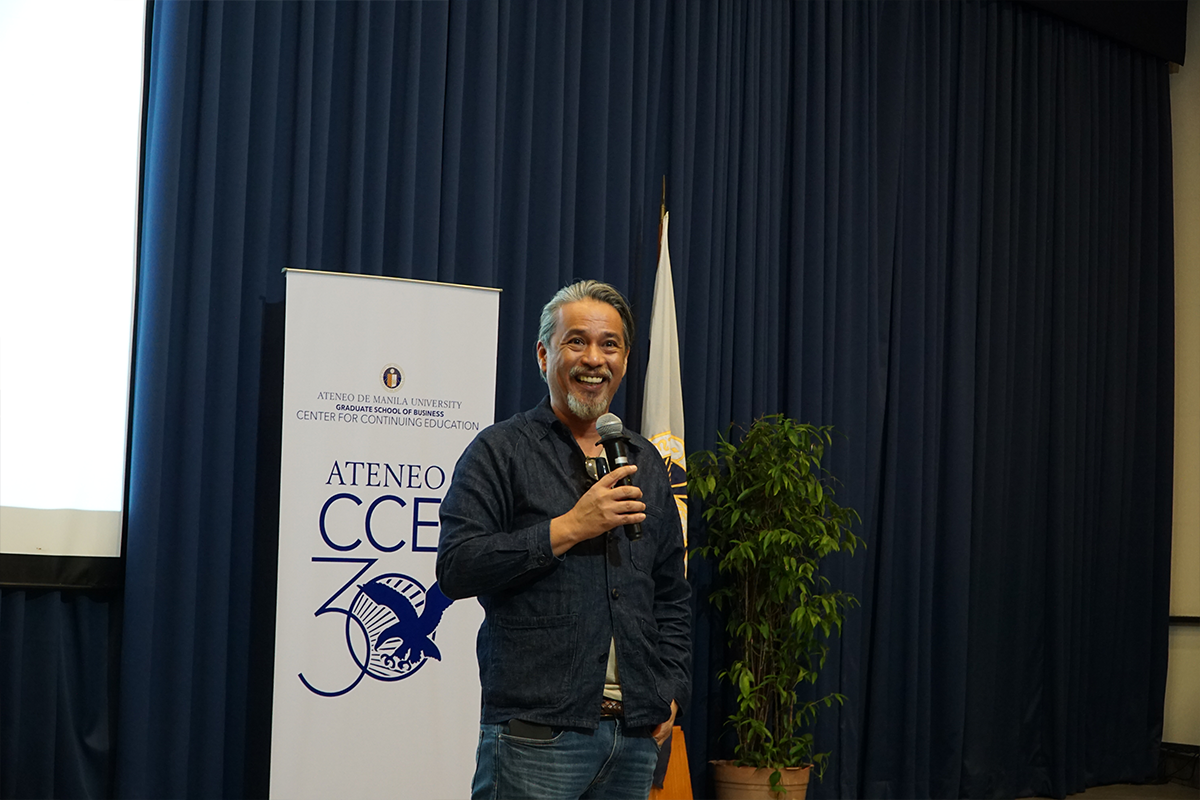
For his session, Mr Gonzales brought up the ROI (Return on Investment) of Happiness at Work. Specifically, happiness goes beyond personal satisfaction, but is also good for business. Research shows that happier workers are better workers – being more conscientious, productive, and loyal.
He also pointed out that younger workers, especially those in Generation Z – the demographic cohort born approximately between 1997 and 2012 – tends to be less happy than older generations.
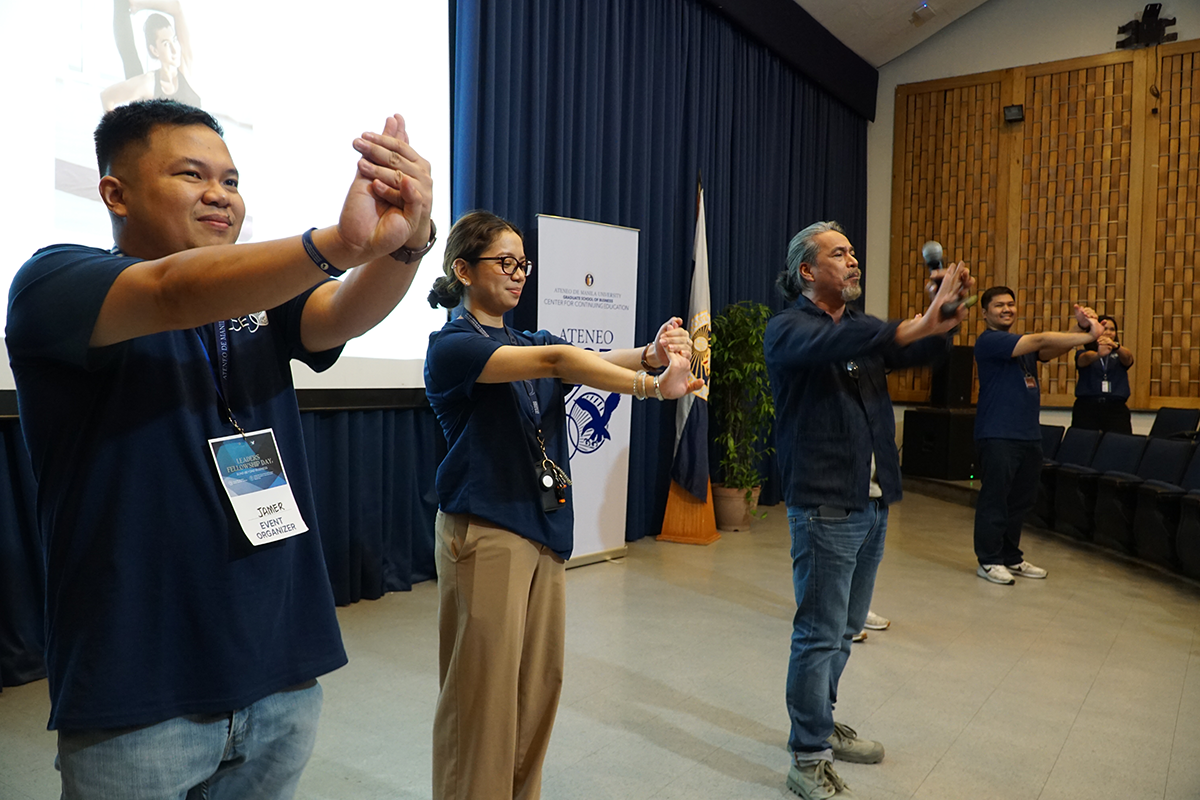
With this in mind, Mr Gonzales outlined three kinds of happiness – physical, emotional, and mental – and led the audience in exercises to help them reach these. These included actual physical excercises and stretches to help get the body started and foster physical happiness, as well as examples of activities and practices to foster emotional and mental happiness from Mr Gonzales' own work experiences.
In particular, he drew upon his experiences at Honda, where he started from simply preparing and washing cars prior to delivery to customers, to heading vehicle sales in the country. This experience helped him manage those below him, including those who were in the same position he was in when he started, and effectively manage and foster their emotional and mental wellbeing and happiness.
Following each learning session, both Dr Domingo and Mr Gonzales answered questions from the audience.
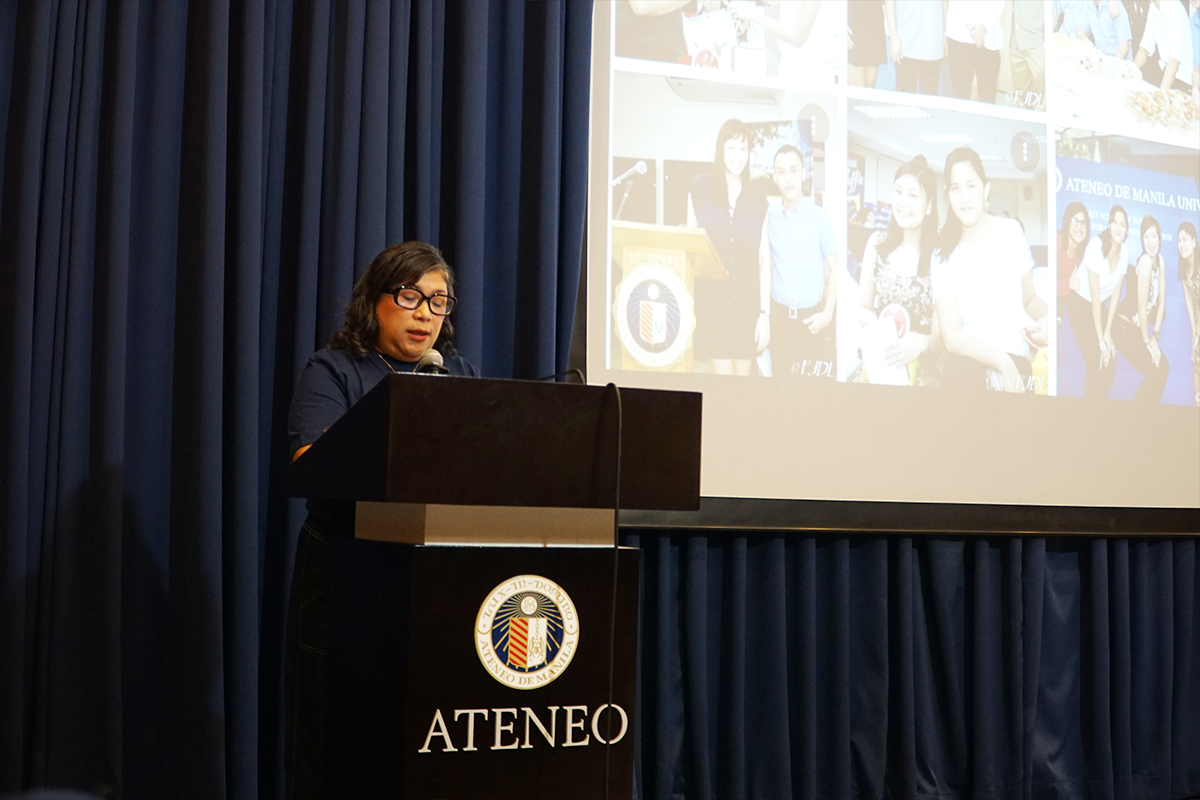
While the learning sessions were the highlight of the Leaders Fellowship, CCE also had other activities and speakers for the attendees. These included greetings from the directors of the various CCE programs, CCE Executive Director Ms Marleth Calanog, and GSB Dean Jowett "Jet" Magsaysay, PhD.
In addition, there were also number of games meant to help the attendees socialize and network among each other as well as to test their knowledge of Ateneo trivia, as well as a raffle.
Recent News
You may also like these articles
Protecting Creativity: AIPO and Rizal Library Host Copyright Awareness Session for the Ateneo Community
On March 18, 2026, the Ateneo Intellectual Property Office (AIPO), in collaboration with the Rizal Library, successfully conducted a Copyright Awareness Session held on the

Class and work arrangements for March 30-April 1, 2026 (Memo No. AGSB-DO-2526-043)
AGSB-DO-2526-043 28 March 2026 TO: AGSB Community FROM: (sgd.) Jowett Cecilio F. Magsaysay, MBA, PhD Dean SUBJECT: Class and work arrangements for March 30-April 1
Class and work arrangements for March 26-27, 2026 (Memo No. AGSB-DO-2526-042)
AGSB-DO-2526-042 25 March 2026 TO: AGSB Community FROM: (sgd.) Jowett Cecilio F. Magsaysay, MBA, PhD Dean SUBJECT: Class and work arrangements for March 26-27, 2026
QS Subject Rankings 2026: Ateneo in top 100 for theology; ranked in 7 subject areas
Ateneo de Manila University is among the top institutions in seven subject areas, and among the top 100 for theological and religious studies, according to
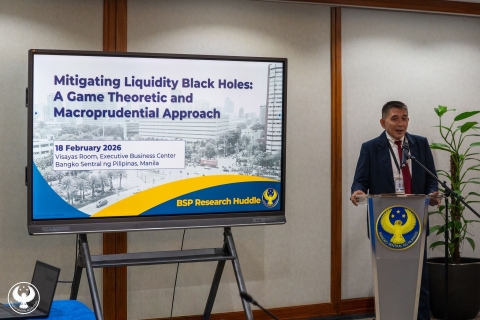
New study from JGSOM proposes framework to address sudden market liquidity collapses
Ateneo de Manila Assistant Professor Emmanuel Richard B Madarang of the John Gokongwei School of Management (JGSOM) presented his research paper “Mitigating Liquidity Black Holes
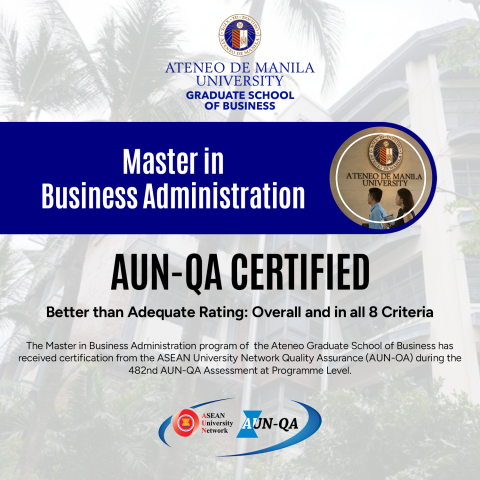
Better than adequate: AGSB's Master in Business Administration program receives AUN-QA certification
The Master in Business Administration (MBA) program of the Ateneo Graduate School of Business (AGSB) celebrates the certification received from the ASEAN University Network –