Kritika Kultura hosts lecture by Vicente L Rafael on Frantz Fanon
11 Dec 2025

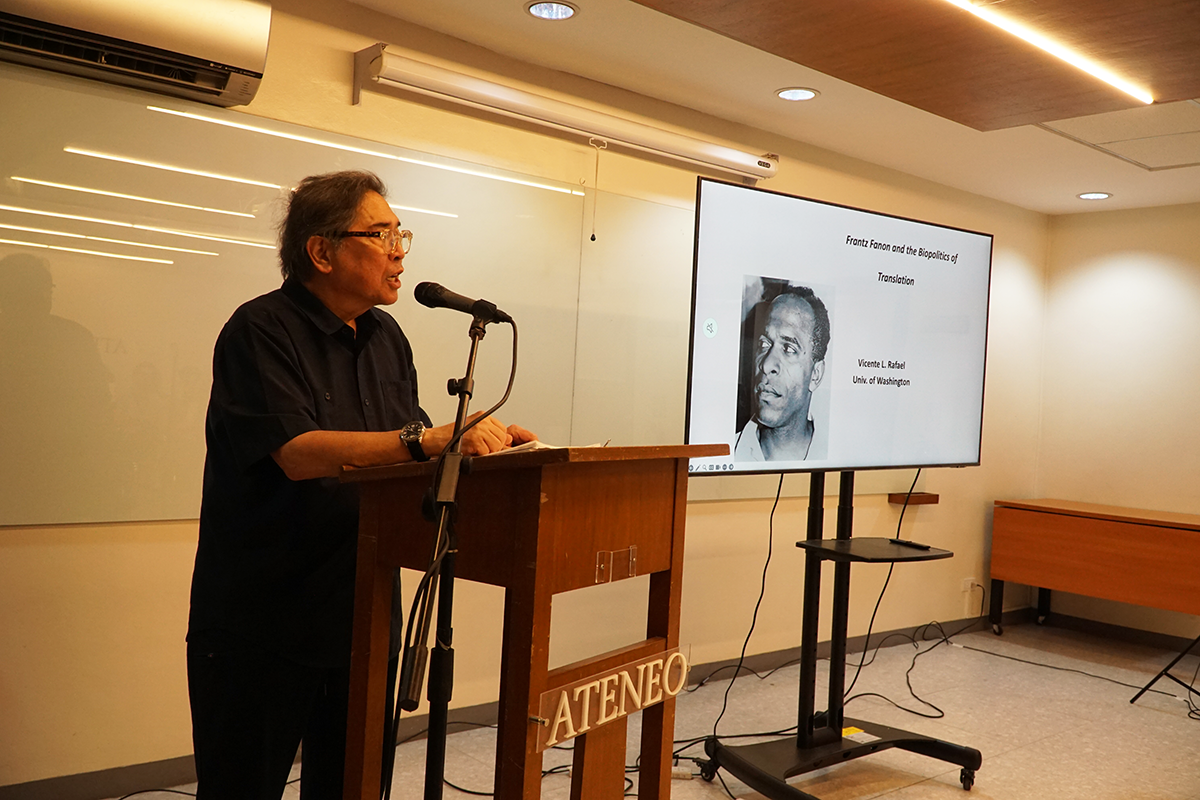
Kritika Kultura, in collaboration with the Literary and Cultural Studies Program and Ateneo Institute of Literary Arts and Practices (AILAP), recently hosted a lecture by Vicente L Rafael PhD, titled "Words the Color of Pulsating Flesh: Frantz Fanon and the Politics of Translation."
Dr Vicente L Rafael is Professor of History and Southeast Asian Studies at the University of Washington in Seattle. He received his Bachelor of Arts in history and philosophy from Ateneo de Manila University in 1977 and his PhD in history from Cornell University in 1984. He is the author of The Sovereign Trickster: Death and Laughter in the Age of Duterte (2022); Contracting Colonialism: Translation and Christian Conversion in Tagalog Society Under Early Spanish Rule (1988/1993); White Love and Other Events in Filipino Histories (2000); The Promise of the Foreign: Nationalism and the Technics of Translation in the Spanish Philippines (2005); Motherless Tongues: The Insurgency of Language Amid Wars of Translation (2016), all published by Duke University Press and co-published in the Philippines by Ateneo de Manila University Press.
In addition, Dr Rafael has also written op-ed columns for Rappler and the Philippine Daily Inquirer, as well as The Atlantic and The New York Review of Books.
Dr Rafael was accompanied by his wife, Lila Ramos Shahani, former UNESCO National Commission of the Philippines (UNACOM) Secretary General and former Assistant Secretary at the Department of Foreign Affairs.
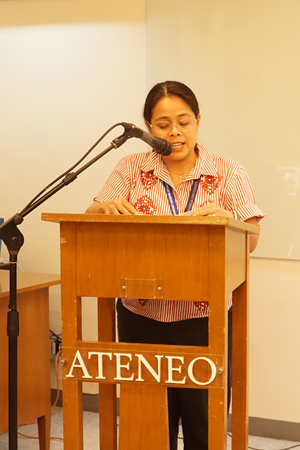
Opening the event was Patricia P Lambino, PhD, Dean of the School of Humanities, who welcomed Dr Rafael and Ramos Shahani, thanking them for taking time out to come to Ateneo for Dr Rafael to give his lecture.
Dr Rafael's lecture focused on the writings of Frantz Fanon and how specific biopolitical and necropolitical formations in colonial translation can be found in these, especially concerning language, race, and decolonization.
Frantz Omar Fanon was a French West Indian psychiatrist and political philosopher born on 20 July 1925 in Martinique, then a French colony, and now a department of France. A political radical and Pan-Africanist, concerned with the psychopathology of colonization and the human, social, and cultural consequences of decolonization, Fanon has been described as the "the most influential anti-colonial thinker of his time." His life and works have inspired national liberation movements and other freedom and political movements in Palestine, Sri Lanka, South Africa, and the United States.
In his lecture, Dr Rafael showed pointed out some of Fanon's thoughts on language and meaning when faced with the realities of colonialism and racism, where a person of color, such as Fanon, is seen as inferior.
In particular, Fanon noted the irony that while learning the colonizer's language can show the the colonized can be the intellectual equal of the colonizer, it still plays into the idea of the colonizer and their language and culture being superior.
"To speak means to be in a position to use a certain syntax, to grasp the morphology of this or that language," he quotes Fanon. "But it means above all to assume a culture, to support the weight of a civilization."
In addition, he shared not only excerpts from Fanon's own writing, but also quotes from people close to him, to further illustrate Fanon's experiences as a person of color living in then-colonial Martinique.
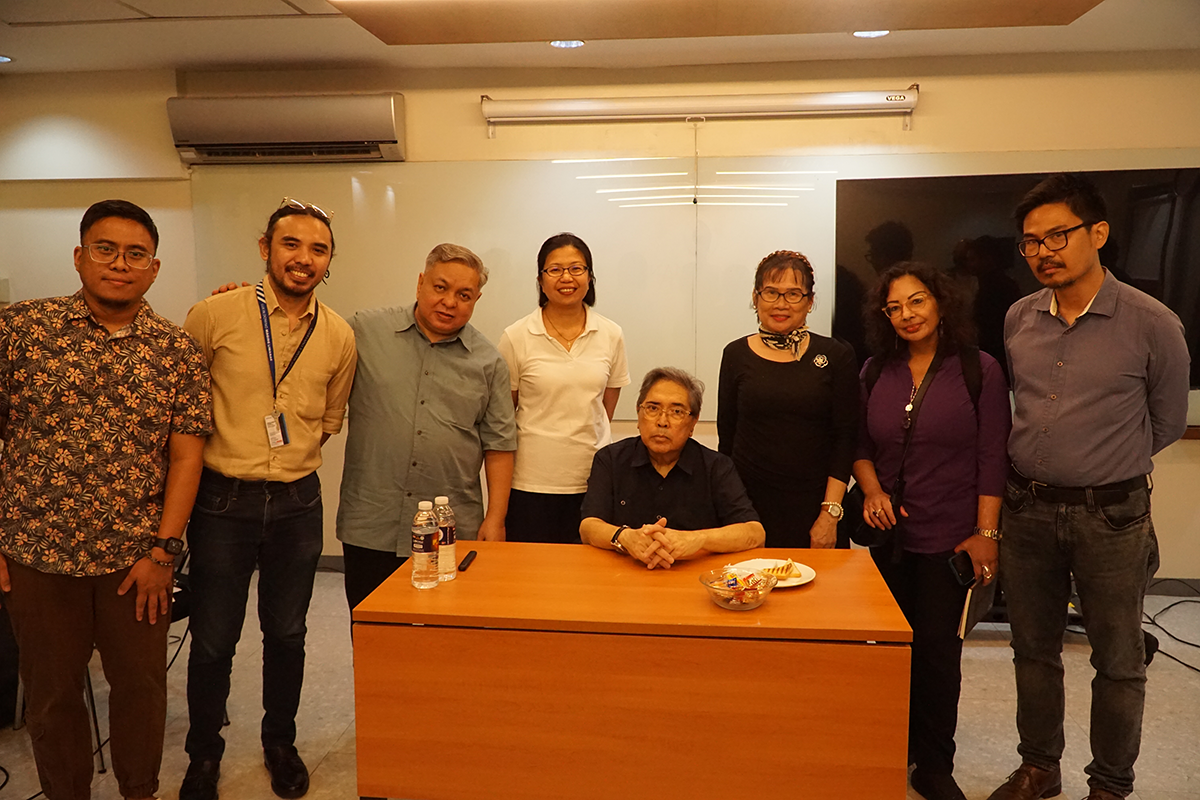
After the lecture, Dr Rafael posed for a photo with some members of the audience. A simple merienda was also served for the guests.
Recent News
You may also like these articles
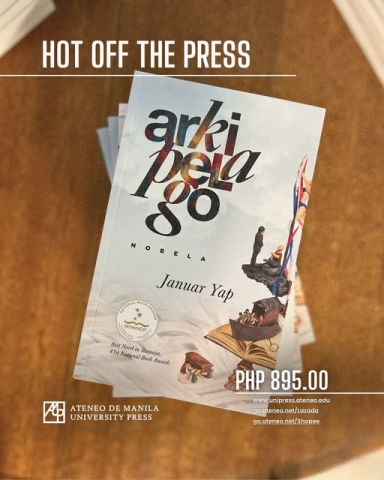
[Hot Off the Press] Arkipelago
New book from the Ateneo Press Arkipelago provides a fascinating and fantastical twist on Philippine politics and history Our country is an archipelago of stories
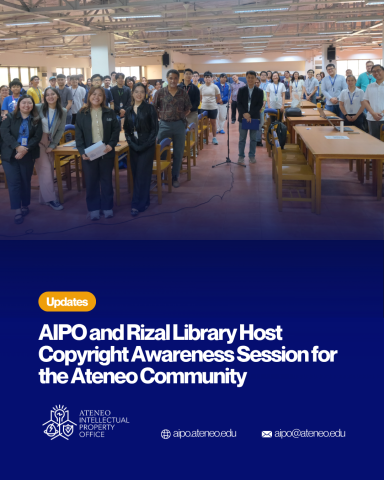
Protecting Creativity: AIPO and Rizal Library Host Copyright Awareness Session for the Ateneo Community
On March 18, 2026, the Ateneo Intellectual Property Office (AIPO), in collaboration with the Rizal Library, successfully conducted a Copyright Awareness Session held on the
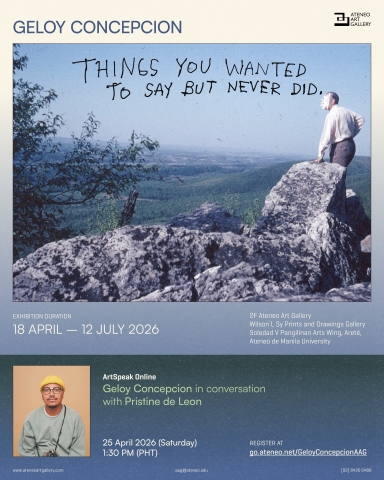
Things You Wanted to Say But Never Did: Geloy Concepcion’s six-year project makes Its exhibition debut at the Ateneo Art Gallery
Geloy Concepcion’s Things You Wanted To Say But Never Did comes to the Ateneo Art Gallery this 18 April 2026. After receiving almost 300,000 messages
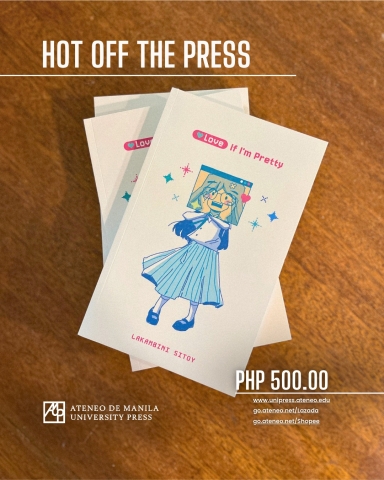
[Hot Off the Press] Love If I'm Pretty
New YA Release from the Ateneo Press Love If I’m Pretty tackles the nuances of growing up through complex characters and straightforward prose What do
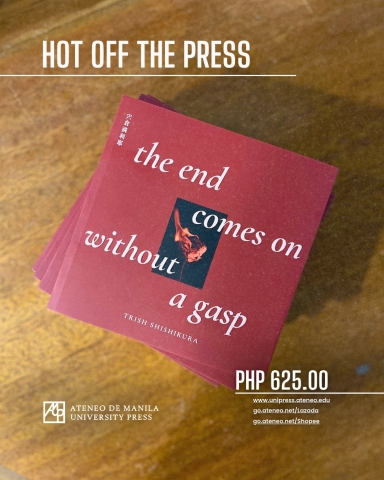
[Hot Off the Press] the end comes on without a gasp
the end comes on without a gasp: Trish Shishikura’s debut poetry collection arrives from Ateneo de Manila University Press (Bughaw) Ateneo de Manila University Press
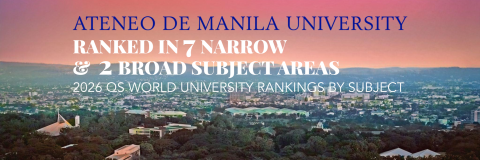
QS Subject Rankings 2026: Ateneo in top 100 for theology; ranked in 7 subject areas
Ateneo de Manila University is among the top institutions in seven subject areas, and among the top 100 for theological and religious studies, according to