Strengthening Local Tobacco Control: ASOG alumni advance smoke- and vape-free policies in Iloilo
23 Feb 2026


On 19 February 2026, local government units (LGUs) from across Iloilo reconvened at Smallville 21 Hotel in Iloilo City to consolidate policy gains and sharpen strategies for the adoption and implementation of comprehensive smoke- and vape-free ordinances. The structured follow-up session brought together alumni of the Executive Course on Leadership and Governance in Tobacco Control, reflecting sustained momentum among participating municipalities to translate executive training into concrete legislative action.
The activity was co-facilitated by the Ateneo School of Government (ASOG) through the Ateneo Policy Center (APC), in collaboration with Transcending Institutions and Communities, Inc (Transcend) and the Provincial Government of Iloilo through its Provincial Health Office. The session forms part of ASOG’s continuing engagement with local reform champions in partnership with the Executive Education program.
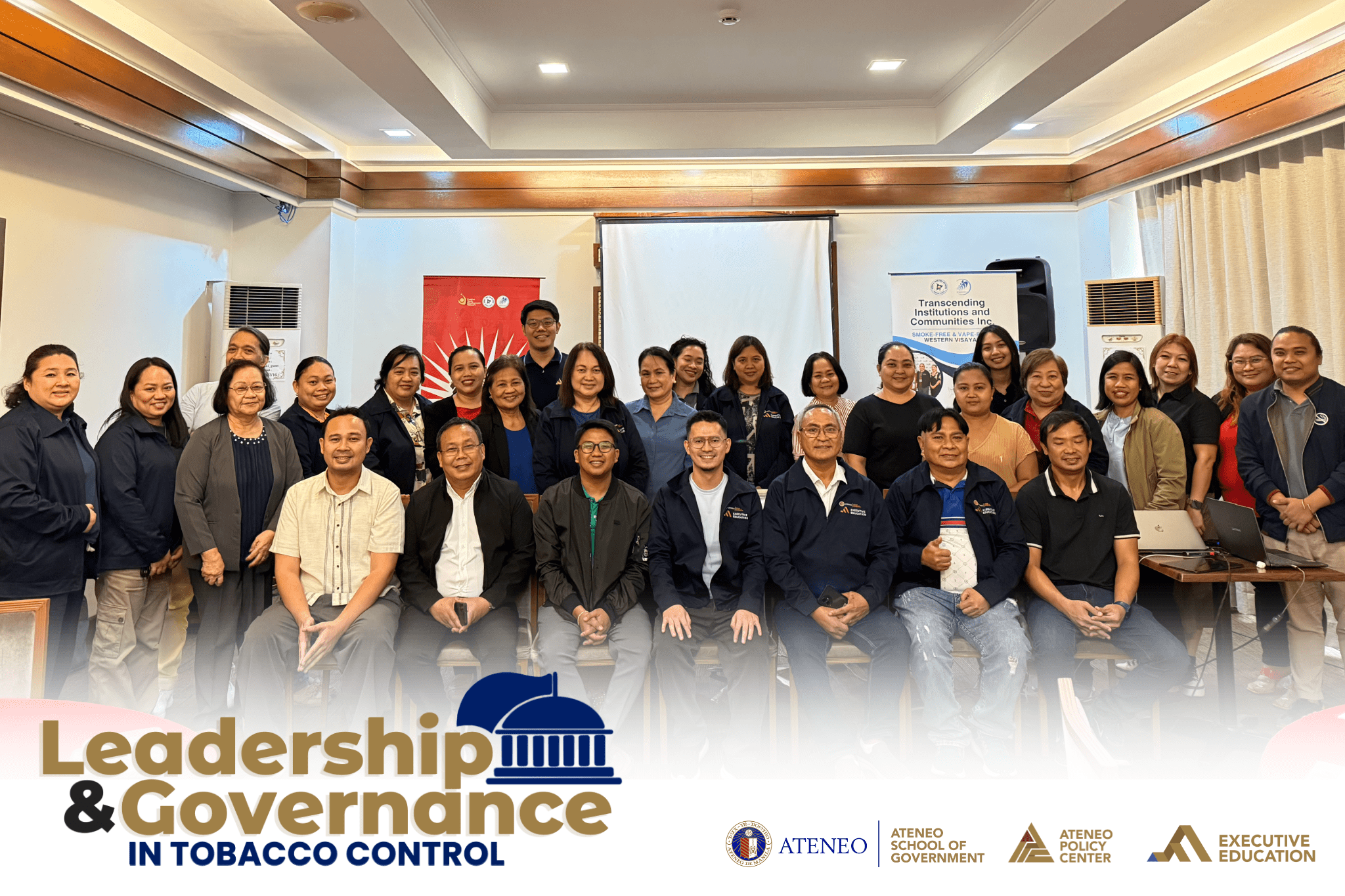
From Executive Learning to Policy Action
The follow-up session was structured as a policy workshop rather than a ceremonial gathering. Participating LGUs presented updates on legislative milestones, discussed governance and implementation challenges, and engaged in facilitated peer learning exchanges. The objective was to identify common barriers, surface context-specific insights, and co-develop practical next steps to strengthen municipal ordinances consistent with global public health standards.
Four months after completing the Leadership and Governance in Tobacco Control (LGTC) program, the 16 participating LGUs have recorded measurable progress toward comprehensive smoke- and vape-free regulation aligned with the Framework Convention on Tobacco Control (FCTC) of the World Health Organization.
Reported milestones include:
- Four LGUs have successfully passed and enacted an FCTC-compliant smoke- and vape-free ordinance;
- Two LGUs have completed third readings;
- One LGU to conduct a public consultation;
- Three LGUs have passed first readings; and
- Six LGUs that are actively strengthening and amending existing local ordinances.
These developments reflect incremental but concrete legislative progress within a relatively short period. They also demonstrate the capacity of local governments to translate technical training into policy action when supported by institutional partnerships and sustained coordination.
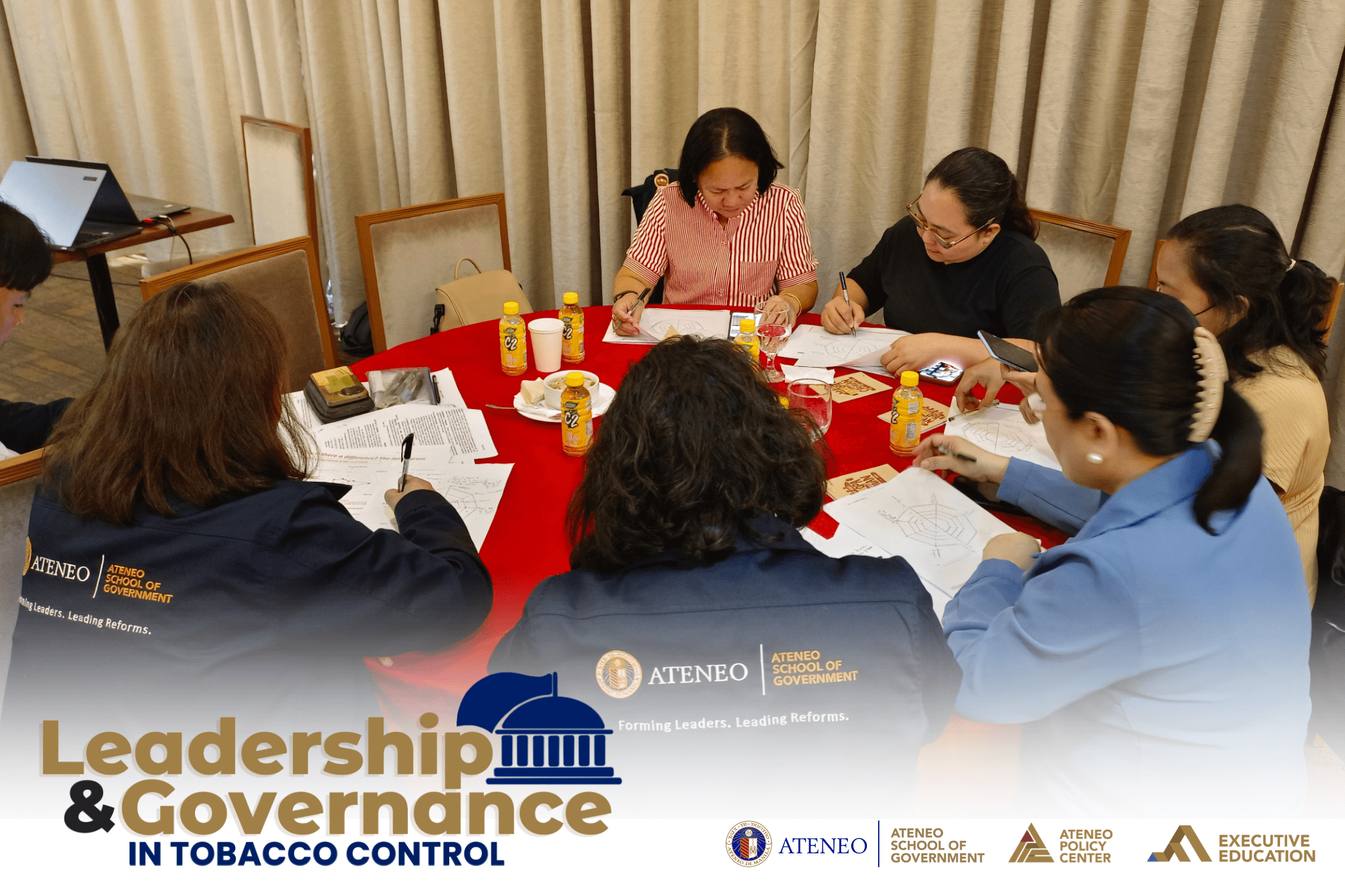
A Collaborative Governance Model
Central to this initiative is a tripartite collaboration that aligns academic expertise, civil society engagement, and provincial leadership. The Provincial Government of Iloilo played a convening and endorsing role, providing institutional legitimacy and encouraging participation from municipalities across the province. Transcend facilitated regional coordination and mobilized post-course technical assistance to LGUs. ASOG, through APC, delivered the executive training, provided policy and legal guidance, and continues to offer technical support and professional networks to alumni.
This integrated approach enables LGUs to situate their reforms within broader public health commitments while adapting policy design to local governance realities. By combining executive education with structured follow-through, the partnership moves beyond capacity-building toward sustained policy reform.
Sustaining Momentum for Healthier Communities
The follow-up session underscored the importance of peer learning and evidence-informed decision-making in advancing local tobacco control. Participants noted that visible progress in several municipalities has begun to encourage neighboring LGUs to initiate or strengthen their own smoke- and vape-free policies, contributing to a wider culture of reform within the province.
As the Iloilo cohort continues to refine and advance their ordinances, the experience illustrates how academic institutions can serve as long-term partners in governance reform—providing not only technical knowledge, but also platforms for collaboration, accountability, and sustained policy innovation.
Through continued engagement with its alumni and partners, ASOG reaffirms its commitment to supporting local governments in developing effective, context-responsive policies that promote healthier, smoke- and vape-free communities.
Recent News
You may also like these articles

[Hot Off the Press] Arkipelago
New book from the Ateneo Press Arkipelago provides a fascinating and fantastical twist on Philippine politics and history Our country is an archipelago of stories
Protecting Creativity: AIPO and Rizal Library Host Copyright Awareness Session for the Ateneo Community
On March 18, 2026, the Ateneo Intellectual Property Office (AIPO), in collaboration with the Rizal Library, successfully conducted a Copyright Awareness Session held on the

Holy Week 2026 Holidays (Memo # UHR2526-038)
Memo # UHR2526-038 31 March 2026 TO: All Employees FROM: [Sgd] Maria Victoria T Cortez, PhD Vice President for University Human Resources SUBJECT: Holy Week
ASOG’s Tobacco Control initiatives spotlighted in DOH National Technical Working Group for Tobacco Prevention and Control
On March 10 to 12, 2026, the Ateneo School of Government (ASOG), through its research and public policy unit, the Ateneo Policy Center, participated in
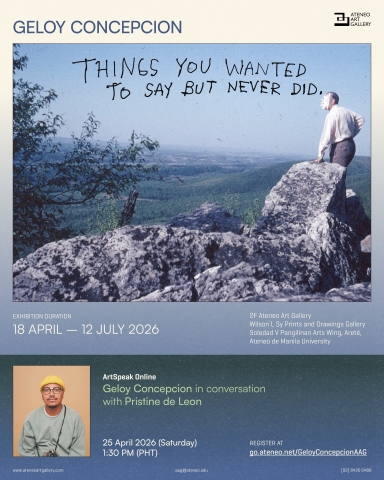
Things You Wanted to Say But Never Did: Geloy Concepcion’s six-year project makes Its exhibition debut at the Ateneo Art Gallery
Geloy Concepcion’s Things You Wanted To Say But Never Did comes to the Ateneo Art Gallery this 18 April 2026. After receiving almost 300,000 messages

[Hot Off the Press] Love If I'm Pretty
New YA Release from the Ateneo Press Love If I’m Pretty tackles the nuances of growing up through complex characters and straightforward prose What do