On being leaven: Reflections on the Service-Learning Student Fellowship 2025
12 Mar 2026 | Ma. Christhia Eliz Pelago, 4 BS Health Sciences











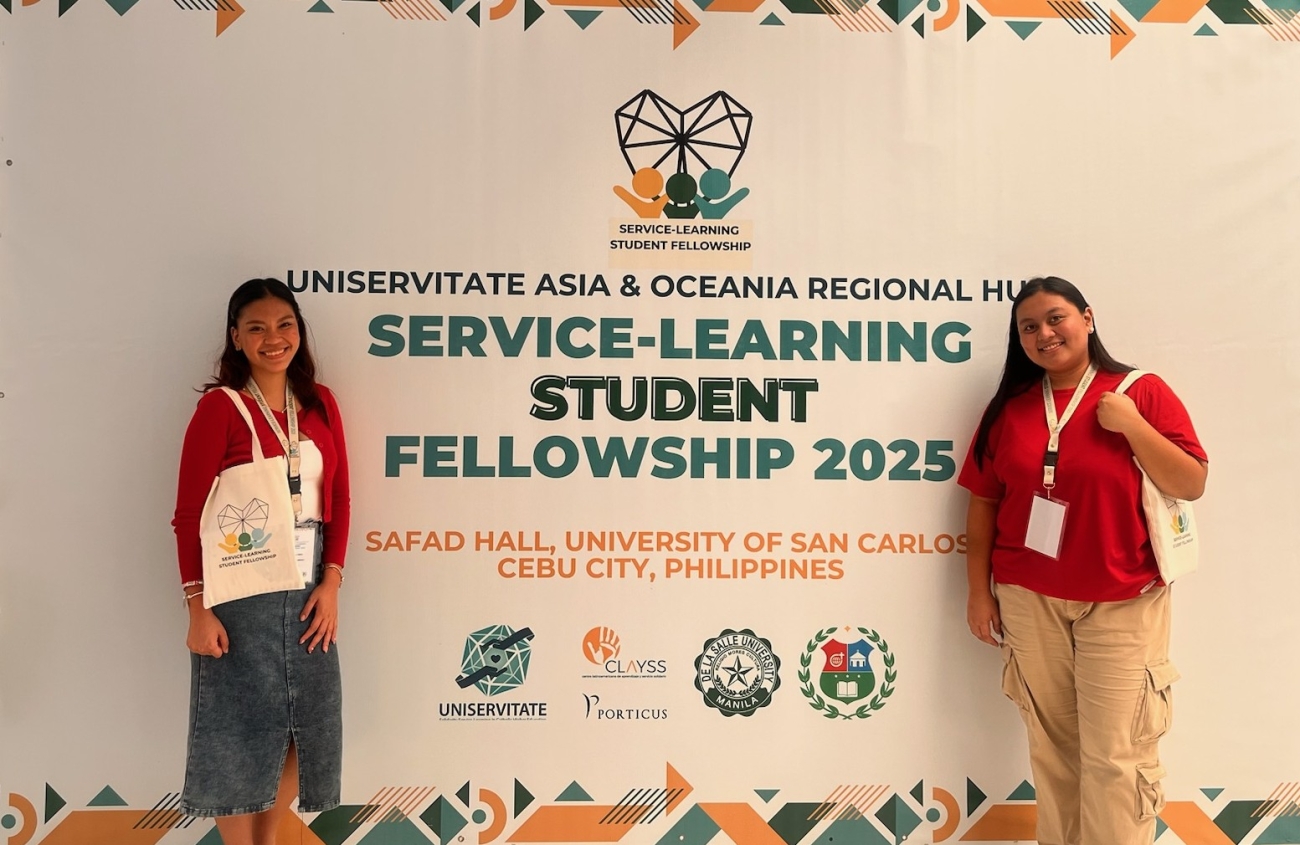
Service-learning has been one of the more honest parts of my Atenean formation, the space where health stopped being theoretical and started being about people, relationships, and the conditions that shape both. The Service-Learning Student Fellowship (SLSF) 2025 offered an opportunity to bring those commitments somewhere new: to sit with student leaders from different institutions and disciplines, all wrestling with the same question about what it truly means to serve with integrity.
Organized by De La Salle University through the Uniservitate Asia and Oceania Regional Hub, in partnership with the University of San Carlos in Cebu, SLSF 2025 brought together student leaders from universities across the region to deepen service-learning practice, develop leadership, and build networks across disciplines and cultures.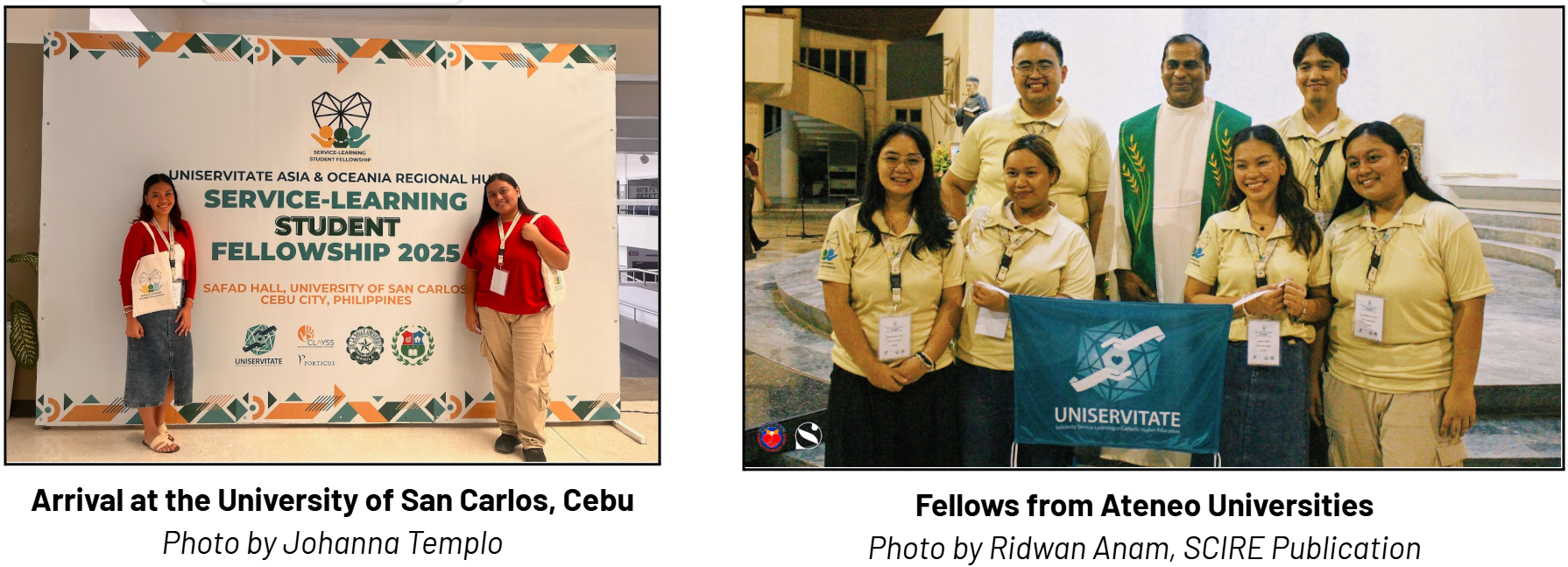
I went to Cebu having already worked with communities through coursework: a diabetes intervention with Samahang Tanglaw ng Malanday Tutorial Outreach for Primary Studies Inc. (STMTOPSI) in Malanday called “Dia-Beat It!”, and a follow-up project on dengue and leptospirosis prevention for the same community called “Seasonal Health Alert.” Returning to the same community the second time taught more than the first visit ever could. Familiarity changes the work, and so does follow-through.
A week before the program, I asked myself, "when does service learning work in serving people, and when does it serve only the student’s sense of purpose? When does a community become a genuine partner, and when do they become a setting for someone else’s learning arc?"
The first day of the program covered the framework on Service Learning, Leaven for Transformation: Servant Leadership in SL, and project design. The image that stayed with me was the leaven metaphor from Matthew 13:33, offered as the fellowship’s animating spirit. “Yeast does not make a spectacle of itself; it works from within and transforms everything around it.”
On the second day, we engaged with two partner communities, St. Arnold Janssen Village Miramar in Talisay and St. Arnold Janssen Community in Bankal. Similar to Ateneo’s Punla Program, fellows were paired, and each pair was assigned a foster parent, with whom we would spend the entire day.
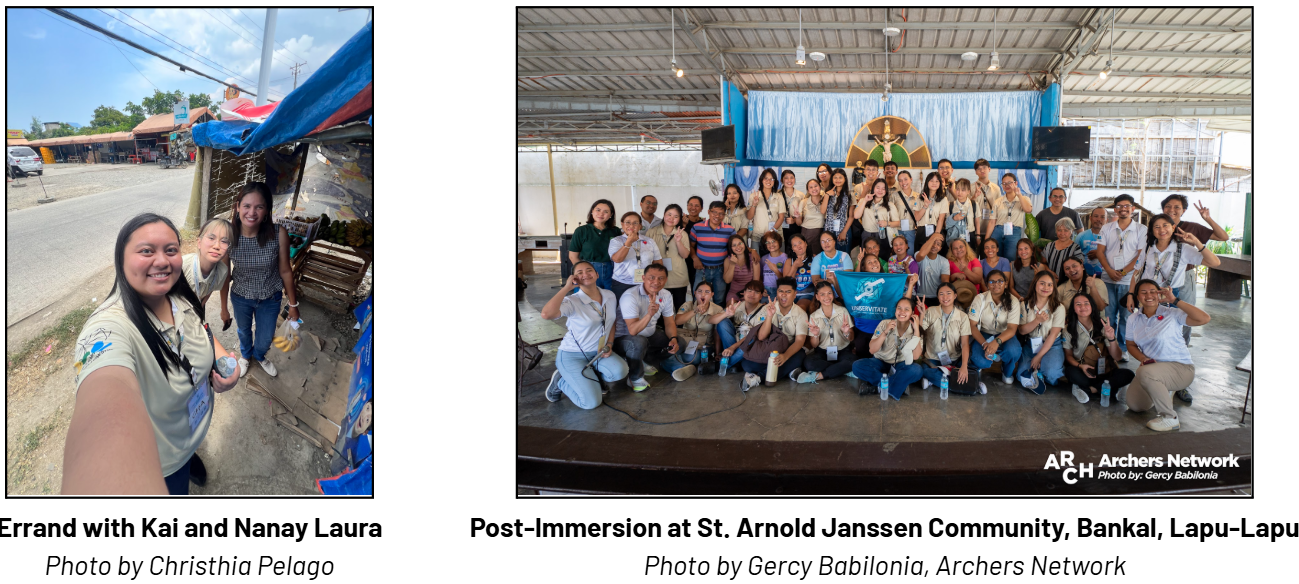
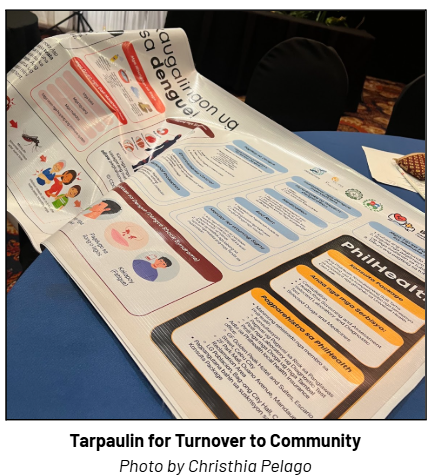
As part of the program, we grouped ourselves based on our community and designed a project that would uplift their lives based on our baseline engagement with them. My group, Health Sciences and Care, implemented “BanKalusugan: Carennected through Preventive Health Education” in Bankal. The project worked with community mothers on dengue prevention and navigation of PhilHealth services.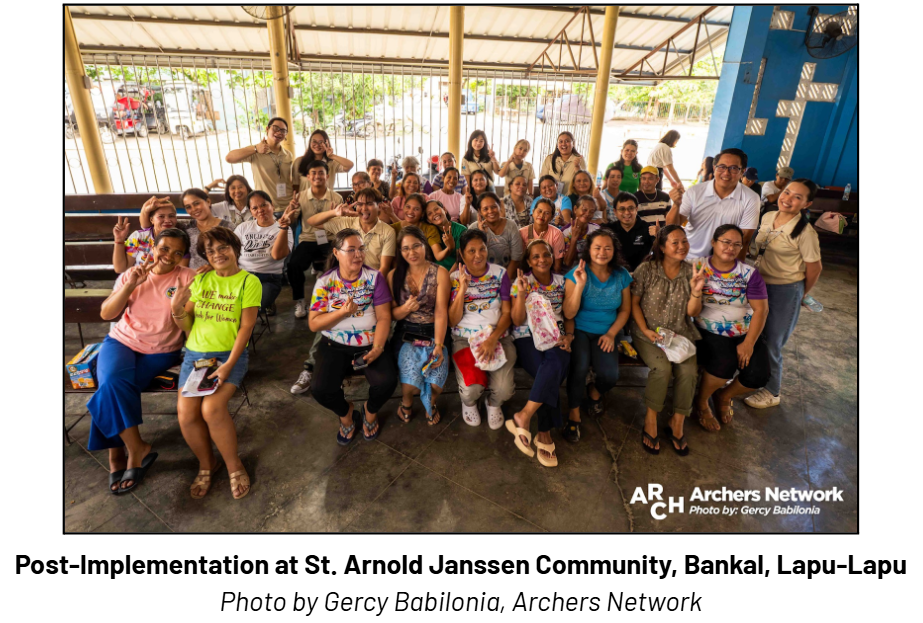
Across all six groups, what came through was how different each discipline reads a community. A health sciences lens surfaces disease prevention and access. A governance lens surfaces power, voice, and participation. A business lens surfaces economic systems and collective ownership. Each reading is partial, and development work drawn from only one tends to miss what the others would have caught. Working alongside people asking the same questions from different starting points was, in itself, one of the more valuable things the week offered.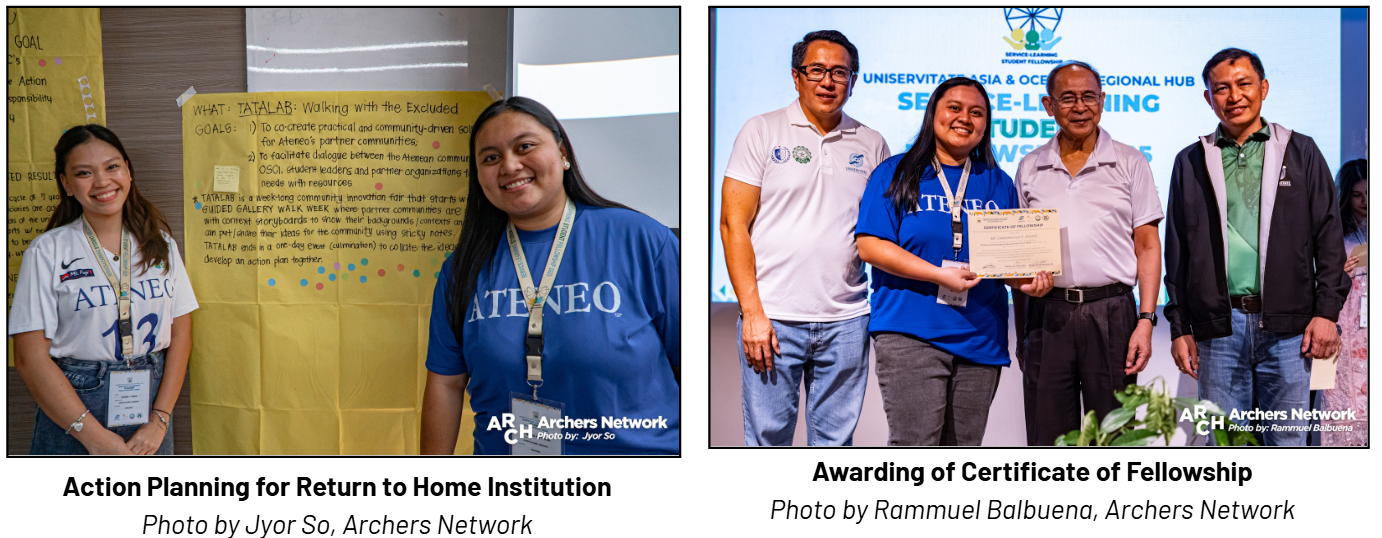
Something the fellowship clarified, which I had been turning over for a while: the quality of service-learning depends on the integrity of the design behind it. Programs that treat community immersion as a field trip, or that measure success by what students learned rather than what communities gained, will produce well-meaning encounters that leave little behind. Every institution practicing service-learning, including our own, is still working through this, and the honesty to say so is part of the work.
The messiah complex lives inside that gap. It surfaces when a student arrives assuming their presence or their expertise is the primary resource on offer. As Rachel Naomi Remen notes, “helping” creates a debt and implies a lack of wholeness in the other, while “serving” is an act of equals that draws on our shared humanity. Amartya Sen’s capabilities approach reinforces this by reminding us that communities carry existing knowledge, leadership, and capacity that predate any student program by years. The student’s role is to learn from that and resist centering their own formation in a space that belongs to the community. Good program design follows from that orientation: it begins with what a community already has, builds toward goals the community owns, and measures success by what the community gains.
The opportunities are already built into our degrees, across electives and major courses.
Through PSYC 80.08i, my groupmates and I conducted Psychological First Aid at the Correctional Institution for Women, where absent mental health facilities and inaccessible medication underscored the urgent need for healthcare services that recognize the dignity of every PDL.
Through HSCI 100.2 and 100.3, five of my batchmates and I designed and implemented The HIVE Lab: Health Intervention and Vision Empowerment for youth and SK officers in Barangay Ligas 2, Bacoor, Cavite, where I learned that the goal of any health intervention should be to make itself unnecessary, and that SK officers, rooted where they are, are exactly the people capable of sustaining what any outside program can only begin.
Ateneo builds these openings into all four years, and there are more of them than most students realize.
Toward the end of the program, my realizations crystallized into gratitude for the Ateneo way of proceeding. What the week asks of you, more than any skill, is a willingness to be changed by the people you meet: to enter without your conclusions fixed, to stay open to what your education has not yet given you the language for, and to let the encounter actually land. The communities you work with have their own knowledge, their own capacity. Your role is to show up accountably and contribute where invited. That is the only way to be both an agent of change and a changed agent.
The conditions that produce poverty and displacement are structural, and no fellowship program will dismantle them alone. What these programs can do is form people who refuse to look away, who ask the difficult questions about the systems of which they are part, and who carry that formation into their professions and their advocacy. That formation begins with a single encounter taken seriously.
The leaven metaphor stays with me as it names exactly the kind of work that is easiest to underestimate: slow and dependent on remaining open to being transformed by the very people you set out to serve. Being an agent of change and a changed agent are not two separate things; they are the same movement, and that is precisely what makes it worth doing.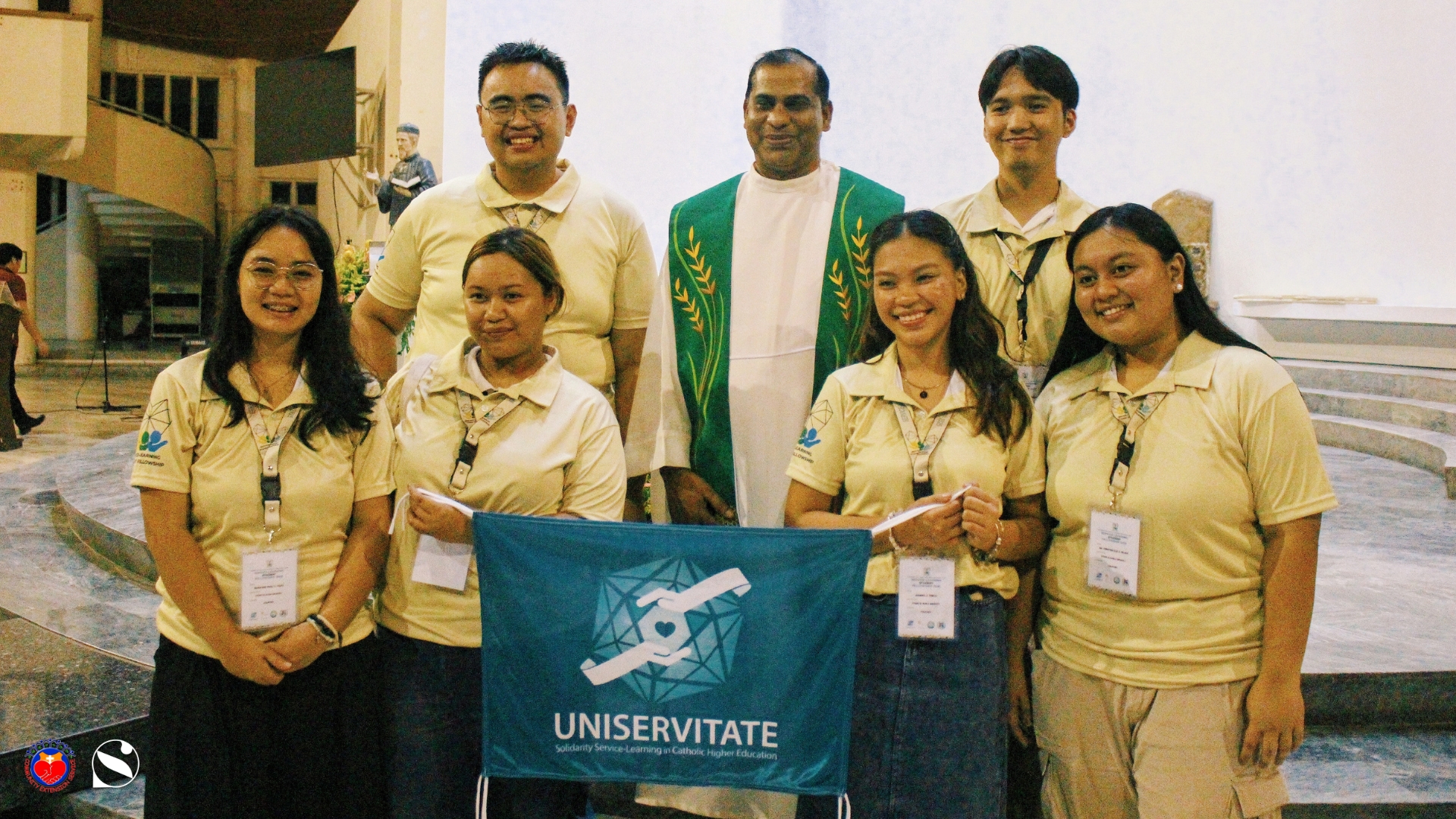
The Service-Learning Student Fellowship (SLSF) 2025 is a week-long, live-in formation inviting undergraduate students from all over the Philippines to become champions of Service-Learning by honing leadership, critical reflection, and project-design skills; building a vibrant peer network across Asia–Oceania; and deepening each fellow’s commitment to social justice through direct community immersion and action inspired by the Gospel image of leaven—small acts that spark transformative change. Attended by representatives from 26 institutions across Asia and Oceania, the program is organized by the University of San Carlos in partnership with the Uniservitate Asia & Oceania Regional Hub (UA&ORH) of De La Salle University (DLSU).
Recent News
You may also like these articles

[Hot Off the Press] Arkipelago
New book from the Ateneo Press Arkipelago provides a fascinating and fantastical twist on Philippine politics and history Our country is an archipelago of stories
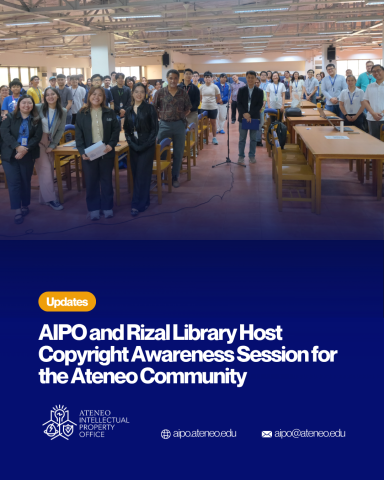
Protecting Creativity: AIPO and Rizal Library Host Copyright Awareness Session for the Ateneo Community
On March 18, 2026, the Ateneo Intellectual Property Office (AIPO), in collaboration with the Rizal Library, successfully conducted a Copyright Awareness Session held on the
Holy Week 2026 Holidays (Memo # UHR2526-038)
Memo # UHR2526-038 31 March 2026 TO: All Employees FROM: [Sgd] Maria Victoria T Cortez, PhD Vice President for University Human Resources SUBJECT: Holy Week
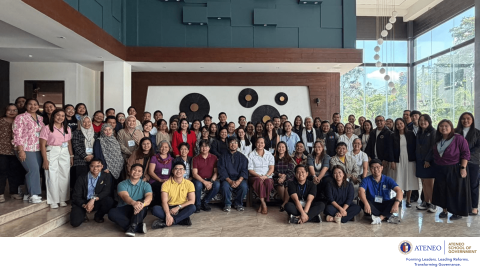
ASOG’s Tobacco Control initiatives spotlighted in DOH National Technical Working Group for Tobacco Prevention and Control
On March 10 to 12, 2026, the Ateneo School of Government (ASOG), through its research and public policy unit, the Ateneo Policy Center, participated in
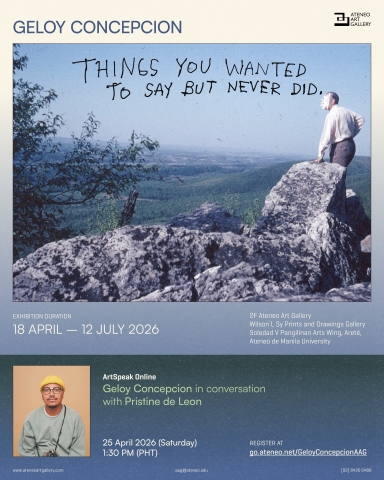
Things You Wanted to Say But Never Did: Geloy Concepcion’s six-year project makes Its exhibition debut at the Ateneo Art Gallery
Geloy Concepcion’s Things You Wanted To Say But Never Did comes to the Ateneo Art Gallery this 18 April 2026. After receiving almost 300,000 messages

[Hot Off the Press] Love If I'm Pretty
New YA Release from the Ateneo Press Love If I’m Pretty tackles the nuances of growing up through complex characters and straightforward prose What do