Democracy from the ground: A reflection on the 13th Association of Jesuit Colleges and Universities - Asia Pacific’s Service Learning Program
09 Mar 2026 | Klariz Monica Chanyee, Phoebe Ysabelle De Leon, and Miguel Kimozave Montemayor






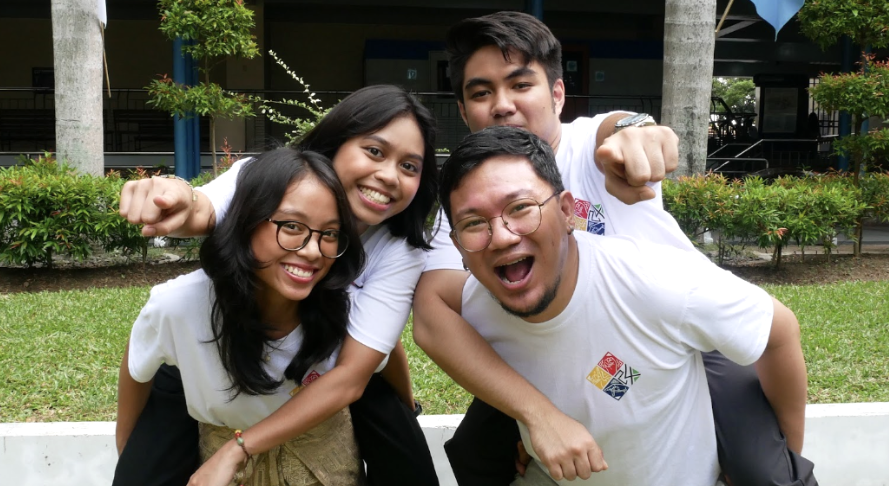
Centered in Mindanao, the 2024 Association of Jesuit Colleges and Universities - Asia Pacific (AJCU-AP) hosted by Ateneo de Davao University organized a two-week Service Learning Program (SLP) where the students underwent several sessions on the Ignatian pedagogical paradigm, emphasizing experience, reflection, and action as pillars of collective volunteerism toward substantive social change. Under the theme “Democracy under Siege: An AJCU-AP Service Learning Program on Democratic Resilience,” the program guided student participants and faculty companions through a series of reflective and immersive activities. These were geared toward gaining a greater understanding of everyday life for the marginalized in Mindanao, as well as upending unquestioned internal biases.
The immersion brought into sharp focus the disconnect between policy and lived reality, as well as the tension between well-intentioned development efforts and their on-the-ground impact. Students, faculty, and program volunteers did not just witness the resilience of Mindanaoans; they grappled with questions about their own roles in perpetuating or dismantling the status quo. More than fostering empathy, the program demanded a shift in perspective. The reflections that emerged from this encounter were complex and often uncomfortable, but that discomfort became fertile ground for growth.
Having questioned their own character, role, and agency, participants returned not with simplistic solutions, but with a deeper commitment to building solidarities that transcend geographical and social divides, fostering a democracy that is both inclusive and responsive to those at the margins. Participants recognized that the challenges faced by one country often resonate with the struggles of others, leading to cross-border discussions on the best practices and failures of various political systems.
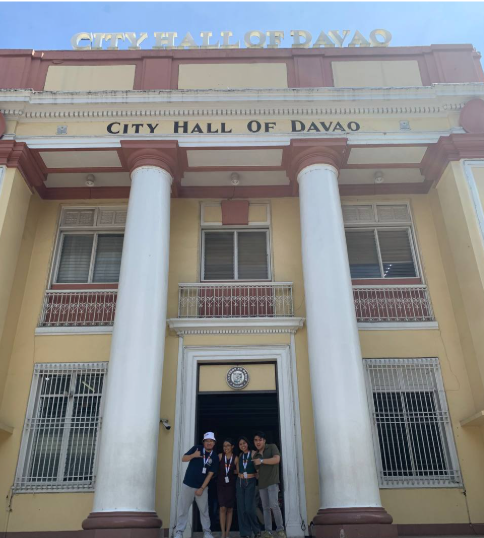
One of the most powerful aspects of the SLP was its ability to humanize abstract ideals such as progress, development, and democracy. Through direct engagement with the communities of Mindanao, participants saw these ideals materialize in the faces of people living on the frontlines of economic inequality, political instability, and social exclusion. Real progress is reflected in human dignity, in the opportunities individuals have to improve their lives, and in the spaces provided for them to tell their own stories. By putting a human face to these ideals, the program challenged participants to rethink what it truly means to foster sustainable progress—one that honors the agency and lived experiences of those on the margins.
The theme of "Democracy under Siege" was particularly thought-provoking in today’s climate, where the very notion of democracy feels fraught. In an era where the lines between truth and falsehood grow increasingly blurred, and where disinformation can undermine even the strongest institutions, the program forced participants to wrestle with the fragility of democratic systems. It invited them to reflect on how democracy, when weakened by populism, corruption, and the erosion of civic spaces, becomes vulnerable to manipulation, often at the expense of the marginalized.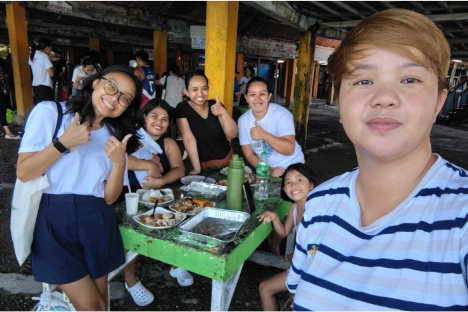
While the program left more questions than answers, it certainly placed the delegates in a state of contemplation regarding their own concepts and practices of democracy. Democracy is not merely a "floating idea" automatically associated with politics and governance; upholding it is more personal than one might think. As members of the youth, the delegates are in the best position to inspire and ignite change.
Upon returning from the SLP, delegates were moved to ideate how they could best embody democracy in their own contexts. Some considered cultivating democratic spaces within their personal relationships; others felt drawn to act within their school organizations, while some envisioned working alongside fellow delegates to reach a wider audience. The freedom to explore, choose, and even change perspectives was highlighted—provided they use their vigor to build safe spaces for others to speak their truths.
The SLP produced a collective consciousness that emphasized the nuances of democracy, sparking hope for a better future and the actions required to achieve it. The delegates were invited to think globally but respond locally. At the end of their SLP journey, everyone was left with the haunting, vital question: What now?
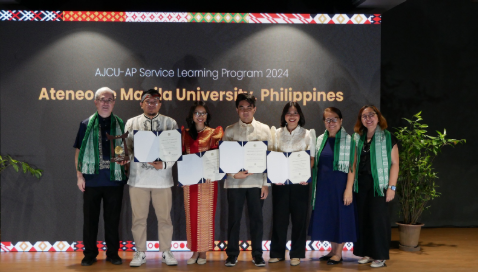
The 13th AJCU-AP SLP brought together seven institutions across the region: Sanata Dharma University (Indonesia), Sophia University (Japan), Xavier Learning Community (Thailand), Instituto São João de Brito (Timor Leste), Ateneo de Manila University (Philippines), and Xavier University – Ateneo de Cagayan (Philippines) with Ateneo de Davao University (Philippines) serving as this year’s host institution.
Ateneo de Manila University was represented by Klariz Chanyee (3 AB DS), Phoebe De Leon (4 AB POS-MPM), and Kim H Montemayor (3 BS LM) under the guidance of Yayun Patrimonio of the Office for Social Concern and Involvement. The delegation was supported by the University’s Office of the Assistant Vice President for Social and Environment Engagement for Development and Sustainability.
Applications are now open for the 2026 AJCU-AP SLP! This year’s program will be held from August 2 to 16, 2026, in Timor-Leste, hosted by Instituto São João de Brito (ISJB), with the theme “Peace and Reconciliation: A Perspective of Post-Conflict Country Experience.”
Interested undergraduate students may complete the application form here: http://go.ateneo.edu/2026-AJCU-AP-SL. Applications close on March 31 at 11:59 PM to allow the selection committee to begin the screening process.
Recent News
You may also like these articles

[Hot Off the Press] Arkipelago
New book from the Ateneo Press Arkipelago provides a fascinating and fantastical twist on Philippine politics and history Our country is an archipelago of stories
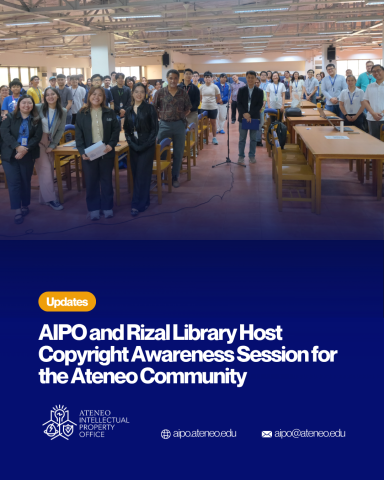
Protecting Creativity: AIPO and Rizal Library Host Copyright Awareness Session for the Ateneo Community
On March 18, 2026, the Ateneo Intellectual Property Office (AIPO), in collaboration with the Rizal Library, successfully conducted a Copyright Awareness Session held on the
Holy Week 2026 Holidays (Memo # UHR2526-038)
Memo # UHR2526-038 31 March 2026 TO: All Employees FROM: [Sgd] Maria Victoria T Cortez, PhD Vice President for University Human Resources SUBJECT: Holy Week
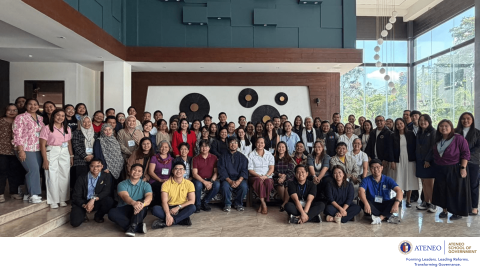
ASOG’s Tobacco Control initiatives spotlighted in DOH National Technical Working Group for Tobacco Prevention and Control
On March 10 to 12, 2026, the Ateneo School of Government (ASOG), through its research and public policy unit, the Ateneo Policy Center, participated in
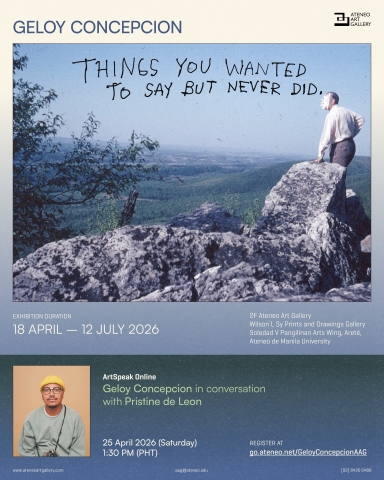
Things You Wanted to Say But Never Did: Geloy Concepcion’s six-year project makes Its exhibition debut at the Ateneo Art Gallery
Geloy Concepcion’s Things You Wanted To Say But Never Did comes to the Ateneo Art Gallery this 18 April 2026. After receiving almost 300,000 messages

[Hot Off the Press] Love If I'm Pretty
New YA Release from the Ateneo Press Love If I’m Pretty tackles the nuances of growing up through complex characters and straightforward prose What do