ASoG through APC organizes expert panel discussion on traditional security at the 7th Katipunan Conference
24 Oct 2025


The 7th Katipunan Conference, held at the IBG-KAL Theatre, UP Diliman, from 15 to 16 October 2025, concluded with an expert panel titled "Strategic Alignments in Flux: Reimagining Traditional Security in the Indo-Pacific" that reframed national security for the Philippines and the region in an era of intensifying geostrategic competition. Leading academics and international experts examined how economic resilience, alliance diversification, and integrated defense planning are taking over exclusively military conceptions of security. The panel was moderated by Dr Robin Garcia of the Ateneo School of Government.
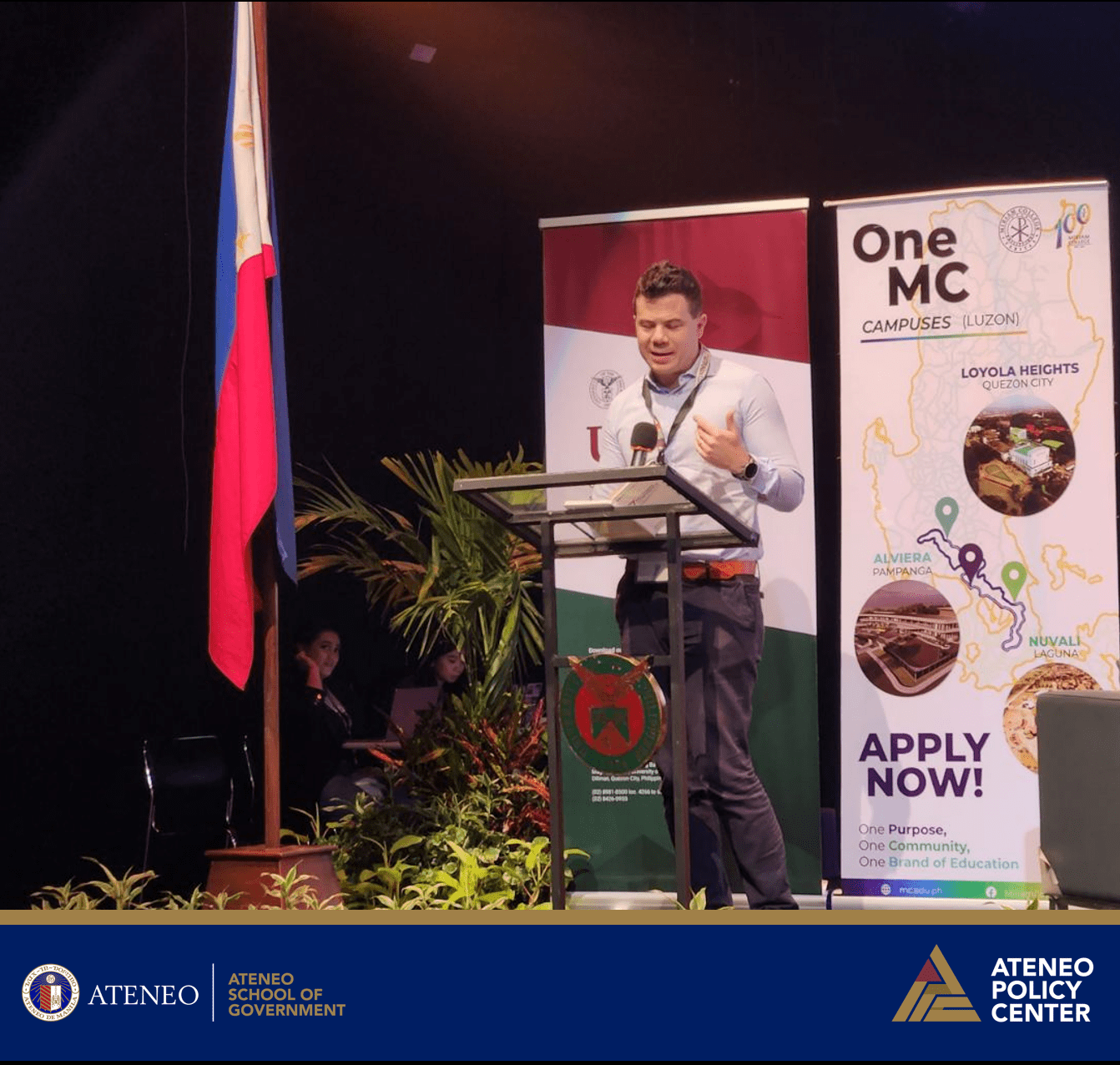
The session opened with Dr Darren J Lim from the Australian National University. He emphasized the centrality of geoeconomics, arguing that trade, investment, critical technologies, and supply chains are now instruments of strategic competition and potential vulnerability. His speech highlighted the need for stronger coordination between economic and security policymaking, citing the need to protect sovereignty without needlessly severing economic ties. He called for whole-of-government frameworks that treat economic security and national defense as mutually reinforcing priorities.
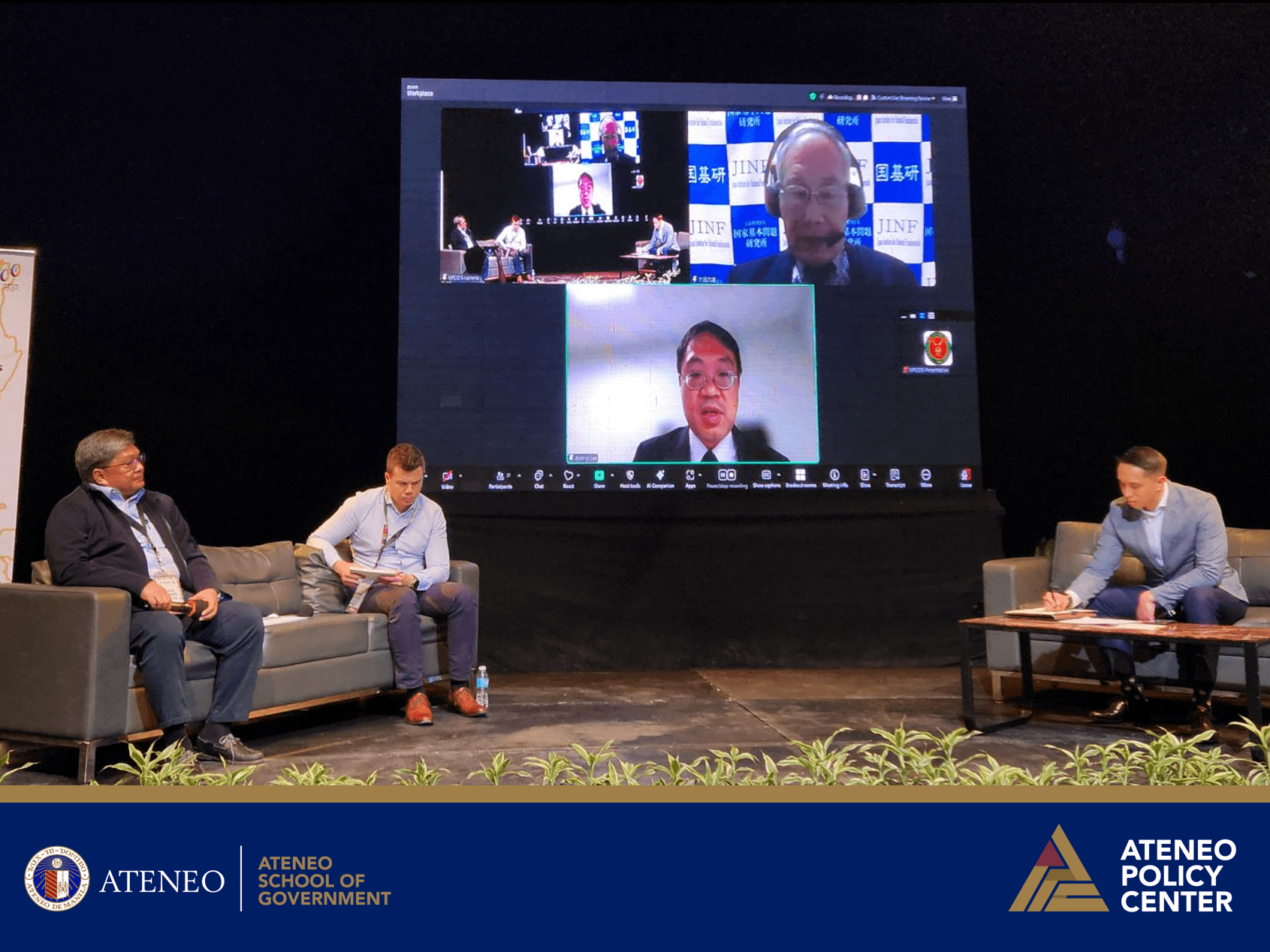
Dr Jyun-yi Lee, from the Institute for National Defense and Security Research, underscored the persistent challenge posed by China’s strategy of national rejuvenation and “grey zone” operations, which rely on a mix of coercive economic tools, information campaigns, and calibrated maritime pressure to reshape regional norms below the threshold of open conflict. The discussion stressed the urgency of building resilience in information ecosystems, governance, and public awareness to reduce susceptibility to coercion and prevent miscalculation in ambiguous confrontations.
Japan’s One Theater Concept and the OCEAN framework were presented by VAdm Fumio Ota of the Japan Institute for National Fundaments, as practical models for networked deterrence and interoperability among like-minded states, with specific reference to enhanced intelligence sharing, maritime domain awareness, and defense-technology cooperation. He noted that minilateral arrangements offer scalable ways to raise the political and economic costs of coercive actions while bolstering regional operational capacity and information exchange.
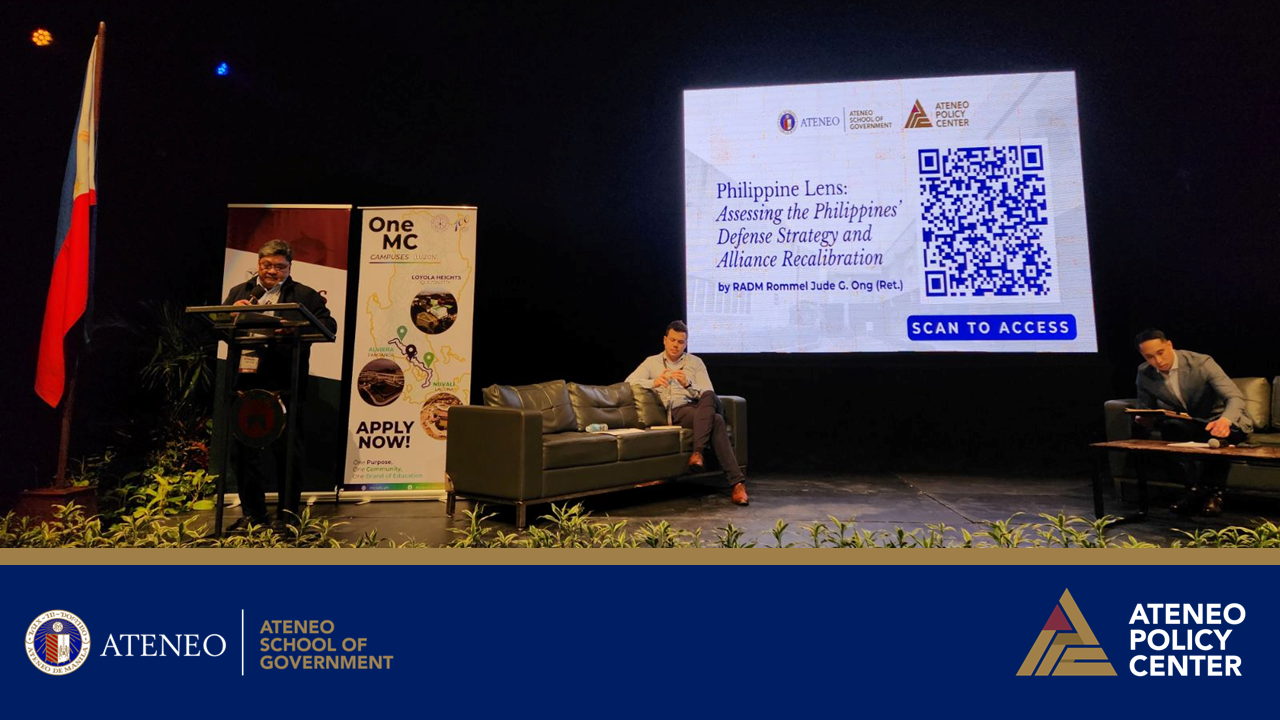
From the Philippine vantage point, Ateneo Policy Center Senior Research Fellow RAdm Rommel Jude G Ong urged an accelerated transition from an inward-focused counterinsurgency posture to an outward-facing Archipelagic Defense Concept that integrates maritime defense, energy and food security, and economic planning. His recommendations included diversifying partnerships beyond traditional alliances, investing in coastal and surveillance capabilities, and developing defense-industrial capacities such as drones and logistics support to reduce critical supply-chain dependencies.
The panel concluded that security in the Indo-Pacific will be defined less by raw military might and more by resilient economies, credible institutions, and adaptive partnerships. It called on Philippine policymakers to pursue cross-sectoral strategies that align economic policy with defense planning and to deepen cooperation with regional partners to safeguard sovereignty and national development.
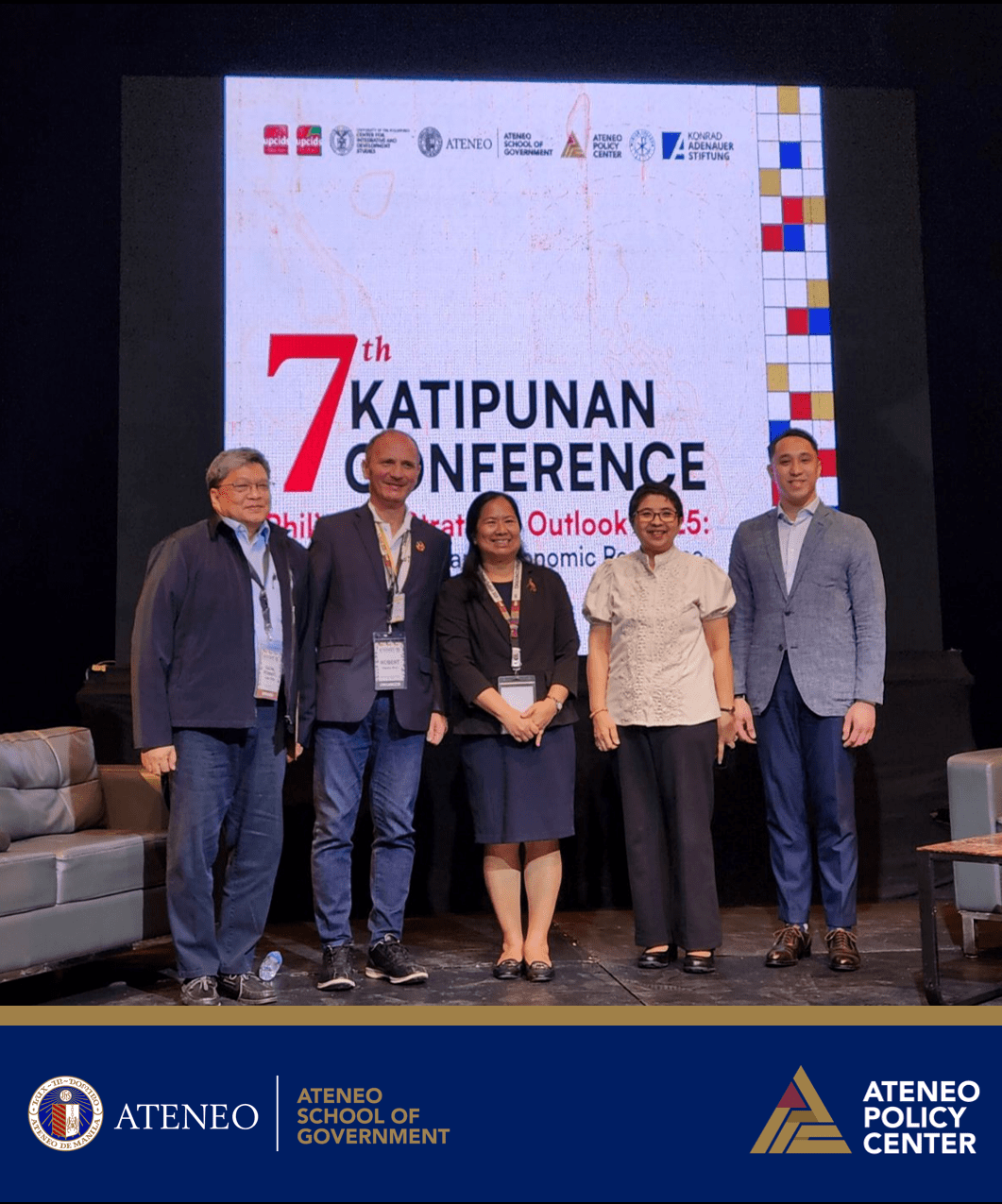
The 7th Katipunan Conference was co-organized by the UP Center for Integrative and Development Studies, the Ateneo School of Government through the Ateneo Policy Center, and Miriam College, with support from Konrad-Adenauer-Stiftung Philippines.
Recent News
You may also like these articles

[Hot Off the Press] Arkipelago
New book from the Ateneo Press Arkipelago provides a fascinating and fantastical twist on Philippine politics and history Our country is an archipelago of stories
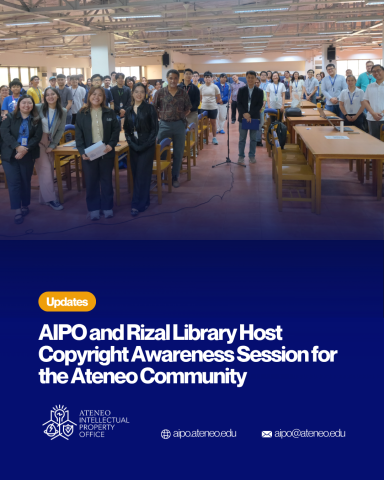
Protecting Creativity: AIPO and Rizal Library Host Copyright Awareness Session for the Ateneo Community
On March 18, 2026, the Ateneo Intellectual Property Office (AIPO), in collaboration with the Rizal Library, successfully conducted a Copyright Awareness Session held on the
Holy Week 2026 Holidays (Memo # UHR2526-038)
Memo # UHR2526-038 31 March 2026 TO: All Employees FROM: [Sgd] Maria Victoria T Cortez, PhD Vice President for University Human Resources SUBJECT: Holy Week
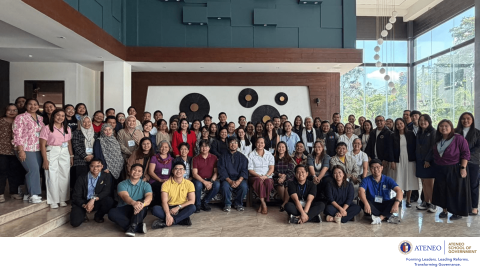
ASOG’s Tobacco Control initiatives spotlighted in DOH National Technical Working Group for Tobacco Prevention and Control
On March 10 to 12, 2026, the Ateneo School of Government (ASOG), through its research and public policy unit, the Ateneo Policy Center, participated in

Things You Wanted to Say But Never Did: Geloy Concepcion’s six-year project makes Its exhibition debut at the Ateneo Art Gallery
Geloy Concepcion’s Things You Wanted To Say But Never Did comes to the Ateneo Art Gallery this 18 April 2026. After receiving almost 300,000 messages

[Hot Off the Press] Love If I'm Pretty
New YA Release from the Ateneo Press Love If I’m Pretty tackles the nuances of growing up through complex characters and straightforward prose What do