[Ateneo Press Review Crew] Revisiting the Republic’s Sadness: On Eric Gamalinda’s My Sad Republic
04 Aug 2025 | Dean Gabriel Amarillas



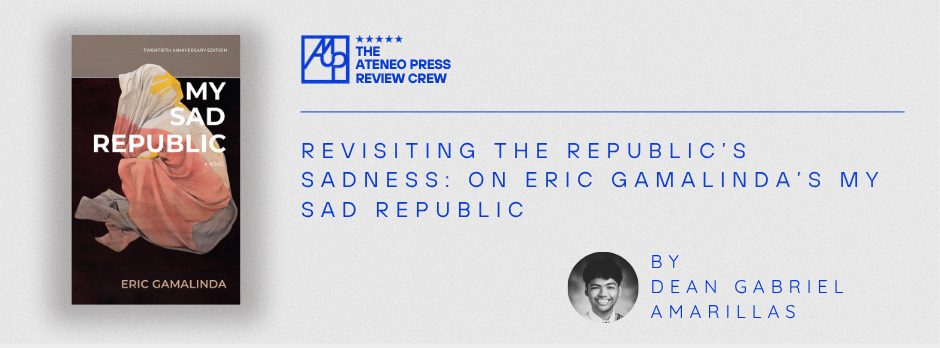
It is only in the inherent duality of my life as someone who studies Philippine Studies and who works as a journalist, have I realized the true meaning of history repeating itself. My classes, which are focused on the country’s history, economics, politics, and tracing the development of its critical thought, carry names, policies, and concepts that I still write in my articles today. Meaning: Marcos, Martial Law, land reform, desaparecidos, corruption, and privatization, are words that occupy the country’s imagination in 2025, as they did during the 70s.
It is fitting, then, that in the twentieth anniversary edition of My Sad Republic, a meditation on this very repetition of history, that Eric Gamalinda chose to revise his translation of the novel’s original epigraph from Francisco Balagtas, changing “desolation” in favor of “treachery”: “Inside and outside my sad country, / it is treachery that reigns supreme.” Treachery, still roaring in our nation’s society, still rowing us further into ruin.
Here lies Gamalinda’s genius: in reminding us of this historical repetition through dissecting the roots of our republic’s sadness. The scalpel specifically used for this dissection being Isio, a reimagining of a real figure: Dionisio Magbuelas, also known as Papa Isio, who was a Filipino revolutionary leader during the late 19th century, he led a group of spiritual leaders in organizing resistance against Spanish colonial rule and, later, American occupation in Negros.
The novel starts with a premonition: As Isio turned sixteen, “he realized that the end of the world would happen in his lifetime. He saw the first convulsions of the apocalypse everywhere, in the diluvial monsoon, in the nervous coruscation of lightning.” The year was 1873, nearing the end of the Spanish colonization, Gamalinda painted a Visayas negotiating the tension between European influence and the insistence of folk traditions and beliefs. Talks about ports and pilgrimages are apparent, but are also superseded by superstitions. In Gamalinda’s world, plantations co-existed with asuangs.
It was after Isio’s first miracle, through reviving Martinez who was bitten by a venomous viper, despite young civil guard Tomas Agustin’s orders, did he gain the nickname “the healer”. Throughout the story, we follow Isio's transformation from healer to pope.
I see it as no mere coincidence that Isio’s first miracle is also an act of rebellion—as if to suggest, from the very beginning, that the true sources of our nation’s ills are our own, albeit influenced by foreign colonialism. In fact, the tenure of Isio’s papacy was never marked by the institutional traits often associated with Catholicism, such as bureaucracy and order. Isio, I argue, never saw himself as above his people.
Based in America, Eric Gamalinda has long been writing about the relationship between the Philippines and America. In My Sad Republic, that relationship takes center stage. Isio and Tomas Agustin, despite standing on opposite sides of the revolution, both turn to America as a source of salvation. In the end, both are “unhappy,” a quiet but firm indictment of the country’s neocolonial condition. Yet because Gamalinda’s critique is more subdued, placing much of the blame on Filipinos themselves through centering this idea of treachery, it stands in contrast to the work of his contemporaries and many Filipino writers today, who are far more direct in their indictments of colonialism.
More things can be further problematized in the novel, including Gamalinda’s treatment of women, who all suffer tragic fates. Not one single woman, in the entirety of the text, called the important shots. Worse, they are all subject to borderline fetishization. Women in Gamalinda’s novels are meant to be molested and harassed. Whether or not Gamalinda did this to represent the extreme patriarchy during the Spanish colonization, these instances often come off as exploitative rather than cathartic. Take, for example, a girl of fifteen or sixteen named Santa Regina, a healer whose bathwater is said to cure cholera, malaria, menstrual cramps, and even madness. The cure is supposedly more effective if “she bathed in a clay basin, her body covered only by her lustrous mane.” Would the story lose anything if this detail were removed? I seriously doubt it.
Stylistically, My Sad Republic deserves every accolade. A winner of the Centennial Literary Prize in 1998, the novel more than lives up to its distinction. It’s easy to be drawn into Gamalinda’s sublime narrative, where a bittersweet tale of revolution, set against the backdrop of Negros’s sugar plantations, unfolds with cinematic grandeur. It is a linguistic tour de force, blending historical reimagination with poetic playfulness—akin to literary forebears like Wilfrido Nolledo and Alfred Yuson.
The novel features a wide cast of fully realized characters, such as Asuncion and Felipe, whom I’ve deliberately left out in order not to diminish the experience of encountering such complex characters.
More than two decades since its initial release, My Sad Republic has only grown in urgency. Its relevance extends like Isio’s ever-growing nail: from Balagtas’s epigraph in the 1800s, to Gamalinda’s novel in the 90s, and on to the familiar specters of treachery and colonialism that persist in 2025. What lingers long after My Sad Republic is set down, is the hope that there will always be those who continue to fight for change, those who will eventually end the republic’s misery.
Get your copy in paperback: Website | Shopee and Lazada
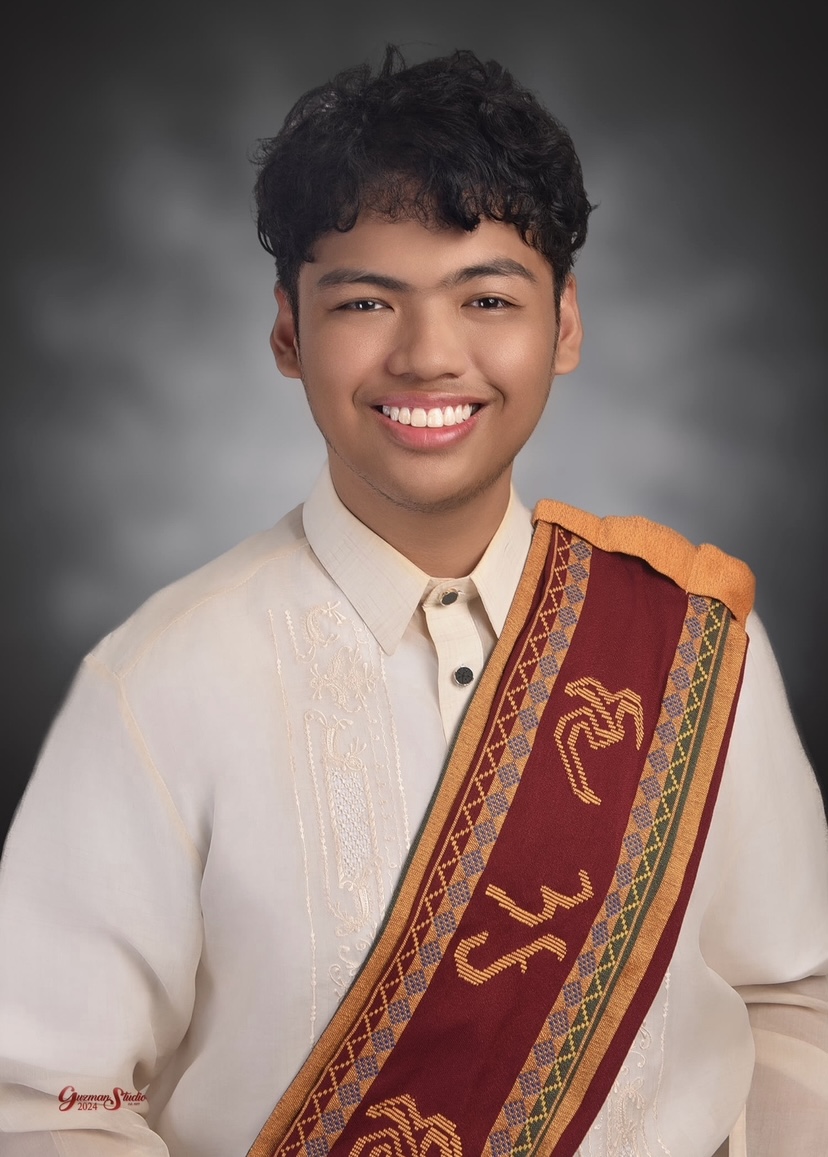
Dean Gabriel C. Amarillas is a BA Philippine Studies student at the University of the Philippines Diliman, double majoring in Comparative Literature and Malikhaing Pagsulat. When he is not reading books, he writes news articles for the Philippine Collegian, primarily covering human rights.
Recent News
You may also like these articles
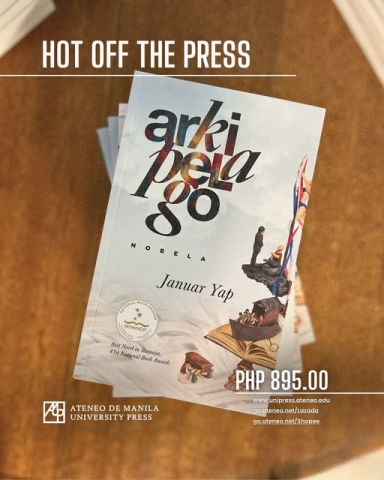
[Hot Off the Press] Arkipelago
New book from the Ateneo Press Arkipelago provides a fascinating and fantastical twist on Philippine politics and history Our country is an archipelago of stories
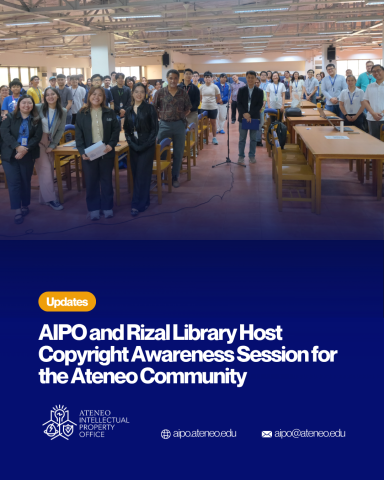
Protecting Creativity: AIPO and Rizal Library Host Copyright Awareness Session for the Ateneo Community
On March 18, 2026, the Ateneo Intellectual Property Office (AIPO), in collaboration with the Rizal Library, successfully conducted a Copyright Awareness Session held on the
Holy Week 2026 Holidays (Memo # UHR2526-038)
Memo # UHR2526-038 31 March 2026 TO: All Employees FROM: [Sgd] Maria Victoria T Cortez, PhD Vice President for University Human Resources SUBJECT: Holy Week
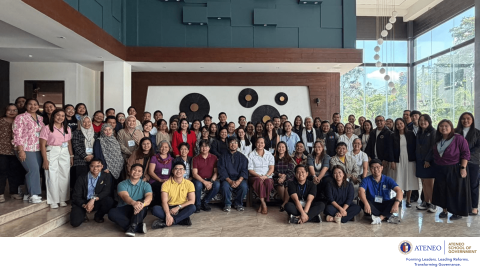
ASOG’s Tobacco Control initiatives spotlighted in DOH National Technical Working Group for Tobacco Prevention and Control
On March 10 to 12, 2026, the Ateneo School of Government (ASOG), through its research and public policy unit, the Ateneo Policy Center, participated in
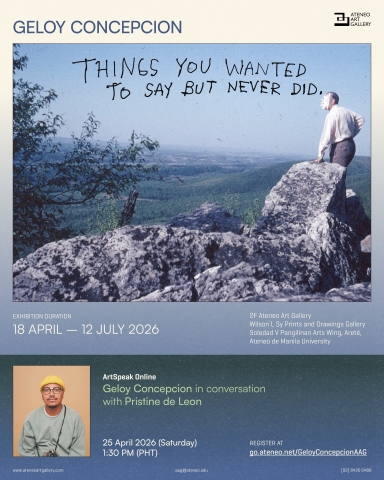
Things You Wanted to Say But Never Did: Geloy Concepcion’s six-year project makes Its exhibition debut at the Ateneo Art Gallery
Geloy Concepcion’s Things You Wanted To Say But Never Did comes to the Ateneo Art Gallery this 18 April 2026. After receiving almost 300,000 messages
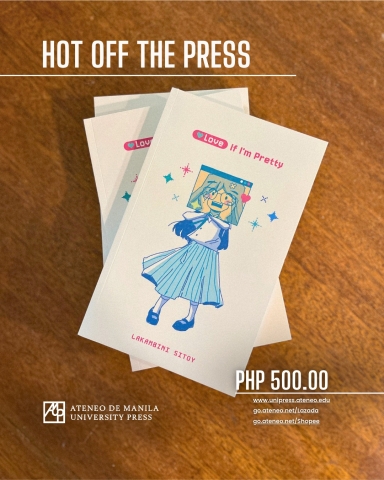
[Hot Off the Press] Love If I'm Pretty
New YA Release from the Ateneo Press Love If I’m Pretty tackles the nuances of growing up through complex characters and straightforward prose What do