[Ateneo Press Review Crew] Re-thinking the Nation in Vicente Rafael's White Love and Other Events in Filipino History
18 Aug 2025 | Aldrake Gallaza


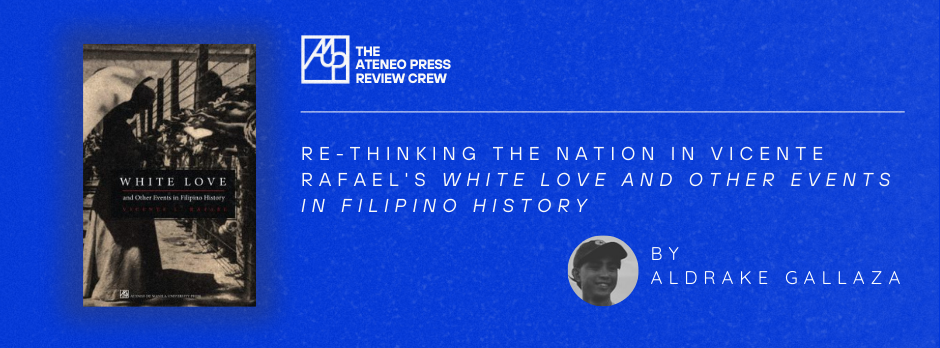
Vicente Rafael’s White Love and Other Events in Filipino History deviates from the usual triumphalist national history. Arranged thematically and semi-chronologically, what this collection of essays offers is not an epic, grand narrative of the Filipino nation’s history but an ‘episodic’ account that goes against the grain of colonial and nationalist discourse. These essays do not just chronologically narrate events in Filipino history as if these events were “part of a smooth continuum”(3)—a teleological narrative of struggle against colonialism leading towards independence and the formation of the nation-state. Rather, Rafael focuses on the contradictions and ironies of nation and nationalism that “interrupts the establishment of a single, overarching narrative about the nation” (4). Disavowing the task of reproducing a grand narrative, he instead offers peripheral versions of history that “fall short or exceed the narrative frames of white love” (xiv), those versions that have slipped from Filipino consciousness.
The book’s narratives transcend the confines of colonial and nationalist/anticolonial discourse. It invites us to re–think nationalism and the nation-state, urging a critical examination of the official national narratives about it—a common motif among the works of Filipino Southeast Asianists who studied at Cornell University in the U.S. like Rafael himself. He emphasizes how colonialism continues to linger and influence the development of postcolonial society and the identity, consciousness, and social life of its people. Here, colonialism’s legacy is treated as something that is not solely rejected and suppressed but also appropriated, embraced, and constitutive in the unfolding of nationalism and the formation of fluid, hybrid culture and identities—such insistence on ambivalence and hybridity is characteristic of postcolonial thought.
The episodes contained in this book span from the year 1898, when the American colonization of the archipelago halted the establishment of a national sovereign, up to the 1990s when the nation had consolidated its transformation as a warm-body export economy and was still grappling with the aftermath of the dictatorship. The essays center on the cultural politics of the Filipino nation and how the dialectical tension between colonialism and nationalism constitutes Filipino history. Rafael juxtaposes seemingly disparate themes, objects, and/or events—census and Tagalog melodramas; elite collaboration and rumors; political patronage, bomba films, and youth politics; Taglish and popular culture; and gossip and OCWs—to reveal how colonialism, or the ‘white love,’ shaped the workings of Filipino nationalism, thereby ironizing it. Such ironies, as the theorist Neferti Tadiar observes, appear to be the product of the contradictions of (formerly) colonized people bearing the signifiers of an alien modernity.
The first three essays examine the period of U.S. colonial rule in the Philippines, exploring how the ideology of white love shaped both colonial policies the U.S. enforced and their constructed image of the nation. This is reflected in the use of the colonial census as an apparatus for categorizing, surveilling, and disciplining native bodies; the construction of a domestic realm in the colony from which colonial violence, inequalities, and exploitation are obscured and depoliticized; and use of photographic portraiture as visual documents of colonial accomplishments. The theme of spectacle recurs in these essays. The bodies of natives are categorized, individuated, displayed, and are rendered to be seen, to be visible to the imperial gaze. By displaying racialized bodies, this highlights the ethno-racial differences of the colonized thereby marking the exceptional qualities of the white masters and converting the native bodies as recipients of benevolent tutelage.
Rafael, in these essays, also highlights the technologies of power that enabled the natives to resist the imperial logic of white love. In chapter 1, for instance, the Tagalog nationalist melodramas provided the natives alternative modes of imaging the nation by subverting the racial and gender hierarchization which the colonial census projects. If the benevolent masters viewed the Philippines as an object of the colonial order, nationalist melodramas viewed the nation as an object of love and attachment. What is also notable in the nationalist melodramas, contrary to the paternal figure of white love, is that the nation is personified by women. Here, the imaginary figure of the mother-nation or inangbayan that has the ability to spur nationalist sentiments and popular movements is evoked. In chapter 5, this mother-nation figures in Imelda’s persona as the “mother of the nation” (with Ferdinand as the father), as the first couple perceived themselves as national patrons.
In the next five essays, Rafael looks into the themes of hybridity of identities and language to explore the legacy of white love and how it continues to shape the economic, cultural, political, and social structure of the Philippines in the postcolonial period. For instance, chapter 4 explores the fragmented nature of national identity and the contradictions of official nationalism which legitimized elites’s “duplicity as a state policy in the form of collaboration” (116). Through the use of English, a language foreign to both the national elites and the Japanese, the former was able to defer the authority and parody the ideology of the latter. But for the non-elites, it was the circulation of rumors that provided them alternative sources of anticipating and imagining nationhood. Building on the same analysis on linguistic politics and social stratification, Rafael also discussed the emergence of Taglish, facilitated by the commercially-driven mass culture, which, as he argues, disrupted the linguistic hierarchy between Spanish, English (which are both associated to mestizo identity) and Tagalog. However, shattering the linguistic hierarchy remains in the symbolic realm and does not have the capacity to overthrow the existing material inequalities.
From the brief overview of selected chapters I have presented, what weaves these essays together is their attempt to challenge our prevailing assumptions about nationalism and the nation—its supposed rigidity and innateness—and urge us to probe into its contingent nature. Rafael is less concerned with the great continuities than on the interruptions in the historical process—disruptions that uncover those unconscious or obscured narratives that elude totalizing discourse, thereby echoing Michel Foucault's so-called "openness of history.”
Ultimately, this book reminds us that history is not confined to prominent figures and monumental events that defined the nation’s saga of suffering, struggle, and triumph. Rafael compels us to reflect on the marginal, everyday, and often overlooked aspects of the past—those seemingly ordinary events that nevertheless shaped the complex realities of the Filipino nation and our understanding of it. His move to go against the grain of official national history opens up for wider historical possibilities and novel interpretations of our history.
His interrogation of the concept of nationalism and nationhood warrants serious reflection. After all, didn’t the formation of hybrid national identities reinforce hierarchies and power structures among Filipinos? Didn't nationalism, besides sparking anti-colonial revolutions, also serve as the justification for the Filipino elites' collaboration with colonial authorities? Has nationalism not engendered some of the most reactionary forms of politics? Consider, for instance, how the violence of Marcos’s rule, or in the past years, Duterte’s drug war, was carried out in the name of the nation.
Although I have to say, Rafael’s scholarly language makes this book not an easy read. Nonetheless, the book is well-written and offers alternative interpretations on postcolonial discourse on nationalism and colonialism. Rafael’s profound knowledge of Philippine history and his theoretical sharpness allowed him to unravel the essence of these seemingly disparate themes and weave them together. The book’s arguments are intriguing and thought-provoking, opening new perspectives for scholars of history and Philippine studies. As Rafael himself admits, the book’s arguments are imperfect, but such imperfections provide possibilities for new connections, interpretations, critiques, and counterarguments.
Get your copy in paperback: Website | Lazada and Shopee
Aldrake Gallaza is a graduate of BA History from the Polytechnic University of the Philippines - Sta. Mesa. His academic interest delves into intellectual history, social movements, and popular culture.
Recent News
You may also like these articles
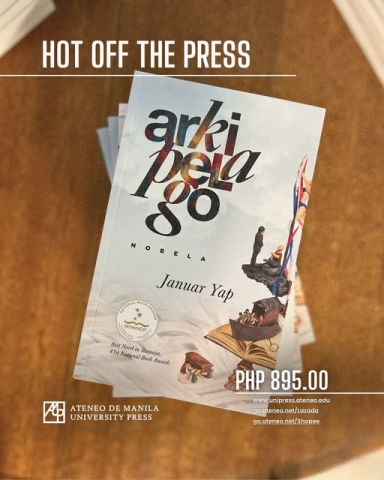
[Hot Off the Press] Arkipelago
New book from the Ateneo Press Arkipelago provides a fascinating and fantastical twist on Philippine politics and history Our country is an archipelago of stories
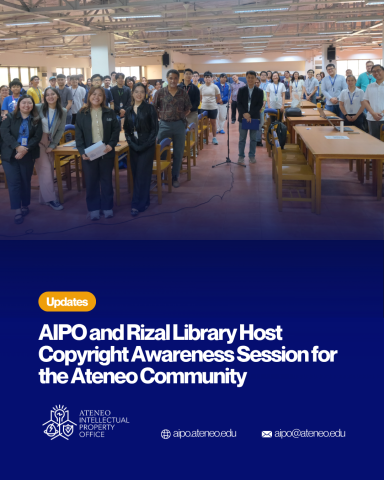
Protecting Creativity: AIPO and Rizal Library Host Copyright Awareness Session for the Ateneo Community
On March 18, 2026, the Ateneo Intellectual Property Office (AIPO), in collaboration with the Rizal Library, successfully conducted a Copyright Awareness Session held on the
Holy Week 2026 Holidays (Memo # UHR2526-038)
Memo # UHR2526-038 31 March 2026 TO: All Employees FROM: [Sgd] Maria Victoria T Cortez, PhD Vice President for University Human Resources SUBJECT: Holy Week
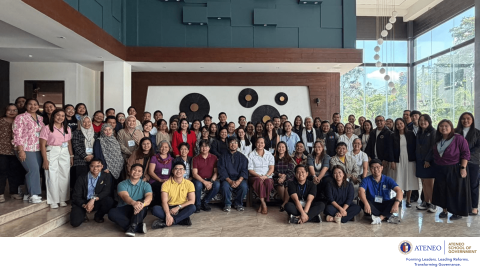
ASOG’s Tobacco Control initiatives spotlighted in DOH National Technical Working Group for Tobacco Prevention and Control
On March 10 to 12, 2026, the Ateneo School of Government (ASOG), through its research and public policy unit, the Ateneo Policy Center, participated in
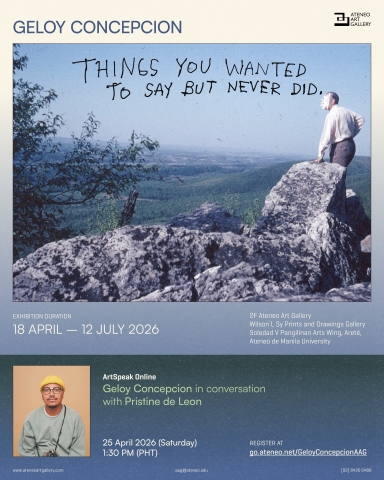
Things You Wanted to Say But Never Did: Geloy Concepcion’s six-year project makes Its exhibition debut at the Ateneo Art Gallery
Geloy Concepcion’s Things You Wanted To Say But Never Did comes to the Ateneo Art Gallery this 18 April 2026. After receiving almost 300,000 messages
[Hot Off the Press] Love If I'm Pretty
New YA Release from the Ateneo Press Love If I’m Pretty tackles the nuances of growing up through complex characters and straightforward prose What do